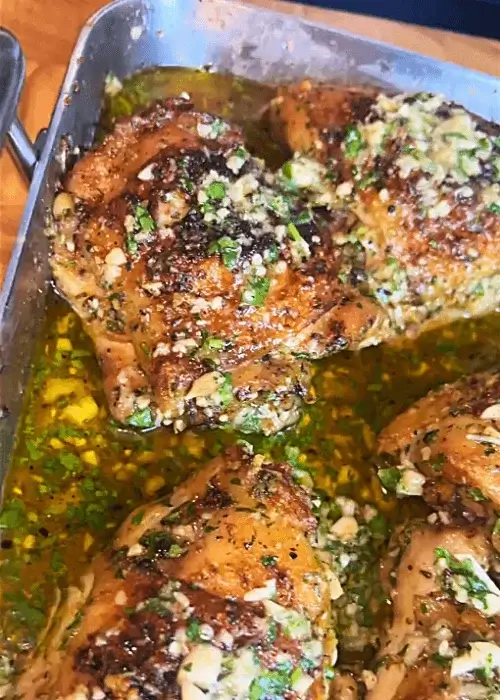
One-Pan Garlic Parmesan Chicken Thighs
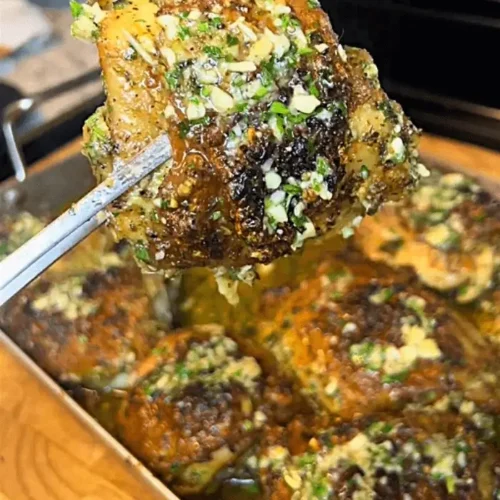
Watch the Full Step-by-Step
- Roasting pan
- Mixing bowls
INGREDIENTS
- 2 pounds/900 grams bone-in chicken thighs
- 1 teaspoon salt
- ½ teaspoon black pepper
- 1 teaspoon lemon pepper
- 1 teaspoon smoked paprika
- 1 teaspoon garlic powder
- 1 teaspoon onion powder
- ½ teaspoon dried thyme
- 2 tablespoons olive oil
Garlic Parmesan topping:
- 4 cloves garlic, minced
- 4 tablespoons unsalted butter, softened
- ¼ cup Parmesan, grated
- 2 tablespoons fresh parsley, chopped

INSTRUCTIONS
- Preheat the oven to 425°F/220°C.
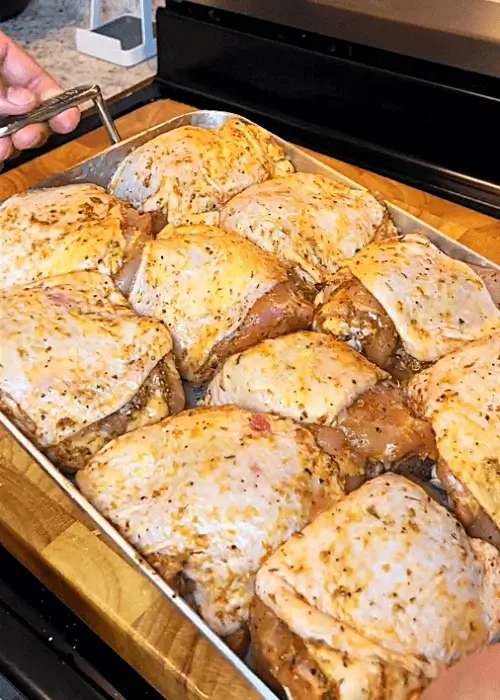
- Pat the chicken dry. Season evenly with oil, salt, pepper, lemon pepper, paprika, garlic powder, onion powder, and thyme.
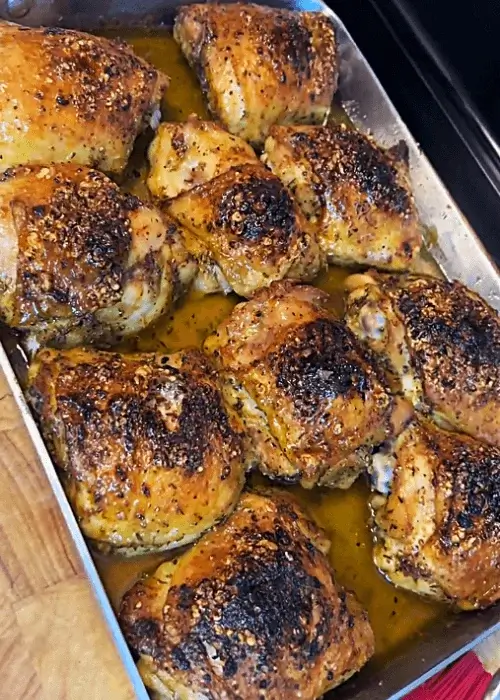
- Lightly oil a roasting pan. Arrange the chicken in a single layer, skin-side up. Roast until juices run clear and the internal temperature reaches 165°F/74°C, about 30 minutes.
- While the chicken roasts, combine garlic, butter, Parmesan, and parsley in a small bowl. Optional: Broil the chicken 2–3 minutes for extra-crispy skin, watching closely.
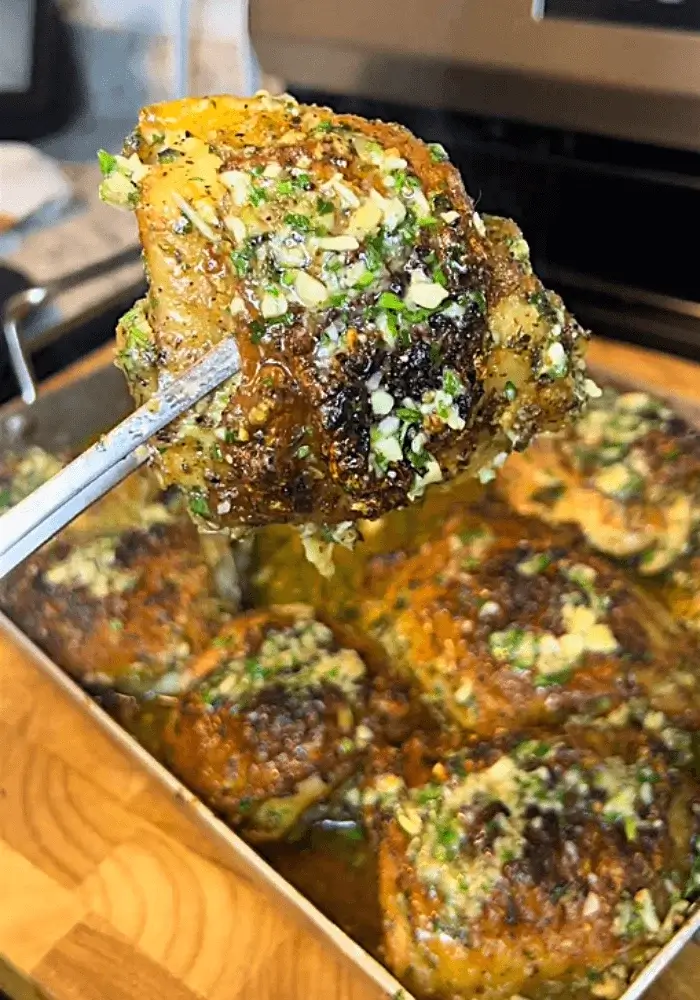
- Remove the chicken from the oven and brush the garlic Parmesan mixture over each thigh. Serve immediately, spooning pan juices over the top.
- Leftovers are excellent sliced over salads or tossed with pasta.
FAQ
How to ensure the thighs come out crispy on the outside but juicy inside
First, pat the chicken completely dry with paper towels before seasoning, as excess moisture prevents the skin from crisping. Using bone-in, skin-on thighs helps retain moisture during roasting, ensuring the interior stays juicy. Roast at a high temperature, around 425°F/220°C, which renders fat from the skin while cooking the meat evenly.
For extra crispiness, broil the thighs for 2–3 minutes at the end, but watch carefully to avoid burning. Resting the chicken for 5–10 minutes before serving allows the juices to redistribute, keeping every bite tender.
Can garlic parmesan chicken thighs be made ahead of time?
The thighs can be prepared ahead, though the texture of the skin may change slightly upon reheating. To make ahead, fully cook the chicken and allow it to cool completely before storing in an airtight container in the refrigerator for up to three days.
When reheating, use an oven or air fryer rather than a microwave, as high dry heat helps restore some crispness to the skin while maintaining juicy meat inside. Reheat at 350°F/175°C until warmed through, about 10–15 minutes, brushing with any reserved garlic Parmesan mixture to refresh flavor. This method preserves both taste and moisture better than microwaving.
What sides pair best with garlic parmesan chicken thighs?
Roasted or steamed vegetables, such as asparagus, green beans, or Brussels sprouts, provide freshness and crunch. Creamy mashed potatoes, garlic-infused polenta, or risotto absorb pan juices and enhance the Parmesan flavor.
Light salads with lemon vinaigrette or a simple arugula salad add acidity to cut through the richness of the chicken. For a one-pan meal, vegetables like carrots, potatoes, or zucchini can be roasted alongside the chicken, allowing the juices and garlic Parmesan topping to flavor everything. Bread or dinner rolls are also excellent to soak up any remaining sauce.
How can I adjust the seasoning?
For a spicier version, add cayenne pepper, smoked chili flakes, or paprika variations. For herb-forward flavors, increase dried thyme or include rosemary, oregano, or sage. Lemon zest or a splash of fresh lemon juice brightens the dish and cuts through richness.
Adjust salt and pepper to taste, keeping in mind that Parmesan already contributes a salty note. You can also incorporate garlic-infused oil or roasted shallots to intensify aroma. Each adjustment should maintain harmony between the savory, garlicky, and cheesy elements of the classic dish.
Is it possible to make the chicken in an air fryer or on the stovetop?
In an air fryer, preheat to 400°F/200°C and cook chicken skin-side down for 12–15 minutes, then flip and cook another 10–12 minutes until internal temperature reaches 165°F/74°C.
On the stovetop, sear the chicken in a heavy skillet over medium-high heat, skin-side down first to render fat and crisp the skin. Reduce heat and cover, cooking until the meat reaches 165°F/74°C. In both methods, brush with garlic Parmesan topping at the end to replicate the roasted version’s rich flavor, ensuring the mixture melts and coats evenly.
What is the best way to store and freeze garlic parmesan chicken thighs?
Garlic parmesan chicken thighs store well both in the refrigerator and freezer when handled properly. For refrigeration, allow cooked chicken to cool to room temperature, then place in an airtight container for up to three days.
To freeze, portion the chicken and wrap each piece tightly in plastic wrap or foil, then place in a freezer-safe bag or container for up to three months. Label with the date for reference. To reheat frozen chicken, thaw overnight in the refrigerator, then warm in a 350°F/175°C oven until heated through. Brush with extra garlic Parmesan topping to refresh flavor and crisp the skin, maintaining the dish’s signature taste and texture.
How do I prevent the thighs from drying out during roasting?
Use bone-in, skin-on thighs, as bones help distribute heat evenly and preserve moisture. Pat the chicken dry to ensure seasonings adhere and the skin crisps. Roast at 425°F/220°C, a high enough temperature to cook quickly without prolonged exposure to heat.
Avoid overcrowding the pan to allow air circulation around each piece. Check the internal temperature with a meat thermometer, removing the chicken at 165°F/74°C. Brushing the thighs with garlic Parmesan topping after cooking adds moisture and flavor, further protecting the meat from drying out while enhancing richness.
What herbs and spices complement garlic parmesan chicken thighs best?
Thyme and rosemary add earthy notes that complement the richness of the Parmesan. Paprika or smoked paprika brings subtle warmth and depth. Lemon zest or a small squeeze of lemon juice adds brightness, balancing the dish’s richness.
Fresh parsley in the garlic Parmesan topping provides herbaceous freshness and a touch of color. Optional additions like oregano, sage, or even a hint of chili flakes can give extra aroma and complexity. Layering herbs during seasoning and in the topping ensures maximum flavor throughout the cooking process.