Chunky Biscoff Chocolate Cookies
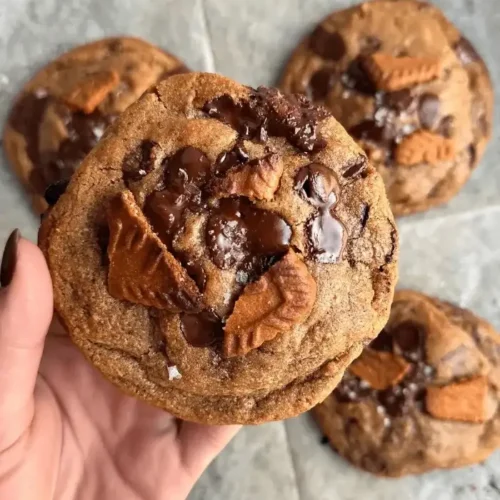
Watch the Full Step-by-Step
- Mixing bowls
- Baking sheet
- Kitchen scale
INGREDIENTS
- 4 ounces/110 grams unsalted butter, softened
- 1⅓ cups/200 grams all-purpose flour
- 1 tablespoon/8 grams cornstarch
- ½ teaspoon baking soda
- ⅓ cup dark brown sugar
- ⅓ cup granulated sugar
- 1 XL egg
- ⅓ teaspoon salt
- 3.2 ounces/90 grams dark chocolate, chopped
- 1.4 ounces/40 grams dark chocolate chips
- 12 Biscoff cookies, crushed
- 1 heaping tablespoon Biscoff spread

INSTRUCTIONS
- Cream the butter, brown sugar, and granulated sugar in a stand mixer until smooth and light. Beat in the egg until combined.
- Add the flour, cornstarch, baking soda, and salt, mixing just until incorporated. Fold in the chopped chocolate, chocolate chips, crushed Biscoff cookies, and Biscoff spread.
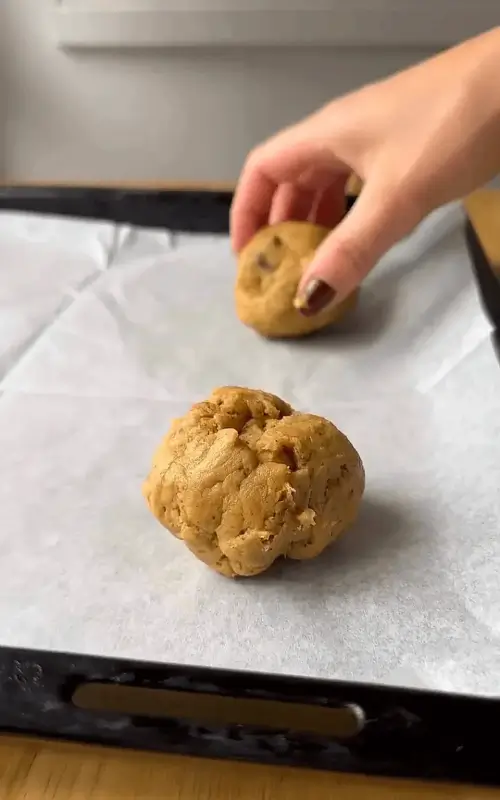
- Shape the dough into balls and chill overnight or freeze for 1 hour. Arrange four dough balls on the prepared baking sheet, and press a few extra chocolate pieces and Biscoff chunks on top.
- Bake on a silicone mat in a 350°F/175°C oven for 9–12 minutes, until the edges are set and the centers are soft.
- Sprinkle with flaky salt and cool completely on a wire rack.
- For a richer, gooier center, press a square of dark chocolate inside each dough ball before baking.
FAQ
What makes these cookies soft in the center but crisp at the edges?
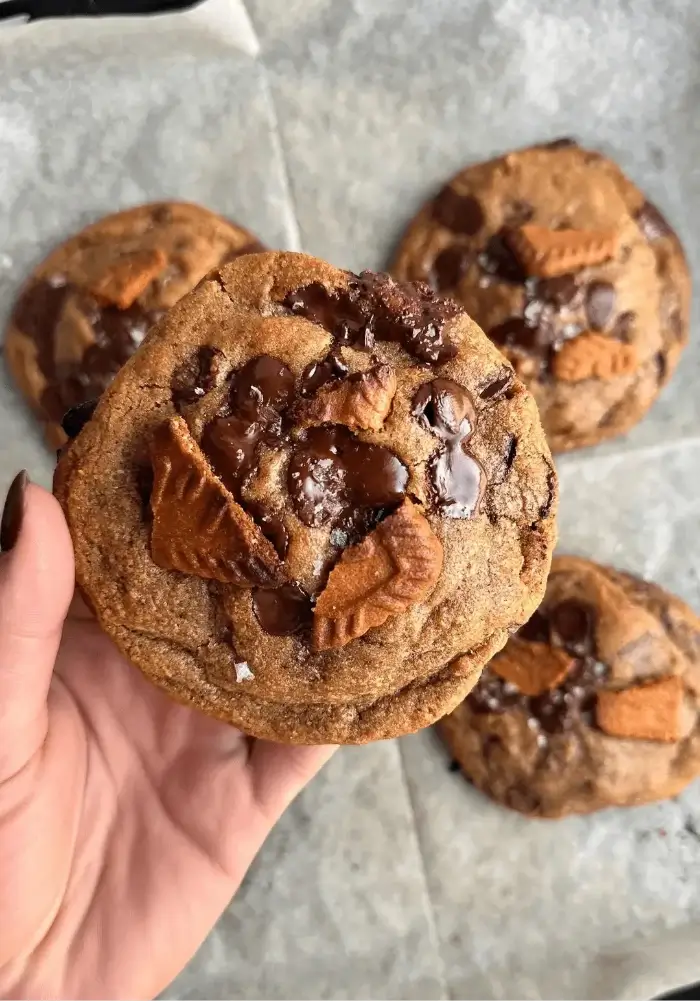
The balance of ingredients and baking time is essential to achieve Biscoff chocolate cookies that are soft in the center and crisp around the edges. Using a combination of butter and both dark brown and granulated sugar helps create moisture and structure. Chilling the dough before baking prevents the cookies from spreading too quickly, allowing the edges to set while the centers remain tender. Baking at 350°F (175°C) for 9 to 12 minutes ensures the exterior firm edges form without overcooking the middle. Incorporating a mix of chopped chocolate and chocolate chips also contributes to a gooey, melty texture in the cookie’s core.
Can I make the Biscoff chocolate cookies without chilling the dough?
While it is possible to bake the cookies immediately, chilling the dough is highly recommended to improve texture and flavor. Cold dough slows spreading in the oven, helping cookies maintain a thicker, chewier center with crisp edges. Chilling also allows the flour to hydrate fully, creating a more tender crumb, and gives the chocolate and Biscoff chunks time to firm up, preventing them from fully melting into the dough. For optimal results, refrigerate for at least one hour or overnight. Skipping this step can lead to thinner, flatter cookies with less defined texture and may affect the overall taste experience of Biscoff chocolate cookies.
Can I substitute regular chocolate for dark chocolate?
Dark chocolate adds depth and balances the sweet, caramel-like taste of the Biscoff cookies and spread. Using milk chocolate will create a sweeter, milder cookie, which some may prefer, but it may reduce the contrast between the chocolate and Biscoff flavors. White chocolate can also be used for a different taste profile, though it will change the texture slightly because it contains more sugar and fat. For a classic Biscoff chocolate cookie experience, dark chocolate is recommended.
How do I store the Biscoff chocolate cookies?
Place the Biscoff chocolate cookies in an airtight container at room temperature for up to five days. Ensure they are completely cooled before storing to prevent condensation, which can make the cookies soggy. For longer storage, you can freeze the baked cookies for up to three months by layering them with parchment paper in a freezer-safe container. Thaw at room temperature before serving. Freezing the cookie dough itself is also an option; scoop the dough into balls and freeze, then bake directly from frozen, adding an extra minute or two to the baking time.

What’s the difference between Biscoff chocolate cookies and chocolate chip cookies?
The addition of Biscoff cookies and Biscoff spread impart a warm, caramelized flavor and unique crunch. Unlike standard chocolate chip cookies, these cookies blend the spiced, slightly caramel taste of Biscoff with rich dark chocolate, giving a layered sweetness and texture. Crushing Biscoff cookies into the dough and pressing additional pieces on top creates pockets of flavor and a visually appealing finish. The combination of butter, sugars, and chilling the dough ensures a soft, chewy interior with golden, crisp edges.
What type of butter is best for Biscoff chocolate cookies?
Unsalted butter is recommended for Biscoff chocolate cookies because it allows full control over the salt content and balances the sweetness of the Biscoff cookies and chocolate. Using salted butter can make the cookies overly salty, especially since flaky salt is often sprinkled on top for contrast. Room-temperature butter should be soft but not melted to ensure proper creaming with the sugars, which helps incorporate air into the dough. This process contributes to the cookies’ soft centers and slightly crisp edges. Butter also provides structure and flavor, helping the Biscoff chocolate cookies maintain their shape during baking. For best results, measure butter carefully and avoid substitutes like margarine, which can change texture and flavor.
Can Biscoff chocolate cookies be made vegan or dairy-free?
Replace unsalted butter with a plant-based butter or a cashew/oat-based butter alternative. Use a vegan egg substitute, such as flaxseed meal mixed with water or a commercial egg replacer. Ensure the chocolate and chocolate chips are dairy-free, as many dark chocolates still contain milk solids. Biscoff spread is naturally vegan, and the cookies themselves do not require other animal products. Baking times and textures may vary slightly; the cookies might spread more or be less rich, but the characteristic caramelized Biscoff flavor remains, maintaining the essence of Biscoff chocolate cookies.