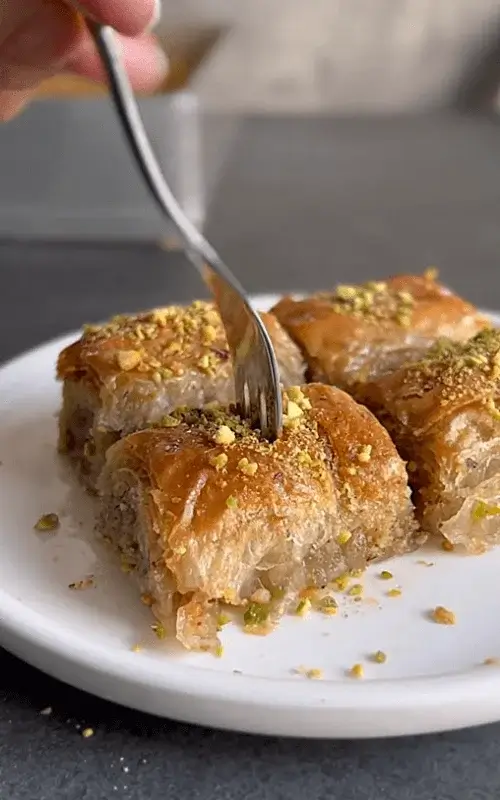
Walnut Baklava (Easy Rolled Method)
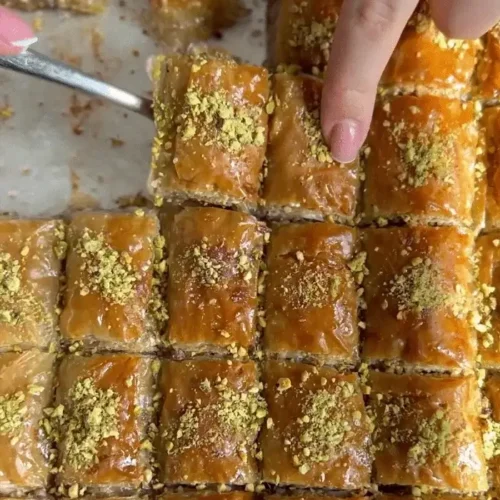
Watch the Full Step-by-Step
- Small saucepan
- Pastry brush
- Chef's knife
- Kitchen scale
- 9-by-13-inch/23-by-33 cm baking dish
INGREDIENTS
- 1 pound/454 grams phyllo dough, thawed
- 7 ounces/200 grams unsalted butter, melted
- 2½ cups/300 grams walnuts, finely ground
Syrup:
- 1 cup sugar
- 1 cup water
- 2 tablespoons lemon juice

INSTRUCTIONS
- Heat the oven to 350°F/180°C convection. Generously butter a 9-by-13-inch baking dish.
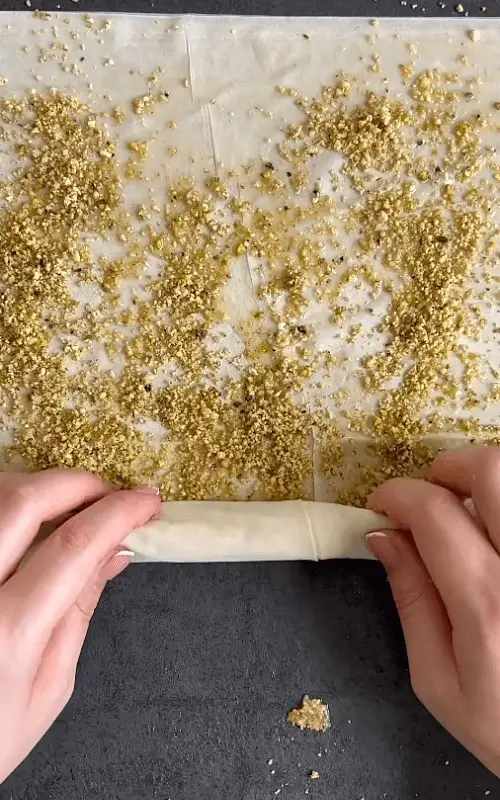
- Lay 3 sheets of phyllo on a work surface. Brush the top sheet lightly with melted butter and scatter a small handful of ground walnuts over the surface. Roll tightly into a log.
- Repeat with the remaining phyllo and walnuts to form several logs, arranging them snugly in the prepared baking dish.
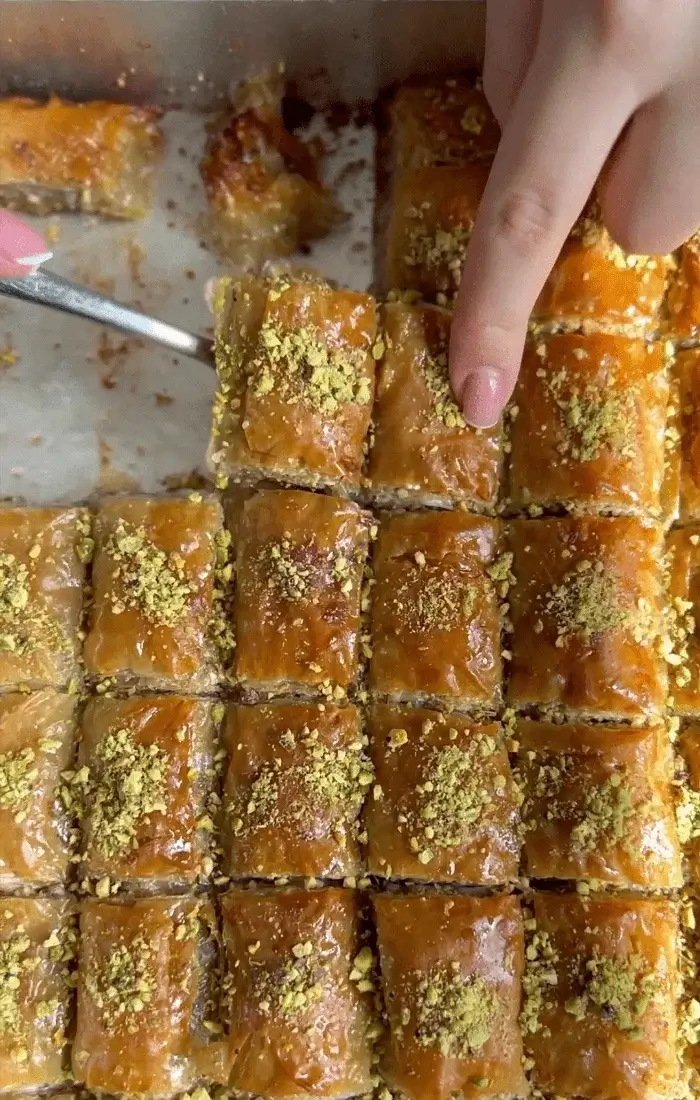
- Pour the remaining melted butter evenly over the rolls so they are well coated. Using a sharp knife, slice the rolls into portions.
- Bake until deeply golden and crisp, about 25 minutes.
- Meanwhile, combine the sugar, water and lemon juice in a small saucepan and bring to a boil. Cook for 2 to 3 minutes, until the sugar dissolves and the syrup is clear.
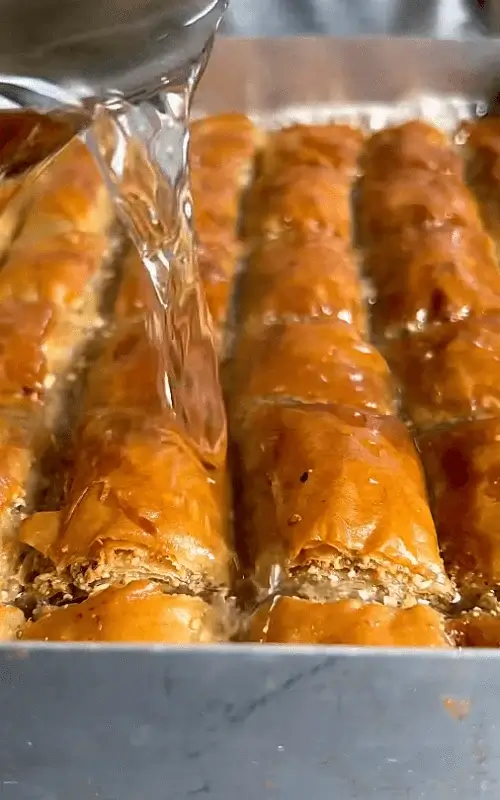
- Remove the walnut baklava from the oven and immediately pour the hot syrup evenly over the rolls. Let cool slightly so the syrup absorbs before serving.
FAQ
What type of nuts work best in walnut baklava?
Traditional walnut baklava relies on walnuts because they provide a balanced flavor that is both rich and slightly bitter, which contrasts well with the sweet syrup. English walnuts are commonly used because they are widely available and grind easily into a consistent texture. For walnut baklava, the nuts should be finely ground but not powdered. A coarse meal allows the filling to remain textured and prevents it from becoming dense or pasty once baked.
If the walnuts are ground too finely, the filling may compact and lose its characteristic layered bite. Freshness also matters significantly. Walnuts contain natural oils that can become rancid if stored improperly or for too long. Toasting the walnuts lightly before grinding can deepen their flavor, but it is optional for walnut baklava. Some bakers mix walnuts with a small portion of pistachios or almonds, though purists prefer using only walnuts so the flavor of walnut baklava remains dominant and distinctive.
Why is syrup poured over walnut baklava immediately after baking?
Pouring syrup over hot walnut baklava directly after it comes out of the oven is essential for proper absorption and texture. The hot pastry and hot syrup create a temperature balance that allows the syrup to penetrate the layers of phyllo and nuts effectively. If the syrup is poured when the pastry has cooled, it tends to sit on the surface rather than soaking through the layers.
Conversely, cold syrup on hot walnut baklava can cause the pastry to seize and become unevenly sweet. When both components are hot, the syrup travels between the layers of crisp phyllo and evenly distributes sweetness throughout the dessert. The lemon juice in the syrup also plays a technical role. It prevents crystallization and adds acidity that balances the sweetness of walnut baklava.
How fine should the walnuts be?
The walnuts used in walnut baklava should be finely ground to a coarse meal, similar to the texture of small breadcrumbs. This consistency allows the nut layer to spread evenly between the phyllo sheets while still maintaining a pleasant texture when eaten. If the walnuts are chopped too coarsely, the filling can become uneven and may tear the delicate phyllo layers during rolling or slicing.
On the other hand, grinding the nuts into a powder can create a paste-like filling once the syrup is added, which reduces the layered texture that walnut baklava is known for. A food processor works best for achieving the correct grind, but it is important to pulse the walnuts in short bursts to prevent them from releasing too much oil. Bakers often sift the ground walnuts lightly to remove excess fine dust, ensuring that the walnut baklava filling remains light and evenly distributed throughout the pastry rolls.
Why is the phyllo dough rolled instead of layered?
Rolling phyllo dough instead of layering it is a simplified technique that makes walnut baklava easier and faster to prepare. Traditional baklava requires stacking many buttered sheets of phyllo in a pan, adding nuts between layers, and cutting the pastry before baking. The rolled method streamlines the process by assembling smaller logs that contain the nut filling inside.
For walnut baklava, rolling also creates tightly packed layers that absorb syrup efficiently, resulting in a uniform distribution of sweetness and moisture. Each roll forms spiral layers of pastry and walnuts, which provide a visually appealing cross-section once sliced.
How do you keep the baklava crispy after adding the syrup?
First, the pastry must be baked until deeply golden and fully crisp. Underbaked phyllo will soften too quickly when syrup is added. The syrup should be thin and lightly boiled so it penetrates the pastry rather than forming a thick sticky coating. When poured over hot walnut baklava, the syrup quickly spreads through the layers and then settles as the pastry cools.
Allowing the baklava to rest at room temperature for at least 1 to 2 hours is critical. During this time the layers reabsorb moisture evenly and regain structural crispness. Storing walnut baklava uncovered or loosely covered for the first several hours also helps prevent steam from softening the pastry. If stored properly in a cool, dry place, walnut baklava can remain crisp for several days while still maintaining its syrup-soaked interior.
What is the best way to cut the baklava without crushing the pastry?
The pastry should be sliced before baking, while the phyllo layers are still dry and firm. This prevents the delicate sheets from shattering once they become crisp in the oven. For rolled walnut baklava, the logs are usually arranged in the baking dish and then cut into portions with a long, sharp chef’s knife.
Applying gentle downward pressure rather than sawing helps keep the layers intact. After baking and soaking with syrup, the cuts may need to be lightly retraced to separate the pieces fully. A thin, sharp blade works best because it passes through the syrup-soaked layers without dragging. Some cooks lightly oil the knife blade to reduce sticking when cutting walnut baklava.
Why does phyllo dough dry out quickly?
When preparing walnut baklava, sheets that are left uncovered can become brittle within minutes, making them difficult to roll or shape without cracking. To prevent this, it is important to keep unused phyllo sheets covered with a slightly damp kitchen towel while assembling the pastry. The towel should be moist but not wet, since excess moisture can cause the sheets to stick together.
Working with small batches of phyllo also helps maintain flexibility during assembly. If a sheet tears slightly while making walnut baklava, it can usually still be used because multiple layers are rolled together.
Can walnut baklava be frozen?
Walnut baklava can be frozen successfully, although the best results occur when freezing it before the syrup is added. After assembling and baking the pastry, allow it to cool completely, then wrap the pan tightly with plastic wrap and foil before freezing. When ready to serve, thaw the walnut baklava at room temperature and reheat it briefly in a low oven to restore crispness.
The syrup can then be prepared fresh and poured over the warm pastry. Freezing fully finished walnut baklava that already contains syrup is also possible, but the texture may become slightly softer after thawing because the syrup continues to hydrate the layers. Regardless of the method used, walnut baklava should be frozen in an airtight container to prevent it from absorbing freezer odors.
Why is lemon juice added to the syrup?
Lemon juice plays an important technical role in the syrup used for walnut baklava. Although it contributes a subtle citrus brightness, its primary purpose is to stabilize the sugar syrup and prevent crystallization. When sugar and water are boiled together, there is a risk that the syrup will recrystallize as it cools, forming a grainy texture rather than a smooth liquid.
The small amount of acid in lemon juice interferes with the crystallization process by breaking down sucrose molecules into simpler sugars. This keeps the syrup clear and pourable, allowing it to distribute evenly throughout the walnut baklava. The acidity also balances the overall sweetness of the dessert, preventing the syrup from tasting overly heavy. Because walnut baklava already contains rich butter and nuts, the slight brightness from lemon juice helps keep the final flavor balanced and more pleasant to eat.