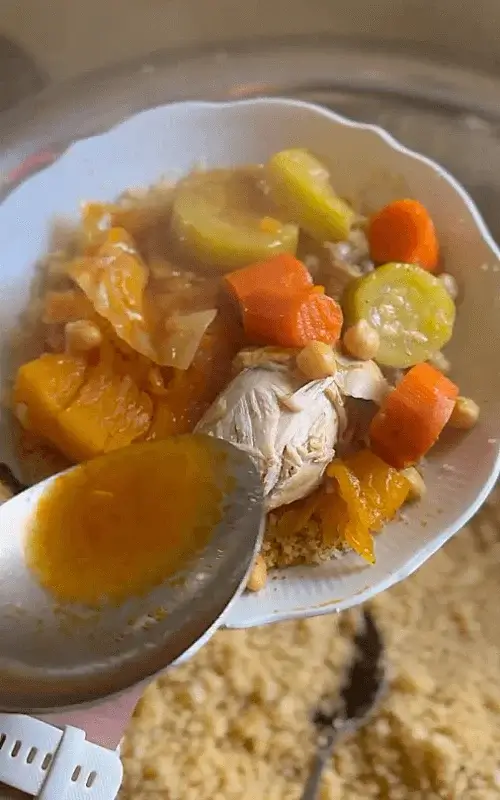
Grandma’s Tunisian Couscous
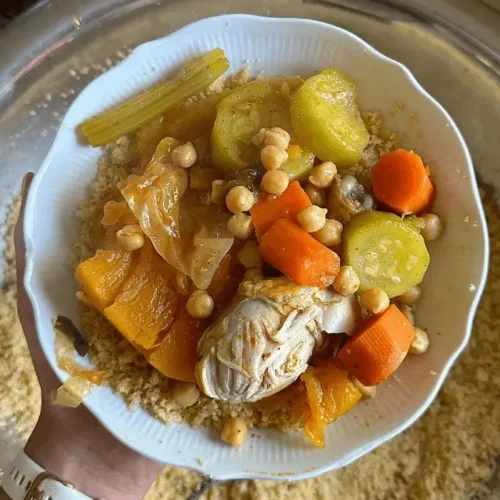
Watch the Full Step-by-Step
- Large mixing bowl
- Couscous steamer or steamer insert with large pot
- Chef's knife
- Kitchen towel
INGREDIENTS
- 2.2 pounds/1 kilogram fine semolina
- 1¼ to 1½ cups water, plus 2 cups water for second steaming
- ¼ cup oil
- 1 teaspoon salt
- 1 teaspoon ground black pepper
- Soup:
- 2 tablespoons oil
- 2 tablespoons sweet paprika
- 2 tablespoons tomato paste
- 10 cups water, or as needed to cover
- 1 tablespoon hawaij spice blend
- 1 teaspoon salt, plus more to taste
- 1 teaspoon ground black pepper
- 3 medium carrots, cut into large pieces
- 2 medium zucchini, cut into large pieces
- ½ medium green cabbage, cut into wedges
- 1½ pounds pumpkin or squash, cut into large chunks
- 1 large onion, halved
- 1 cup soaked or frozen chickpeas
- 1 tablespoon natural chicken bouillon powder
- 3 celery stalks, cut into large pieces
- 5 small potatoes, peeled
- 8 chicken drumsticks/bone-in thighs

INSTRUCTIONS
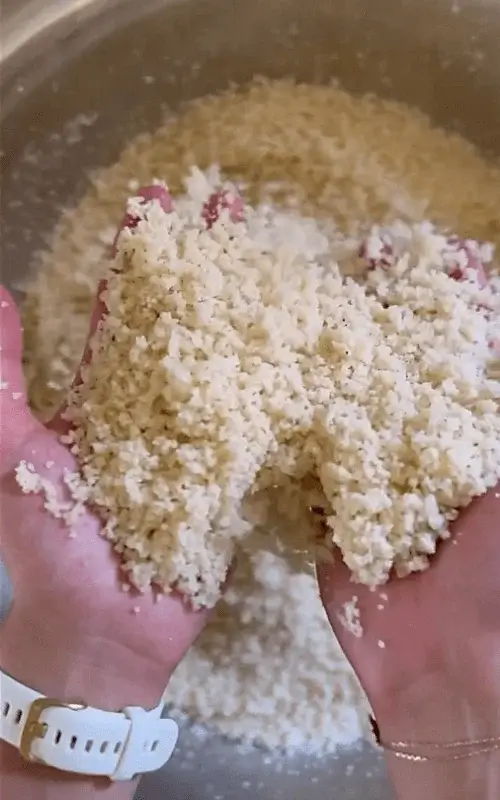
- Place the semolina in a large bowl. Gradually drizzle in 1¼ to 1½ cups water, rubbing with your hands to form small, even granules. Add the oil and continue rubbing until the grains are light and separate. Season with salt and pepper.
- Transfer to a couscous steamer insert set over simmering water. Steam for 45 minutes, stirring once or twice to break up any clumps.
- Return the couscous to the bowl. Gradually mix in 2 cups of water. Cover with a kitchen towel and let rest for 15 minutes. Fluff and break up any clumps, then return to the steamer.
- Meanwhile, heat the oil in a large pot over medium heat. Add the paprika and cook, stirring, until fragrant and slightly darkened, about 2 minutes. Stir in the tomato paste and cook for 1 minute. Add 1 cup water to loosen.
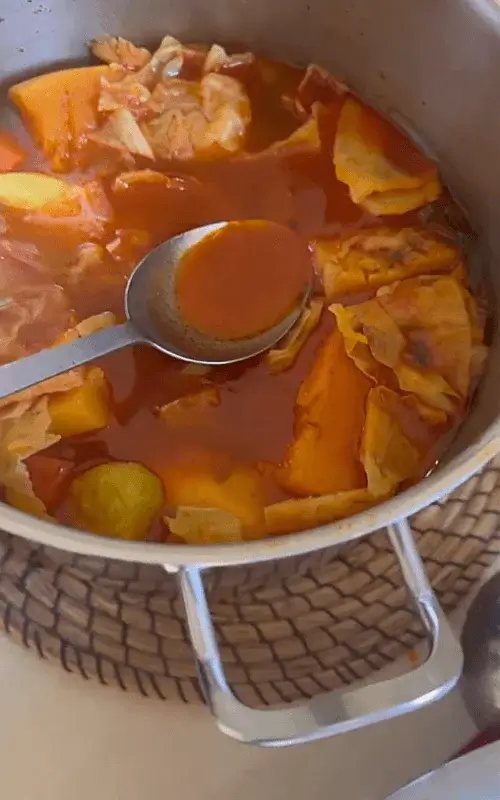
- Add the carrots and chickpeas and cook for 5 minutes. Add the onion, cabbage, squash, celery, potatoes, chicken drumsticks, hawaij, salt, pepper and bouillon powder. Pour in enough water to cover. Bring to a boil, then reduce to a gentle simmer.
- Set the couscous steamer over the pot and steam for 40 to 45 minutes, until the vegetables are tender and the chicken is cooked through.
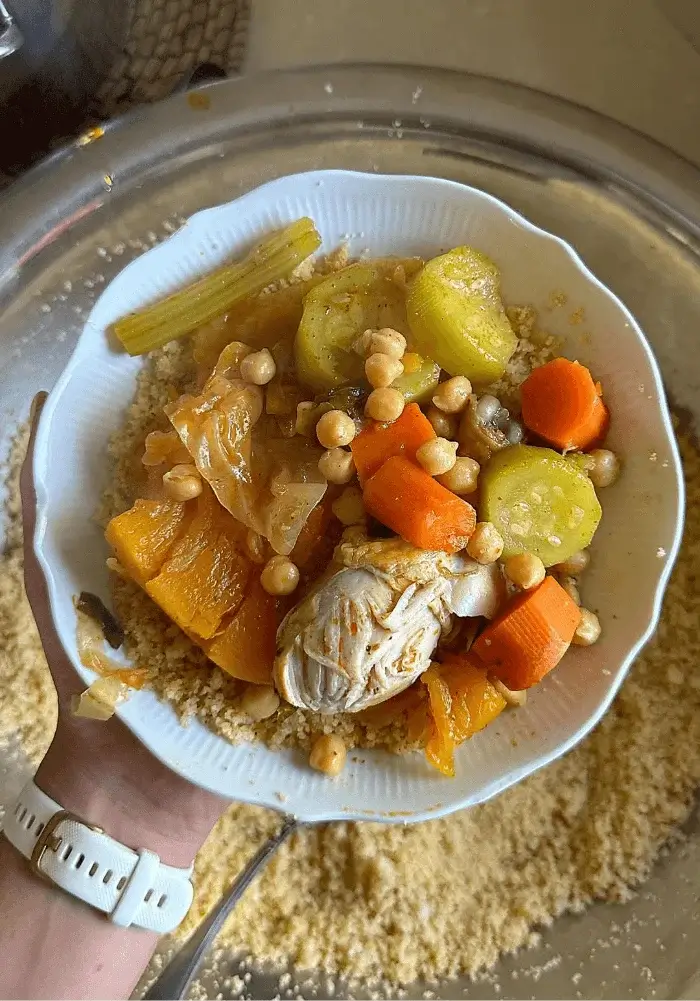
- Transfer the couscous to a large bowl. Season lightly with additional salt and pepper. Spoon ½ to ¾ cup of the soup’s surface oil and broth over the couscous, or to taste, and toss gently to coat.
- Serve in a wide bowl, with the chicken, vegetables and broth alongside.
FAQ
What makes Tunisian couscous different from other types of couscous?
Tunisian couscous is distinguished by its seasoning profile, broth structure, and ingredient composition. Unlike Moroccan couscous, which is often lighter and sometimes slightly sweet, Tunisian couscous typically features a deeper, more robust broth built from sweet paprika, tomato paste, and hawaij or other warm spice blends. The color is usually redder due to the paprika and tomato base.
Tunisian versions commonly include pumpkin or squash, cabbage, chickpeas, potatoes, and chicken drumsticks, creating a heartier and more vegetable-forward composition. The broth is often spicier and more concentrated. Additionally, the traditional preparation method emphasizes hand-rolling and double steaming the semolina, which produces a distinct granular texture rather than the fluffy, quick-cooked texture found in instant couscous preparations common in North America.
Can I use store-bought couscous?
Yes, but the texture and authenticity will differ significantly. Traditional Tunisian couscous uses raw semolina that is hydrated gradually and steamed twice in a couscoussier, producing light, separate grains with structural integrity. Store-bought instant couscous is pre-steamed and dried, meaning it only requires hot water to rehydrate.
While convenient, it lacks the layered texture and slightly chewy structure of traditionally steamed semolina. If substituting, use fine instant couscous and fluff thoroughly with a fork after hydrating to avoid clumping. However, you cannot replicate the same grain definition or depth of absorption. The double-steaming process allows the couscous to absorb surface broth later without becoming mushy, which is a defining characteristic of properly prepared Tunisian couscous.
What is hawaij, and is it necessary for authentic Tunisian couscous?
Hawaij is a Yemeni spice blend commonly used in North African and Middle Eastern cooking, typically composed of turmeric, cumin, coriander, black pepper, and sometimes cardamom or cloves. In Tunisian couscous, hawaij contributes warmth, earthiness, and subtle bitterness that balances the sweetness of paprika and squash. While not strictly mandatory, it plays an important structural role in flavor development.
Without it, the broth may taste flatter or overly tomato-forward. If unavailable, a mixture of ground cumin, coriander, turmeric, and black pepper can approximate its effect. The spice blend should be added directly to the simmering broth to bloom in liquid rather than oil. Proper seasoning is critical because Tunisian couscous relies on broth depth rather than heavy finishing sauces for complexity.
Can Tunisian couscous be frozen successfully?
Yes, but the components should be separated for best results. The broth with chicken and vegetables freezes very well because its liquid base protects texture and prevents drying. Store it in airtight containers, leaving slight headspace for expansion, and freeze for up to 3 months.
The couscous grains can also be frozen, but they must be completely cooled and loosely fluffed before packaging to avoid compression. When reheating, thaw overnight in the refrigerator. Re-steam the couscous briefly to restore lightness rather than microwaving directly. Reheat the broth gently on the stovetop and adjust seasoning if necessary.
How do I prevent the couscous from clumping during steaming?
Clumping occurs when water is added too quickly or when the grains are not separated adequately between steaming stages. To prevent this in Tunisian couscous, water must be drizzled gradually into the semolina while rubbing continuously with your hands to create small, even granules. After the first steaming, the couscous should be returned to a bowl and hydrated again gradually before resting.
Breaking up clumps manually before the second steam is essential. During steaming, stirring once or twice helps maintain separation. Avoid compressing the couscous in the steamer; it should sit loosely to allow steam circulation. Proper hydration control and manual aeration are what produce the characteristic light yet distinct grains expected in well-executed Tunisian couscous.
Can I make Tunisian couscous without chicken?
Tunisian couscous can be adapted to vegetarian or alternative protein versions while maintaining its core structure. The broth must remain deeply seasoned to compensate for the absence of poultry fat. Increase the quantity of chickpeas and consider adding white beans for additional body. A richer vegetable stock can replace chicken-based bouillon. Some variations include lamb, beef shank, or merguez sausage, though each changes the flavor profile.
If eliminating meat entirely, enhance depth by sautéing the tomato paste longer and increasing spices slightly. The key principle in Tunisian couscous is layered broth development; protein choice is secondary to achieving a balanced, concentrated cooking liquid that properly seasons the grains during final assembly.
Why is the broth poured over the couscous at the end instead of cooking it directly in the soup?
In Tunisian couscous, the grains are steamed separately to control hydration and preserve structure. Cooking the couscous directly in the soup would result in swollen, unevenly cooked grains and a starchy broth. By steaming first and then spooning a measured amount of the broth’s surface oil and liquid over the grains, you achieve controlled absorption.
This technique allows the couscous to remain light and separate while still carrying the flavor of the broth. The oil layer that rises to the top contains concentrated spice and paprika flavor, which evenly coats the grains when tossed. This staged integration is fundamental to traditional Tunisian couscous technique and ensures textural contrast between grain and broth.
What texture should properly prepared Tunisian couscous have?
Properly prepared Tunisian couscous should be light, fluffy, and composed of separate, distinct granules. The grains should not clump together, appear sticky, or form dense masses. When pressed lightly between fingers, they should feel tender but not mushy. The texture results from gradual hydration, thorough hand-rubbing, and controlled steaming.
Overhydration leads to heaviness, while insufficient steaming produces chalky interiors. After final assembly with surface broth and oil, the grains should absorb flavor while retaining structural definition. The contrast between airy couscous and richly simmered vegetables and chicken is central to the dish’s success.
What vegetables are traditional in Tunisian couscous?
Traditional Tunisian couscous commonly includes carrots, zucchini, cabbage, pumpkin or squash, chickpeas, potatoes, celery, and onion. These vegetables are chosen for their structural durability during long simmering and their ability to absorb seasoning without disintegrating. Pumpkin or squash contributes sweetness that balances paprika and spice. Cabbage provides subtle bitterness and texture.
While substitutions are possible, they should be selected based on cooking stability. Sweet potatoes can replace pumpkin, and turnips can substitute for potatoes. Delicate vegetables such as green beans or spinach are less suitable because they overcook quickly. The defining factor in Tunisian couscous is not strict vegetable identity but maintaining a balance of sweet, earthy, and savory elements within a broth that remains cohesive and well-seasoned.
Is a couscoussier necessary to make Tunisian couscous?
A traditional couscoussier is ideal for making Tunisian couscous because it allows simultaneous steaming of the grains while the broth simmers below, creating efficient heat transfer and flavor integration. The perforated top insert ensures consistent steam circulation without direct contact between the grains and liquid. However, it is not strictly required.
A large pot fitted with a metal steamer basket can work effectively if the basket sits securely above simmering liquid and is sealed well to prevent steam leakage. Some cooks wrap the seam between pot and steamer with a damp towel to trap steam. The critical factor is maintaining steady steam flow without condensation dripping excessively onto the grains, which can cause uneven hydration or clumping.
Why is the semolina steamed twice?
The double-steaming process is essential for proper grain structure. During the first steam, the hydrated semolina begins to swell and set its shape. After resting and rehydrating with additional water, the second steam completes cooking and ensures internal tenderness while preserving exterior separation. If steamed only once, the grains may appear cooked on the outside but remain slightly firm inside.
Conversely, overhydrating before steaming can produce dense clusters. The staged steaming technique used in Tunisian couscous balances moisture penetration with grain integrity. It also allows the cook to correct texture between stages by breaking up clumps manually. This method produces light, distinct grains capable of absorbing broth at serving without collapsing.
How spicy is traditional Tunisian couscous?
The heat level of Tunisian couscous varies by region and household preference. Many traditional versions include chili peppers or harissa, contributing noticeable but balanced heat. In the version without added chilies, the warmth primarily comes from paprika and spice blends like hawaij, which provide aromatic heat rather than sharp spiciness. The broth should taste deeply seasoned but not overwhelmingly hot.
Because the couscous itself is lightly seasoned and absorbs surface broth at the end, excessive spice in the soup can dominate the dish. For a spicier variation, fresh chilies or a spoonful of harissa can be added to the broth or served on the side, allowing individuals to adjust heat without compromising the overall balance of Tunisian couscous.
Why is tomato paste cooked before adding water in Tunisian couscous?
Tomato paste is sautéed briefly to caramelize its natural sugars and remove raw acidity. This step deepens flavor and integrates it with the oil and spices before dilution. In Tunisian couscous, the broth forms the backbone of the dish, so early flavor development is essential.
Cooking the paste in oil allows fat-soluble flavor compounds in the paprika and spices to bloom and disperse evenly. If water is added immediately without sautéing, the broth may taste flat or slightly metallic.