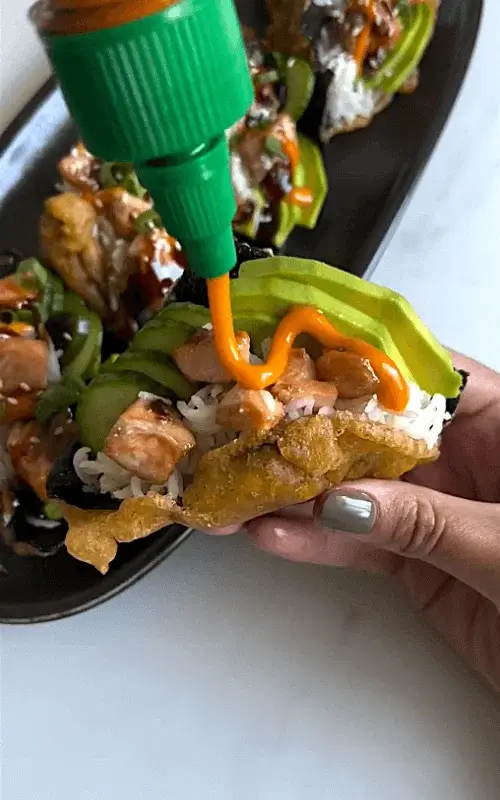
Sushi Taco with Crispy Nori
Watch the Full Step-by-Step
- Medium saucepan with lid
- Medium mixing bowl
- Large mixing bowl
- Thermometer
- Wire rack
- Chef's knife
INGREDIENTS
- 1 cup sushi rice or basmati rice
- 1½ cups water
- 1 medium cucumber, thinly sliced
- 1 medium avocado, sliced
- 2 scallions, thinly sliced
- 2 tablespoons sesame seeds
- ½ cup spicy mayonnaise
- ¼ cup teriyaki sauce
Salmon:
- 9 ounces/250 grams skinless salmon, cut into ½-inch cubes
- 1 tablespoon cornstarch
- 2 tablespoons soy sauce
- 1 teaspoon honey
- 1 teaspoon mayonnaise
- 1 tablespoon oil, for searing
Nori shells:
- 3 nori sheets, each cut into 4 squares
- 1 cup all-purpose flour
- ½ cup cornstarch
- 1 teaspoon baking soda
- 1 teaspoon baking powder
- ½ tablespoon salt
- ½ teaspoon ground black pepper
- 1 teaspoon sweet paprika
- 1 cup cold water
- 1 large egg
- 4 cups oil, for frying

INSTRUCTIONS
- Rinse the rice under cold water until the water runs clear. Combine rice and water in a saucepan and bring to a boil. Cover, reduce heat to low and cook until tender and water is absorbed, 15 to 18 minutes. Remove from heat and let steam, covered, 10 minutes. Fluff gently and cool slightly.
- In a medium bowl, toss the salmon with cornstarch, soy sauce, honey and mayonnaise. Heat the oil in a skillet over medium-high. Sear the salmon, turning once, until just cooked through and lightly caramelized, 3 to 4 minutes. Transfer to a plate.
- In a large bowl, whisk flour, cornstarch, baking soda, baking powder, salt, pepper and paprika. Add cold water and whisk until smooth. Add the egg and stir just until combined; the batter should remain light.
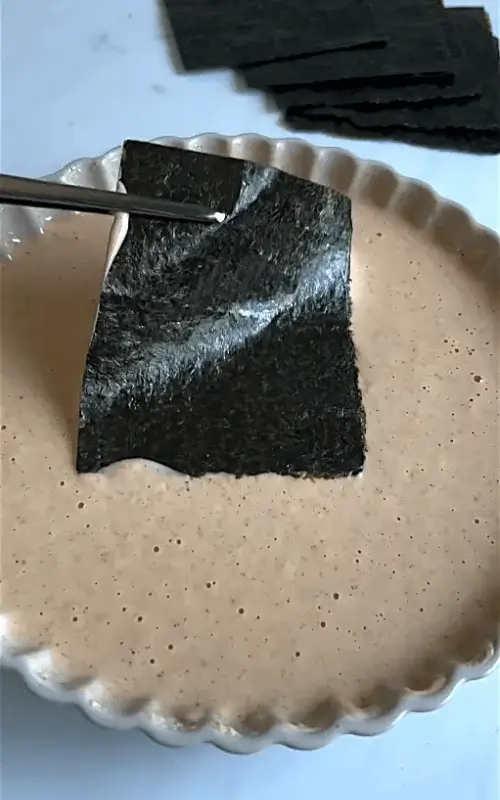
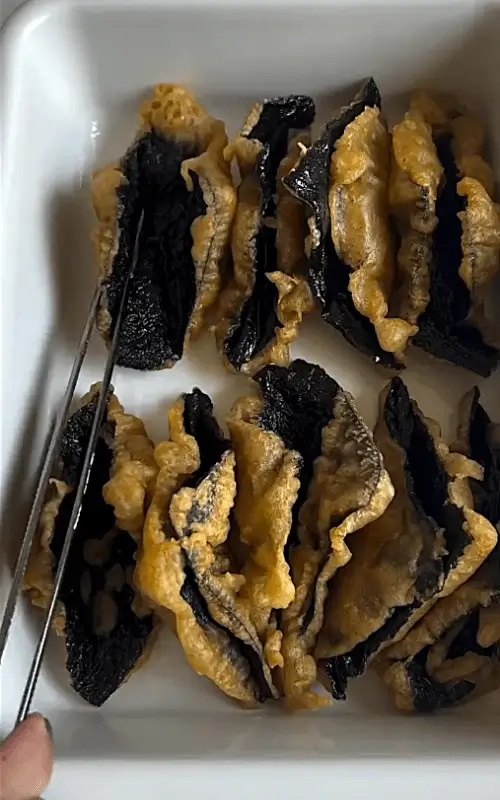
- Heat 2 inches of oil in a heavy pot to 350°F/180°C. Dip each nori square into the batter, coating one side only. Fry until golden and lightly puffed, 30 to 45 seconds. Transfer to a rack or paper towels to drain. While warm, gently bend each into a taco shape; the shells will remain pliable as they cool.
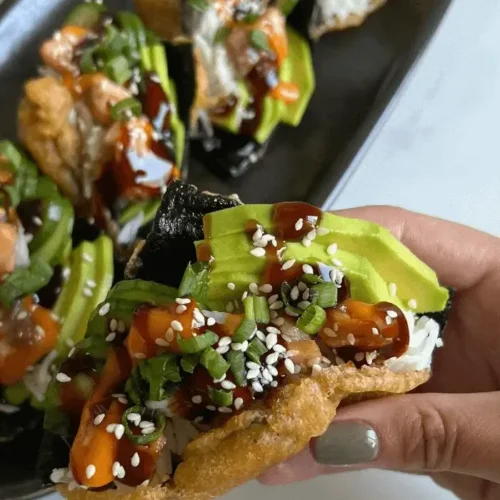
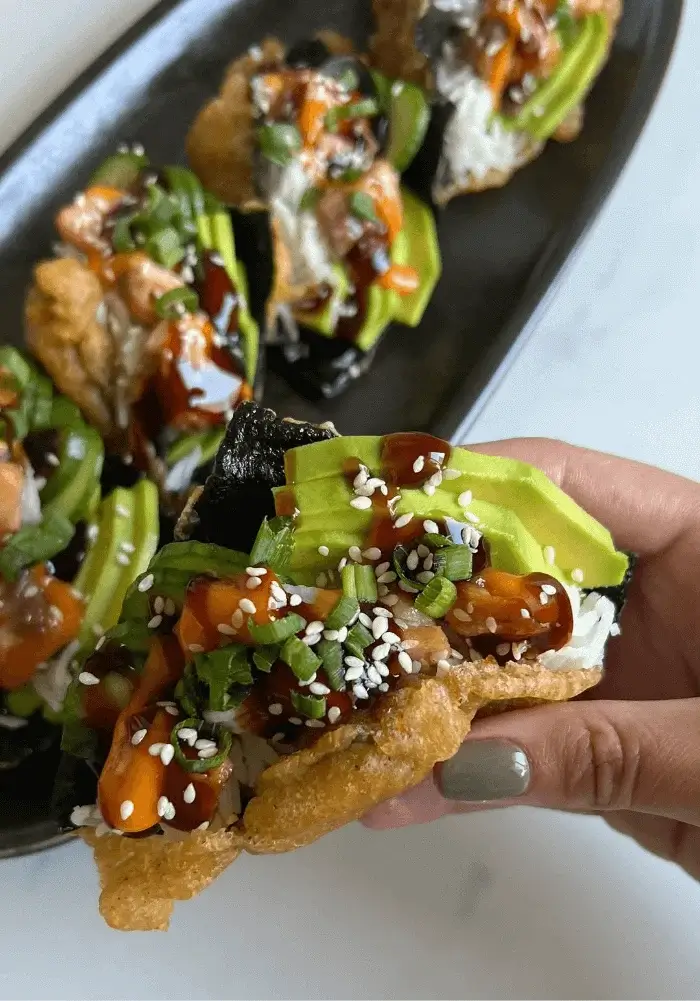
- To assemble, spoon rice into each shell. Top with salmon, cucumber, avocado and scallions. Drizzle with spicy mayonnaise and teriyaki sauce. Sprinkle with sesame seeds and serve immediately.
FAQ
How do I keep the nori shells crispy in a sushi taco?
First, ensure the frying oil reaches and holds 350°F/180°C; oil that is too cool results in greasy, soggy batter. Fry the nori briefly, just until golden, and drain thoroughly on a rack rather than stacking, which traps steam. Avoid covering freshly fried shells, as condensation will soften the crust. During assembly, allow rice to cool slightly so excess steam does not transfer into the shell.
Do not overload with sauce; drizzle sparingly to prevent structural breakdown. Serve immediately after filling. If holding briefly, keep shells in a dry, room-temperature environment away from humidity. Refrigeration is not recommended, as it introduces moisture that rapidly compromises the crisp texture of the sushi taco shell.
How should I store leftovers of a sushi taco?
Storing leftovers of a sushi taco requires careful separation of components to prevent sogginess. Do not assemble tacos for storage; instead, keep the rice, cooked protein, and toppings in separate airtight containers in the refrigerator. Rice should be cooled completely before refrigerating and can be refreshed briefly by steaming or microwaving with a sprinkle of water to restore some softness.
Cooked salmon or alternative proteins should be stored in a single layer to avoid crushing. Nori shells will lose crispness if stored with moisture; they can be kept in an airtight container at room temperature, but should be re-fried lightly or served immediately after separating from wet ingredients. Assemble only before serving to preserve the sushi taco’s texture and integrity.
What sauces work best for sushi taco?
The best sauces for a sushi taco balance richness, spice, and umami without overwhelming the delicate shell and rice. Spicy mayonnaise adds creaminess and heat, complementing salmon or other proteins, while teriyaki sauce contributes a sweet-savory depth that pairs naturally with nori and rice. Soy sauce or tamari can be added sparingly for saltiness, but avoid pouring directly onto the shell to prevent sogginess.
Other creative options include sriracha blended with vegan mayo, ponzu for acidity, or a drizzle of sesame oil for fragrance. When using multiple sauces, layer lightly to maintain the crisp texture of the nori shell and allow each bite of sushi taco to remain clean and well-balanced.
Can I make sushi tacos gluten-free?
Replace all-purpose flour in the tempura batter with a gluten-free flour blend or rice flour, which still produces a light, crisp coating for the nori shell. Use tamari or a certified gluten-free soy sauce instead of traditional soy sauce to season the salmon or other proteins.
Ensure that any pre-made sauces, such as teriyaki, are also gluten-free. Keep the rice, toppings, and protein components the same, as they are naturally gluten-free. When frying the shells, maintain the oil temperature at 350°F/180°C to achieve crispness, which is essential for the gluten-free sushi taco experience. Assemble just before serving for best results.
What mistakes should I avoid when making a sushi taco?
Common mistakes when preparing a sushi taco include underheating the frying oil, overmixing the batter, and assembling too early. Oil below 350°F/180°C produces greasy, heavy shells instead of crisp ones. Overmixed batter develops gluten, resulting in dense coating rather than light tempura texture.
Another frequent issue is adding too much sauce, which quickly softens the shell. Failing to cool the rice slightly before assembly can also introduce excess steam. Finally, stacking fried shells traps moisture and reduces crispness.
What oil is best for frying the nori shells?
A neutral oil with a high smoke point is essential for frying the nori shells in a sushi taco. Oils such as canola, vegetable, peanut, or sunflower oil are ideal because they can safely reach and maintain 350°F/180°C without breaking down or imparting strong flavor. Avoid olive oil or unrefined oils, which have lower smoke points and may produce bitterness at frying temperatures.
Maintaining stable heat is critical; fluctuations below target temperature will cause the batter to absorb excess oil, resulting in greasy shells. Use a thermometer for accuracy and fry in small batches to prevent temperature drops.
How thick should the tempura batter be for a sushi taco?
The tempura batter for a sushi taco should be thin enough to coat lightly yet thick enough to cling to one side of the nori without dripping excessively. The texture should resemble heavy cream or a loose pancake batter. Overmixing develops gluten in the flour, leading to a dense coating rather than a light, crisp crust. Stir just until combined, leaving the batter slightly lumpy if necessary.
Cold water is important because it slows gluten formation and helps create a delicate structure during frying. If the batter becomes too thick, add a small amount of cold water; if too thin, whisk in a small spoonful of flour.
Can I bake the nori shells instead of frying?
Baking the nori shells for a sushi taco is possible but will not replicate the same texture as frying. The tempura batter relies on rapid oil contact to create a crisp, airy crust. Baking produces a drier and often denser coating that may lack the signature lightness.
If choosing to bake, place battered nori on a parchment-lined sheet and brush lightly with oil to encourage browning. Bake at a high temperature, around 425°F/220°C, and monitor closely to prevent burning. The result will be firmer and less pliable than fried shells.