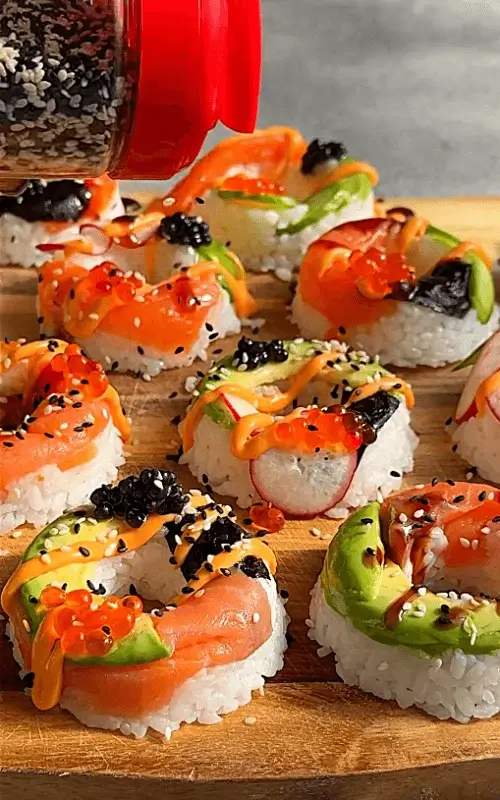
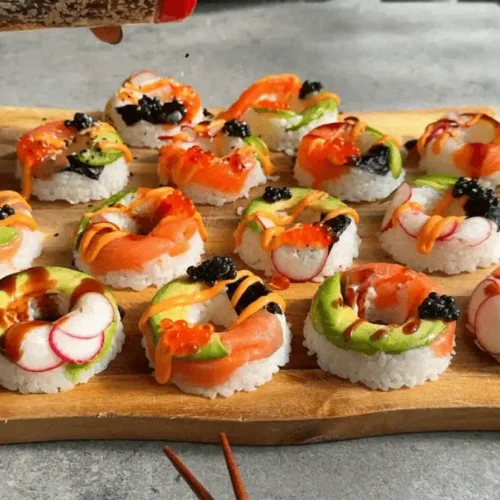
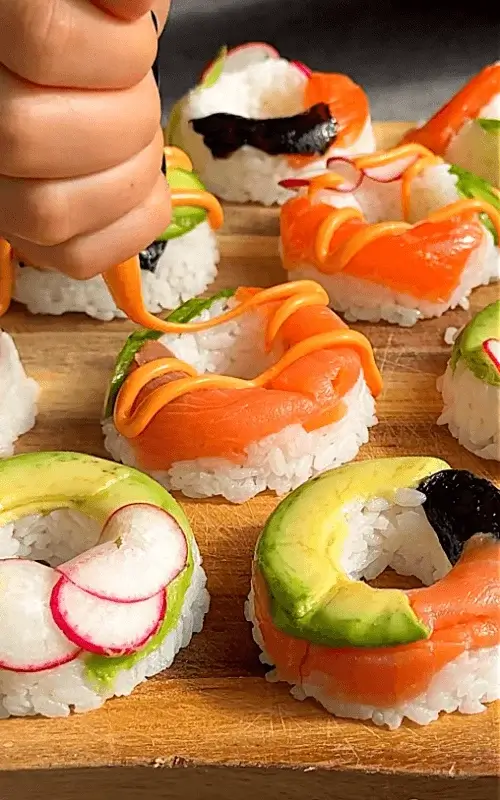
Salmon Avocado Sushi Donuts
Watch the Full Step-by-Step
- Donut pan
- Medium saucepan with lid
- Mixing bowls
- Kitchen scale
INGREDIENTS
- 1 cup sushi rice
- 2 cups boiling water
- ¼ cup rice vinegar
- 1 teaspoon salt
- 1 teaspoon sugar
- 3 radishes, thinly sliced
- 2 avocados, peeled and thinly sliced
- 1 medium cucumber, thinly sliced
- 9 ounces/250 grams sushi-grade salmon, thinly sliced
- 2 nori sheets, cut into small rectangles
- ½ cup spicy mayonnaise
- ¼ cup teriyaki sauce
- ¼ cup caviar or fish roe
- 2 tablespoons black and white sesame seeds

INSTRUCTIONS
- Rinse the rice under cold water until the water runs clear. Combine with boiling water in a saucepan, cover, and cook over low heat until tender and the water is absorbed, 15 to 20 minutes. Remove from heat and rest, covered, 10 minutes.
- Heat the rice vinegar, salt, and sugar until dissolved. Transfer the rice to a bowl, pour the seasoning over, and fold gently with a spatula. Let cool to room temperature.
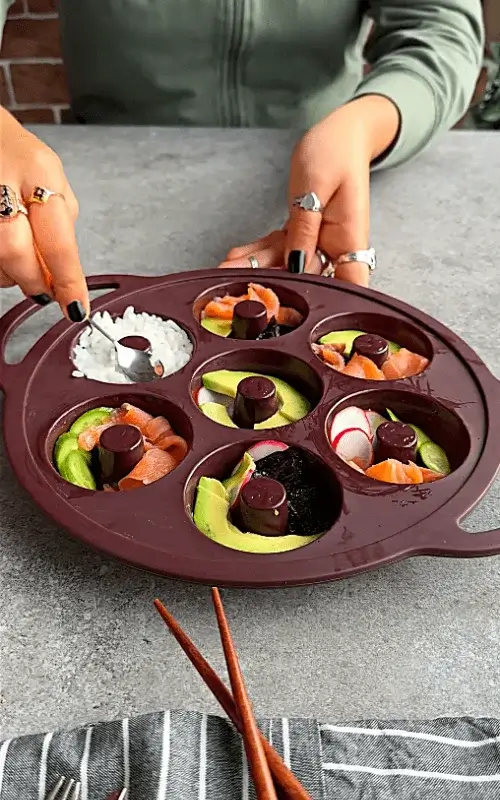
- Lightly oil a donut pan. Arrange radishes, avocado, cucumber, salmon, and nori snugly in each cavity. Pack in rice and press firmly with a damp spoon to compact. Invert and release carefully.
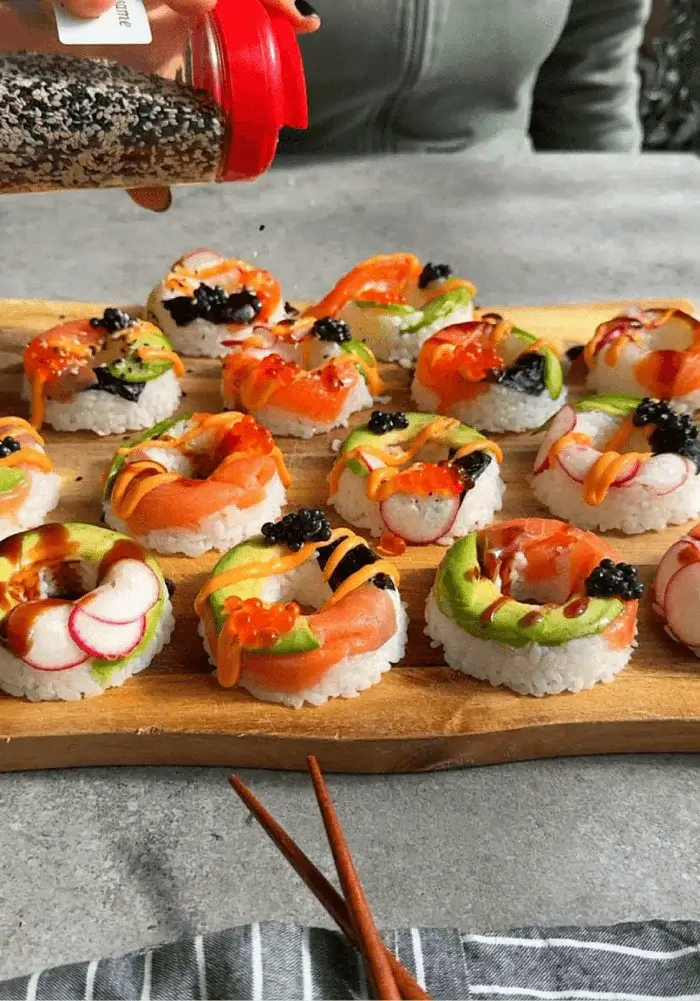
- Drizzle with spicy mayonnaise and teriyaki. Finish with caviar and sesame seeds. Serve immediately.
FAQ
How do you keep sushi donuts from falling apart when unmolding?
Proper rice preparation and packing technique are critical. Use short-grain sushi rice because its higher starch content creates the cohesive texture needed for molded shapes. After cooking, season the rice while warm and allow it to cool until just slightly warm or room temperature; rice that is too hot will be loose, while fully cold rice becomes rigid and difficult to compress.
When assembling sushi donuts, lightly oil the donut pan and layer ingredients tightly so there are no gaps. Pack the rice firmly using a damp spoon or lightly wet fingers, pressing especially around the outer edges. Let the filled mold rest for one to two minutes so the rice sets before inverting. A gentle shake and steady lift will release cleanly without cracking.
What type of rice works best for sushi donuts and why?
Short-grain Japanese rice is essential for sushi donuts because of its high amylopectin starch content, which becomes sticky when cooked and seasoned. This stickiness allows the rice to hold its shape when pressed into molds, unlike long-grain varieties such as jasmine or basmati that remain separate and fluffy. Proper rinsing before cooking removes excess surface starch that can make the texture gummy rather than cohesive.
After cooking, seasoning with rice vinegar, salt, and sugar balances flavor and slightly firms the grains as they cool. Medium-grain rice can work in a pinch, but authentic sushi rice provides the best structure and flavor balance for sushi donuts. The goal is a texture that is compact yet tender, allowing clean slicing and stable presentation while still tasting like traditional seasoned sushi rice.
How thin should vegetables and fish slices be?
For vegetables like cucumber, radish, and avocado, aim for slices roughly 1/8 inch thick, thin enough to bend slightly but thick enough to provide structure along the mold’s walls. Fish slices, such as salmon or tuna, should be about the same thickness, allowing them to layer without tearing or sliding off.
Consistent thickness ensures even packing, avoids gaps between rice and fillings, and creates clean layers visible when the donut is unmolded. Thicker slices may push rice outward, while slices that are too thin risk tearing or falling apart
Can sushi donuts be made ahead of time without affecting texture or safety?
Certain components can be prepared in advance. The rice can be cooked and seasoned a few hours ahead, then kept covered at room temperature to maintain softness. Refrigerating rice will harden it and compromise the final texture, so if you must chill it, allow time for it to come back to room temperature before molding.
Vegetables and toppings can be sliced and stored separately under refrigeration. If using raw fish, assemble sushi donuts no more than two to four hours before serving and keep them chilled until shortly before plating. Food safety is critical with seafood, so always use fresh sushi-grade fish from a trusted source.
What fillings or toppings can be substituted?
Firm vegetables like cucumber, radish, carrot, or mango provide structure without releasing excess liquid. Proteins such as cooked shrimp, crab salad, seared tuna, smoked salmon, or tofu work well because they maintain shape when pressed. Avoid overly wet fillings like heavily dressed salads or watery fruits, which can cause the rice to loosen.
Thin, even slices allow ingredients to layer tightly against the mold walls, helping the sushi donuts hold their form when unmolded. Crunch elements like sesame seeds or tempura flakes can be added after unmolding rather than inside the mold.
Do you need sushi-grade fish for sushi donuts?
Using sushi-grade fish is recommended for sushi donuts when serving raw seafood, as it has been handled and frozen according to standards that reduce parasite risk. Sushi-grade typically means the fish has been frozen to very low temperatures and stored carefully to preserve quality. Purchase from a reputable fishmonger who confirms suitability for raw consumption.
If sushi-grade fish is unavailable, safe alternatives include cooked shrimp, imitation crab, smoked salmon, canned tuna mixed lightly with mayonnaise, or seared fish with a fully cooked exterior. Vegetarian options like avocado, pickled vegetables, or tamago also work well.
How tightly should the rice be packed when forming sushi donuts?
Rice for sushi donuts should be packed firmly enough to hold shape but not so tightly that it becomes dense or compressed. After seasoning and cooling to room temperature, use a damp spoon or lightly wet hands to press the rice into the mold in layers. Start by pressing a thin base layer, add fillings along the edges, then pack more rice on top while applying even pressure around the ring.
The goal is a compact structure that releases cleanly when inverted. If the rice is too loose, the sushi donuts will crumble; if packed excessively, they become heavy and chewy. Press until the surface feels stable and level, then let the mold rest briefly before unmolding so the starches settle and bind properly.
What mold size works best for evenly shaped sushi donuts?
Standard donut pans with cavities about 3 to 3½ inches in diameter are ideal for sushi donuts because they provide enough space to layer fillings while maintaining structural integrity. Smaller molds can work for bite-size portions but require more careful packing and thinner ingredient slices. Silicone molds release more easily, while metal pans provide sharper edges and cleaner definition.
Lightly oiling any mold helps prevent sticking and ensures a smooth surface. Consistency in cavity size allows even rice distribution, which is important for uniform texture and presentation. Using a mold with defined edges also helps maintain the donut shape when turning out the sushi donuts.
Can sushi donuts be frozen or refrigerated after assembly?
Freezing sushi donuts is not recommended because the rice texture deteriorates when thawed, becoming dry and crumbly. Refrigeration is acceptable for short periods, but it will firm the rice and dull flavors. If you must refrigerate assembled sushi donuts, wrap them tightly and store for no more than a few hours, especially when using raw fish.
Before serving, allow them to sit at room temperature for about 15 minutes to soften slightly. A better approach is to prepare components ahead—cook and season the rice, slice vegetables, and portion toppings—then assemble shortly before serving.