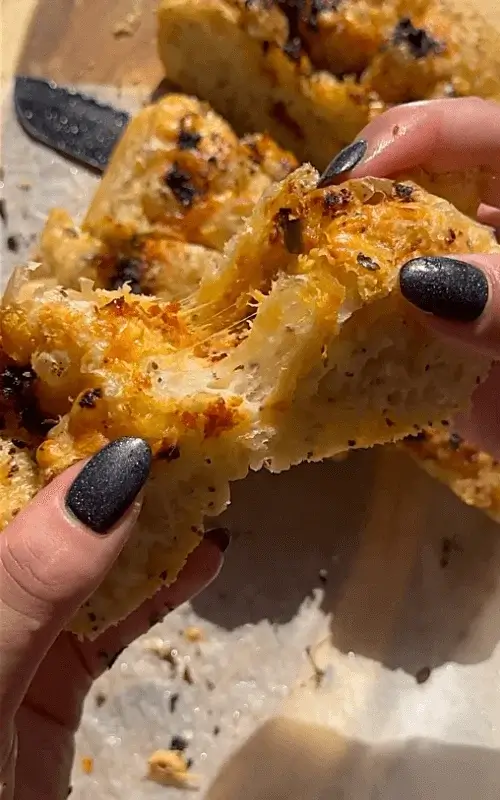
Sun Dried Tomato Focaccia with Cheddar and Thyme
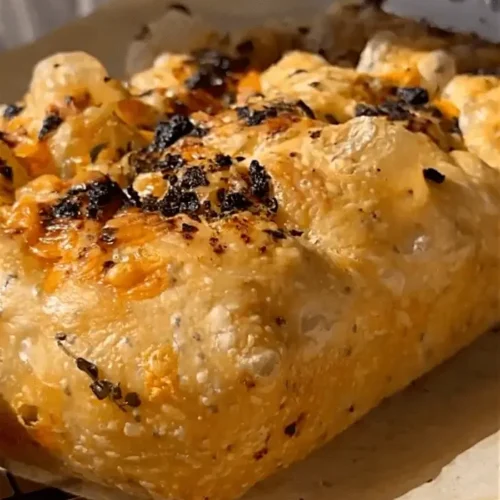
Watch the Full Step-by-Step
- Kitchen scale
- Airtight container
INGREDIENTS
Dough:
- 2 cups/250 grams bread or pizza flour
- 1 teaspoon chia seeds, optional
- ¾ cup/180 grams water
- ½ teaspoon/1.5 grams active dry yeast
- ¾ teaspoon fine sea salt
- 1 tablespoon olive oil
Topping:
- 1 heaping tablespoon sun-dried tomato spread
- ⅓ cup cheddar cheese, shredded
- 1 tablespoon fresh thyme leaves
- ¼ teaspoon coarse sea salt

INSTRUCTIONS
- Mix the water, yeast, and flour until no dry flour remains. Cover and rest for 30 minutes.
- Add the salt and olive oil; fold until incorporated. Cover and rest for 30 minutes.
- Fold the dough two to three more times at 30-minute intervals, until smooth and elastic.
- Transfer to a lightly oiled airtight container and refrigerate 12 to 72 hours.
- Line a loaf pan or small sheet pan with parchment. Transfer the dough, cover, and rest at room temperature for 30 minutes.
- Heat the oven to 430°F/220°C.
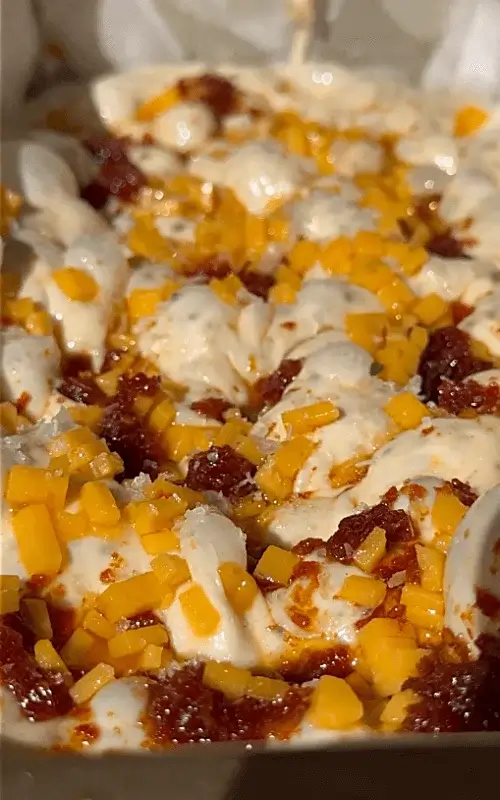
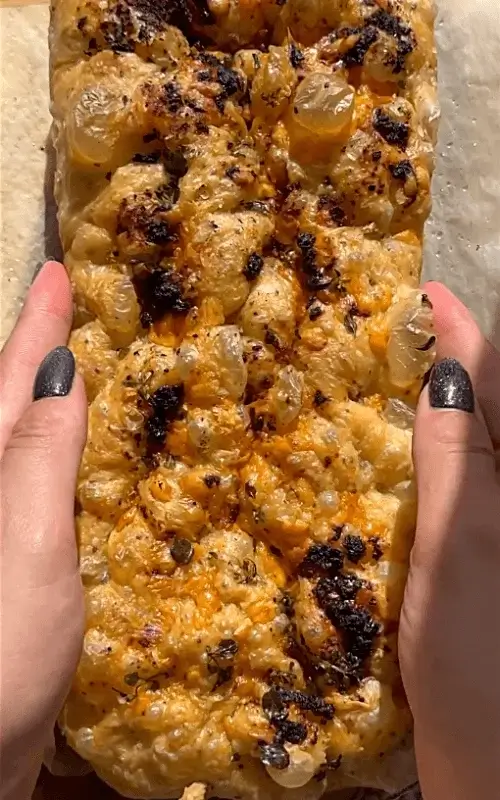
- Spread the sun-dried tomato mixture over the dough, scatter the cheddar and thyme, and gently dimple the surface. Finish with coarse salt.
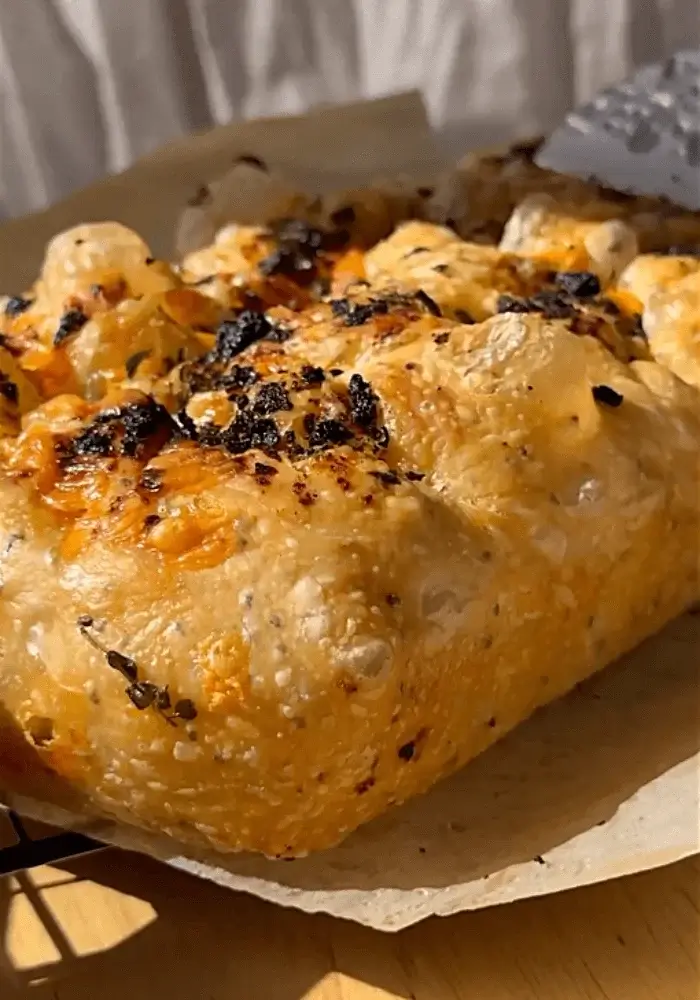
- Bake until deeply golden, 22 to 24 minutes. For a crisper base, remove from the pan and bake directly on parchment 3 to 4 minutes more. Cool slightly, then slice.
FAQ
How long should dough be cold fermented for best flavor and texture?
Cold fermentation is a defining factor in the final quality of sun dried tomato focaccia, influencing flavor complexity, crumb structure, and digestibility. A minimum of 12 hours in the refrigerator allows yeast to slowly break down starches into sugars, producing a more nuanced, lightly tangy flavor and improving browning during baking. At this stage, the dough will still be mild but noticeably more developed than same-day focaccia.
Extending fermentation to 24–48 hours deepens aroma, creates a more open crumb, and results in a softer interior with a crisp base. Fermenting up to 72 hours is possible if the dough is properly refrigerated and lightly oiled, though flavors will be more pronounced and slightly acidic. For most home cooks, 24 to 48 hours offers the best balance of flavor, structure, and handling without risking overproofing or excessive sourness in sun dried tomato focaccia.
Can I bake the sun dried tomato focaccia the same day?
Sun dried tomato focaccia can be baked the same day without cold fermentation, but the results will differ noticeably from a cold-fermented version. Without refrigeration, fermentation relies solely on room temperature activity, which produces faster rise but less flavor development. A same-day dough will taste milder and slightly sweeter, with fewer organic acids and less complexity. The crumb will be softer but more uniform, lacking the open, irregular structure associated with slow fermentation. If baking the same day, increasing yeast slightly and extending the initial bulk rise can help compensate, though it will not replicate the depth achieved through time. Browning may also be reduced because fewer sugars develop during fermentation.
What type of cheese works best in sun dried tomato focaccia?
Cheddar is particularly effective in sun dried tomato focaccia because it melts smoothly, adds richness, and provides a savory sharpness that balances the sweetness and acidity of sun-dried tomatoes. Medium or sharp cheddar works best, as very mild versions can disappear once baked, while extra-aged cheddar may release oil and brown too aggressively.
That said, substitutions are possible depending on flavor preference. Low-moisture mozzarella creates a milder, creamier result with less browning. Gruyère adds nuttiness and depth, while fontina melts evenly and complements herbs like thyme. Avoid very fresh cheeses such as fresh mozzarella or ricotta, as their high moisture content can make the dough soggy.
Why is folding used instead of kneading?
Folding is preferred over traditional kneading for sun dried tomato focaccia because the dough is high-hydration and designed to develop gluten gradually. Instead of aggressively working the dough, folding gently stretches and aligns gluten strands while preserving air pockets that form during fermentation. This technique results in a lighter, more open crumb and a tender interior. Folding also allows the dough to strengthen over time without becoming tight or elastic, which is critical for focaccia’s signature soft texture.
Each fold redistributes yeast activity and equalizes temperature throughout the dough, improving fermentation consistency. Additionally, folding is more forgiving for home bakers, requiring less physical effort and reducing the risk of overworking the dough. For sun dried tomato focaccia, this method ensures structure while maintaining the relaxed extensibility needed for dimpling and topping without tearing.
Can I freeze the dough for sun dried tomato focaccia after fermentation?
Yes, the dough can be frozen successfully, and doing so can be a practical way to manage fermentation timing without sacrificing quality. The ideal moment to freeze the dough is after the cold fermentation stage, once flavor and gluten structure have fully developed. At this point, lightly oil the dough, place it in an airtight container or freezer bag, and freeze for up to one month.
To use, transfer the dough to the refrigerator and allow it to thaw slowly for 12 to 24 hours. Once thawed, bring it to room temperature for at least 30 to 60 minutes before shaping. Freezing slightly slows yeast activity but does not destroy it, so the dough will still rise during baking. When handled gently, frozen and thawed sun dried tomato focaccia retains its soft crumb, airy structure, and balanced flavor.
How to prevent the bottom of sun dried tomato focaccia from baking too pale or soggy
A pale or soft bottom is a common issue with high-hydration breads like sun dried tomato focaccia, but it can be corrected with a few technical adjustments. First, ensure the oven is fully preheated for at least 30 minutes so the baking surface is properly hot. Baking on a lower rack encourages stronger bottom heat and better crust formation.
Using a metal pan rather than glass also improves heat transfer. If the focaccia is fully baked on top but still pale underneath, removing it from the pan and placing it directly on parchment on the oven rack for a few additional minutes allows moisture to evaporate and the crust to firm up. Adequate oil in the pan also helps create a crisp, golden base while preventing sticking in sun dried tomato focaccia.