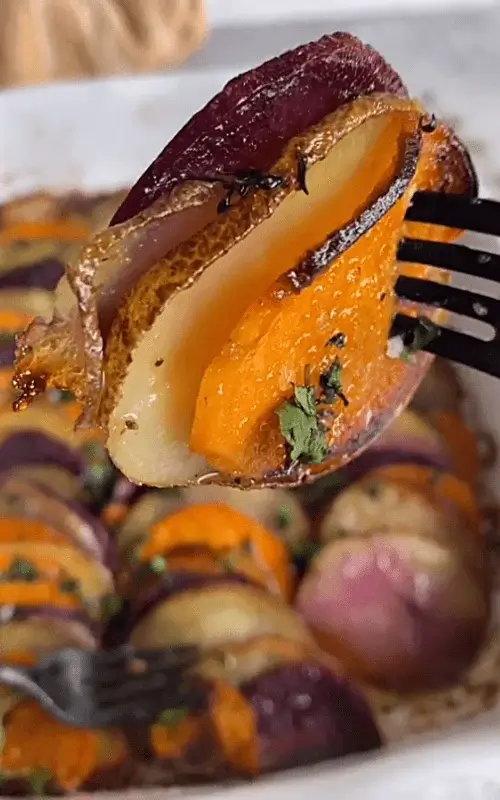
Crisp Sheet Pan Potatoes
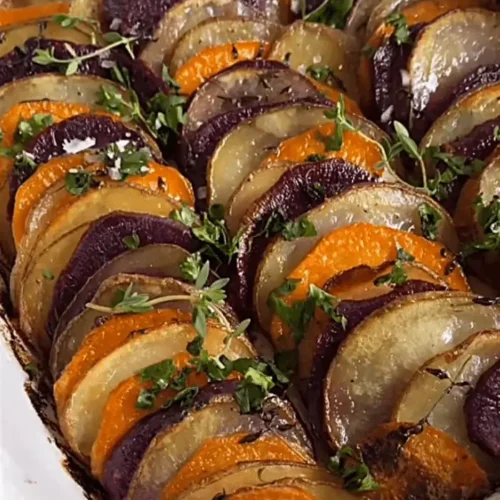
Watch the Full Step-by-Step
- Mandoline
- Large mixing bowl
INGREDIENTS
- 2 medium russet potatoes
- 1 sweet potato, peeled
- 1 purple sweet potato, peeled
- ¼ cup olive oil
- 4 ounces/110 grams butter, melted, vegan or regular
- 1½ teaspoons salt
- 1 teaspoon garlic powder
- ½ teaspoon black pepper
- 3 thyme sprigs
- 2 tablespoons parsley, chopped
- Flaky sea salt, for finishing
- Cooking spray

INSTRUCTIONS
- Heat the oven to 400°F/200°C.
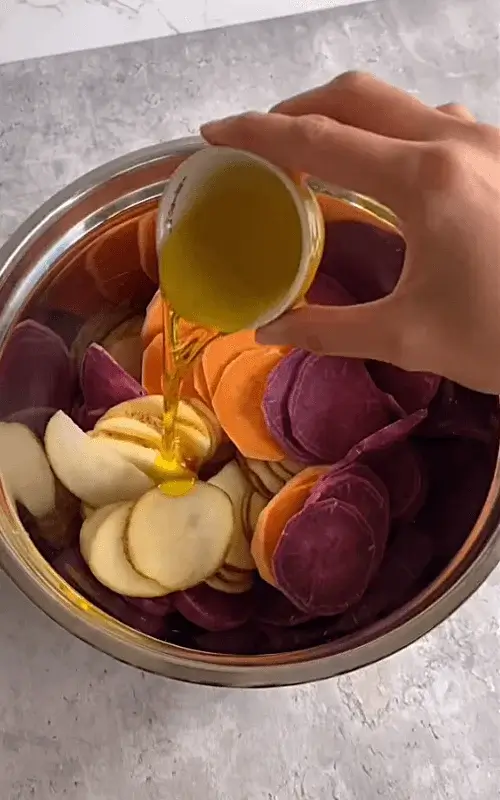
- Slice the potatoes thinly and evenly, using a mandoline or sharp knife, and place them in a large bowl. Season with olive oil, kosher salt, garlic powder, and black pepper, tossing until every slice is lightly coated.
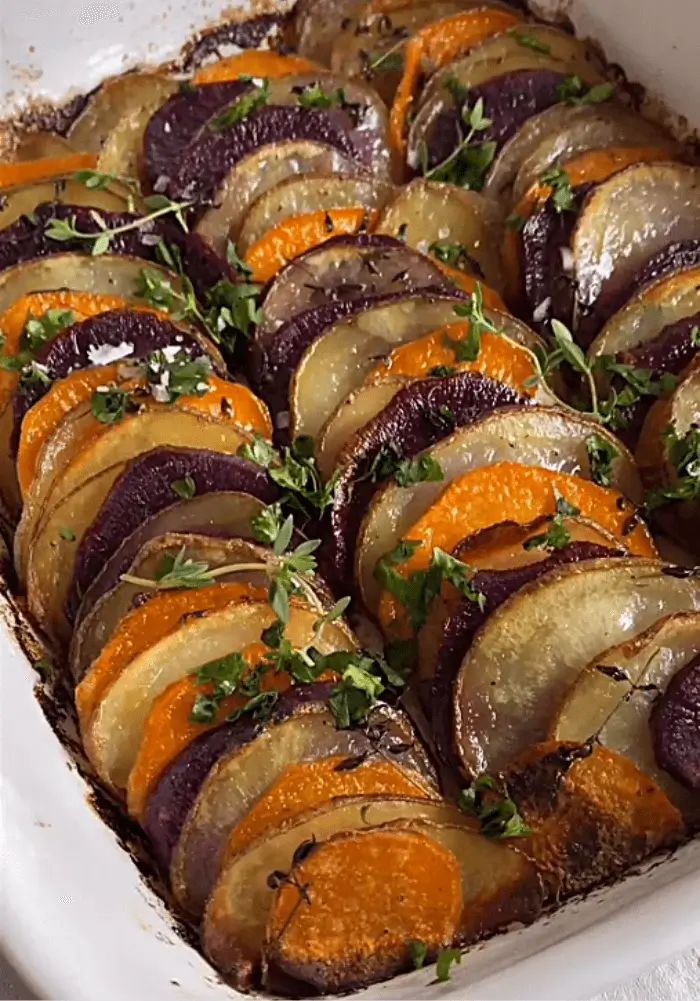
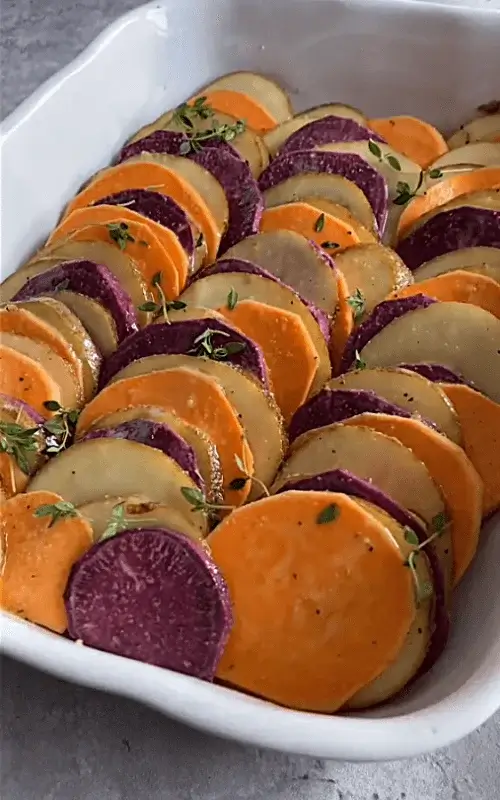
- Grease a rimmed sheet pan or shallow baking dish and arrange the potatoes in tight, overlapping rows, alternating varieties and filling the pan completely.
- Drizzle the melted butter over the potatoes and scatter the thyme across the surface.
- Cover the pan with foil and bake until the potatoes begin to soften, about 30 minutes.
- Uncover and return to the oven, baking until the top is well browned and crisp, 35 to 40 minutes more. Increase the oven temperature to 425°F/220°C during the final 10 minutes for deeper color.
- Season with flaky sea salt, parsley, and extra thyme, if desired. Let rest briefly before serving.
FAQ
What types of potatoes work best for sheet pan potatoes?
Use a mix of varieties enhances both flavor and texture. Russet potatoes are ideal for their starchy, fluffy interiors, which soften beautifully while roasting. Sweet potatoes add natural sweetness and a creamy texture that contrasts nicely with the russets, while purple sweet potatoes provide a vibrant color and slightly firmer bite.
Choosing fresh, firm potatoes without blemishes or soft spots is crucial. Waxy potatoes like red or fingerling can also be used but will result in a denser, less fluffy texture. If you prefer all russets or all sweet potatoes, the recipe still works, but the flavor complexity and presentation are enhanced by combining multiple varieties.
How should I slice the potatoes for even cooking?
Aim for slices that are about ⅛ to ¼ inch thick. A mandoline slicer produces uniform slices quickly and safely, though a sharp chef’s knife works as long as care is taken to keep slices consistent. Uneven slices can result in some potatoes overcooking and turning crispy or burnt while others remain underdone.
Layering the slices in overlapping rows helps them hold shape and promotes even roasting. Slightly thicker slices produce a tender interior with crisp edges, while thinner slices roast faster and develop more browning. For larger sheet pans, consider staggering slices or slightly overlapping them to maintain even heat distribution.
Can I make sheet pan potatoes ahead of time?
You can slice the potatoes, toss them with olive oil and seasonings, and store them covered in the refrigerator for up to 24 hours. Keep the butter separate until ready to bake. This prevents the potatoes from absorbing excess moisture or turning mushy. When ready to cook, assemble the layered pan with butter and herbs and follow the baking instructions.
Fully cooked sheet pan potatoes can also be refrigerated for 2 to 3 days and reheated in the oven at 375°F until warmed and crisp. Avoid microwaving, as this tends to make them soggy.
What herbs and seasonings complement sheet pan potatoes?
Fresh thyme, as used in the recipe, adds a subtle, earthy aroma that complements the natural sweetness of sweet potatoes and the starchiness of russets. Rosemary is another excellent option, providing a pine-like fragrance that pairs beautifully with roasted potatoes. Garlic powder, kosher salt, and black pepper enhance flavor without overpowering the potatoes’ natural taste.
Additional seasonings such as smoked paprika, onion powder, or a pinch of cayenne can add warmth and complexity. For a finishing touch, flaky sea salt sprinkled after baking boosts texture and visual appeal. Even a light drizzle of high-quality olive oil just before serving can intensify flavor.
How do I get sheet pan potatoes crispy on the edges but tender inside?
Slice potatoes evenly so all pieces cook at the same rate. Drizzling with olive oil and a little melted butter provides fat, which promotes browning and crispiness. Covering the pan for the first part of baking allows the interior to steam gently and soften.
Uncovering the pan for the final 30 to 40 minutes and raising the oven temperature toward the end ensures golden, crisp edges. Overcrowding the pan traps steam, so arrange the slices snugly but not tightly. Finally, sprinkling flaky sea salt immediately after baking enhances both flavor and the perception of crispiness.
What pan or dish is best for sheet pan potatoes?
A rimmed sheet pan or shallow baking dish works best for sheet pan potatoes because it allows heat to circulate evenly and prevents juices from pooling. Using a shallow dish helps the edges brown, while a rimmed pan contains any butter or oil that melts during roasting. Avoid using very deep pans, which can trap steam and prevent crisping.
For smaller kitchens, a 9-by-13-inch pan or an 11-by-7-inch rimmed sheet pan works well. Aluminum or stainless steel pans conduct heat efficiently, ensuring golden, crispy edges. Nonstick surfaces are optional but can help with cleanup. The right pan makes sheet pan potatoes easier to roast evenly, crisp, and visually appealing.
Is it necessary to use both butter and olive oil for sheet pan potatoes?
Using both butter and olive oil in sheet pan potatoes is recommended for flavor and texture balance. Olive oil provides even coating and promotes browning, while butter adds richness and a subtle nutty aroma when roasted. This combination enhances the natural sweetness of the potatoes and creates golden, crisp edges.
You can use only olive oil for a lighter or vegan option. Using only butter is possible but requires careful monitoring to avoid burning, as butter has a lower smoke point.
Is it necessary to cover the potatoes with foil while baking?
Covering the potatoes with foil during the first stage of baking is important for sheet pan potatoes because it allows the potatoes to steam slightly, cooking the interior without drying them out. The foil traps moisture and ensures that thicker slices become tender before the edges brown.
Removing the foil later encourages crisping and golden color, particularly at the edges, and skipping the foil entirely may result in uneven cooking, with some slices underdone while the tops over-brown.
How should I store leftover sheet pan potatoes?
Leftover sheet pan potatoes can be stored safely in an airtight container in the refrigerator for up to 3 days. Allow the potatoes to cool to room temperature before sealing to prevent condensation, which can make them soggy. When storing, place a paper towel at the bottom of the container to absorb excess moisture.
To reheat, spread the potatoes on a baking sheet and warm them in a 375°F oven until crispy again, about 10 to 15 minutes. Avoid microwaving if possible, as it tends to soften the edges and reduces the crispiness.
Can sheet pan potatoes be frozen?
Yes, but for best results, partially cook them first. Roast the potatoes until just tender, then cool completely. Place them in a single layer on a baking sheet to freeze individually, then transfer to an airtight container or freezer bag.
When ready to serve, bake directly from frozen at 400°F until heated through and crisp, which may take slightly longer than the original recipe. Avoid thawing before baking, as this can make the potatoes soggy.
Can I season sheet pan potatoes differently for a flavor twist?
Sheet pan potatoes are versatile and can handle a variety of seasoning profiles. For Mediterranean flavors, add smoked paprika, oregano, and a squeeze of lemon after baking. For a spicy kick, incorporate cayenne pepper, chili powder, or crushed red pepper flakes. Garlic powder and fresh herbs like rosemary, thyme, or parsley remain classic enhancements.
For a richer taste, drizzle a little balsamic vinegar or a splash of soy sauce just before baking. The key is to evenly coat the potatoes with the seasonings and fat to promote caramelization and crispiness.