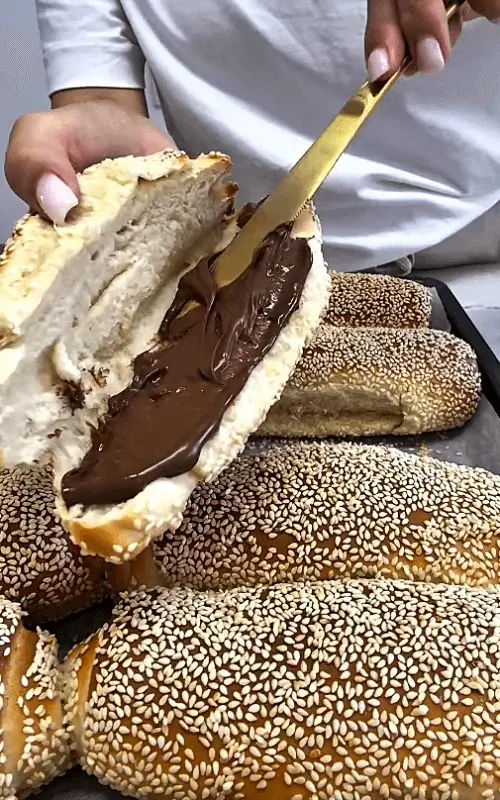
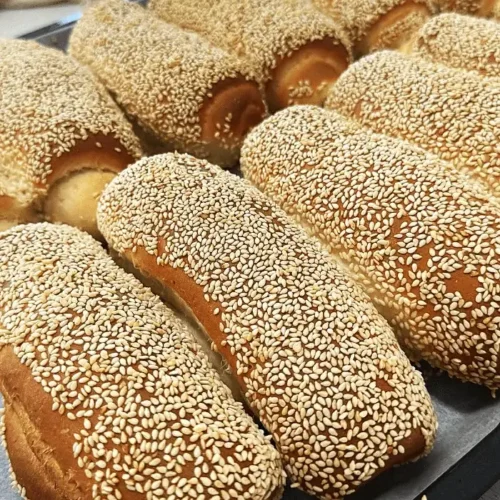
Soft Sesame Rolls (Eggless)
Watch the Full Step-by-Step
- Mixing bowls
- Kitchen scale
- Bench scraper
- Wire rack
INGREDIENTS
- 8 cups/1 kilogram bread flour
- ¼ cup/60 grams sugar
- 1¾ cups plus 1 tablespoon/420 milliliters water
- 1 tablespoon plus 1 teaspoon/15 grams instant yeast
- 2 tablespoons/30 milliliters olive oil
- 1 tablespoon/12 grams salt
- Sesame seeds

INSTRUCTIONS
- Mix the flour, sugar, water, yeast, olive oil, and salt in the bowl of a stand mixer until a soft, slightly sticky dough forms. Knead on medium speed until smooth and elastic, 8 to 10 minutes. Cover and let rise until doubled in volume, 60 to 75 minutes.
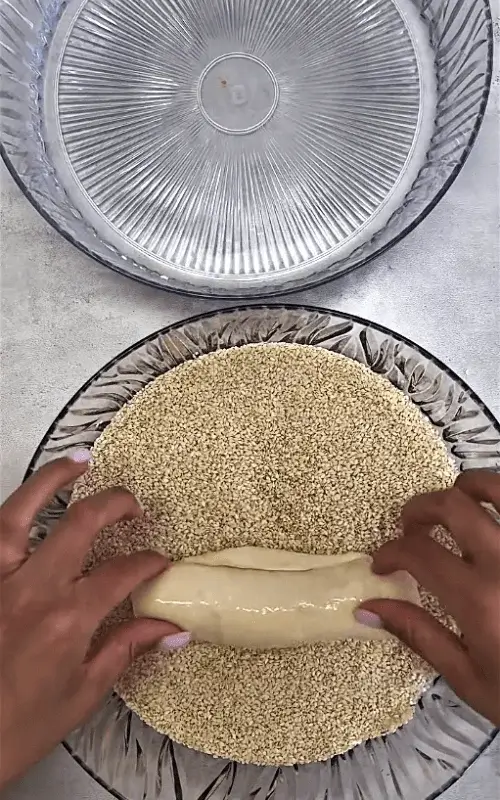
- Divide the dough into 12 equal pieces, about 100 to 120 grams each. Shape each piece into a ball, flatten slightly, and roll into a log. Dip the tops in water, then press into sesame seeds. Arrange on a parchment-lined baking sheet and let rise until puffy, about 30 minutes.
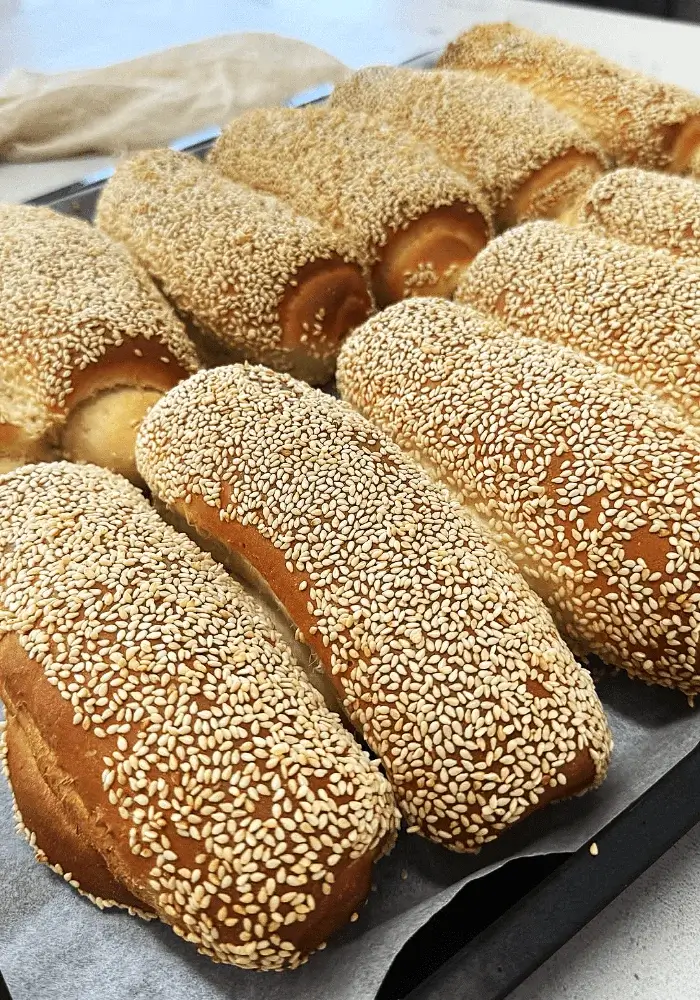
- Bake at 400°F/200°C until golden brown, 25 to 30 minutes. Cool on a wire rack before serving.
- Notes: Bread flour absorbs liquid differently depending on the brand. If the dough feels stiff, gradually add up to ½ cup/120 milliliters more water. If using all-purpose flour instead, add an additional ¾ cup/180 milliliters water. The dough should feel soft and slightly tacky after kneading.
FAQ
How can I make these rolls without bread flour?
Sesame rolls are usually made with bread flour because its higher protein content creates a stronger gluten structure, resulting in a chewy yet light crumb. If you only have all-purpose flour, you can still make sesame rolls successfully, but you’ll need to adjust the hydration. All-purpose flour absorbs less water than bread flour, so the recipe often requires adding about ¾ cup/180 milliliters more liquid to achieve the correct dough texture. Knead well until the dough feels soft and slightly sticky, as this ensures good structure and volume during baking.
Can I prepare the sesame rolls in advance?
You can refrigerate the shaped rolls after the second rise, covering them tightly with plastic wrap, and bake them the next day. Let them come to room temperature and finish rising before baking. Another option is to par-bake the sesame rolls for about 15 minutes, cool them, then freeze. When needed, bake directly from frozen for 10 to 12 minutes until golden brown. Fully baked sesame rolls also freeze well and can be reheated in the oven at 325°F/165°C for 8 to 10 minutes.
How can I keep the rolls soft after baking?
Allow them to cool completely on a wire rack, then store them in an airtight container or resealable bag at room temperature for up to three days. Placing a piece of parchment paper between layers helps prevent sticking. For longer storage, sesame rolls can be frozen for up to two months. Reheat in the oven to refresh their texture. Avoid refrigerating, as that accelerates staling. Another method is brushing the rolls lightly with olive oil before storing, which helps retain moisture and keeps the crust tender.
Can I make mini sesame rolls instead of full-size ones?
Instead of dividing the dough into 100–120 gram portions, cut it into 40–50 gram portions, which will yield about 24 mini rolls. Shaping and dipping them in sesame seeds is done the same way, but the baking time will be shorter, around 15 to 18 minutes at 400°F/200°C. The smaller size makes them excellent for sandwich bites or served alongside soups and salads. Always check for a golden crust to ensure they are baked through.

How do I make these sesame rolls extra fluffy?
Focus on proper kneading and rising. The dough should be kneaded until smooth, elastic, and slightly sticky, which allows the gluten to develop fully. A long first rise of at least 60 minutes until doubled in size gives the yeast time to build airiness. For even lighter results, some bakers use a preferment or sponge starter, which enhances both flavor and texture. Ensuring the dough is proofed adequately before baking is key, since under-proofed sesame rolls will turn out dense. Bake in a hot oven to lock in the airy structure.
Can I use whole wheat flour instead?
Whole wheat has more bran and fiber, which absorb liquid and weigh down the dough, leading to a denser roll. To balance this, it’s best to replace only 25–50% of the bread flour with whole wheat. Increasing the hydration slightly and kneading longer will help the dough stay supple. The resulting sesame rolls will have a nuttier taste and darker color while still maintaining a soft, chewy crumb if handled correctly.
Do sesame rolls need an egg wash?
Traditional sesame rolls are often dipped in water before coating with sesame seeds, which helps the seeds stick without needing an egg wash. However, using an egg wash gives the rolls a shinier, deeper golden crust and can help the sesame seeds adhere more firmly. If you want to keep the rolls vegan, water or plant-based milk works fine. If appearance matters and you want extra sheen, brushing with beaten egg before baking is recommended.