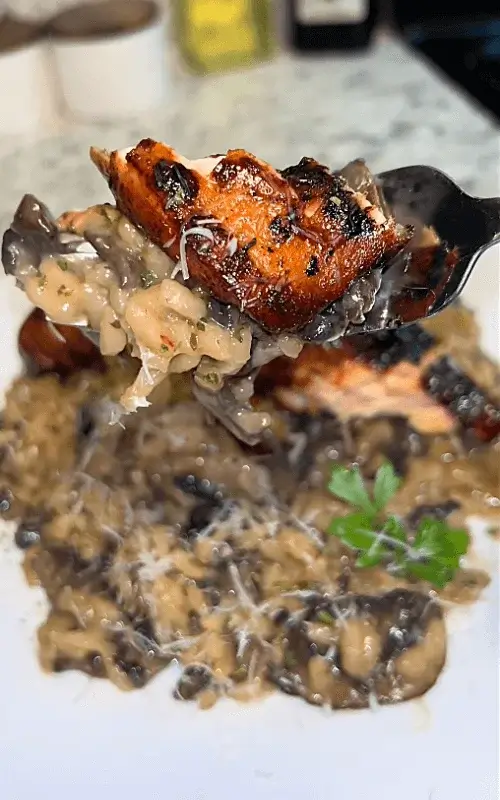
Soy-Glazed Salmon with Risotto and Mushrooms

Watch the Full Step-by-Step
- Medium pot
INGREDIENTS
- 12 ounces/340 grams salmon fillets
- 2 tablespoons brown sugar
- 2 tablespoons soy sauce
Risotto:
- 2 cups/200 grams mushrooms, sliced
- 1 medium shallot, finely chopped
- 2 garlic cloves, minced
- 1 cup arborio rice
- 4 cups chicken stock, warm
- 2 tablespoons unsalted butter
- ¼ cup fresh parsley, chopped
- ½ cup Parmesan cheese, freshly grated
- Salt and pepper, to taste

INSTRUCTIONS
- Heat a skillet over medium heat. Add mushrooms, season with salt and pepper, and sauté until lightly browned. Remove and set aside.
- Cook shallots and garlic in a medium pot until fragrant, about 1–2 minutes. Add rice and toast for 1–2 minutes.
- Gradually stir in warm chicken stock, one ladle at a time, letting the rice absorb the liquid before adding more, until creamy and tender, about 18–20 minutes.
- Stir in butter, parsley, and Parmesan. Fold in the sautéed mushrooms and season to taste.
- Mix brown sugar and soy sauce. Coat salmon fillets and let sit 5–10 minutes.
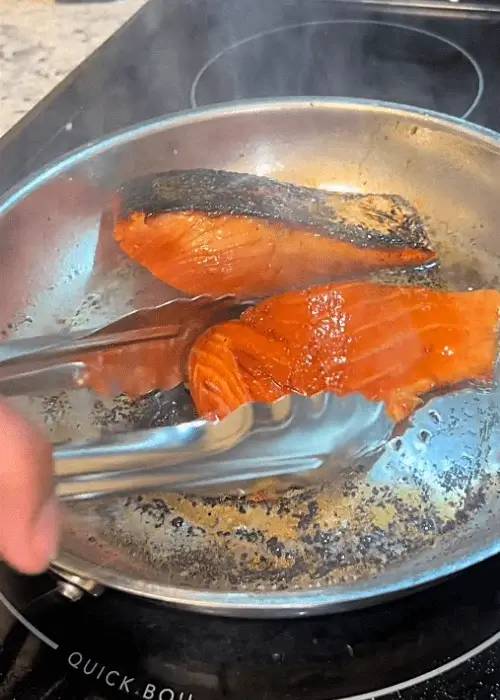
- Heat a skillet over medium heat. Place salmon skin-side down and sear until caramelized and cooked through.
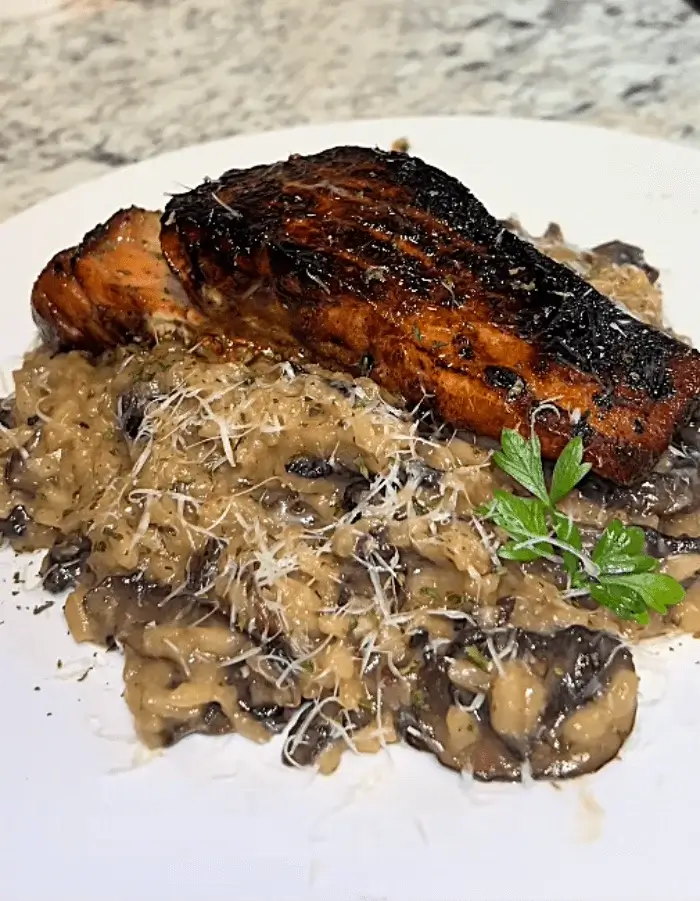
- Serve the risotto topped with salmon and a sprinkle of Parmesan.
FAQ
What type of rice is best for making risotto?
Arborio rice is the preferred choice due to its high starch content, which is crucial for achieving the signature creamy texture. Arborio grains are short, plump, and absorb liquids slowly, allowing the rice to release starch gradually as it cooks, creating a rich and velvety consistency without becoming mushy.
Other Italian varieties like Carnaroli or Vialone Nano can also be used, as they provide similar creaminess and maintain firmness in the center of each grain. Avoid long-grain rice like basmati or jasmine, as they do not release enough starch to develop the creamy texture risotto requires.
What wine pairs well with salmon with risotto?
A light to medium-bodied white wine pairs beautifully with salmon with risotto, complementing the creamy texture and savory flavors without overpowering the dish. Sauvignon Blanc, Pinot Grigio, or Chardonnay with moderate oak are excellent options, as their acidity cuts through the richness of the risotto while enhancing the caramelized sweetness of the salmon.
Sparkling wines, such as Prosecco or Champagne, can also be served for a celebratory touch, providing bright bubbles that refresh the palate. Avoid overly tannic reds, which can clash with the creamy risotto and delicate fish. Serve chilled for the best balance and pairing experience.
What stock works best for salmon with risotto?
Light chicken stock is the most reliable choice because it adds body and savoriness while remaining neutral enough to support the salmon’s flavor. Vegetable stock can also work, especially if it is homemade and low in sodium, though it may produce a slightly lighter result. Fish stock is generally avoided for this preparation because it can intensify seafood flavors too much and create an overly briny finish.
The stock should always be warm before adding it to the rice, since cold liquid lowers the cooking temperature and disrupts starch release. Using low-sodium stock allows better control over seasoning, especially because Parmesan and soy sauce contribute salt. Consistent ladling and steady heat ensure the rice absorbs the stock gradually and develops a cohesive texture.

How do you prevent risotto from becoming mushy?
The rice should remain tender with a slight bite at the center, known as al dente. Begin by toasting the arborio rice for one to two minutes so the grains develop structure and absorb liquid evenly. Add warm stock in small increments and stir frequently but not aggressively, allowing the rice to release starch gradually.
Excessive liquid added all at once can overhydrate the grains and cause them to break down. Taste the risotto near the end of cooking to monitor texture and stop adding liquid once the rice is creamy but still structured. Finishing with butter and cheese off the heat helps bind the sauce without overcooking the grains
How do you know when risotto is fully cooked?
Properly cooked risotto should be creamy and fluid but not soupy, with grains that are tender on the outside and slightly firm in the center. This texture is achieved through gradual stock absorption and steady stirring. Begin tasting the rice around the 16-minute mark and continue checking every minute or two. The grains should not feel chalky or crunchy, but they also should not be completely soft.
When you drag a spoon through the risotto, it should slowly flow back into place rather than hold a stiff shape. Removing the pot from heat just before the rice reaches perfect doneness allows residual heat to finish cooking the grains. Adding butter and Parmesan at the end helps emulsify the sauce and finalize texture without overcooking.
What type of mushrooms work best in salmon with risotto?
Mushroom selection affects both flavor depth and texture in salmon with risotto. Cremini mushrooms are a reliable choice because they offer a balanced earthiness without overpowering the dish. White button mushrooms work as a milder alternative, while shiitake mushrooms add a deeper umami note that pairs well with soy-marinated salmon. For a more complex flavor profile, a blend of mushrooms can be used, combining cremini for body and shiitake for intensity.
Mushrooms should be sliced evenly and sautéed over medium heat until their moisture evaporates and they develop light browning. This step concentrates flavor and prevents excess water from diluting the risotto. Adding them back at the end keeps their texture intact and ensures they remain distinct rather than blending into the rice.
Can you use frozen salmon for salmon with risotto?
Thaw the salmon slowly in the refrigerator overnight to preserve texture and prevent moisture loss. Once thawed, pat the fillets dry thoroughly to remove excess water, which can interfere with searing and prevent caramelization. Apply the brown sugar and soy sauce marinade after thawing so it adheres evenly.
When cooking, use medium heat and allow the salmon to sear undisturbed to form a crust. Frozen salmon may release slightly more moisture than fresh, so avoid overcrowding the pan and cook in batches if necessary.
How do you keep the salmon moist?
Begin with salmon fillets of even thickness to ensure uniform cooking. Pat the fish dry before marinating so the glaze adheres properly and the surface sears instead of steaming. Use medium heat rather than high heat, since the brown sugar in the marinade can burn quickly. Place the salmon skin-side down first and allow it to cook undisturbed for several minutes to develop a crust and render fat. Flip only once and cook until the center is just opaque. Removing the salmon slightly before it reaches full doneness allows carryover heat to finish cooking while resting.
Is Parmesan necessary for salmon with risotto?
The cheese adds salt, umami, and richness while helping emulsify the risotto into a cohesive sauce. Finely grated Parmesan melts quickly and integrates smoothly into the rice, enhancing creaminess without creating heaviness. If a lighter profile is desired, the quantity can be reduced slightly while maintaining enough to support texture.
Alternatives such as Pecorino Romano can be used for a sharper finish, though they should be added cautiously due to higher salt content. For a dairy-free version, the risotto can be finished with olive oil and nutritional yeast, though the result will be less creamy.
What pan is best for cooking salmon with risotto?
A wide, heavy-bottomed pot or Dutch oven works best for risotto because it distributes heat evenly and allows for steady stirring without hot spots. This helps the rice cook uniformly and prevents sticking. For the salmon, a stainless steel or cast-iron skillet is ideal, as both retain heat well and produce a strong sear. Nonstick pans can be used, but they may not develop the same caramelized crust.
The skillet should be preheated before adding the salmon to ensure immediate contact and proper browning. Avoid overcrowding the pan, since too many fillets at once will lower the temperature and cause steaming.