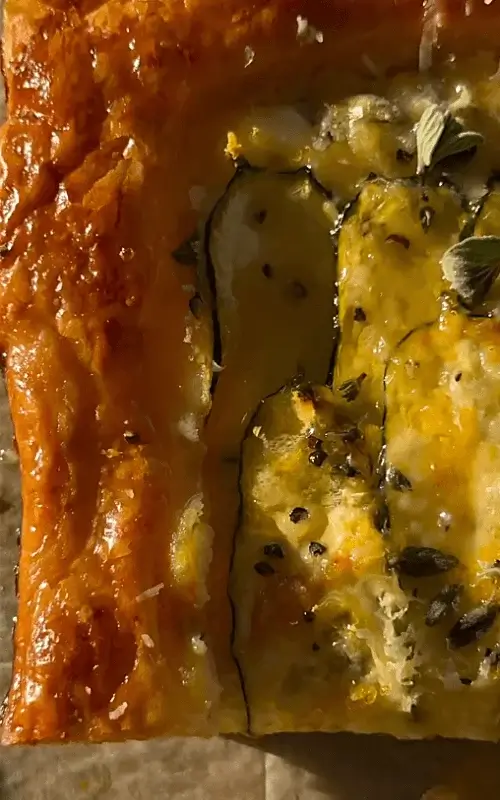
Ricotta Cheese Pastry with Zucchini
Watch the Full Step-by-Step
- Medium saucepan
- Mixing bowls
- Cheesecloth
- Mandoline
- Pastry brush
- Microplane
INGREDIENTS
Ricotta:
- 4 cups/960 grams whole milk
- 1 cup/240 grams heavy cream
- 4 tablespoons vinegar
- 1 teaspoon salt
Pastry:
- 9 ounces/255 grams all-butter puff pastry
- 2 tablespoons olive oil
- 3 medium zucchinis, thinly sliced
- ½ cup ricotta cheese
- 1 tablespoon lemon zest
- 2 tablespoons lemon juice
- 2 tablespoons fresh oregano leaves
- 1 teaspoon salt
- ½ teaspoon black pepper
- ½ cup Parmesan cheese, finely grated
- 2 tablespoons honey
Egg wash:
- 1 large egg
- 1 teaspoon date syrup

INSTRUCTIONS
- Bring milk and cream to a simmer in a medium saucepan. Stir in vinegar and salt; cook over medium heat until curds form, 3 to 5 minutes. Remove from heat and let stand for 10 minutes. Transfer to a cheesecloth-lined strainer set over a bowl and drain, refrigerated, up to 5 hours.
- Heat oven to 350°F/180°C. Line a sheet pan with parchment.
- In a bowl, stir ricotta with lemon zest, lemon juice, oregano, salt, and pepper.
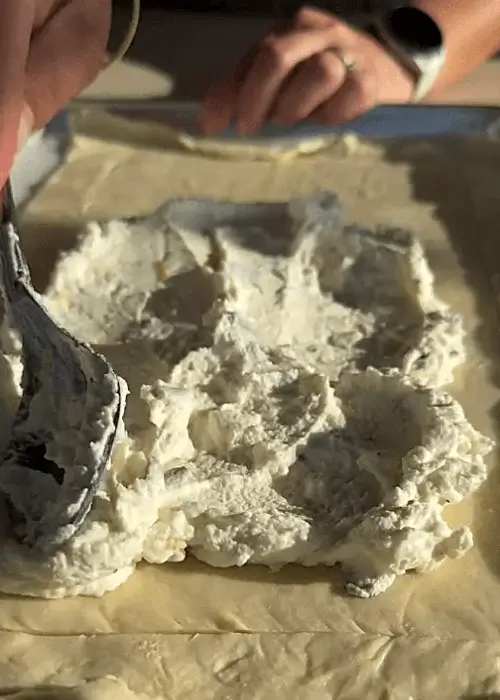
- Roll puff pastry lightly to even thickness and place on the prepared pan. Score a ½-inch border around edges without cutting through. Spread ricotta mixture within the border.
- Toss zucchini with olive oil, salt, and pepper; arrange over ricotta. Drizzle with honey and sprinkle with Parmesan.
- Whisk egg with date syrup and brush border. Bake until the pastry is puffed and deeply golden, 25 to 30 minutes.
- Finish with more Parmesan, lemon zest, oregano, and a light drizzle of honey. Serve warm.
FAQ
What is the best type of puff pastry to use for this recipe?
For a ricotta cheese pastry, all-butter puff pastry is the optimal choice because of its superior flavor and lamination quality. Butter-based dough creates distinct, flaky layers as the water content in butter turns to steam during baking, lifting the pastry. Avoid margarine-based or shortening-based puff pastry, as they tend to produce a flatter, less flavorful result with a waxy mouthfeel.
If using frozen puff pastry, thaw it slowly in the refrigerator to maintain structure and prevent cracking when rolled. The dough should remain cold but pliable when handled, typically around 40–50°F. Keeping it chilled before baking ensures proper rise and prevents butter leakage, which can lead to greasy results. Lightly rolling the pastry evens thickness without compressing layers, which is critical for consistent puff and structure.
Can I freeze a ricotta cheese pastry before or after baking?
A ricotta cheese pastry can be frozen either before or after baking, but each method has different implications for texture and quality. Freezing before baking generally yields better results because the puff pastry retains its lamination and rises more effectively when baked from frozen. Assemble the pastry fully, place it on a sheet pan to freeze until solid, then wrap tightly to prevent freezer burn.
Bake directly from frozen, adding 5 to 10 minutes to the baking time. If freezing after baking, allow the pastry to cool completely before wrapping. Reheat from frozen in a 350°F/180°C oven until heated through and crisp, about 15 to 20 minutes. Avoid thawing at room temperature, as this can introduce excess moisture and compromise the structure of the pastry.
How do you prevent the ricotta cheese pastry from becoming soggy?
Ricotta naturally contains a high percentage of whey, so draining it thoroughly is essential, especially if homemade. Even store-bought ricotta benefits from additional draining in a fine-mesh sieve or cheesecloth for at least 30 minutes.
Zucchini is another high-moisture ingredient; slicing it thinly and lightly salting it before use helps draw out excess water. Pat it dry thoroughly before layering. Scoring a border in the puff pastry helps contain the filling and promotes even rise. Baking at the correct temperature, 350°F/180°C, ensures the pastry cooks through while allowing moisture to evaporate.
Can I use store-bought ricotta instead?
Store-bought ricotta can be used effectively in a ricotta cheese pastry, but it requires slight adjustments to match the texture of homemade ricotta. Commercial ricotta is often wetter and less structured, so draining it is critical. Place it in a cheesecloth-lined sieve and refrigerate for at least 30 minutes to 1 hour to remove excess liquid. This step concentrates the flavor and improves spreadability.
Whole milk ricotta is preferable over part-skim, as the higher fat content provides better creaminess and mouthfeel. If the ricotta still feels loose, it can be briefly mixed to smooth out curds without overworking it. Avoid whipped ricotta products, as they introduce air and instability, which can collapse during baking.
Why is scoring the puff pastry important in a ricotta cheese pastry?
Scoring the puff pastry creates a defined border that controls how the dough rises during baking, which is essential for the structure of a ricotta cheese pastry. By lightly cutting a ½-inch border without penetrating fully through the dough, you allow the outer edges to puff more dramatically than the center. This forms a natural frame that contains the filling and prevents it from spilling over.
Without scoring, the pastry may rise unevenly, causing distortion or spreading of the ricotta layer. Proper scoring also improves visual presentation, giving the pastry a clean, professional appearance. It ensures that steam generated within the dough lifts the edges while the center remains stable enough to support the toppings.
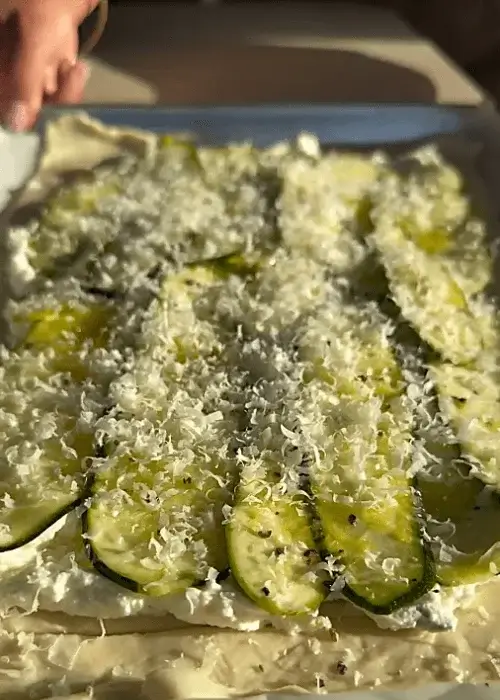
What is the best way to slice zucchini for a ricotta cheese pastry?
For a ricotta cheese pastry, zucchini should be sliced very thinly to ensure even cooking and proper integration with the filling. A mandoline slicer is the most efficient tool, producing uniform slices approximately 1/16 to 1/8 inch thick. Consistent thickness is important because uneven slices cook at different rates, leading to a mix of undercooked and overly soft textures.
A vegetable peeler can also be used to create long ribbons, which provide a more delicate presentation and faster cooking time. After slicing, lightly salt the zucchini and let it sit for 10–15 minutes to draw out moisture, then pat dry thoroughly. This step not only prevents excess water release during baking but also concentrates the zucchini’s flavor.
Why add honey to a savory ricotta cheese pastry?
Honey in a ricotta cheese pastry serves as a balancing agent, enhancing both savory and acidic components without making the dish overtly sweet. The mild sweetness contrasts with the saltiness of Parmesan and the brightness of lemon, creating a layered flavor profile.
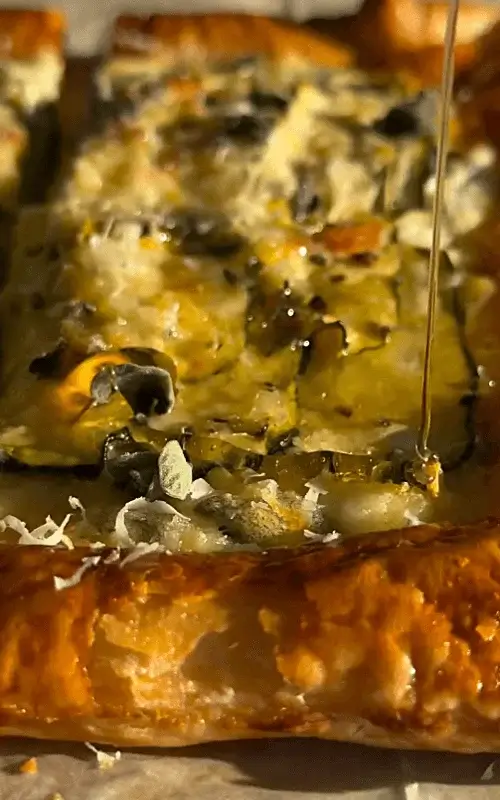
When baked, honey slightly caramelizes on the surface, contributing subtle depth and a glossy finish. It also pairs naturally with dairy, as the fat in ricotta carries and amplifies its floral notes. The key is controlled application; a light drizzle before and after baking is sufficient to achieve balance. Overuse can overpower the dish and mask the herbaceous elements like oregano.
How should a ricotta cheese pastry be stored and reheated?
A ricotta cheese pastry should be stored in the refrigerator once cooled, ideally in an airtight container or loosely wrapped to prevent condensation buildup. It can be kept for up to 3 days without significant loss of quality.
For reheating, avoid the microwave, as it softens the pastry and creates a soggy texture. Instead, use a conventional oven at 350°F/180°C for 8 to 12 minutes, placing the pastry directly on a rack or a preheated sheet pan to restore crispness. If reheating a slice, a toaster oven works well for maintaining structure. Allowing the pastry to come to room temperature before reheating promotes even warming.
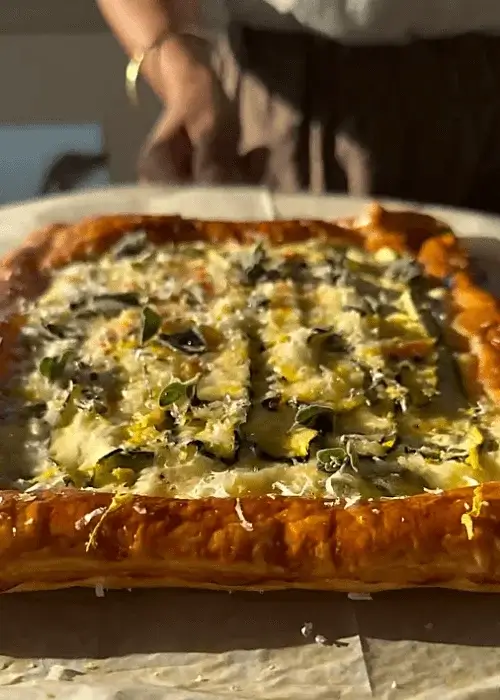
How do you know when a ricotta cheese pastry is fully baked?
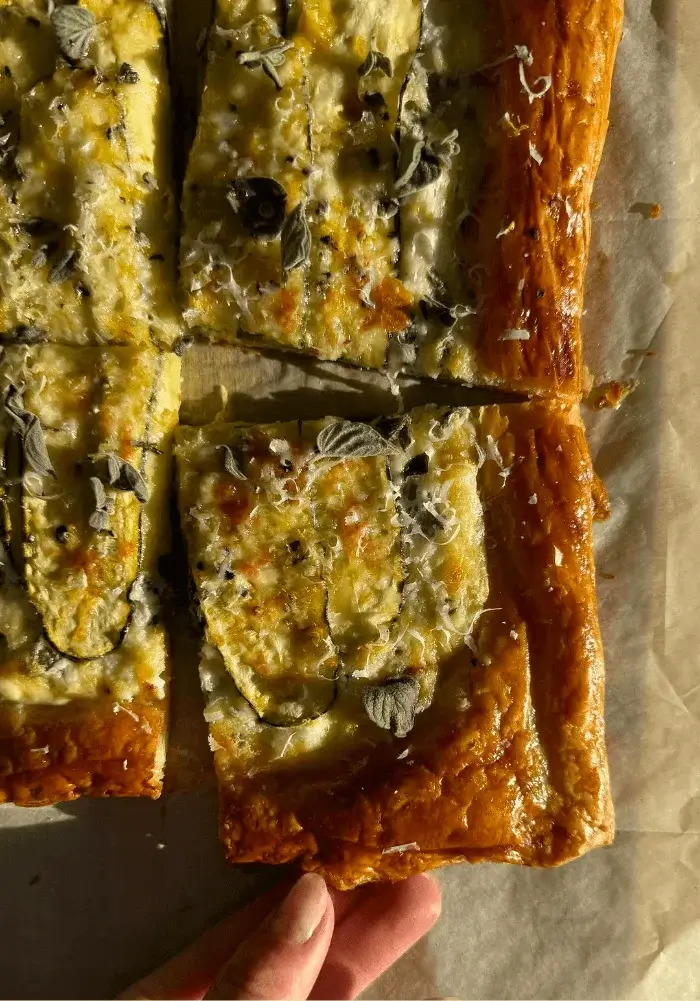
Visually, the puff pastry should be deeply golden with well-defined layers and no pale or doughy sections, especially along the bottom. The edges should be crisp and firm to the touch, not soft or greasy. The underside can be checked by gently lifting with a spatula; it should be evenly browned.
The filling should appear set, not wet or glossy from excess moisture. Zucchini should be tender but not mushy, with lightly caramelized edges. Baking time typically falls between 25 and 30 minutes at 350°F/180°C, but ovens vary, so rotating the pan halfway through ensures even heat distribution and consistent results.
Can I substitute other vegetables in a ricotta cheese pastry?
Vegetables like asparagus, mushrooms, caramelized onions, or thinly sliced eggplant work well. Mushrooms should be pre-cooked to release their water content before layering, while eggplant benefits from salting and draining similarly to zucchini. Leafy greens such as spinach must be fully wilted and squeezed dry to prevent excess moisture.
Root vegetables like thinly sliced potatoes or sweet potatoes can also be used but may require par-cooking to ensure tenderness. The key principle is controlling water release during baking so the pastry remains crisp. Maintaining thin, even cuts and proper seasoning ensures the vegetables integrate smoothly with the ricotta base.
What cheeses pair well with ricotta cheese pastry besides Parmesan?
Pecorino Romano offers a saltier, more assertive alternative with similar texture. Fontina or Gruyère can be added for meltability and a nutty depth, creating a richer interior. Fresh cheeses like goat cheese introduce tanginess and a softer texture, balancing the mild ricotta.
Mozzarella can be used sparingly for stretch, though it should be low-moisture to avoid excess liquid. Combining cheeses is often effective, pairing a hard aged cheese for structure with a softer cheese for creaminess. The goal is to enhance complexity without overwhelming the delicate ricotta, keeping the overall balance clean and cohesive.
What is Borekitas?
The name “borekitas” is thought to come from the Turkish word “börek”, which means “pie”. Borekas are believed to have originated in Asia, and were brought to the Middle East by Sephardic Jews during the 15th century. They quickly became popular throughout the region, and today there are many different variations of borekas, each with its own unique flavor.