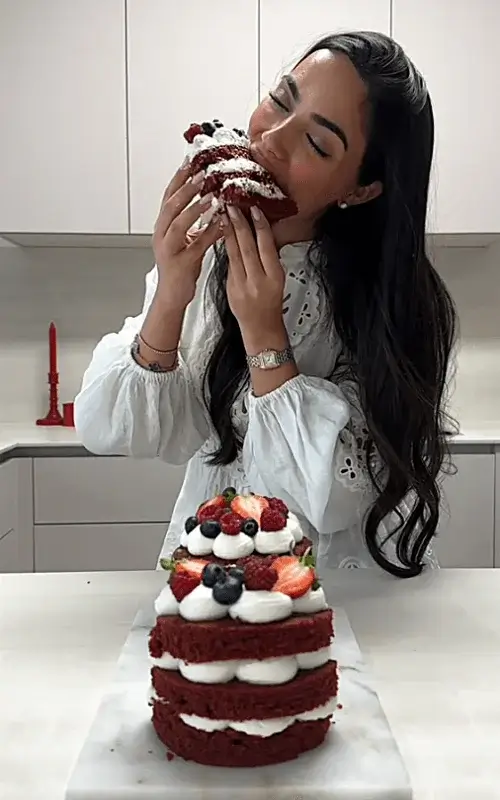
Red Velvet Layer Cake for Two
Watch the Full Step-by-Step
- Mixing bowls
- 12-by-16-inch rimmed baking sheet
- Round cutter
- Kitchen scale
INGREDIENTS
- 1 cup each fresh raspberries, sliced strawberries, and blueberries
Batter:
- 1½ cups/300 grams granulated sugar
- 5.3 ounces/150 grams unsalted butter, melted
- ½ cup/100 grams oil
- 3 large eggs plus 1 egg yolk/200 grams
- 2 tablespoons cocoa powder
- ½ teaspoon natural red gel food coloring
- 2 cups/280 grams all-purpose flour
- ¾ cup/180 grams milk
- 1½ teaspoons/6 grams baking powder
- ½ teaspoon/3 grams baking soda
- ½ teaspoon salt
Cream:
- 2 cups/480 grams heavy whipping cream
- 7 ounces/200 grams cream cheese, softened
- ⅓ cup granulated sugar
- ½ teaspoon vanilla extract

INSTRUCTIONS
- Heat oven to 350°F/175°C convection. Line a 12-by-16-inch rimmed baking sheet with parchment.
- Whisk sugar, melted butter, and oil until glossy. Add eggs and yolk and whisk until fully emulsified. Whisk in cocoa powder and red food coloring until evenly colored. Add flour, baking powder, baking soda, salt, and milk and stir just until smooth and combined.
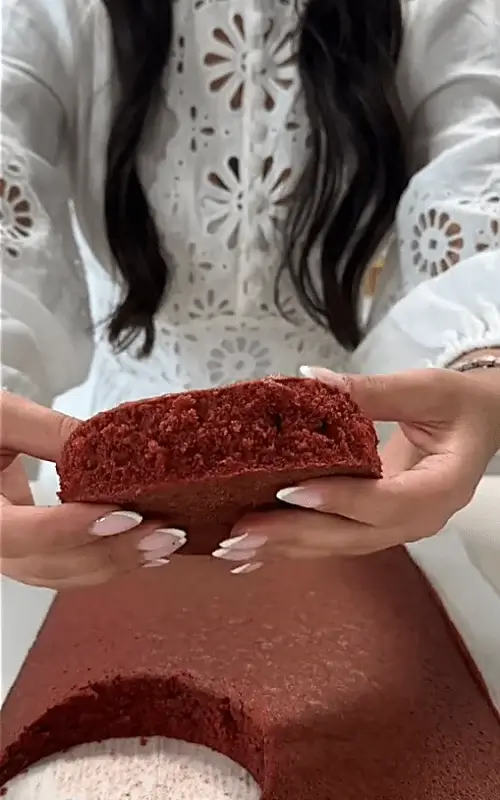
- Spread batter evenly in the prepared pan. Bake until the cake springs back lightly and a toothpick inserted shows moist crumbs, 25 to 30 minutes. Cool completely in the pan on a rack.
- Cut 6 rounds with a cutter. For each cake, stack 3 layers.
- In a stand mixer fitted with the whisk, beat heavy cream, cream cheese, sugar, and vanilla on medium speed until thick, smooth, and stable, 3 to 4 minutes.
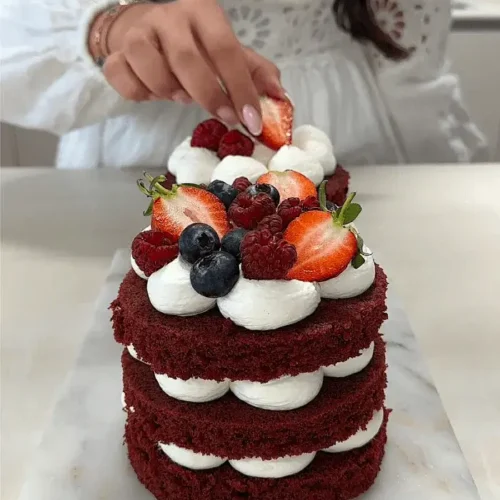
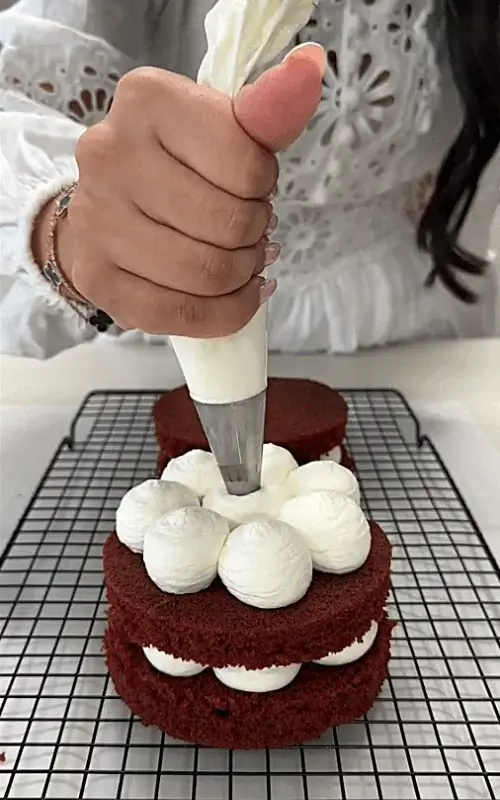
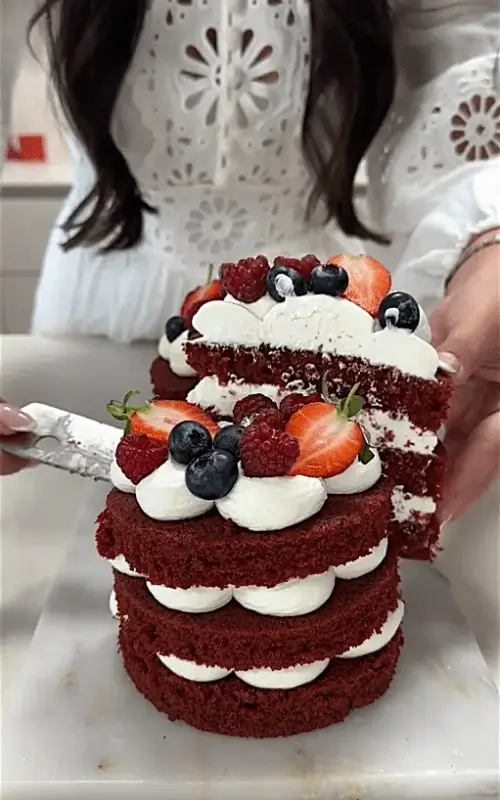
- Place one cake layer on a plate. Spread or pipe an even layer of cream. Repeat with remaining layers to form 3 cake layers and 3 cream layers. Finish with berries. Chill 20 minutes before serving for clean slices.
FAQ
What makes a red velvet cake different from other chocolate cakes?
A red velvet layer cake is unique because it combines a subtle chocolate flavor with a tender, moist crumb and a signature red color. Unlike typical chocolate cakes, red velvet uses a small amount of cocoa powder rather than large quantities, giving it a mild chocolate taste. The red color traditionally comes from food coloring or natural alternatives, which enhances its visual appeal.
Buttermilk or milk mixed with vinegar is often added to react with baking soda, creating a slightly tangy, tender texture. The crumb is soft and fine, making it ideal for layered cakes. The frosting, typically cream cheese or whipped cream-based, complements the delicate flavor without overpowering it.
How do I keep my red velvet layer cake moist and tender?
Maintaining moisture in a red velvet layer cake relies on the right balance of fat, liquid, and gentle mixing. Using melted butter and oil, along with eggs, helps create a tender and moist crumb. Avoid overmixing the batter after adding flour; overmixing can develop gluten, leading to a dense cake. Baking at the correct temperature, around 350°F/175°C, ensures the cake cooks evenly without drying out.
Once baked, allow it to cool completely before cutting to preserve moisture and structure. Wrapping layers in plastic wrap or storing in an airtight container prevents them from drying. Additionally, spreading frosting between layers acts as a moisture barrier, keeping the cake soft for days. Even small adjustments, such as using full-fat dairy or room temperature eggs, can significantly improve the cake’s tenderness.
What is the best way to assemble a red velvet layer cake?
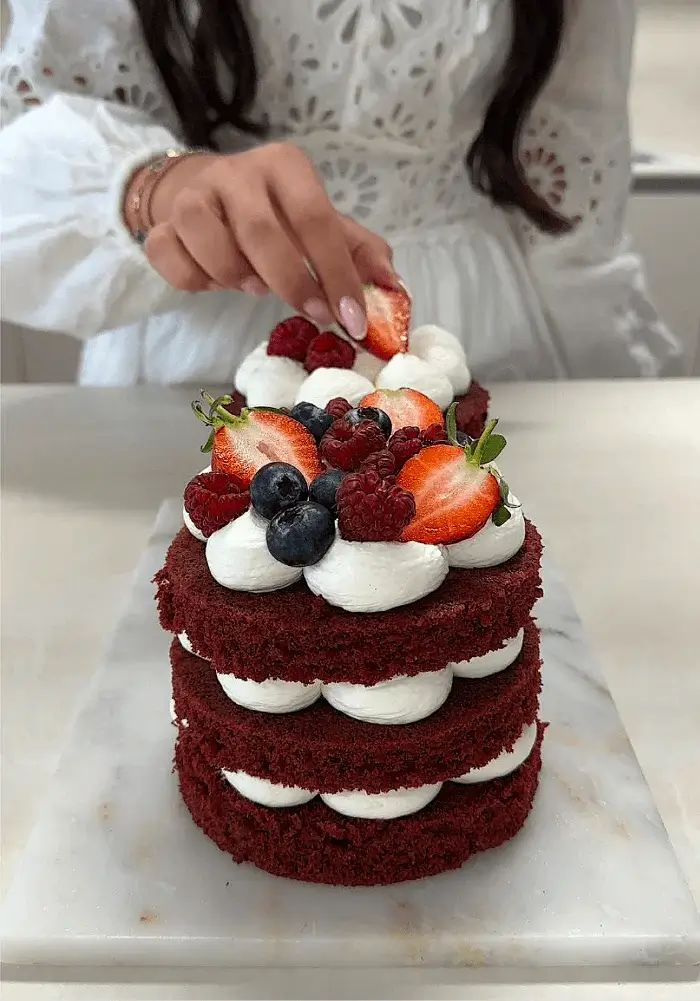
It starts with evenly cut layers, ensuring each layer is level and uniform in height. Using a round cutter or leveling the tops with a serrated knife ensures the final cake stacks neatly. Spread or pipe an even layer of cream or cream cheese frosting between layers to act as both flavor and structural support.
Alternate layers carefully, pressing gently to avoid squishing the cake, and ensure the frosting reaches the edges to prevent gaps. The top layer should have slightly more frosting for a smooth, polished finish. After assembly, chill the cake briefly to help the layers set and make slicing easier. Garnishing with fresh berries or decorations adds visual appeal and a textural contrast.
Can I make a red velvet layer cake ahead of time?
Cake layers can be baked and cooled, then wrapped tightly in plastic wrap and refrigerated for up to two days or frozen for several weeks. Cream cheese or whipped cream frosting should be added just before serving if stored frozen, or after refrigerating if layers are prepped ahead.
Once assembled, the cake should be refrigerated to keep the cream stable. This approach allows you to prepare components in advance, reducing stress on the day of serving. Chilling the cake also helps the layers set, making clean slicing easier.
What frosting works best for a red velvet layer cake?
The traditional frosting for a red velvet layer cake is cream cheese-based, which balances the cake’s subtle sweetness with a slightly tangy, rich flavor. Whipped cream cheese frosting adds lightness and stability, while classic cream cheese buttercream gives a richer, creamier texture. Some recipes use whipped heavy cream alone for a lighter, softer option.
The frosting should be smooth, thick enough to hold layers, but not so stiff that it tears the cake when slicing. Flavorings like vanilla extract enhance depth without overpowering the delicate cocoa and red velvet flavor. Spreading or piping the frosting evenly ensures structural support and an aesthetically pleasing finish.
Why does my red velvet layer cake turn out dense?
Density in a red velvet layer cake often comes from overmixing the batter, incorrect ratios of flour to liquid, or inaccurate measurement of leavening agents. Overmixing activates gluten, making the crumb tough. Too much flour or too little liquid prevents the cake from rising properly.
Baking soda and baking powder must be measured accurately; these leaveners react with acidic components like buttermilk or vinegar to aerate the batter. Additionally, eggs at room temperature help trap air for a lighter crumb. Proper folding and gentle mixing of dry and wet ingredients ensure the red velvet layer cake maintains its signature soft, tender, and airy texture.
Why does my red velvet layer cake sometimes turn out dry?
A dry red velvet layer cake usually results from overbaking, overmixing, or incorrect ratios of fat and liquid. Using both butter and oil, as in classic recipes, helps retain moisture, while eggs contribute structure and richness. Overmixing after adding flour can develop gluten, producing a tougher, drier crumb.
Baking at too high a temperature can also dry out the cake, so it’s important to preheat the oven to 350°F/175°C and check for doneness early by inserting a toothpick: it should come out with moist crumbs, not fully dry. Additionally, ensuring ingredients like milk and eggs are at room temperature allows for better emulsification and moisture retention. Finally, adding frosting between layers seals in moisture, keeping the red velvet layer cake tender and soft for several days.
What is the best way to store leftovers?
Leftover red velvet layer cake should be stored in an airtight container or tightly wrapped with plastic wrap to prevent the cream from absorbing odors and the layers from drying. It can be refrigerated for up to 3–4 days while maintaining flavor and texture.
If freezing, wrap each layer individually and store the frosting separately; thaw and assemble before serving to preserve the cake’s moisture and cream consistency. Avoid leaving it uncovered, as exposure to air quickly dries out the cake.
Why does my red velvet layer cake sometimes crack on top?
Cracks on the top of a red velvet layer cake usually happen due to oven temperature, overmixing, or batter distribution. If the oven is too hot, the edges set and rise faster than the center, causing the top to crack. Overmixing the batter after adding flour can create too much gluten, making the cake less elastic and more prone to splitting.
Uneven spreading of batter in the pan can also lead to uneven rising. To avoid cracks, bake at 350°F/175°C and check for doneness with a toothpick. Room temperature ingredients help even mixing and consistent rise. Proper leveling of the batter ensures the red velvet layer cake remains smooth and visually appealing, preventing cracks while maintaining a soft, tender crumb.
How do I achieve the perfect red color in a red velvet layer cake?
The signature red color in a red velvet layer cake comes from food coloring combined with the natural reaction between cocoa powder and acidic ingredients like buttermilk or vinegar. Using natural or gel-based red coloring ensures vibrant, consistent results without affecting the cake’s texture.
It’s important to measure the coloring carefully; too little results in a muted shade, while too much can leave an off taste. Stir the color thoroughly into the batter for an even tone throughout. For subtle variations, a small amount of beet juice or powder can replace synthetic coloring, adding natural red tones while keeping the batter moist.
Can I substitute ingredients in a red velvet layer cake?
Vegetable oil or neutral-flavored oil can replace butter for a lighter crumb, though butter adds richness. Buttermilk is traditional, but you can mix milk with lemon juice or vinegar to create a similar acidity. Cream cheese frosting is preferred, but whipped heavy cream with a touch of powdered sugar can serve as a lighter alternative.
Flour should remain all-purpose for structure, while natural cocoa powder is essential for the delicate chocolate undertone. Avoid skipping the acidic component, as it interacts with baking soda to produce a tender crumb and helps the red color. Substitutions must preserve moisture and texture to keep the red velvet layer cake authentic.
Can I make a vegan or dairy-free red velvet layer cake?
Replace butter with a neutral oil and use plant-based milk mixed with vinegar to mimic buttermilk. Eggs can be substituted with flax eggs, chia eggs, or commercial egg replacers to provide structure. For the cream, dairy-free oat-based cream cheese or coconut cream whipped with powdered sugar can achieve a similar texture and flavor.
Ensure the cocoa powder is vegan and that any food coloring is free from animal-derived ingredients. Baking times may need slight adjustments depending on ingredient density.