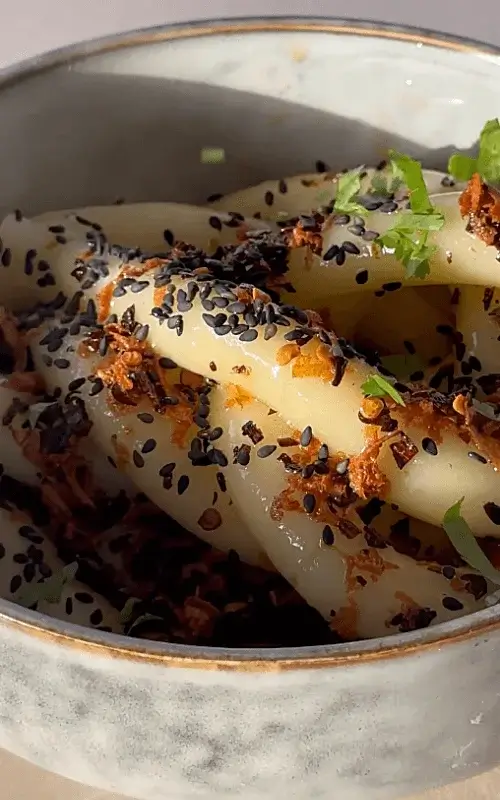
Potato Noodles with Garlic-Chile Oil
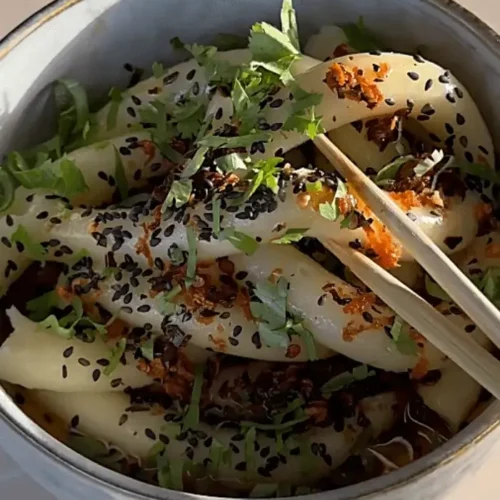
Watch the Full Step-by-Step
- Rimmed baking sheet
- Large mixing bowl
- Potato masher
- Large pot
- Colander
- Small saucepan
- Chef's knife
INGREDIENTS
- 4-5 large russet potatoes
- 2 cups cornstarch or potato starch
- 1-2 tablespoons cold water, as needed
- 1½ teaspoons salt
- 1 teaspoon ground black pepper
- Coarse salt, for baking
Sauce:
- 2 garlic cloves, finely minced
- 1 teaspoon red pepper flakes
- 2 tablespoons oil
- ¼ cup fresh cilantro, finely chopped
- 3 green onions, thinly sliced lengthwise
- ½ teaspoon toasted black or white sesame seeds
- 1 teaspoon lime or lemon zest, finely grated (optional)

INSTRUCTIONS
- Preheat the oven to 425°F/220°C.
- Spread a thin layer of coarse salt on a rimmed baking sheet and arrange the potatoes on top. Bake for 40 minutes. Turn and continue baking until the skins are firm and the centers completely tender, about 40 minutes more.
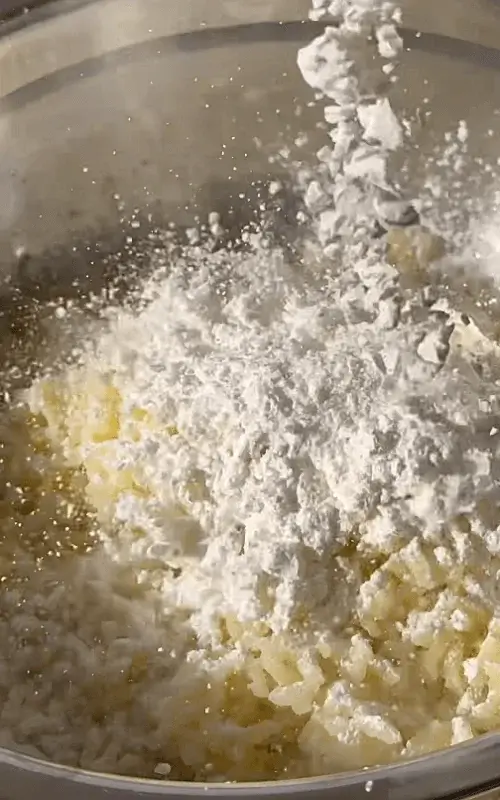
- While still hot, split the potatoes and scoop the flesh into a large bowl. Mash until smooth. Add the cornstarch, salt and pepper. Mix, adding cold water a little at a time, until a soft, smooth dough forms that is supple but not sticky. Cover and let rest for 10 minutes.
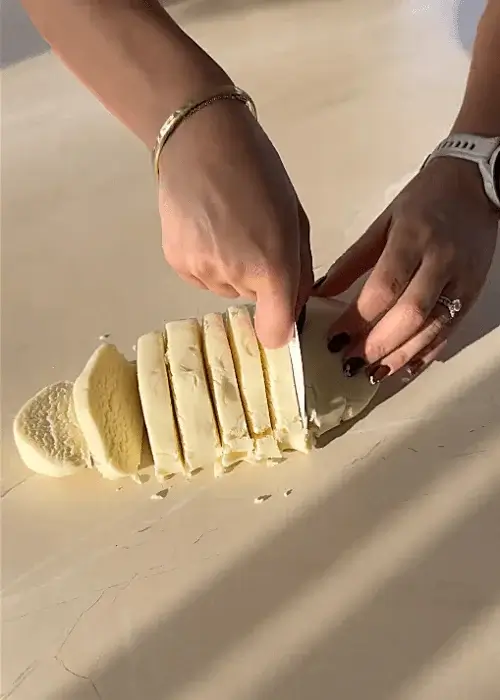
- Bring a large pot of well-salted water to a boil. Shape the dough into a wide log, cut into 1-inch/2 cm pieces, then roll each piece into a long noodle.
- Boil the noodles until they rise to the surface and are tender yet chewy, 4 to 5 minutes. Drain and transfer to a serving bowl.
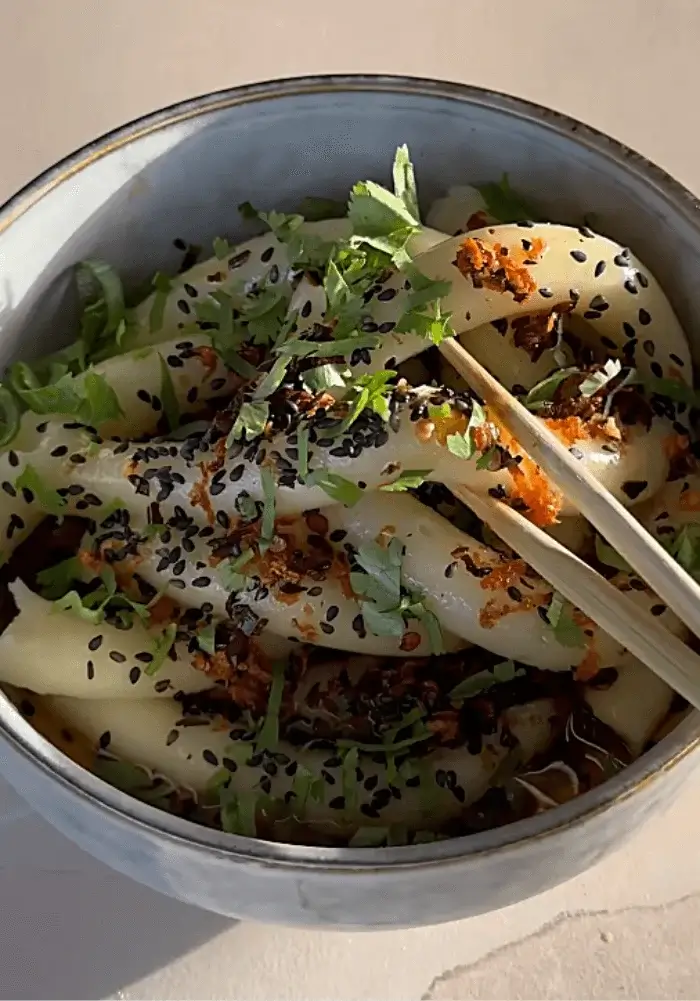
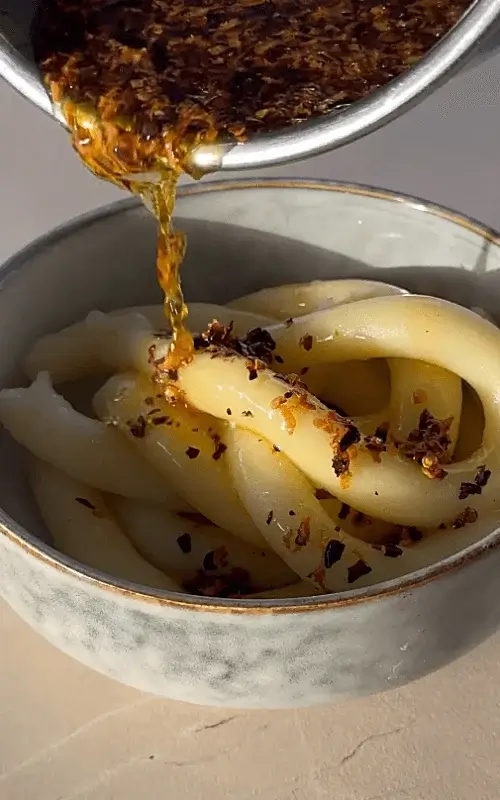
- In a small saucepan over medium heat, warm the oil. Add the garlic and red pepper flakes and cook just until fragrant, 20 to 30 seconds; do not let the garlic brown. Spoon several tablespoons of the hot oil over the noodles. Add the sesame seeds, cilantro and green onions, and toss gently to combine. Finish with citrus zest, if using, and serve immediately.
FAQ
What type of potatoes work best for making the noodles?
Russet potatoes are the ideal choice due to their high starch content and low moisture. The starch helps the noodles hold together when mashed and mixed with cornstarch, creating a smooth, pliable dough that won’t be sticky.
Waxy potatoes like red or Yukon gold have more moisture and less starch, which can result in noodles that are gummy or fall apart during cooking. Selecting large, uniform russets ensures even baking and consistent texture. Baking the potatoes instead of boiling also concentrates their flavor and reduces excess water, producing a richer taste and a sturdier dough for potato noodles.
How can I ensure my noodles do not stick together during cooking?
It is crucial to maintain the right dough consistency and cooking technique. The dough should be soft and supple but not sticky; adding water gradually helps achieve this balance. When boiling, use a large pot with plenty of salted water, giving the noodles room to move freely.
Stir gently during the first minute of boiling to prevent clumping. Once the noodles rise to the surface, they are cooked; draining them immediately into a serving bowl or colander prevents residual moisture from causing sticking. Tossing the noodles lightly with oil or sauce also maintains separation.
What is the best way to shape potato noodles evenly?
Roll the dough into ropes of consistent thickness, about half an inch in diameter, and cut into equal lengths of three to four inches. Consistency in thickness ensures even cooking, so no noodle becomes overcooked or undercooked.
If the dough is too soft, slightly dusting with cornstarch helps maintain shape. Uneven noodles can still taste good, but for a professional presentation or social media-ready dish, consistent sizing improves both appearance and cooking reliability.
How long should the noodles be boiled to achieve the perfect texture?
Potato noodles should be boiled until they are tender yet still slightly chewy, usually about four to five minutes. The exact timing depends on the thickness of the noodles and the starch content of the potatoes. Overcooking can make them mushy, while undercooking leaves a dense, raw center.
Using a large pot of boiling salted water allows the noodles to cook evenly and prevents sticking. Once the noodles rise to the surface, it is a sign they are nearly done. Draining immediately and tossing with oil or sauce ensures the noodles retain their texture and do not clump together.
What flavors pair well with potato noodles?
Potato noodles have a mild, starchy base that pairs beautifully with bold and aromatic flavors. Garlic, red pepper flakes, and toasted sesame seeds provide warmth and depth, while fresh herbs like cilantro and green onions add brightness and freshness. Citrus zest can add a subtle tang that cuts through the starchiness.
Light oils or chili-infused oils help coat the noodles without weighing them down, preserving the chewy texture. Potato noodles also work well with rich sauces like cream-based, tomato-based, or soy-ginger dressings, allowing the starch to absorb flavor while maintaining structure.
Can potato noodles be made ahead of time?
Potato noodles can be made ahead of time but require careful storage to maintain texture. After shaping, the noodles can be lightly dusted with cornstarch and kept in an airtight container in the refrigerator for up to 24 hours.
When ready to cook, bring a large pot of salted water to a boil and cook directly from chilled; the cooking time may increase slightly. Avoid storing cooked noodles without oil or sauce, as they tend to stick and clump together. For the freshest taste and ideal chewy texture, it is recommended to prepare and cook potato noodles on the same day whenever possible.
How do I store leftover potato noodles and sauce?
Leftovers should be cooled to room temperature before storing to prevent condensation, which can make them soggy. Place the noodles in an airtight container and lightly toss with a small amount of oil to maintain separation.
The sauce should be stored separately in a sealed jar or container to preserve its flavor and prevent the noodles from absorbing too much moisture. Both can be kept in the refrigerator for up to two days. When reheating, warm gently on the stovetop or in the microwave to avoid overcooking, which can change the texture of potato noodles and make them mushy.
Can I make potato noodles without cornstarch?
Cornstarch plays a crucial role in binding the mashed potatoes and maintaining structure in potato noodles. Without cornstarch, the noodles are likely to be fragile and may break apart during boiling. Potato starch can be used as a direct substitute, offering similar binding properties.
Some cooks experiment with all-purpose flour, but this changes the texture and can make the noodles chewier or slightly doughy. For the best results, cornstarch or potato starch is recommended to achieve smooth, pliable potato noodles that hold their shape and cook evenly without disintegrating.
What is the best method to mash potatoes for potato noodles?
Use a potato masher or a fork rather than a food processor, which can overwork the starches and make the dough gummy. Scoop the flesh directly from the baked potatoes into a bowl and mash until there are no lumps, creating a uniform base for mixing with cornstarch and seasonings. Avoid cooling the potatoes completely before mashing, as this makes them harder to incorporate into a smooth dough.
Are potato noodles suitable for stir-fry dishes?
Yes, potato noodles are excellent for stir-fry dishes because their chewy texture holds up well under high heat. Before stir-frying, boil the noodles briefly until tender but not fully soft to prevent overcooking during the stir-fry. Toss with oil or sauce to keep the noodles separated.
Potato noodles absorb flavors from sauces and aromatics quickly, making them ideal for spicy, garlicky, or soy-based stir-fries. Their mild taste allows them to complement vegetables, proteins, and bold seasonings without overpowering the dish.
Can potato noodles be frozen?
After shaping, dust the noodles lightly with cornstarch and arrange them on a baking sheet in a single layer. Freeze until solid, then transfer to a resealable freezer bag. Do not stack while unfrozen, as they will stick together. When ready to cook, boil the noodles directly from frozen; cooking may take an extra minute or two. Freezing works best if you plan to use the potato noodles in soups or stir-fries where slight softness won’t affect the final dish.
Why are my potato noodles sticky after boiling?
Sticky potato noodles usually result from dough that is too wet or from overcrowding the pot during boiling. If the dough is too soft, the noodles release excess starch, causing clumping. Ensure the dough is supple but not sticky and dust lightly with cornstarch if necessary.
Boil in a large pot with plenty of salted water and stir gently during the first minute to prevent sticking. Draining immediately once the noodles rise to the surface and tossing them with oil or sauce keeps them separated.