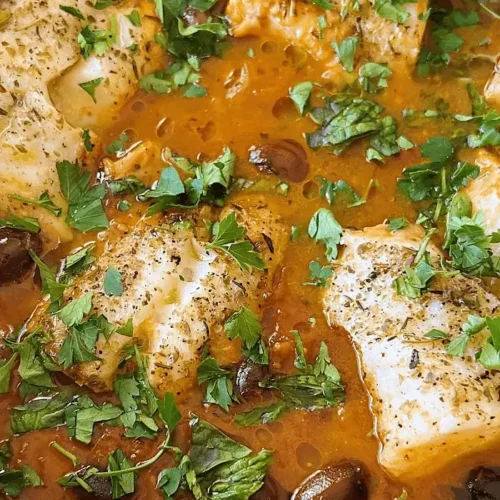
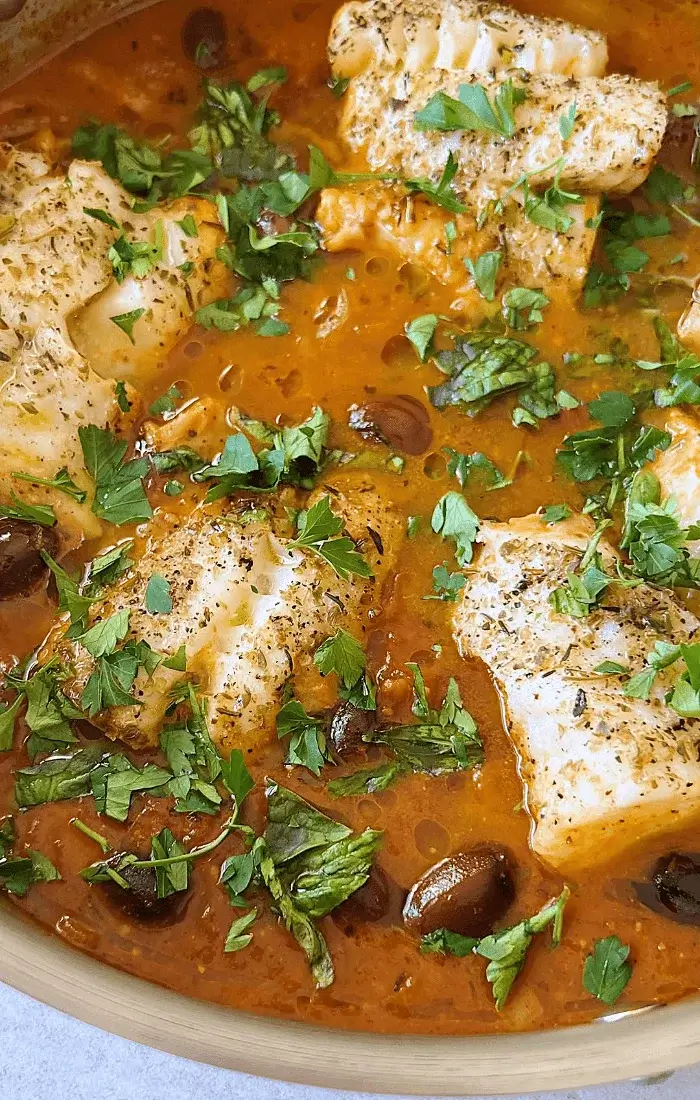
Easy One Pan Poached Cod Recipe
Watch the Full Step-by-Step
- Wide skillet with lid
- Chef's knife
INGREDIENTS
- 16 ounces/460 grams cod fillets
- 1 teaspoon salt
- ½ teaspoon black pepper
- 2 teaspoons Italian seasoning
- 2 tablespoons olive oil
Tomato sauce:
- 14 ounces/400 grams whole peeled tomatoes
- 1 cup water or vegetable broth
- 2 medium shallots, thinly sliced
- 3 garlic cloves, crushed
- ⅓ cup pitted kalamata olives
- ½ teaspoon salt
- ½ teaspoon black pepper
- ½ teaspoon red pepper flakes
- ½ teaspoon Italian seasoning
- ¼ cup fresh basil and parsley, chopped

INSTRUCTIONS
- Season the cod on both sides with salt, pepper, and Italian seasoning.
- Heat olive oil in a wide skillet over medium heat. Add shallots and cook until softened, about 2 minutes. Stir in garlic and cook until fragrant, about 1 minute.
- Add tomatoes, water or broth, salt, pepper, red pepper flakes, and Italian seasoning. Bring to a simmer, cover, and cook over medium-low heat for 5 minutes.
- Crush the tomatoes with a spoon to form a coarse sauce. Taste and adjust seasoning, then stir in olives.
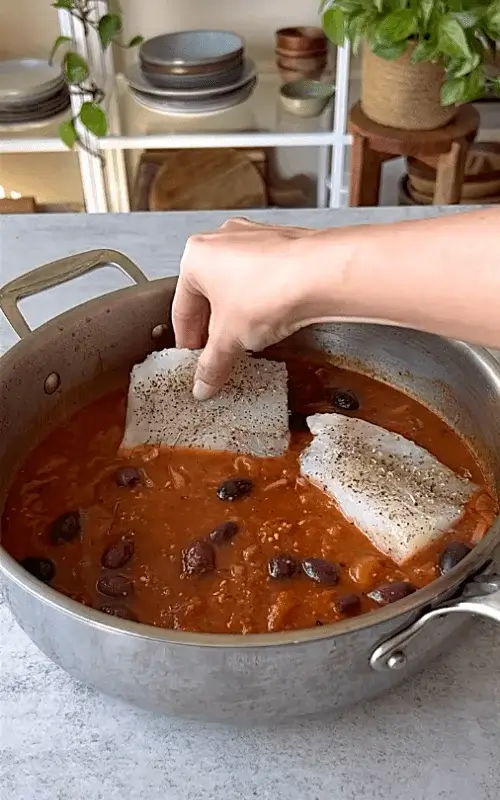
- Nestle the cod into the sauce in a single layer and spoon sauce over the top. Cover and simmer gently until the fish is opaque and flakes easily, 8 to 10 minutes.
- Drizzle with olive oil and scatter with basil and parsley. Serve immediately.
FAQ
How do you keep cod from falling apart?
Keeping cod intact in a poached cod recipe depends on gentle heat, proper handling, and timing. Cod is a lean, flaky fish with large muscle segments that separate easily if overcooked or stirred too aggressively. The key is to maintain a low, steady simmer rather than a rolling boil. Once the sauce is simmering, the fish should be nestled into the liquid and left undisturbed.
Avoid flipping the fillets; instead, spoon sauce over the top to cook them evenly. Using a wide pan allows the fish to sit in a single layer, preventing overlap that can cause breakage. Cod is done when it turns opaque and flakes easily with a fork, typically within 8 to 10 minutes. Removing it promptly prevents the proteins from tightening and forcing the flesh to separate.
Is fresh or frozen cod better for a poached cod recipe?
Both fresh and frozen cod work well for a poached cod recipe, but quality and handling matter more than the form. High-quality frozen cod is often flash-frozen shortly after harvest, preserving texture and flavor effectively. When thawed properly in the refrigerator overnight, it performs nearly identically to fresh cod. Fresh cod should have firm flesh, a clean ocean scent, and no excessive moisture.
Previously frozen cod should be thoroughly patted dry before cooking to prevent excess liquid from diluting the sauce. Frozen cod may release slightly more moisture during cooking, so allowing the sauce to simmer and reduce briefly before adding the fish helps maintain flavor concentration. Avoid thawing cod in warm water, as this weakens the muscle fibers and increases the chance of breakage during poaching.
What type of pan works best for a one-pan poached cod recipe?
A wide, heavy-bottomed skillet with a lid is ideal for a poached cod recipe. Width is more important than depth, as it allows the fillets to rest in a single layer, ensuring even cooking and preventing overcrowding. Stainless steel or enameled cast iron works especially well because they distribute heat evenly and maintain a steady simmer without hot spots.
A lid is essential to trap gentle steam, helping the fish cook evenly from above while remaining moist. Nonstick pans can be used, but they tend to heat unevenly at lower temperatures and may not promote proper sauce reduction. The pan should be large enough that the sauce reaches about halfway up the sides of the fish, creating a controlled poaching environment rather than fully submerging the fillets.
Can this poached cod be made ahead and reheated without drying out?
Cod dries out quickly when reheated at high temperatures, so the fish should be stored submerged in its sauce to retain moisture. Refrigerate the dish in an airtight container for up to one day. When reheating, place the cod and sauce in a covered skillet over low heat, warming gently until just heated through.
Avoid microwaving at full power, as this causes uneven heating and overcooks the edges. If the sauce has thickened too much, add a small splash of water or broth before reheating.
How do you know when the poached cod is fully cooked?
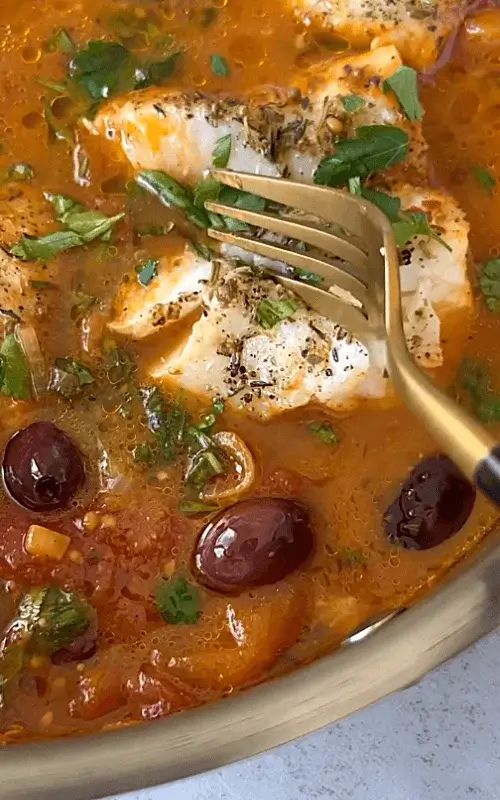
Cod is fully cooked when it turns opaque throughout and flakes easily when pressed with a fork. The internal temperature should reach approximately 130 to 135 degrees Fahrenheit for moist, tender fish, though many cooks rely on texture rather than a thermometer. Overcooking begins quickly after this point, causing the fish to tighten and shed moisture.
The fillets should separate into large flakes but still hold together. If the fish begins to split excessively or looks dry at the edges, it has likely cooked too long. Because a poached cod recipe cooks in simmering liquid rather than direct heat, carryover cooking is minimal, so the fish can be served immediately once it reaches the proper texture.
What should you serve with a poached cod for a complete meal?
Crusty bread is the most common accompaniment, as it allows the sauce to be fully utilized. Steamed rice, orzo, or small pasta shapes also work well, providing structure without overpowering the fish. Roasted or sautéed vegetables such as zucchini, green beans, or fennel complement the acidity of the tomatoes and olives.
For a lighter option, a simple salad of bitter greens dressed with lemon and olive oil balances the richness of the sauce. Because the dish is relatively lean, adding a starch helps create a more complete and satisfying meal.
Can you thicken the sauce if it seems too thin?
The sauce can be reduced or slightly thickened without compromising the dish. The most effective method is to remove the cooked fish from the pan and simmer the sauce uncovered for several minutes until it reaches the desired consistency. This concentrates flavor naturally without additional ingredients.
If further thickening is needed, a small amount of tomato paste can be stirred in and cooked briefly to deepen the sauce. Avoid flour or heavy cream, as they alter the intended texture and flavor profile. Another option is to crush more of the tomatoes in the pan, which releases natural pectin and thickens the liquid. Once the sauce is adjusted, return the fish briefly to reheat gently before serving the poached cod.
Can you make this poached cod recipe spicy?
Heat can be added to a poached cod recipe without masking the flavor of the fish if it is layered carefully. Red pepper flakes already provide mild heat, but additional spice can come from sliced fresh chili, Calabrian chili paste, or a small amount of harissa stirred into the sauce. The key is to add spice to the oil and aromatics early so it infuses the base without sitting directly on the fish.
Taste the sauce before adding the cod to ensure the heat level is balanced. Because cod is mild, excessive spice can dominate quickly, so adjustments should be incremental. Acid from tomatoes and olives will naturally round out the heat, keeping the poached cod balanced rather than aggressively spicy.
Should the cod be at room temperature before cooking it?
Allowing the cod to sit at room temperature for 10 to 15 minutes before cooking can improve even doneness. Very cold fish added directly from the refrigerator lowers the temperature of the sauce and can lead to uneven cooking, with the outer layers overcooking before the center warms through.
Letting the fish rest briefly ensures it cooks at the same rate from edge to center. However, it should not be left out longer than 20 minutes for food safety. Patting the fish dry before seasoning also helps the seasoning adhere and prevents excess moisture from diluting the sauce.
What wine pairs best with this poached cod recipe?
A poached cod recipe pairs well with light, crisp white wines that complement the tomato-olive sauce without overpowering the delicate fish. Sauvignon Blanc offers bright acidity that balances the tomatoes, while Pinot Grigio adds subtle citrus and mineral notes that enhance the cod’s flavor.
A dry Albariño or Vermentino also works beautifully, providing a clean, refreshing finish that cuts through the olive brine. Avoid oaky or heavily buttery wines, which can overshadow the gentle poaching flavors. Serving slightly chilled enhances the pairing, allowing the wine’s brightness to mirror the fresh herbs and acidity in the poached cod recipe, creating a harmonious dining experience.