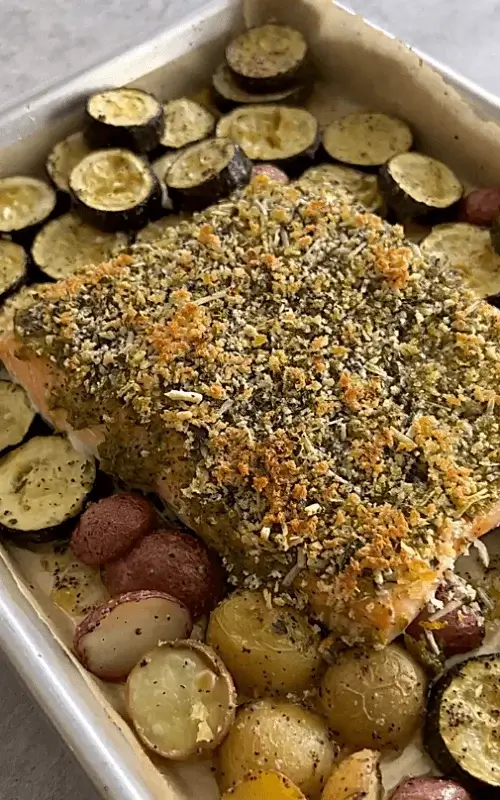
Pesto Salmon with Roasted Potatoes and Zucchini
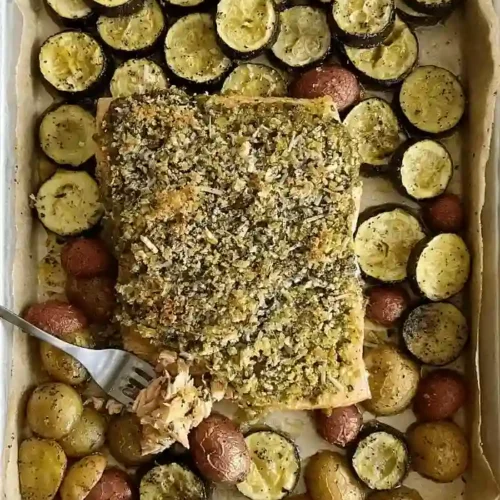
Watch the Full Step-by-Step
- Rimmed sheet pan
- Large mixing bowl
- Chef's knife
INGREDIENTS
- 1.5 pounds/700 grams baby potatoes, halved
- 2 medium zucchini, sliced into ½-inch/1.25 cm rounds
- 2 tablespoons olive oil
- 1 teaspoon garlic powder
- Salt and black pepper
Salmon:
- 1 pound/450 grams salmon fillet
- 2 tablespoons pesto
- 2 tablespoons panko
- 1 tablespoon Parmesan, finely grated
- 1 teaspoon lemon zest
- 1 teaspoon dried parsley
- 1 tablespoon lemon juice
- Salt and black pepper
- 1 tablespoon olive oil

INSTRUCTIONS
- Heat the oven to 375°F/190°C.
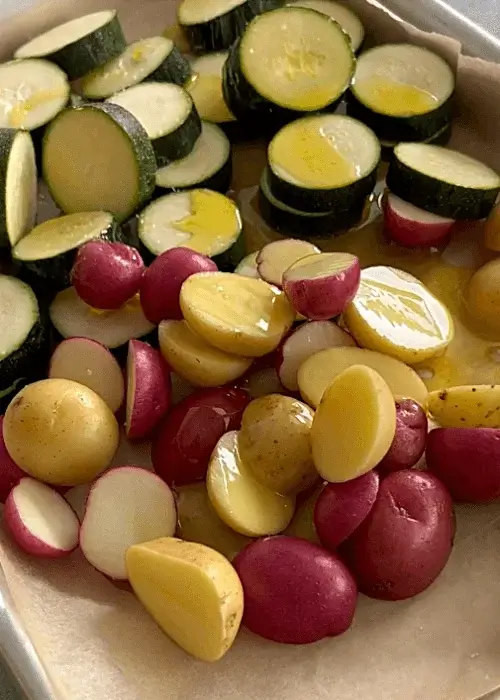
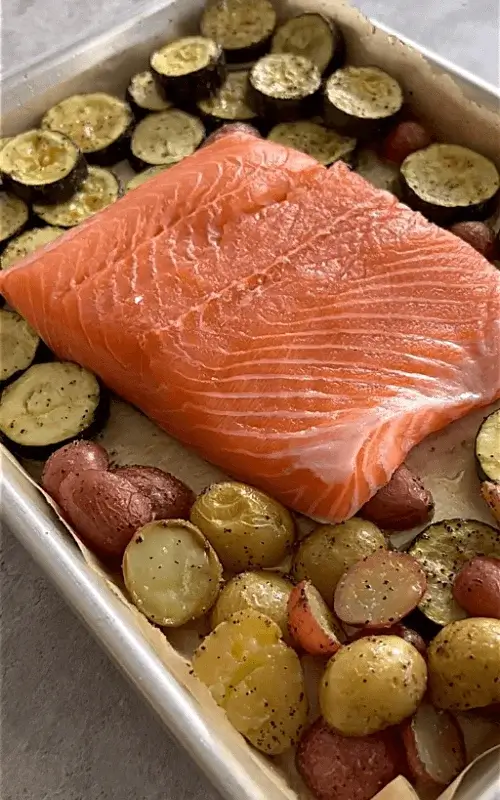
- On a rimmed sheet pan, toss the potatoes and zucchini with the olive oil, garlic powder, salt and pepper. Spread in an even layer and roast until the potatoes are fork-tender and lightly browned, 25 to 30 minutes.
- Season the salmon with salt and pepper. Spread the pesto evenly over the top. In a small bowl, combine the panko, Parmesan, lemon zest and parsley. Press the mixture onto the pesto.
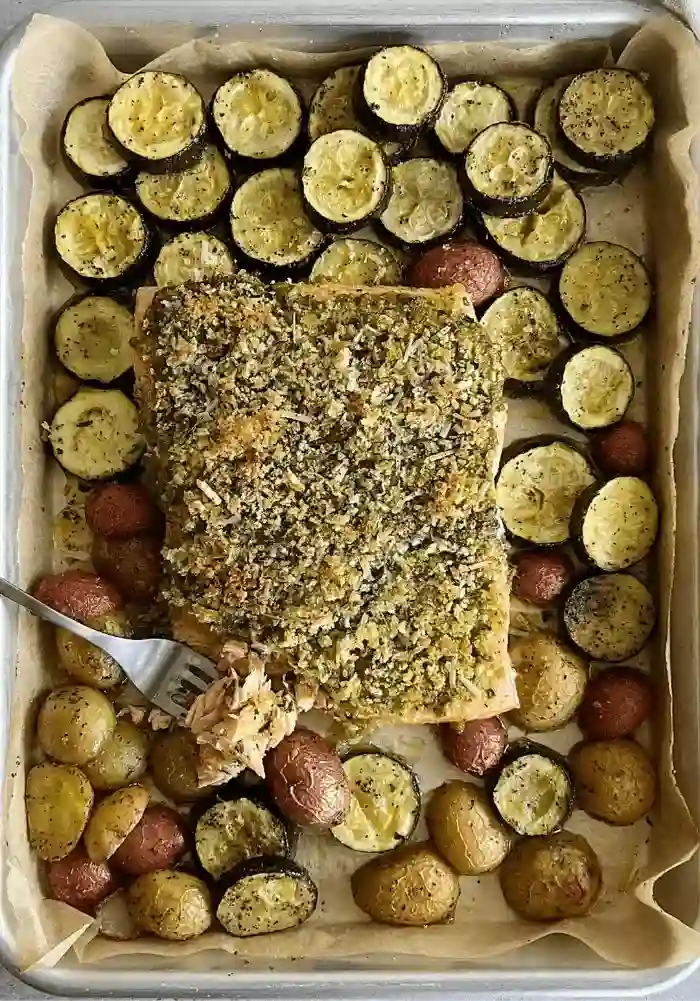
- Remove the pan from the oven and increase the heat to 400°F/200°C. Turn the vegetables and clear space in the center. Place the salmon on the pan and lightly brush the top with olive oil.
- Roast until the salmon flakes easily and the crust is golden, 12 to 15 minutes, depending on thickness. Broil for 1 to 2 minutes, if needed, to deepen the color.
- Drizzle with lemon juice and serve immediately.
FAQ
What type of salmon is best for making pesto salmon?
Typically wild-caught Atlantic or sockeye salmon, though farmed Atlantic salmon can also work well. Wild-caught salmon usually has firmer flesh and a more pronounced flavor, which complements the rich, herbaceous pesto without being overpowered. Sockeye salmon has a deep red color and a slightly oilier texture that helps the pesto adhere better and creates a moist, flavorful result. Farmed salmon tends to have a milder taste and softer flesh.
Regardless of the type, choose fillets that are uniform in thickness to ensure even cooking. Avoid salmon with overly thin edges or large bones, as they can dry out faster and make it harder to achieve a tender, flaky interior.
What vegetables pair best with pesto salmon?
Pesto salmon pairs exceptionally well with vegetables that have a mild, slightly sweet flavor and firm texture, which can complement the rich, herbaceous notes of the pesto. Roasted baby potatoes, zucchini, asparagus, green beans, and bell peppers are excellent choices because they can roast alongside the salmon without overcooking, providing a balanced one-pan meal. Leafy greens such as spinach, kale, or arugula can be lightly sautéed or served fresh as a side to add a slightly bitter contrast to the pesto salmon.
Root vegetables like carrots, parsnips, or sweet potatoes can also be roasted with olive oil and herbs to enhance the overall flavor profile, creating a colorful and nutrient-rich plate. It is important to cut vegetables into uniform sizes so they cook evenly alongside the salmon, preventing some pieces from burning while others remain undercooked. Drizzling a bit of lemon juice over the vegetables just before serving can brighten the dish and tie together the flavors with the pesto salmon.
How do I ensure the pesto salmon crust stays crispy during cooking?
First, pat the salmon dry with paper towels before applying the pesto, as excess moisture will prevent the panko and Parmesan topping from crisping properly. Spread the pesto evenly but in a thin layer so it adheres without making the topping soggy. Combine the panko with finely grated Parmesan and any herbs before pressing it gently on top of the pesto. Baking the salmon at a high enough temperature, such as 400°F/200°C, ensures the crust browns while the fish cooks through.
Avoid covering the salmon with foil, which traps steam and softens the crust. For extra crispiness, broil for the last 1–2 minutes of cooking, watching carefully to prevent burning. Using a lightly oiled baking sheet or brushing the top of the crust with a small amount of olive oil also promotes even browning and texture.
Can I use store-bought pesto for this recipe?
You can absolutely use store-bought pesto for pesto salmon, but fresh pesto often provides a more vibrant, herb-forward flavor that enhances the dish. When using store-bought pesto, choose a high-quality brand with natural ingredients and minimal preservatives. Taste it beforehand to ensure it has a bright, balanced flavor, as some commercial varieties can be overly salty or oily.
If using fresh pesto, blending fresh basil leaves, garlic, pine nuts, Parmesan, and olive oil yields a fragrant, fresh-tasting sauce that complements the salmon perfectly. The pesto should be thick enough to coat the salmon without running off during baking. Regardless of whether it is store-bought or homemade, it is best to apply the pesto just before baking to preserve the color, aroma, and flavor.
What is the best way to store leftover pesto salmon?
Leftovers should be stored carefully to maintain texture and flavor. Allow the salmon to cool completely to room temperature before refrigerating, as trapping heat can cause condensation and sogginess in the crust. Place the salmon in an airtight container, separating individual fillets with parchment paper if possible to prevent sticking. Refrigerated properly, the pesto salmon can last for up to two days.
Avoid storing the salmon in the same container as the roasted vegetables if you want to preserve the crispness of the crust. When reheating, use a low oven (275–300°F/135–150°C) to gently warm the salmon without overcooking, and consider a light drizzle of fresh lemon juice or a small amount of extra pesto to refresh the flavor. Freezing is possible but not recommended, as the crust may lose its texture and become soft.
What sides complement pesto salmon for a complete meal?
Grain-based sides like quinoa, couscous, farro, or brown rice add heartiness and absorb some of the pesto flavor, creating a cohesive plate. A fresh green salad with arugula, spinach, or mixed greens can add acidity and freshness to lighten the meal.
Adding citrus elements, such as a squeeze of lemon or a simple lemon vinaigrette, brightens the dish and ties together the pesto salmon with the sides. Creamy components, like a dollop of ricotta, Greek yogurt, or mashed potatoes, offer a smooth contrast to the crisp crust, while roasted nuts sprinkled over the plate add crunch.
How can pesto salmon be grilled instead of baked?
Use a medium-high heat on a clean, well-oiled grill grate to ensure even cooking and prevent the fish from tearing. Lightly brush the salmon with olive oil before placing it on the grill, and apply the pesto and panko mixture just before grilling or toward the end to avoid burning. Consider using a grill pan or a piece of aluminum foil with holes poked in it to support the crust while allowing smoke to flavor the fish.
Monitor the salmon closely, as grill times are usually shorter than oven roasting, typically 8–12 minutes depending on thickness. Rotate the salmon halfway through cooking to achieve even grill marks and consistent doneness. Once the salmon flakes easily with a fork and the crust is golden, remove it immediately and finish with fresh lemon juice.
How do I keep pesto salmon moist while cooking?
Start by choosing fillets of even thickness to ensure uniform cooking. Pat the salmon dry to remove excess moisture but leave the natural oils intact. Apply pesto as a thin layer so it sticks to the fish without adding excess liquid. Baking at a moderate temperature, like 400°F/200°C, allows the fish to cook through without drying out, while finishing under the broiler briefly can crisp the crust without overcooking the interior.
Avoid overbaking by checking the salmon at the minimum recommended time; it should flake easily with a fork but still be slightly translucent in the center. Let the salmon rest for a few minutes after removing it from the oven, which allows residual heat to finish cooking gently and locks in juices. Adding a squeeze of lemon or a light drizzle of olive oil just before serving also enhances moistness and flavor.
How can I make pesto salmon in foil packets?
Start by placing the salmon fillet on a sheet of aluminum foil large enough to wrap the fish completely. Spread pesto over the top of the salmon and sprinkle with the panko-Parmesan mixture. Fold the foil over the fish and seal the edges tightly, creating a packet that traps steam. Place the packets on a sheet pan and bake at 375–400°F/190–200°C.
Cooking time may be slightly longer than baking directly on a sheet pan because the foil traps steam, which gently cooks the fish. The steam keeps the salmon moist and tender, while the pesto infuses flavor into the fish. Carefully open the packets at the table to release steam and serve immediately.
Can I use frozen salmon to make pesto salmon?
Yes, but it must be properly thawed to ensure even cooking and optimal texture. The safest method is to thaw the salmon overnight in the refrigerator, allowing it to defrost gradually while maintaining food safety standards. If you need a faster option, place the sealed salmon in a bowl of cold water and change the water every 20 to 30 minutes until thawed. Avoid thawing at room temperature, as this increases bacterial risk and can negatively affect texture.
Once thawed, pat the salmon thoroughly dry with paper towels to remove excess surface moisture, which helps the pesto adhere properly and promotes better browning of the crust. Because previously frozen salmon may release more moisture during cooking, monitor doneness closely and avoid overbaking.