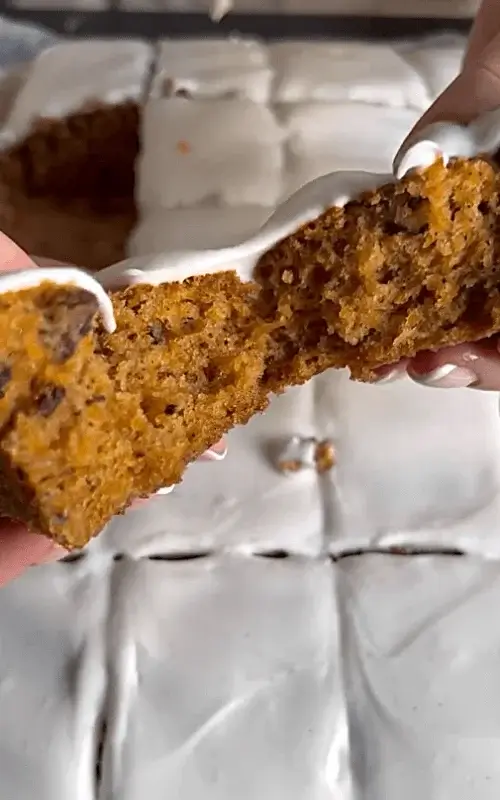
Moist Pecan Carrot Cake with Cream Cheese Frosting
Watch the Full Step-by-Step
- Mixing bowls
- Box grater
- 9-by-13-inch baking pan
- Kitchen scale
INGREDIENTS
- 5 large carrots, peeled and finely grated
- 4 large eggs
- 1⅓ cups/320 grams oil
- 1 cup sugar
- 1 cup brown sugar
- 2¼ cups/270 grams all-purpose flour
- 2 teaspoons/10 grams baking soda
- 1 heaping teaspoon ground cinnamon
- 1½ cups pecans, finely chopped
- ½ teaspoon fine salt
Frosting:
- 3.5 ounces/100 grams unsalted butter, at room temperature
- 7.75 ounces/220 grams full-fat cream cheese, at room temperature
- 2 cups powdered sugar

INSTRUCTIONS
- Heat oven to 350°F/175°C. Line a 9-by-13-inch (23-by-33 cm) rectangular pan with parchment paper.
- Grate the carrots and set aside. In a large bowl, whisk eggs, granulated sugar, brown sugar, and oil until smooth and fully emulsified.
- Add flour, baking soda, cinnamon, and salt. Whisk just until no dry spots remain.
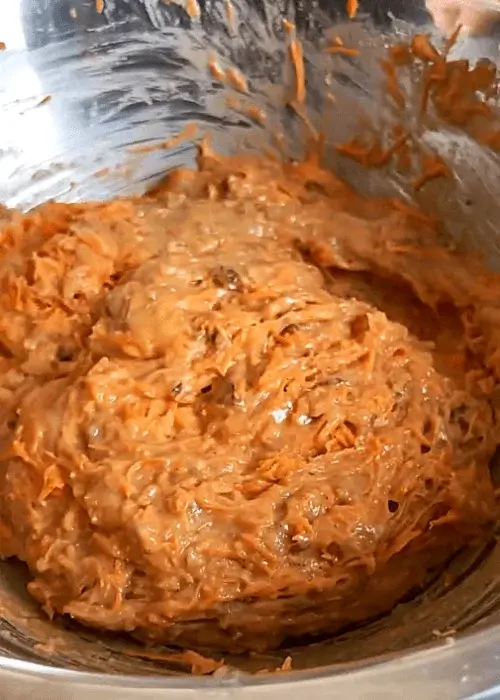
- Fold in carrots, then pecans, mixing gently until evenly distributed.
- Transfer batter to the prepared pan and smooth the surface. Bake for 40 to 45 minutes, until the top is deeply golden and a toothpick inserted into the center comes out with moist crumbs. Let cool completely in the pan.
- Prepare the frosting by whisking butter, cream cheese, and powdered sugar until smooth and creamy.
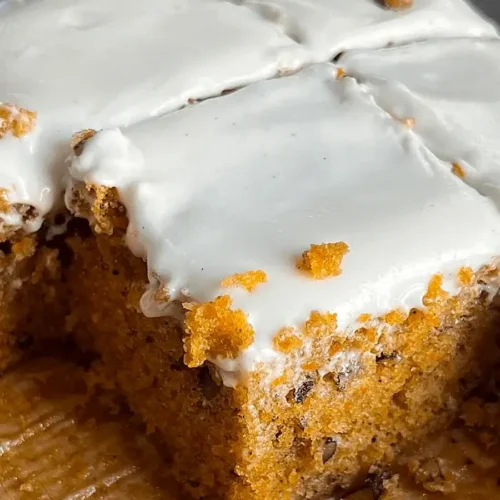
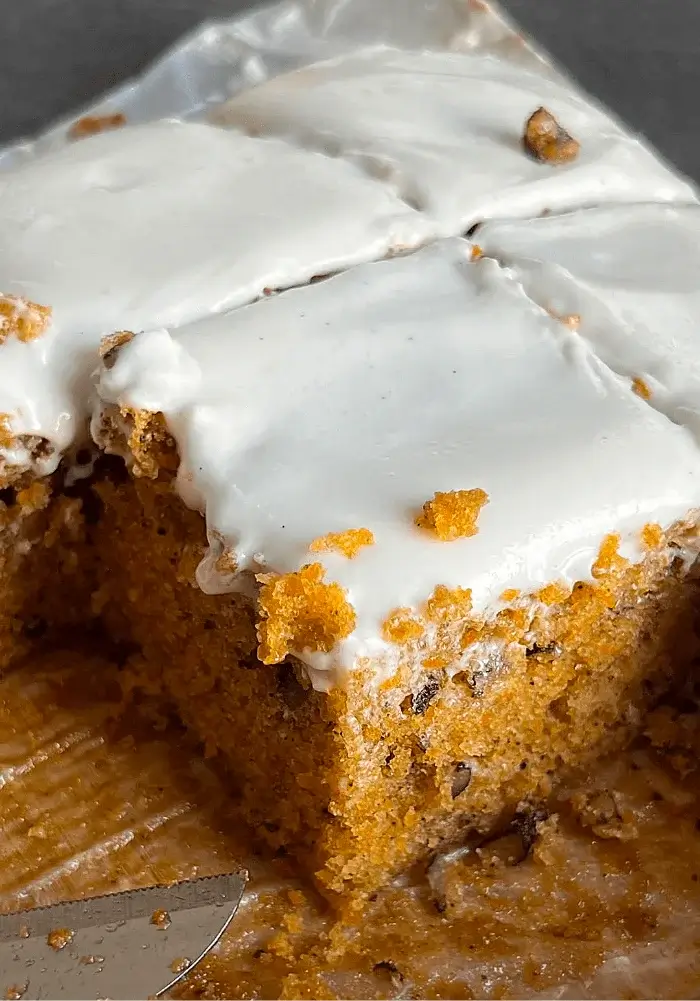
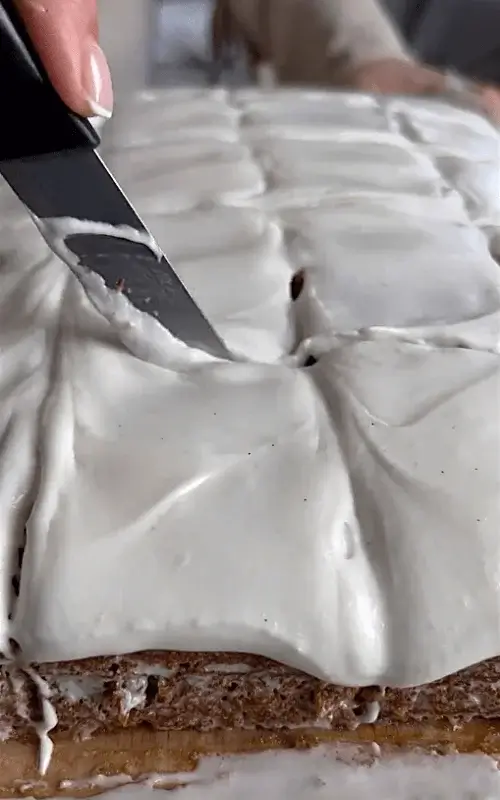
- Spread frosting evenly over the cooled cake. Refrigerate at least 2 hours, or overnight, to set before slicing.
FAQ
Why does pecan carrot cake stay moist even after baking?
The cake stays moist primarily because of its high oil content and the natural moisture released from finely grated carrots during baking. Unlike butter-based cakes, oil remains liquid at room temperature, which helps the crumb stay soft for days rather than firming up. The carrots slowly release water as the cake bakes, steaming the interior and preventing dryness.
Brown sugar also contributes moisture due to its molasses content, which attracts and retains water. In pecan carrot cake, the balance between flour and liquid is critical; too much flour would absorb excess moisture and dry out the cake. Proper baking time is equally important. Removing the cake when a toothpick shows moist crumbs ensures it finishes setting as it cools, locking in moisture rather than evaporating it.
What role do pecans play in the texture and flavor of the cake?
Pecans provide both structural contrast and flavor depth in pecan carrot cake. Their natural fat content enhances richness while offsetting the sweetness of the batter. Finely chopped pecans distribute evenly, adding gentle crunch without disrupting the cake’s tender crumb. Pecans also toast slightly during baking, developing a warm, buttery flavor that complements cinnamon and brown sugar.
From a structural standpoint, nuts help break up the crumb, preventing the cake from becoming overly dense. Using pecans rather than firmer nuts like almonds ensures a softer bite that blends seamlessly into the cake. Omitting or reducing pecans will not affect the cake’s rise, but it will noticeably change both mouthfeel and flavor balance.
Should pecans be toasted before adding them?
Toasting pecans before adding them to pecan carrot cake is optional but can significantly enhance flavor. Light toasting drives off excess moisture and intensifies the nut’s natural oils, producing a deeper, more pronounced pecan taste.
If toasting, pecans should be cooled completely before chopping and folding into the batter to avoid melting the fats prematurely. However, because pecans also toast naturally during baking, skipping this step still yields good results. In pecan carrot cake, over-toasting beforehand can lead to bitterness once baked.
How finely should carrots be grated for the best cake texture?
Carrots should be finely grated using the small holes of a box grater or a food processor fitted with a fine shredding disc. Large shreds release less moisture and can create uneven pockets in pecan carrot cake, leading to inconsistent crumb and longer baking times.
Finely grated carrots integrate fully into the batter, allowing their moisture to disperse evenly and contribute to a uniform, tender texture. Excessively pureeing carrots, however, can make the cake gummy and dense. After grating, carrots should not be squeezed dry, as their natural moisture is essential to the structure and softness of pecan carrot cake.
Can the cake be baked in different pan sizes without affecting the texture?
A thicker batter layer, such as in a square or loaf pan, will require a longer baking time at the same temperature to ensure the center sets without leaving a raw core. Shallower pans, including sheet pans or round cake layers, bake faster and may need to be checked 10 to 15 minutes earlier.
For pecan carrot cake, even heat distribution is essential because the batter is dense and moisture-rich. Using light-colored metal pans helps prevent over-browning before the interior finishes baking. Regardless of pan size, the cake should be removed when a toothpick inserted in the center comes out with moist crumbs, not wet batter, to preserve softness.
How do you prevent pecans from sinking in pecan carrot cake?
They should be finely chopped and evenly folded into the batter rather than left in large pieces. Smaller pieces remain suspended more easily within the thick batter. Tossing the pecans lightly with a small amount of flour before folding them in can also help, as it increases friction and slows sinking during baking.
The batter consistency plays a major role; pecan carrot cake batter should be thick and cohesive, not loose or runny. Proper mixing is important as well. Overmixing can thin the batter and deflate air bubbles, while undermixing can cause uneven distribution. Baking immediately after mixing also reduces the time pecans have to settle before the structure begins to set.
What type of oil works best for pecan carrot cake and why?
Neutral-flavored oils such as vegetable, canola, or sunflower oil are best for pecan carrot cake because they provide moisture without competing with the flavors of carrot, cinnamon, and pecans. Oil-based cakes stay softer longer than butter-based cakes since oil remains liquid at room temperature.
Olive oil is generally not recommended unless very mild, as its flavor can overpower the delicate sweetness of the cake. Using oil also improves shelf life, making pecan carrot cake ideal for baking ahead. The amount of oil must be carefully balanced; too little will result in a dry crumb, while too much can create a heavy or greasy texture.
How do you know when pecan carrot cake is fully baked?
When the edges are set, the top is deeply golden, and the center springs back lightly when pressed. The most reliable test is inserting a toothpick into the center; it should come out with moist crumbs clinging to it, not wet batter and not completely clean.
Because pecan carrot cake continues to cook slightly from residual heat after removal from the oven, pulling it at the moist-crumb stage prevents overbaking. Visual cues matter as well. If the cake pulls slightly away from the sides of the pan and no longer appears glossy in the center, it is ready. Cooling the cake fully before frosting allows the crumb to finish setting without losing moisture.
Can pecan carrot cake be frozen with cream cheese frosting?
Freezing works best when the cake is frosted and then refrigerated until the frosting is firm. Once set, the cake should be wrapped tightly in plastic wrap, followed by a layer of foil, to prevent freezer burn and moisture loss. Pecan carrot cake freezes well for up to two months without significant texture degradation.
Thawing should be done slowly in the refrigerator overnight to prevent condensation from softening the frosting or making the cake soggy. While freezing does slightly mute flavors, the spice and nut elements in pecan carrot cake tend to hold up better than lighter cakes.