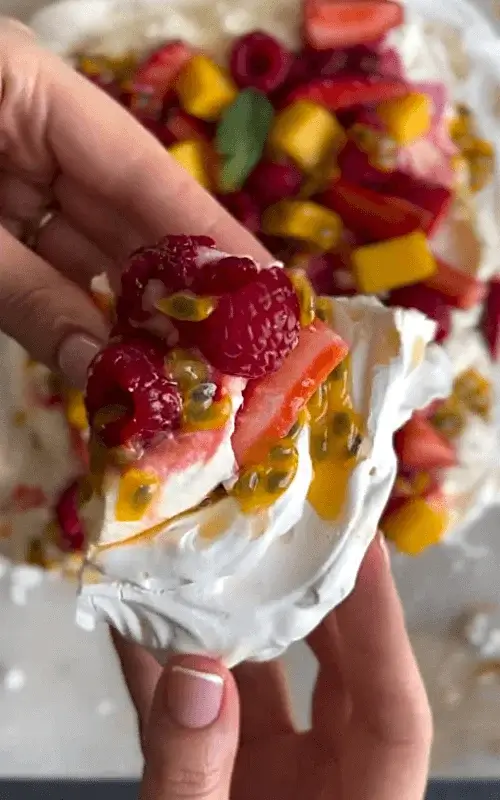
Family-Style Pavlova with Fruits
Watch the Full Step-by-Step
- Mixing bowls
- Kitchen scale
INGREDIENTS
Meringue:
- 1 cup/240 grams egg whites, about 6 large
- 1 cup/200 grams sugar
- 1 cup/120 grams powdered sugar
Whipped cream:
- 2 cups/480 milliliters heavy cream or chilled coconut cream
- ½ cup/120 milliliters milk or oat milk
- ¼ cup/50 grams sugar
- 1 teaspoon/5 grams potato starch or cornstarch and a dash of vanilla extract
Raspberry coulis:
- ½ cup/120 grams fresh or frozen raspberries
- 2 tablespoons sugar
- 1 teaspoon lemon juice
Toppings:
- Seasonal fruits
- Raspberry coulis, recipe below

INSTRUCTIONS
- Combine raspberries, sugar, and lemon juice in a small saucepan over medium heat. Cook, stirring occasionally, until raspberries break down and sugar dissolves, 3–5 minutes. Strain through a fine-mesh sieve and cool slightly.
- Preheat the oven to 250°F/120°C. Line a baking pan with parchment.
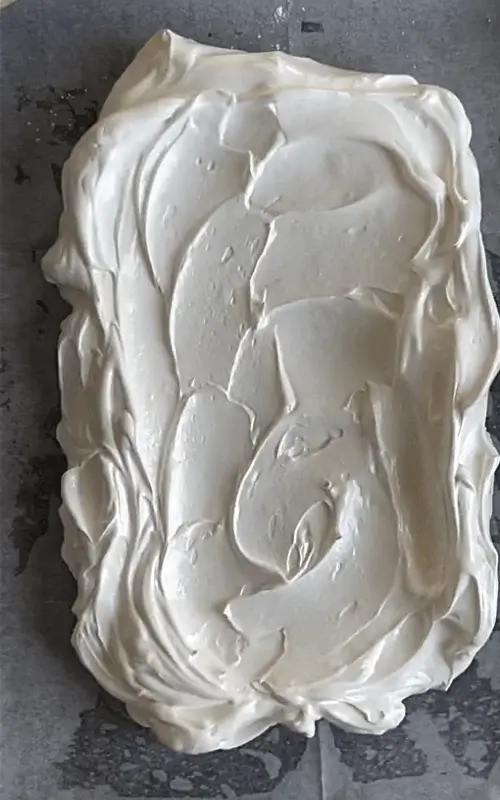
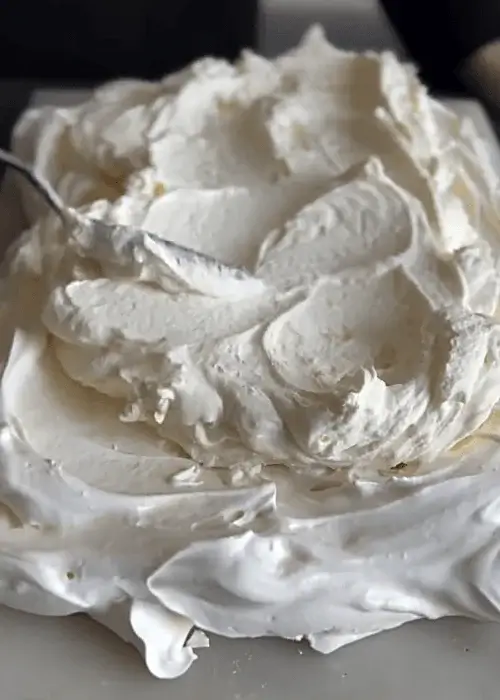
- In a clean mixing bowl, whip egg whites until foamy, gradually adding sugar. Continue whipping 7–10 minutes until glossy stiff peaks form. Gently fold in powdered sugar for 2 minutes. Spread the meringue into a rectangle or square, leaving a small border.
- Bake for 1 hour, then reduce oven temperature to 200°F/95°C and bake for an additional 2 hours. Turn off the oven and let the pavlova cool completely inside with the door slightly ajar.
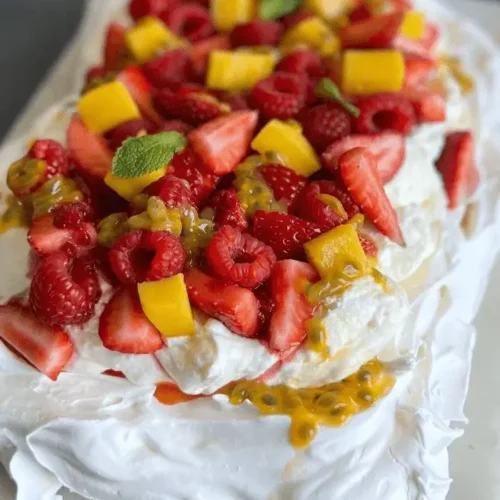
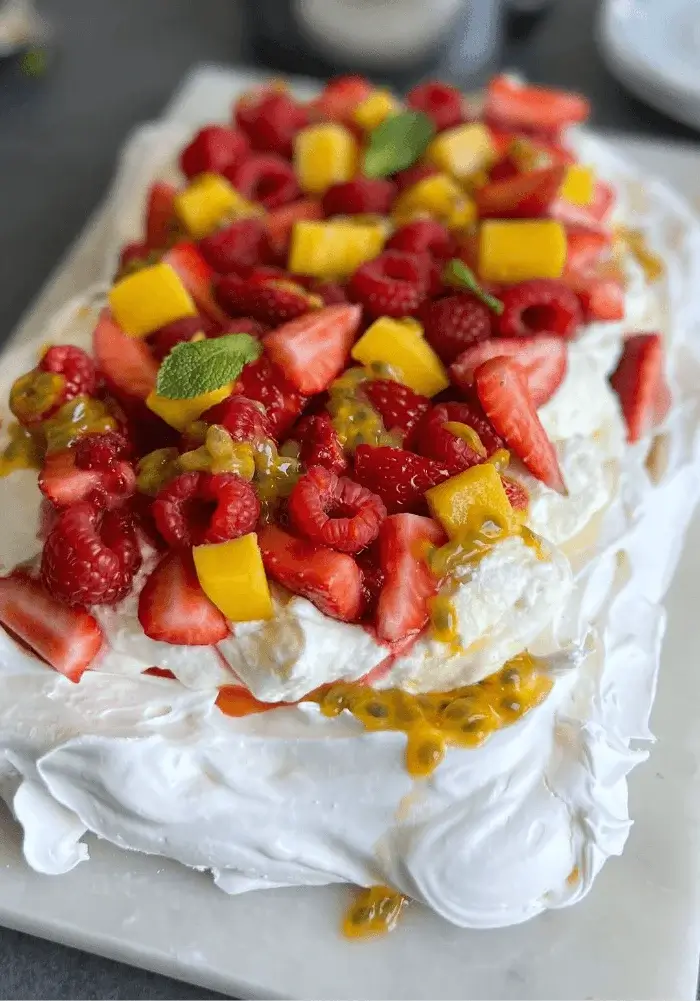
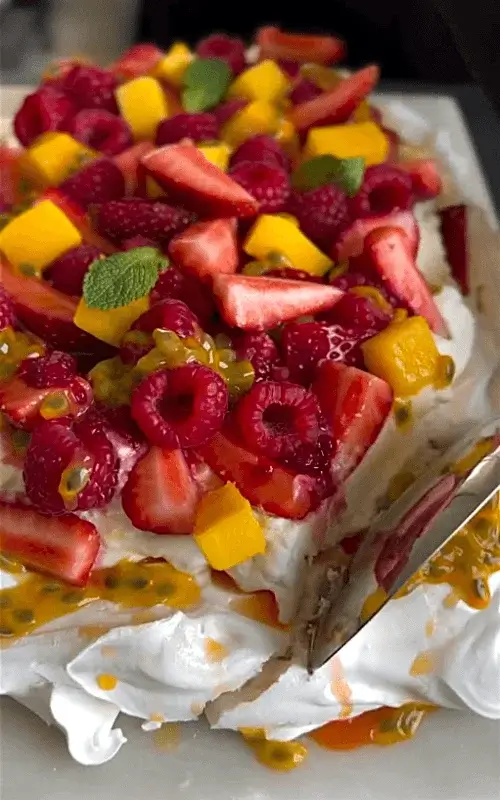
- Whip cream with milk, sugar, and pudding powder until firm. Chill until assembly. Cut fruits to convenient sizes. Just before serving, place cooled meringue on a platter, spread or pipe whipped cream, arrange fruits on top, and drizzle with raspberry coulis. Serve at the center of the table.
FAQ
What makes a perfect pavlova with fruits?
A perfect pavlova with fruits balances a crisp, light meringue exterior with a soft, marshmallow-like interior that is stable enough to hold whipped cream and toppings without collapsing. The egg whites must be whipped to glossy stiff peaks, and sugar should be incorporated gradually to ensure smoothness and shine. Folding in powdered sugar carefully prevents deflating the meringue while keeping it aerated. Baking at low temperatures allows the meringue to dry slowly, preventing cracks and moisture pockets.
Cooling inside the oven with the door slightly ajar helps maintain structure while preventing sudden temperature changes that can cause shrinking or splitting. The choice of whipped cream or coconut cream affects richness and flavor, and the fruits should be fresh, ripe, and cut to sizes that complement the meringue’s texture, ensuring each bite has balance.
How do I make the whipped cream hold longer on pavlova with fruits?
Start by using very cold heavy cream or chilled coconut cream, as cold cream whips more easily and holds peaks better. Gradually add sugar while whipping, and once soft peaks form, incorporate a stabilizer such as cornstarch, potato starch, or a small amount of cream cheese.
Vanilla or other flavorings can be added for taste, but avoid adding extra liquid, which can reduce firmness. Chill the whipped cream until assembly. When spreading or piping over the meringue, work quickly to prevent heat or moisture from softening it.
Can pavlova with fruits be made vegan?
For a vegan version of this pavlova with fruits, egg whites can be replaced with aquafaba, the liquid from cooked chickpeas, which whips similarly to egg whites. Whipped coconut cream or another plant-based cream substitute can replace dairy cream, and plant-based milk such as oat or almond milk can be used for stabilizing mixtures.
Additional stabilizers like cornstarch or potato starch can help maintain structure. While the texture may differ slightly from traditional pavlova, the dessert remains crisp, airy, and visually stunning. Using fresh fruits and coulis ensures flavor and vibrancy, creating a fully vegan and gluten-free pavlova with fruits suitable for dietary restrictions.
How do you store pavlova with fruits before serving?
Pavlova with fruits should be stored carefully to maintain its crispness and prevent moisture from affecting the meringue. Before adding whipped cream and fruits, the baked and cooled meringue can be stored in an airtight container at room temperature for up to two days. It should not be refrigerated alone, as the humidity can soften the exterior and compromise the crisp shell.
If you have already assembled the pavlova with cream and fruits, refrigeration is required, but the meringue will inevitably soften over time. For best results, keep the assembled pavlova in the fridge for no more than a few hours before serving, and add fruits and coulis just before presentation. Using fresh, dry parchment paper underneath the meringue and keeping the container tightly sealed minimizes contact with moisture and odors.
Why does my pavlova collapse or become soggy?
Over-whipping egg whites or adding sugar too quickly can destabilize the meringue, while folding too aggressively can deflate it, resulting in a weak structure. Baking at too high a temperature causes rapid expansion and cracking, and insufficient low-temperature baking leaves moisture trapped inside, creating a soft, soggy center.
Cooling the meringue too quickly outside the oven can cause shrinkage or collapse. Additionally, adding whipped cream and fruits too far in advance introduces moisture that softens the crisp outer shell. Using fresh, dry parchment and assembling pavlova with fruits just before serving prevents early sogginess.
How should fruits be selected for pavlova with fruits?
Fruits should be ripe, flavorful, and complementary in texture to the crisp meringue and rich cream. Berries such as raspberries, blueberries, and strawberries are classic choices because they provide natural sweetness, acidity, and vibrant color. Stone fruits like peaches or kiwi add juiciness but should be cut into small pieces to avoid excess moisture that can soften the meringue.
Tropical fruits such as passion fruit or mango offer exotic flavor but should be used sparingly to prevent the pavlova from becoming soggy. Fresh fruits are preferred over canned or preserved varieties, as syrupy fruit can release moisture quickly. Fruits should be added immediately before serving to maintain both texture and visual appeal.
What is the best way to achieve a glossy meringue for pavlova with fruits?
To achieve a glossy meringue for pavlova with fruits, start with room-temperature egg whites, as they whip more easily and reach greater volume. Use a clean, dry mixing bowl, free from any fat or residue, since even a small amount of oil can prevent stiff peaks from forming. Gradually add granulated sugar once the whites begin to foam, allowing it to dissolve completely while whipping to prevent graininess.
Whip the mixture on medium-high speed until it forms stiff, shiny peaks. Gently fold in powdered sugar for a short time to maintain aeration. The resulting meringue should hold its shape, be smooth and glossy, and provide a stable base for whipped cream and fruit toppings, ensuring that your pavlova with fruits has the ideal combination of structure, texture, and visual appeal.
How can I prevent cracks in my pavlova?
Bake at a low, consistent temperature, starting at around 250°F/120°C and reducing to 200°F/95°C for the final stage. Avoid opening the oven door during baking, as sudden temperature changes can cause the meringue to contract and crack. Once baked, allow the pavlova to cool gradually inside the oven with the door slightly ajar, which helps maintain its structure.
Properly whipped egg whites with sugar folded in gently also help prevent cracking by creating a stable, elastic meringue network. Using an even baking surface, such as a parchment-lined pan, ensures uniform heat distribution. By controlling these factors, you can produce a smooth, crack-free pavlova with fruits that is visually impressive and structurally sound.
Can pavlova with fruits be frozen?
Pavlova with fruits can be partially frozen, but it requires careful handling. The meringue itself can be baked, cooled completely, and stored in an airtight container in the freezer for up to one month. Freezing helps preserve its crispness, but any condensation during thawing can soften the exterior, so it should be thawed in a dry environment, ideally at room temperature.
Whipped cream and fresh fruits should never be frozen together with the meringue, as they lose structure and release moisture when thawed. Raspberry coulis or other fruit sauces can be frozen separately in airtight containers. When ready to serve, assemble the pavlova with fruits using thawed meringue, freshly whipped cream, and fresh fruits to retain texture, appearance, and flavor.
How do I make pavlova with fruits extra stable for transport?
Ensure the meringue is baked thoroughly and completely cooled before assembly, as a soft center will collapse easily. Whip the cream until firm peaks form, and consider adding a stabilizer like cornstarch, potato starch, or a small amount of cream cheese to help it hold shape longer. Cut and arrange fruits just before serving to avoid moisture softening the meringue.
Use a sturdy, flat base such as a serving platter or cake board, and place the pavlova inside a shallow, rigid container if moving it in a vehicle. Avoid stacking decorations or draping heavy sauces over the meringue until just before presentation.
Why is my pavlova chewy instead of crisp?
A chewy pavlova is usually the result of underbaking, excess humidity, or improperly whipped egg whites. Baking at too high a temperature can cause the outside to harden quickly while trapping moisture inside, leaving a soft interior. Ensure that egg whites are whipped to stiff peaks with sugar fully dissolved to create a strong, aerated structure.
Low-temperature baking for the recommended time allows the meringue to dry slowly and evenly. Cooling the pavlova gradually inside the oven prevents sudden shrinkage or softening. Additionally, avoid storing it in the refrigerator before assembly, as moisture can seep in and reduce crispness.
Why does my pavlova weep or release liquid?
This can happen if cream is over-whipped, not stabilized, or stored too long before serving. Fresh fruits with high water content, such as watermelon or very juicy berries, can also release liquid onto the meringue surface. To minimize weeping, use stabilized whipped cream with a small amount of starch or cream cheese.
Cut and drain fruits carefully before assembly and add coulis or syrup just before serving. Avoid storing the fully assembled pavlova in the refrigerator for extended periods, as condensation will soften the meringue.