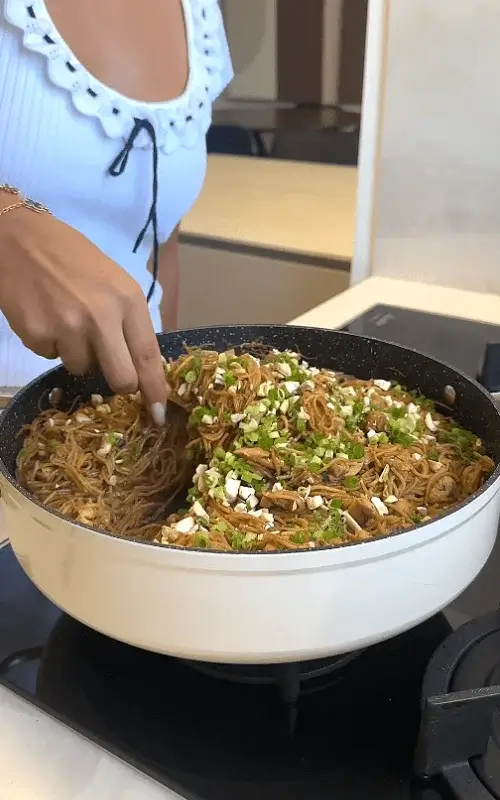
One Pot Chicken Thighs with Noodles
Watch the Full Step-by-Step
- Chef's knife
- Kitchen scale
INGREDIENTS
- 12 ounces/340 grams thin egg noodles
- 4 medium onions, finely chopped
- 3.3 pounds/1.5 kilograms boneless skinless chicken thighs, chopped
- 2 tablespoons date syrup
- 1 teaspoon ground black pepper
- 1½ teaspoons baharat
- 1 teaspoon sweet paprika
- 1½ teaspoons salt
- 1 bunch cilantro, chopped
- ½ cup roasted cashews, chopped
- 5 green onions, thinly sliced
- 3 ounces olive oil, divided
- 2 cups water, or just enough to cover the noodles

INSTRUCTIONS
- Heat 2 ounces olive oil in a wide sauté pot over medium. Add the noodles and fry, stirring often, until deeply golden, 4 to 6 minutes. Transfer the noodles to a bowl.
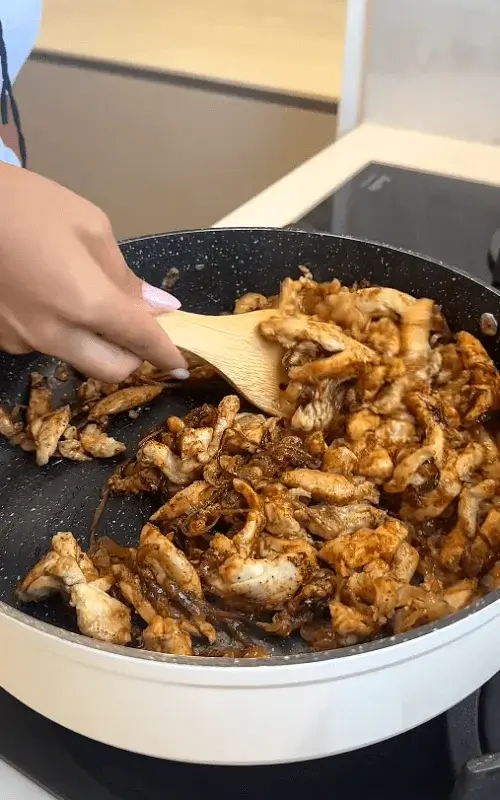
- Add the remaining 1 ounce olive oil to the pot and the chopped onions. Sauté until golden and caramelized, 8 to 10 minutes. Push the onions to one side of the pot and add the chopped chicken thighs. Cook, stirring occasionally, until the chicken changes color, about 6 minutes.
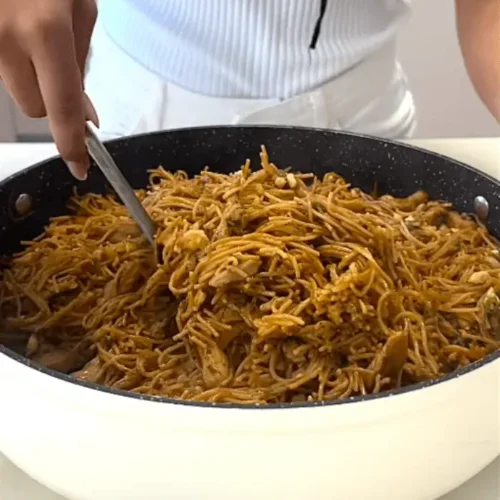
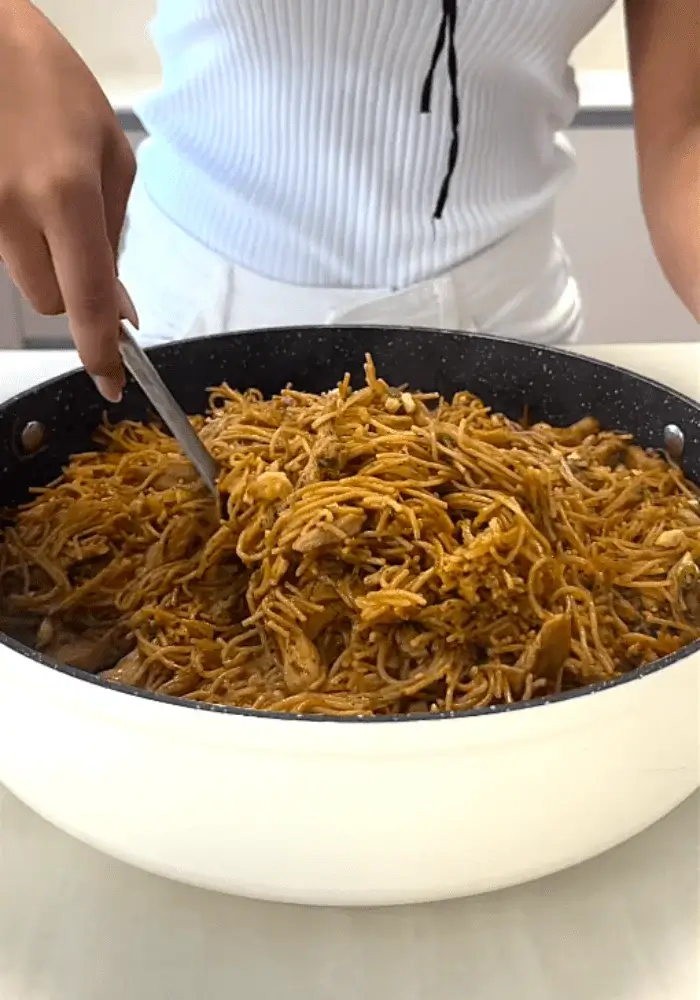
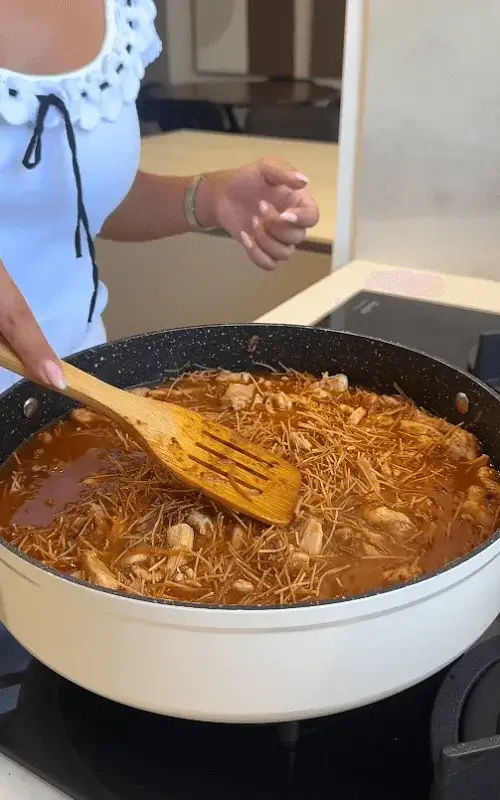
- Stir in the date syrup, black pepper, baharat, paprika, and salt. Return the fried noodles to the pot and spread them evenly over the chicken. Add just enough water to cover the noodles. Cover and cook over medium heat for 8 minutes.
- Uncover, add the chopped cilantro, and continue cooking until the liquid is absorbed and the noodles are tender, about 5 minutes more. Remove from heat, cover, and let rest for 5 to 6 minutes.
- Uncover, sprinkle with chopped cashews and scallions, toss gently, and serve.
FAQ
How can I make one pot chicken thighs healthier?
Focus on reducing added oils while keeping flavor intact. Use skinless chicken thighs to lower fat content and sauté the onions in minimal olive oil or avocado oil. Replace some or all of the noodles with whole wheat or chickpea noodles for extra fiber and protein. You can also add vegetables like carrots, zucchini, or spinach during the final few minutes of cooking to increase nutritional value.
How can I keep the noodles from sticking together?
Ensure they are evenly coated in oil when frying at the beginning of the recipe. Stir frequently until they turn golden. When adding water, avoid overcrowding the pot—just enough liquid should cover the noodles without drowning them. As the dish cooks, give it a gentle stir occasionally to keep the noodles separated. Finally, let the dish rest covered after cooking so the residual steam loosens any clumps.
What can I serve with one pot chicken thighs?
This dish pair beautifully with simple side dishes that complement their rich and aromatic flavor. A crisp green salad with lemon dressing adds freshness, while roasted vegetables or grilled eggplant provide depth and balance. You can also serve it with a small bowl of yogurt sauce or tahini drizzle for a creamy contrast. For a heartier meal, pair it with warm flatbread or pita.
What other proteins can I use instead of thighs?
Chicken breasts can be used for a leaner option, but take care not to overcook them since they dry out faster than thighs. For a pescatarian version, shrimp or chunks of firm white fish can be added near the end of cooking, as they require minimal heat. If you prefer a plant-based alternative, chickpeas or tofu cubes work well when seasoned with baharat, giving the dish a similar spiced profile and texture contrast.
How can I make this recipe gluten-free?
One pot chicken thighs can easily be made gluten-free by substituting the regular noodles with gluten-free alternatives such as rice noodles, quinoa noodles, or chickpea pasta. Make sure to reduce the cooking time slightly since gluten-free noodles tend to soften faster. Always check ingredient labels to confirm that spices and date syrup are certified gluten-free, as some brands may include trace gluten.
What type of noodles work best in this recipe?
Thin egg noodles are ideal for one pot chicken thighs because they absorb flavor quickly and cook evenly. If unavailable, you can use vermicelli or fideo pasta, which have a similar texture. For a slightly heartier version, try using medium egg noodles or even broken spaghetti. The key is to avoid thick pasta shapes that require long cooking times, as they can become overcooked or absorb too much liquid. Whatever you choose, make sure to toast the noodles until golden before simmering, as this adds depth and prevents them from getting mushy.
Can I freeze leftovers?
Allow the dish to cool completely, then transfer it into airtight containers or freezer-safe bags. To prevent the noodles from becoming overly soft, slightly undercook them before freezing. When ready to eat, thaw the dish overnight in the refrigerator and reheat gently on the stovetop, adding a splash of water or broth to restore moisture.
What spices can I substitute for baharat?
You can make an easy substitute by blending common pantry spices. Combine equal parts of ground cumin, paprika, coriander, cinnamon, and black pepper. For extra warmth, add a pinch of nutmeg or allspice. This homemade mix mimics the earthy, aromatic notes of baharat and pairs perfectly with the caramelized onions and date syrup in one pot chicken thighs. You can also experiment with ras el hanout or garam masala for a slightly different regional twist, both of which complement the chicken and noodles beautifully.