Marzipan Cookies with Strawberry Hearts

Watch the Full Step-by-Step
- Mixing bowls
- Rolling Pin
- Heart-shaped cookie cutter
- Baking sheets
- Piping bags
- Kitchen scale
INGREDIENTS
Dough:
- 4.4 ounces/125 grams unsalted butter, cold and cubed
- 1⅔ cups/200 grams all-purpose flour
- ⅔ cup powdered sugar
- ¼ cup/25 grams almond flour
- 1 teaspoon vanilla extract
- 3 tablespoons poppy seeds
- 1 large egg
- ¼ teaspoon salt
Marzipan for piping:
- 21 ounces/600 grams marzipan
- 4 large egg whites
Filling:
- 1 cup granulated sugar
- 1⅔ cups/400 grams strawberry jam
- ½ cup water
- 1 teaspoon pectin
- Natural red food coloring, as needed

INSTRUCTIONS
- In a stand mixer fitted with the paddle, combine butter and flour and mix until sandy and evenly crumbly. Add powdered sugar, almond flour, poppy seeds, and salt and mix briefly. Add the egg and vanilla and mix just until a cohesive dough forms. Wrap tightly and refrigerate for 2 hours.
- Heat the oven to 340°F/170°C.
- Roll the dough to about ⅛ inch/3 millimeters thick. Cut into heart shapes and arrange on parchment-lined baking sheets. Bake until lightly golden, 10 to 12 minutes. Let cool completely.
- Meanwhile, prepare the marzipan by mixing it with the egg whites in a stand mixer fitted with the paddle, adding the whites gradually, until smooth and uniform. Cover and set aside.
- Prepare the filling by mixing 2 tablespoons/25 grams of the sugar with the pectin. In a saucepan, combine the jam, remaining sugar, and water and bring to a full boil. Add the pectin mixture, reduce heat to medium, and whisk constantly for 3 minutes, until slightly thickened. Tint lightly with red food coloring.
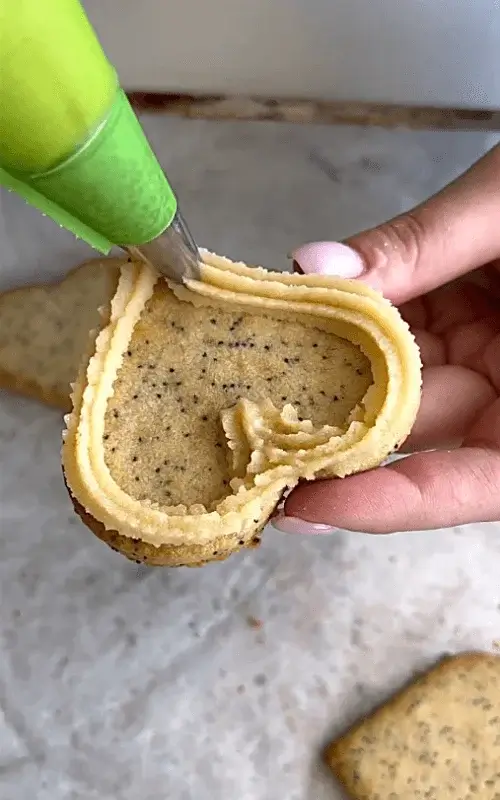
- Pipe a thin marzipan border around each cookie using a small star tip. Bake again until the marzipan is just lightly golden, 7 to 10 minutes. Cool completely.
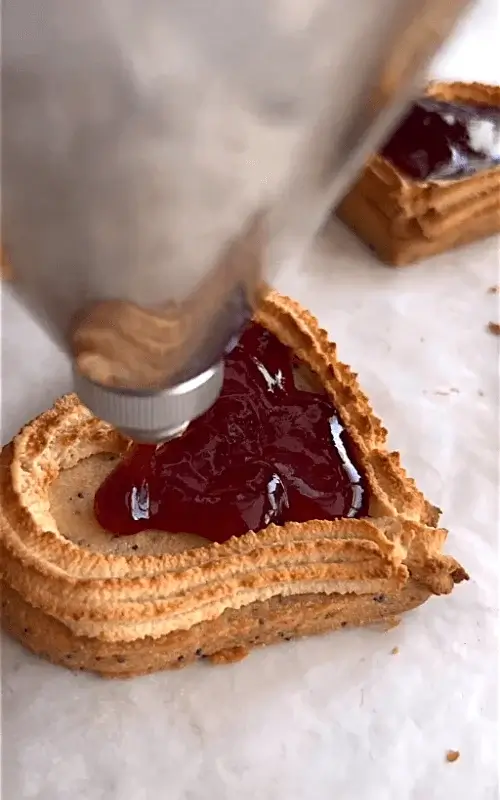
- Fill the centers with the warm jam mixture and let set before serving.

FAQ
What type of marzipan works best for marzipan cookies?
The best choice is high-quality baking marzipan with at least 50 percent almond content. Higher almond ratios produce better flavor, smoother texture, and a more stable structure when baked. Avoid low-almond or fondant-style marzipan, which can melt or spread too much in the oven. If the marzipan feels stiff, it can be loosened with egg whites to create a pipeable consistency that holds defined ridges.
Room-temperature marzipan blends more evenly and prevents lumps when mixed. For consistent results, weigh the marzipan rather than using volume measures, since density varies by brand. European-style marzipan tends to be firmer and more almond-forward, making it particularly suitable for marzipan cookies that require structure, clean piping, and balanced sweetness after baking.
How do you keep marzipan cookies from spreading or losing their shape?
The dough must be properly chilled and rolled to an even thickness before baking. Cold butter in the dough solidifies in the refrigerator, allowing the cookies to hold sharp edges when they enter the oven. Overmixing can develop excess gluten, which causes uneven spread and tough texture, so mix only until the dough comes together. Baking on parchment-lined sheets helps maintain shape and prevents sticking.
When piping marzipan borders, ensure the base cookies are fully cooled so the marzipan adheres without melting prematurely. A second short bake sets the marzipan without overbrowning the cookie base. Proper oven temperature calibration is also critical; too low encourages spread, while too high can cause cracking.
Can marzipan cookies be made ahead and stored or frozen?
The baked cookie bases can be prepared several days in advance and kept in an airtight container at room temperature. Once filled with jam, store them in a cool environment or refrigerate if the filling is particularly soft.
For longer storage, unfilled marzipan cookies freeze well. Place them in a single layer until frozen solid, then transfer to airtight containers with parchment between layers. Thaw at room temperature before piping or filling, and avoid freezing fully assembled cookies with jam, as condensation can affect texture.
Why is the dough chilled before baking?
Chilling the dough is essential for marzipan cookies because it firms the butter and hydrates the flour evenly. This resting period allows the gluten network to relax, preventing shrinkage during baking and ensuring tender texture. Cold dough is easier to roll thinly without sticking and produces cleaner edges when cut. If the dough is not chilled, it will soften too quickly at room temperature and lose definition in the oven.
A minimum two-hour chill stabilizes the fat structure, ensuring the cookies bake evenly and hold their shape when the marzipan border is added later. This step also enhances flavor development as the ingredients meld. Skipping the chill can result in uneven browning and fragile cookies.
What piping tip is best for shaping the marzipan border?
A small star piping tip is ideal for shaping the marzipan border on marzipan cookies because it creates ridges that hold structure during the second bake. The ridges help the marzipan set evenly and create a defined frame for the jam filling. If the marzipan mixture is too stiff, add egg whites gradually until it reaches a smooth, pipeable consistency that flows without tearing.
Overly soft marzipan will spread and lose detail, while overly firm marzipan will crack when piped. Use steady pressure and keep the piping bag perpendicular to the cookie for even borders. Practicing on parchment first ensures consistent thickness.
How do you know when marzipan cookies are fully baked?
Marzipan cookies are fully baked when the edges turn lightly golden and the base feels set but not overly firm. Because these cookies bake twice, it is important not to overbake during the first round. The initial bake should only set the structure and lightly color the dough. The second bake, after piping the marzipan, lightly toasts the marzipan and finishes the texture.
Overbrowning can dry out the shortcrust and harden the marzipan. Use visual cues rather than time alone, since ovens vary. Even heat distribution and proper spacing on the baking sheet help prevent uneven browning. Removing the cookies at the correct stage ensures marzipan cookies remain tender with a crisp edge and a soft, balanced interior.
What is the best jam consistency for filling marzipan cookies?
The best jam consistency for marzipan cookies is thick enough to hold its shape when piped but still fluid when warm. A jam that is too loose will spread beyond the marzipan border and create sticky surfaces once set. Cooking the jam briefly with sugar and pectin helps stabilize it and produce a glossy, sliceable center.
The filling should be warm when piped so it settles smoothly into the cookie center without forming air pockets. Once cooled, it should set with a soft gel texture that does not run when the cookies are stacked or stored. Choosing a high-fruit jam improves flavor balance and prevents excessive sweetness in marzipan cookies.
How thick should the dough be rolled?
The dough should be rolled to about one-eighth inch thickness. This thickness provides enough structure to support the marzipan border and jam filling while still baking to a crisp, delicate texture. Rolling too thin can cause breakage when transferring or piping, while rolling too thick can result in a dense cookie that overwhelms the marzipan.
Using guide sticks or rolling bands helps maintain uniform thickness across the entire sheet of dough. Even thickness ensures consistent baking time and color.