Lahmajun from Scratch
Watch the Full Step-by-Step
- Mixing bowls
- Food processor
- Rolling Pin
- Kitchen scale
INGREDIENTS
Dough:
- 4 cups/500 grams all-purpose flour
- 1 tablespoon/10 grams dry yeast
- 3 tablespoons/40 grams sugar
- 3 tablespoons/40 grams olive oil
- 1 1/4 cups/310 milliliters lukewarm water
- 1 teaspoon/5 grams salt
Meat Mixture:
- 14 ounces/400 grams beef + 3.5 ounces/100 grams lamb fat
- 2 medium onions, halved
- 2 garlic cloves
- 4 very ripe tomatoes, halved
- 1 bunch parsley
- 1 teaspoon salt
- 1/2 teaspoon black pepper
- 1 teaspoon ras el hanout
- 1 teaspoon paprika
Toppings (optional):
- Sumac onion salad and raw tahini

INSTRUCTIONS
- Make the dough by combining flour, yeast, sugar, olive oil, water, and salt in a stand mixer. Knead with a dough hook until smooth and elastic, about 7 minutes. Transfer to a lightly oiled bowl, cover, and let rise at room temperature until doubled in size, 45–60 minutes.
- For the meat mixture, pulse onions, garlic, tomatoes, and parsley in a food processor until finely chopped. Transfer to a bowl with ground meat and spices and mix by hand until fully combined. Refrigerate until ready to assemble.
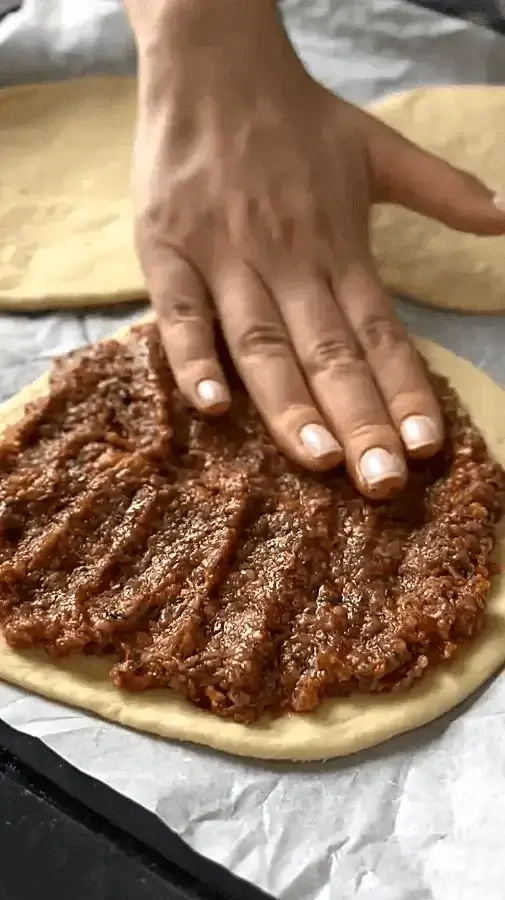
- Roll the risen dough on a floured surface into a thin sheet and cut into 5–6 inch/12–15 cm circles. Mini lahmajun work well too. Place dough circles on a parchment-lined baking sheet and evenly spread the meat mixture on top.
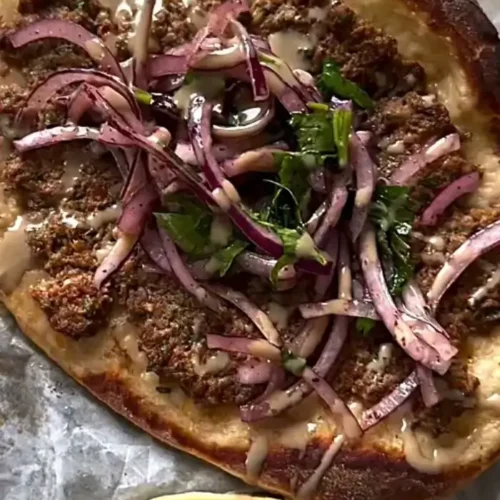
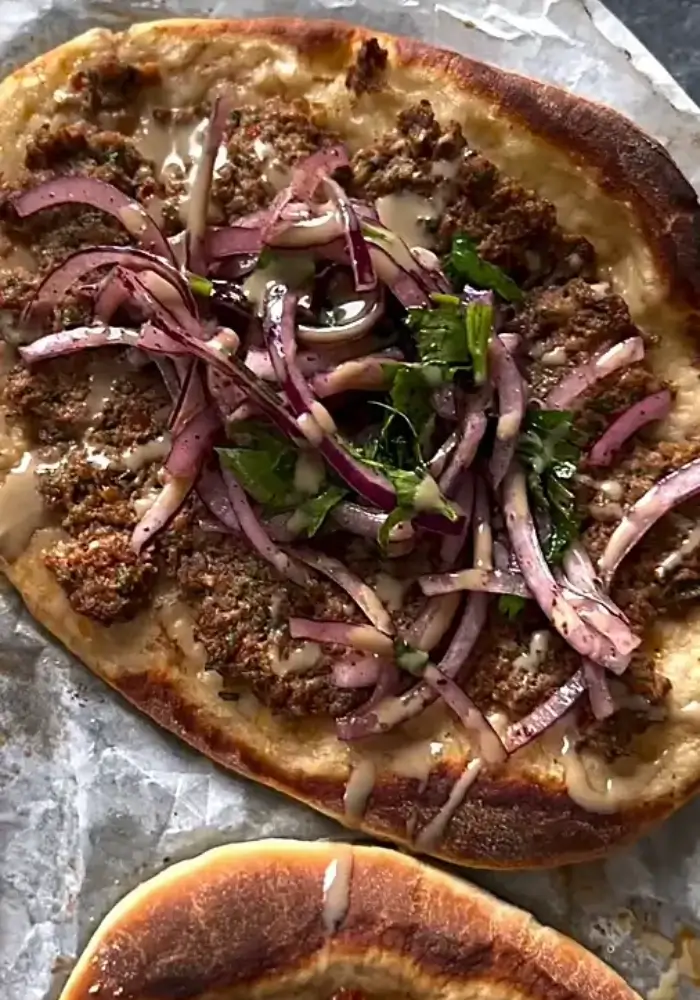
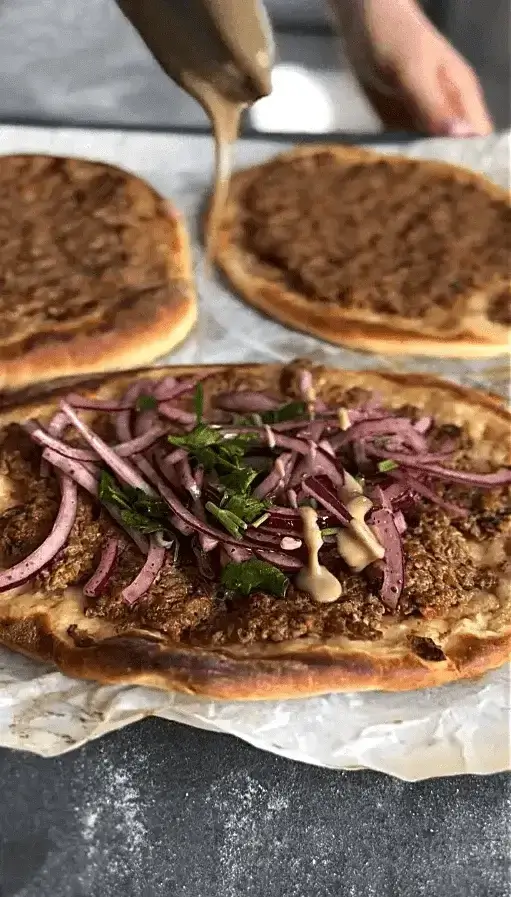
- Preheat the oven to 200°C/390°F, convection. Bake until the meat is browned, 10–12 minutes. Switch to broil/grill for 5 minutes to achieve light charring. Remove from the oven, top with sumac onion salad and a drizzle of raw tahini, and serve immediately.
FAQ
Can I substitute another type of meat in the lahmajun?
Ground lamb, veal, or a combination of beef and lamb works well. For a leaner version, use turkey or chicken, but you may need to add a small amount of olive oil to maintain moisture. Ensure the meat is finely ground and mixed with the herbs, spices, and tomato-onion mixture to achieve the characteristic texture and balance essential for authentic lahmajun.
Is it possible to make the dough ahead of time?
Absolutely. After kneading, place the dough in an airtight container or wrap it tightly in plastic wrap and refrigerate for up to 24 hours. When ready to use, bring it to room temperature before rolling out. This resting period can even improve elasticity, making it easier to roll thin.
What is the best way to store leftovers?
Allow it to cool completely at room temperature, then wrap tightly in plastic wrap or place in an airtight container. Refrigerate for up to three days to maintain freshness. To reheat, use a preheated oven at 350°F/175°C for 5–7 minutes or a skillet on medium heat to preserve the crispness of the dough and prevent the meat from becoming soggy.
Can I freeze the lahmajun before or after baking?
For unbaked dough with meat, assemble on parchment and freeze individually; then wrap tightly in plastic wrap or foil and store in a freezer-safe bag for up to one month. For baked lahmajun, allow them to cool, wrap individually, and freeze. Reheat frozen lahmajun in a preheated oven at 350°F/175°C for 10–12 minutes or until warmed through. Freezing preserves flavor, though baking fresh from raw ensures optimal crispiness.
How do I achieve a perfectly thin and crispy base?
Roll the dough evenly on a floured surface to about 1/8 inch/3 mm thickness. Use a light touch when transferring to the baking sheet to avoid stretching. Preheating the oven to 200°C/390°F, convection, ensures immediate crisping. Baking on a parchment-lined tray and finishing briefly under the broiler or grill creates a lightly charred, crunchy texture. Avoid overloading the surface with meat to prevent sogginess while maintaining authentic lahmajun flavor.
Can I make mini lahmajun for appetizers or parties?
Roll the dough thinner than usual and cut into 3–4 inch/7–10 cm circles. Spread a smaller portion of the meat mixture evenly over each circle. Bake at 200°C/390°F until browned, then briefly broil for a slight char. Mini lahmajun are easier to serve and eat by hand, making them perfect for gatherings. They also allow for creative presentations, such as topping with fresh herbs, sumac onions, or a drizzle of tahini before serving.
What spices are essential for an authentic flavor?
Authentic lahmajun flavor relies on a balanced combination of spices. Ras el hanout and Moroccan paprika are central, providing warmth and subtle smokiness. Salt and black pepper are essential for seasoning, while fresh parsley adds brightness. Optional additions include a small pinch of cayenne or chili flakes for mild heat.
How should I serve the lahmajun for a gathering or meal?
Serve it immediately after baking for the best texture and flavor. Offer fresh toppings such as sumac onion salad, chopped parsley, lemon wedges, and a drizzle of raw tahini. For gatherings, keep mini lahmajun warm in a low oven or on a serving tray lined with parchment. Guests can fold or roll the lahmajun with toppings, making it interactive and easy to eat by hand. Pairing with fresh salads, pickles, or yogurt-based sides enhances the meal while maintaining authentic lahmajun presentation and flavor.