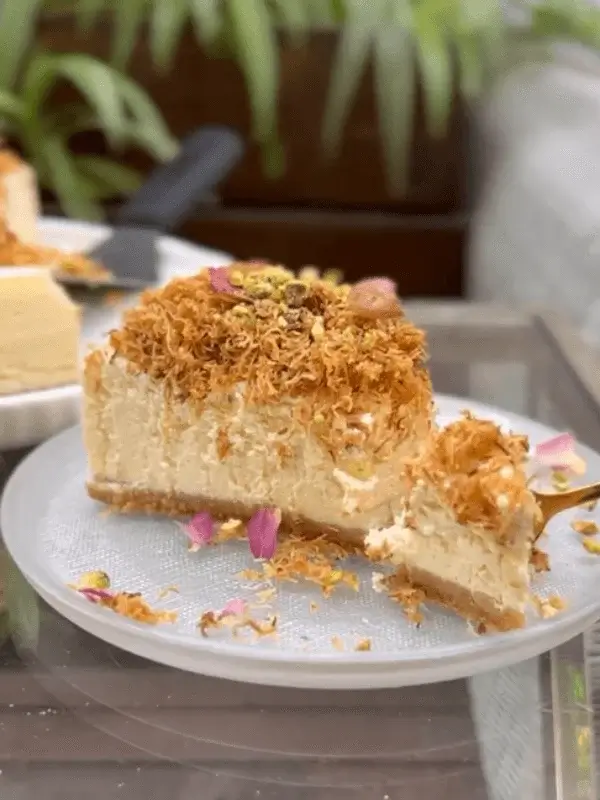
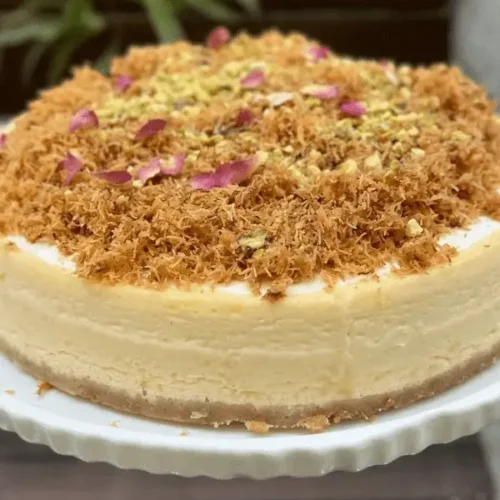
Kadaif Cheesecake with Rose and Pistachio
Watch the Full Step-by-Step
INGREDIENTS
- 1 ½ cups/150 grams butter cookies, finely crushed
- 5 tablespoons/75 grams unsalted butter, melted
Batter:
- 1.5 pounds/675 grams cream cheese, at room temperature
- 1 cup/200 milliliters sour cream
- ½ cup/100 grams sugar
- 3.5 ounces/100 grams white chocolate, finely chopped
- ¼ cup/60 milliliters heavy cream
- 4 large eggs
- 1 teaspoon vanilla extract
Glaze:
- 1 cup/200 milliliters sour cream
- 3 tablespoons sugar
Topping:
- 4.5 ounces/125 grams kadaif pastry, shredded phyllo
- 3.5 tablespoons/100 grams unsalted butter, divided
- 4 tablespoons powdered sugar

INSTRUCTIONS
- Preheat the oven to 265°F (130°C), static mode.
- In a food processor, pulse the cookies into fine crumbs. In a bowl, combine with melted butter and stir until evenly moistened. Wrap the bottom of a 9-inch/22 cm ring mold with foil and line the base with parchment paper. Butter the inside of the ring. Press the crumb mixture firmly into the bottom in an even layer. Chill while preparing the filling.
- In a small saucepan over low heat, melt the white chocolate with the heavy cream, stirring until smooth. Set aside to cool slightly.
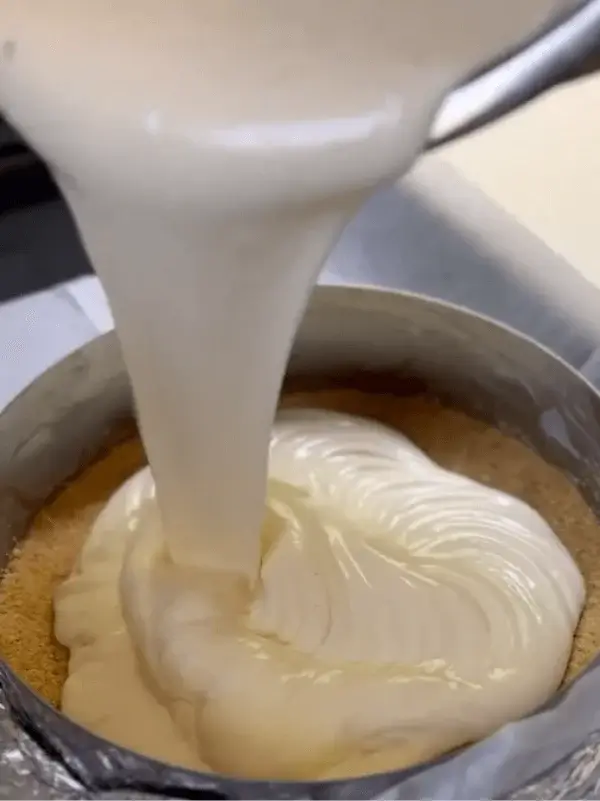
- In a large bowl, beat the cream cheese until smooth. Add the sour cream, sugar, eggs, and vanilla extract. Mix until fully combined and lump-free. Gradually stream in the cooled white chocolate mixture while stirring constantly. Pour the filling over the crust and tap gently to release any air bubbles.
- Bake for 1½ hours, or until the edges are just set and the center has a slight wobble. Remove the cheesecake from the oven and increase the oven temperature to 300°F (150°C).
- In a small bowl, whisk together the sour cream and sugar. Spread the glaze gently over the surface of the cake. Return to the oven and bake for 10 minutes. Remove and let cool at room temperature, then refrigerate uncovered overnight.
- The next day, run a thin knife or offset spatula around the inside of the ring to release the cake. Transfer to a serving plate.
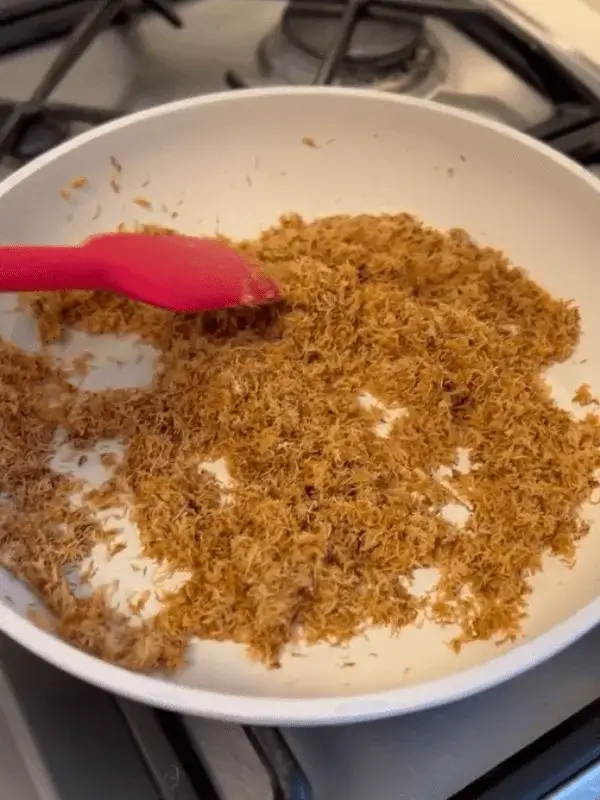
- To prepare the kadaif topping, cut the strands into 1- to 2-inch pieces. Place in a bowl and toss with 3½ tablespoons/50 grams melted butter until coated. In a large skillet over low heat, melt the remaining 3½ tablespoons/50 grams butter. Add the kadaif and cook, stirring constantly, until it begins to turn golden. Sprinkle in the powdered sugar and continue to cook until evenly caramelized, about 8 to 10 minutes total. Transfer to a tray to cool completely. (Alternatively, bake the buttered kadaif at 340°F/170°C, stirring occasionally, until golden.)
- Just before serving, top the cheesecake generously with the cooled kadaif. Garnish with chopped pistachios and dried rose petals.

FAQ
What can I use instead of kadaif pastry if I can’t find it?
The closest alternative for kadaif cheesecake is shredded phyllo dough, often labeled as “kataifi” in international or Middle Eastern markets. If that’s unavailable, you can try using regular phyllo dough by slicing it into very thin strips, then fluffing it lightly by hand to mimic the texture. While it won’t be exactly the same, it will crisp up nicely when cooked in butter and sugar. Puff pastry or vermicelli noodles are not good substitutes here, as they behave differently during caramelization and won’t yield the same texture.
How do I keep the kadaif topping crisp?
It’s essential to cook it thoroughly over low heat in butter and powdered sugar until deeply golden and caramelized. Once done, let it cool completely before storing in an airtight container at room temperature. Do not refrigerate the kadaif once it’s cooked, as moisture from the fridge will soften the strands. For best results, add the kadaif topping right before serving to preserve its crunch. If needed, you can re-crisp it in a 300°F (150°C) oven for a few minutes before assembling.
Can I make this kadaif cheesecake without a ring mold?
You can make kadaif cheesecake without a ring mold by using a 9-inch/23 cm springform pan instead. Line the base with parchment paper and wrap the outside with foil to prevent leakage. A ring mold gives a clean edge, but a springform pan offers ease of release and is more commonly available in home kitchens. If using a regular cake pan without a removable bottom, line it with parchment up the sides so you can lift the cake out once it has fully chilled. Just be sure to chill overnight before unmolding.
What kind of cream cheese works best for this cake?
Full-fat brick-style cream cheese yields the best texture for kadaif cheesecake. It creates a dense, creamy filling that holds up well to baking and pairs beautifully with the buttery kadaif topping. Avoid whipped or tub cream cheeses, which have a higher water content and can lead to a runny or unstable filling. Popular brands like Philadelphia or other block-style cheeses work reliably. Let the cream cheese come to room temperature before mixing to ensure a smooth, lump-free batter. Always mix gently to avoid incorporating too much air, which can lead to cracks.
Can I make this kadaif cheesecake gluten-free?
You can adapt kadaif cheesecake to be gluten-free with a few careful substitutions. Use certified gluten-free cookies for the crust—digestive-style or butter cookies are ideal—and replace standard kadaif pastry with a gluten-free alternative, such as rice vermicelli strands or homemade shredded gluten-free dough. Be aware that traditional kadaif is made from wheat flour, so always check packaging. The cheesecake filling is naturally gluten-free, but double-check that your vanilla extract and chocolate contain no gluten. Assemble and bake as usual, and be sure to store the kadaif topping separately to keep it crisp.
Why does my cheesecake crack in the center?
Cracking is usually caused by sudden temperature changes or overbaking. To avoid cracks in your kadaif cheesecake, make sure to bake it at a low temperature—265°F (130°C) is ideal—and don’t open the oven door during baking. Once the edges are set and the center has a slight jiggle, remove it from the oven. Letting it cool gradually is key. Sudden movement from hot to cold air causes the structure to contract too fast, leading to cracks. Additionally, avoid overmixing the batter, which can incorporate excess air and increase the chance of surface splitting.
Can I freeze the kadaif cheesecake?
You can freeze the base of a kadaif cheesecake, but not the kadaif topping. Bake, glaze, and cool the cheesecake completely, then wrap it tightly in two layers of plastic wrap and one layer of foil. Freeze for up to 2 months. Thaw it in the refrigerator overnight before serving. Do not freeze the kadaif, as it will lose its crispness and may turn soggy. Instead, prepare the kadaif fresh the day you plan to serve the cheesecake, or store the cooked topping at room temperature in an airtight container and add it after thawing.