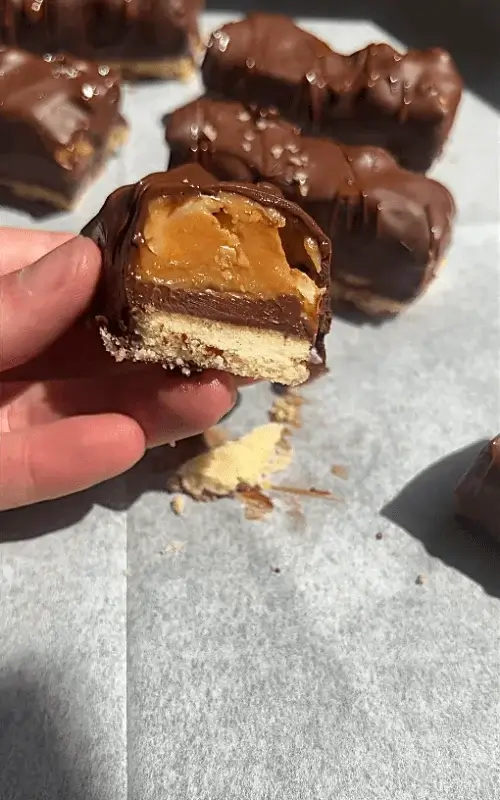
Homemade Snickers Recipe
Watch the Full Step-by-Step
- Mixing bowls
- Rolling Pin
- Rectangular baking pan
- Immersion blender
- Kitchen scale
INGREDIENTS
Shortcrust pastry:
- 1 ¼ cups/150 grams all-purpose flour
- 3.5 ounces/100 grams unsalted butter
- ½ cup/50 grams powdered sugar
- 1 large egg yolk
Chocolate ganache:
- 5.3 ounces/150 grams dark chocolate
- 1.8 ounces/50 grams milk chocolate
- ¾ cup/180 grams heavy cream
- 2 ounces/60 grams unsalted butter
- Pinch of salt
Caramel:
- ½ cup/100 grams granulated sugar
- ½ cup/120 grams heavy cream
- 3 ounces/80 grams unsalted butter
- Pinch of salt

INSTRUCTIONS
- Preheat the oven to 340°F/170°C.
- Mix flour, powdered sugar, and butter in a stand mixer with paddle attachment until crumbly. Add egg yolk and blend until smooth.
- Roll dough to 0.2-inch/0.5 cm thickness, transfer to a rectangular pan, and bake until lightly browned, 22 minutes. Cool slightly.
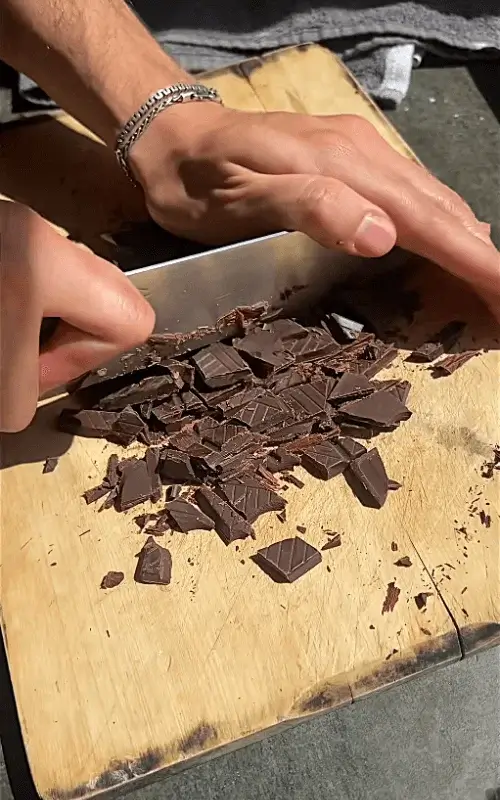
- Heat cream until hot, pour over chopped chocolate, add butter, and blend with an immersion blender until smooth. Pour ganache over baked crust and freeze for at least 1 hour.
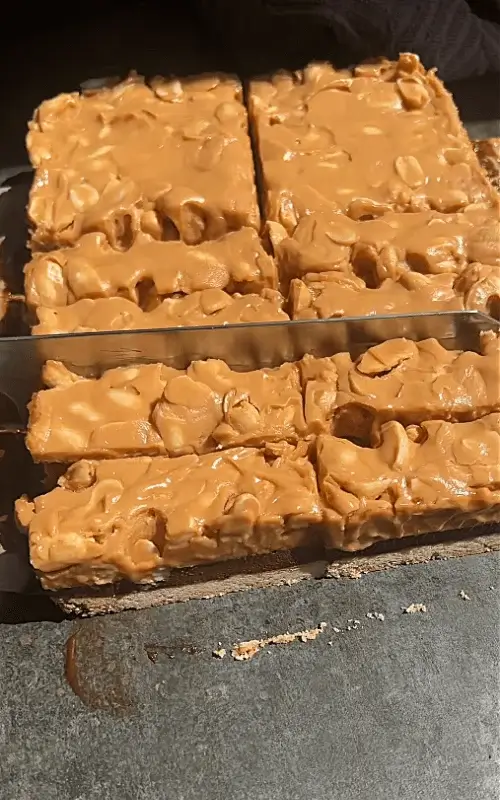
- Cook sugar in a saucepan until amber. Heat cream, then carefully pour over caramel while stirring. Add butter and mix until smooth. Pour over the ganache and spread evenly.
- Sprinkle roasted peanuts over caramel. Freeze until set.
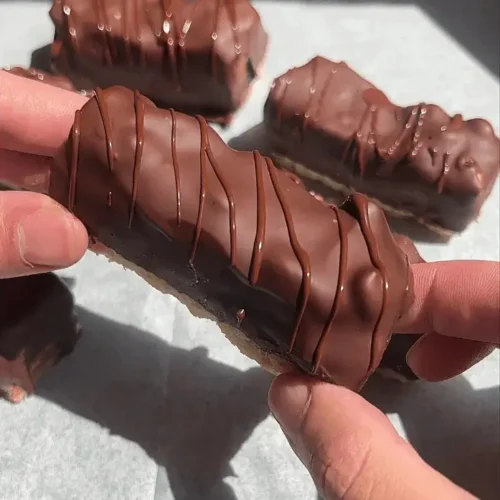
- Melt chocolate in the microwave in short bursts. Cut bars into rectangles and dip in melted chocolate. Chill until firm. Serve.

FAQ
What kind of peanuts are best to use in a homemade Snickers recipe?
Dry-roasted, unsalted peanuts are the best choice because they provide clean peanut flavor without introducing excess oil or salt that can overpower the caramel and chocolate. Dry-roasted peanuts offer a firm crunch that holds up well during freezing and slicing, maintaining texture throughout storage. If salted peanuts are used, the caramel and chocolate should be adjusted to avoid excessive saltiness.
Spanish peanuts deliver a stronger peanut flavor, while Virginia peanuts provide larger pieces and a more classic candy-bar bite. Peanuts should be completely cooled before adding to the caramel layer, as residual warmth can soften the caramel and cause uneven setting. Lightly chopping some of the peanuts while leaving others whole creates better distribution and improves bite consistency.
Why is freezing important between layers in a homemade Snickers recipe?
Freezing between layers is essential in a homemade Snickers recipe because it stabilizes each component before the next is added, ensuring clean separation and defined layers. The ganache must be fully set before caramel is poured, otherwise the heat from the caramel can melt or blend into the chocolate layer. Freezing also prevents peanuts from sinking unevenly and helps the caramel set quickly into a smooth, even sheet.
During chocolate coating, frozen bars hold their shape, allowing for fast setting and minimal dripping. Skipping or shortening freeze times often results in smeared layers, uneven cuts, and inconsistent texture. Controlled freezing improves both appearance and structural integrity without negatively affecting flavor.
How do you get clean, professional-looking cuts when slicing?
Clean cuts are achieved in a homemade Snickers recipe by slicing the bars while fully chilled but not rock solid. A long, sharp knife warmed under hot water and wiped dry between cuts prevents chocolate cracking and caramel drag. Cutting in one firm downward motion, rather than sawing, preserves sharp edges and layered definition. Marking portion sizes lightly before slicing helps maintain uniform bars. If the caramel is too soft, returning the slab to the freezer for 10 to 15 minutes firms it up without freezing solid.
What type of chocolate works best for coating a homemade Snickers?
The best chocolate for coating is couverture-style chocolate or high-quality bar chocolate with a cocoa butter content of at least 30 percent. This type of chocolate melts smoothly, coats evenly, and sets with a clean snap, which closely mimics the finish of a commercial candy bar. Dark chocolate provides balance against the sweet caramel and nougat-style layers, while milk chocolate delivers a more traditional Snickers-like flavor.
Avoid chocolate chips, as they contain stabilizers that prevent proper melting and result in a thick, dull coating. Tempering the chocolate, while optional, improves shine and texture and helps the coating stay firm at room temperature. If tempering is skipped, chilling the bars briefly after dipping ensures the chocolate sets evenly without streaks or bloom.
How do you prevent the caramel layer from becoming too hard or grainy?
Caramel texture is critical in a homemade Snickers recipe, and controlling temperature is the key to success. Cooking the sugar only to a deep amber color prevents bitterness while avoiding excessive heat that leads to hardness. Adding warm cream gradually reduces the risk of seized sugar and grainy texture. Butter should be incorporated after the cream is fully emulsified to ensure smoothness.
Overcooking the caramel after the dairy is added will evaporate too much moisture, resulting in a stiff or brittle layer once chilled. Using a heavy-bottomed saucepan promotes even heat distribution, while gentle stirring helps maintain a stable emulsion. Allowing the caramel to cool slightly before pouring also helps it set into a soft, sliceable consistency rather than a rigid layer.
Can the homemade Snickers be made ahead of time?
Fully assembled bars can be refrigerated for up to five days in an airtight container, layered with parchment to prevent sticking. For longer storage, freezing is ideal, as it preserves the structure of the ganache, caramel, and chocolate coating without compromising flavor. Bars should be thawed gradually in the refrigerator to prevent condensation, which can dull the chocolate surface. Avoid storing at room temperature for extended periods, especially in warm environments, as caramel may soften and chocolate may bloom.
How to prevent chocolate bloom when making homemade Snickers recipe
Chocolate bloom is usually caused by improper temperature control or moisture exposure. Fat bloom occurs when cocoa butter separates due to uneven cooling, while sugar bloom happens when condensation dissolves sugar on the chocolate surface. Using high-quality chocolate and melting it gently prevents damage to the cocoa butter structure.
Tempering the chocolate is the most reliable way to prevent bloom, as it stabilizes the cocoa butter crystals and produces a glossy, firm finish. If tempering is not used, keeping dipped bars refrigerated in an airtight container minimizes bloom risk. Allowing frozen bars to thaw slowly in the refrigerator before serving also prevents condensation, which is a common cause of surface discoloration in homemade Snickers.