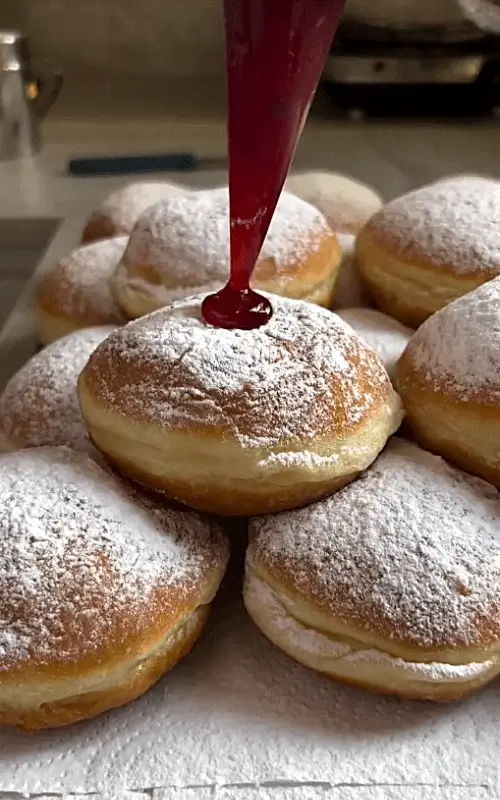
Classic Hanukkah Donuts (Sufganiyot)
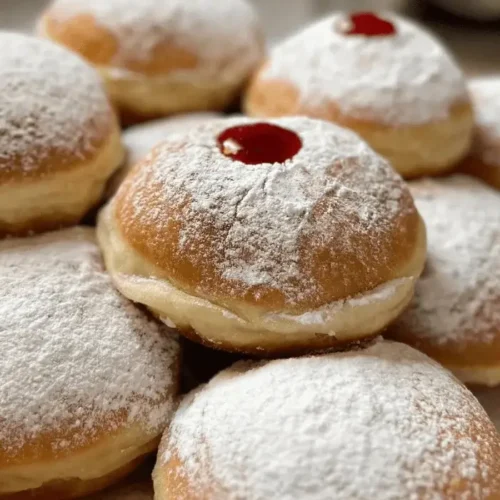
Watch the Full Step-by-Step
- Large mixing bowl
- Kitchen scale
- Bench scraper
- Thermometer
- Wire rack
INGREDIENTS
- 2 quarts/2 liters oil, for deep frying
- Powdered sugar
- Strawberry jelly, for filling
Dough:
- 4 cups/500 grams all-purpose flour
- 1 ounce/25 grams fresh yeast
- ½ cup/100 grams sugar
- 2 large eggs/100 grams
- 1 cup/240 grams lukewarm milk
- 1.4 ounces/40 grams unsalted butter, softened
- Pinch of salt
- 1 teaspoon vanilla paste

INSTRUCTIONS
- Place the flour, yeast and sugar in a stand mixer bowl. Attach the dough hook and mix on low speed. Pour in the milk and add the butter. Add the eggs and vanilla, then the salt. Knead until the dough is smooth and sticky, about 10 minutes.
- Transfer the dough to a greased bowl, cover and let rise for 1 hour at room temperature or overnight in the refrigerator.
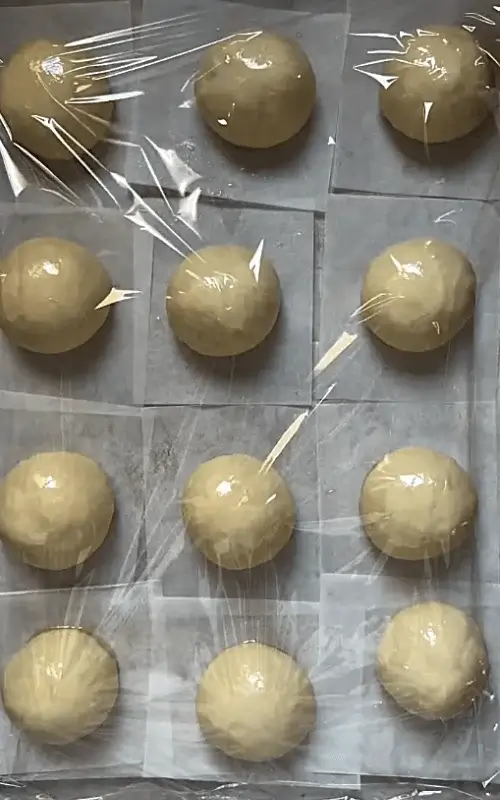
- Turn the dough onto a floured surface. Divide into 1.8-ounce (50–gram) pieces and roll into tight balls. Set each ball on a small square of parchment, cover with a towel and let rise until doubled.
- Heat the oil to 340°F/170°C.
- Lower the donuts into the oil using the parchment. Fry for about 2 minutes per side, until golden. Drain on a wire rack. Cool slightly, fill with jam using a piping bag and dust with powdered sugar.
FAQ
What is the best type of jam to use for Hanukkah donuts?
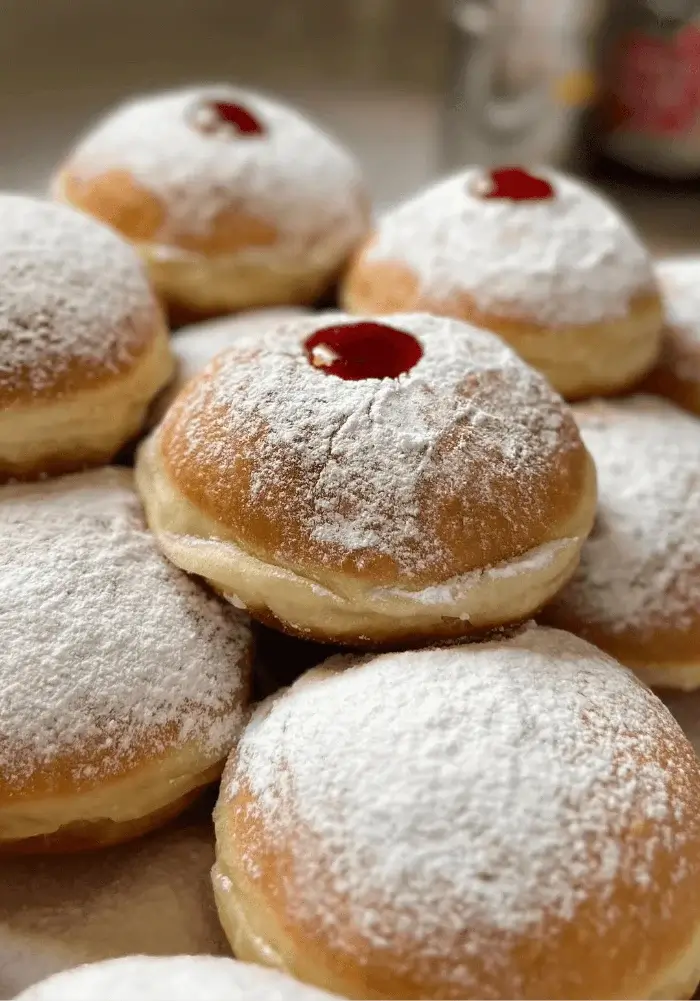
The best type of jam is one that has a smooth texture and balanced sweetness. Strawberry, raspberry, and apricot jams are popular choices because they complement the soft, airy dough without overpowering it. The jam should be thick enough to hold its shape when piped into the donuts but not so stiff that it tears the dough. Homemade jam or high-quality store-bought varieties work equally well. Avoid jams with large chunks of fruit, as they can create gaps in the filling. Ensure the jam is at room temperature for easy piping and even distribution inside each donut.
How do I know when the dough balls are fully risen?
They are fully risen when the dough has approximately doubled in size and feels light and airy to the touch. You can perform a gentle poke test: lightly press a finger into the dough, and if the indentation slowly springs back, the dough is ready. Rising time may vary depending on the room temperature or whether the dough has been refrigerated overnight. Properly proofed donuts will fry evenly, resulting in a golden exterior and tender interior. Under-proofed donuts can become dense, while over-proofed donuts may collapse in the oil, so careful monitoring is essential.
Can Hanukkah donuts be made ahead of time and stored?
Yes, but proper storage is important to maintain freshness. Once fried and cooled, donuts can be stored in an airtight container at room temperature for up to two days. For longer storage, unfilled donuts can be frozen for up to one month. To freeze, place them in a single layer on a tray until solid, then transfer to a freezer-safe bag or container. When ready to serve, reheat gently and fill with jam. Avoid freezing filled donuts, as the jam can leak and affect the texture. Dust with powdered sugar just before serving for best results.
How can I prevent the donuts from absorbing too much oil?
It is crucial to maintain the proper frying temperature of 160–170°C (320–340°F). Make sure the donuts are fully proofed before frying, as under-proofed dough tends to absorb more oil. Avoid overcrowding the pot, which can lower the oil temperature and lead to greasy donuts. Fry in small batches, and gently turn each donut only once or twice. Using a spider or slotted spoon allows you to remove the donuts efficiently. After frying, drain them on a wire rack instead of paper towels to allow excess oil to drip away without creating sogginess.

What type of flour works best for Hanukkah donuts?
All-purpose flour is ideal because it provides a balance of structure and tenderness. All-purpose flour contains enough protein to support proper gluten development, giving the donuts a soft, airy interior while holding their shape during frying. Bread flour can also be used for a chewier texture, but it may produce a slightly denser donut if over-kneaded. Cake flour is not recommended as it is too low in protein, resulting in a fragile dough that may tear when filled. Measuring flour by weight rather than volume ensures consistent results, which is particularly important for light, fluffy Hanukkah donuts.
Can I make Hanukkah donuts without eggs?
Eggs contribute to the dough’s richness, structure, and elasticity, so you can replace each egg with a mixture of ¼ cup unsweetened applesauce or 3 tablespoons yogurt for similar moisture. Keep in mind that egg-free donuts may be slightly less airy and tender than traditional ones. You may also need to increase kneading time slightly to develop the gluten for proper elasticity. For frying, follow the same temperature and timing recommendations. Egg-free Hanukkah donuts can still be filled with jam and dusted with powdered sugar to achieve the classic festive appearance.
Why are my donuts dense instead of light and fluffy?
Dense Hanukkah donuts usually indicate issues with proofing, kneading, or ingredient temperature. If the dough did not rise fully, the donuts lack the air pockets that make them soft and fluffy. Over-kneading or using too much flour can also create a tight, dense texture. Yeast activity is critical, so check that your yeast is fresh and that the milk is lukewarm (around 105–110°F/40–43°C) to activate it without killing it. Make sure to allow the dough to double in size during both initial and final proofing. Fry at the correct temperature, 160–170°C (320–340°F), to cook the donuts evenly without absorbing excess oil.