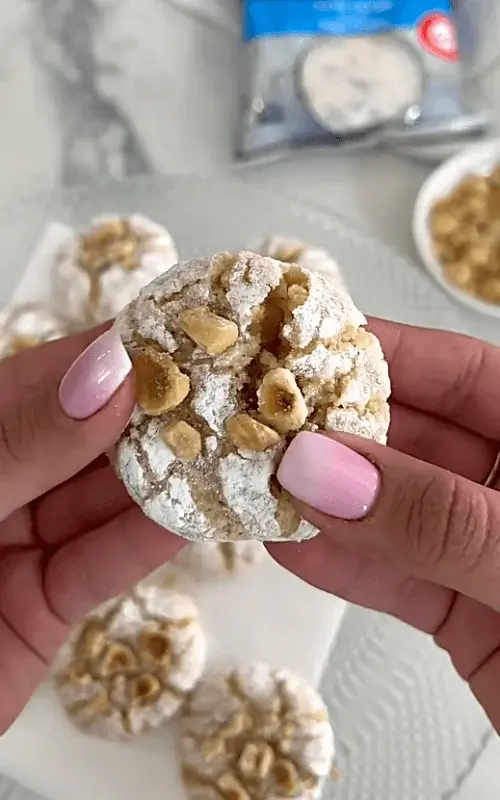
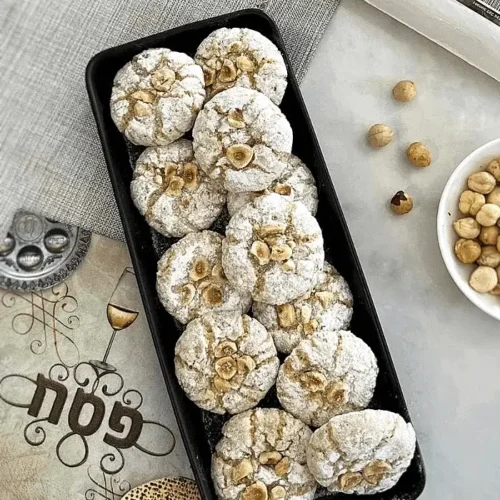
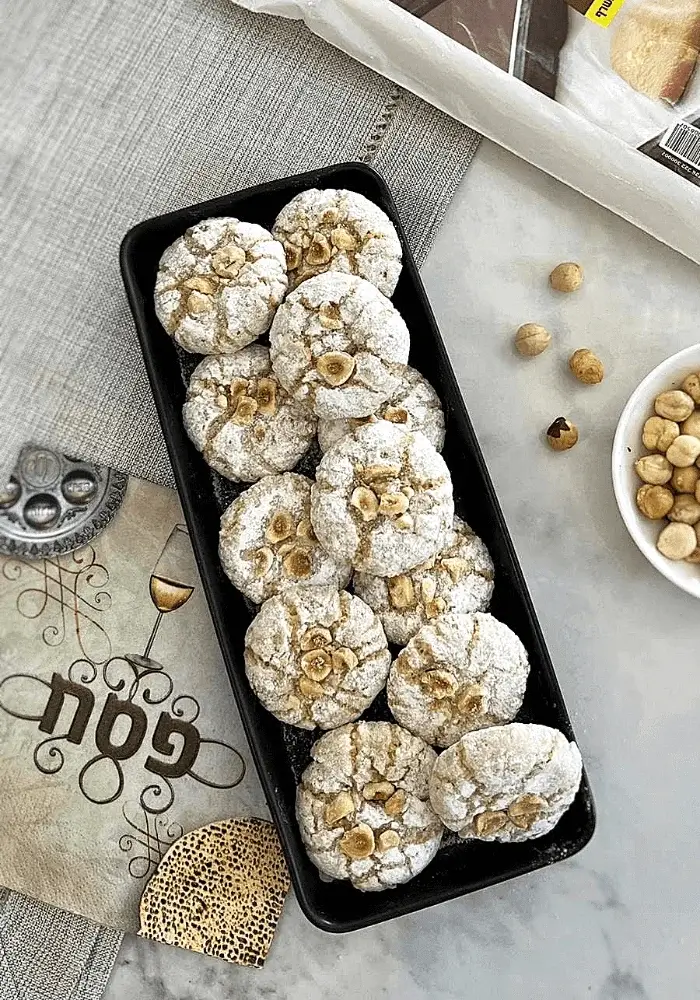
Gluten Free Amaretti Cookies (Almond Cookies)
Watch the Full Step-by-Step
- Mixing bowls
- Baking sheet
- Wire rack
- Kitchen scale
INGREDIENTS
- ½ cup powdered sugar
- ½ cup halved hazelnuts
Cookies:
- 3 large egg whites/90 grams
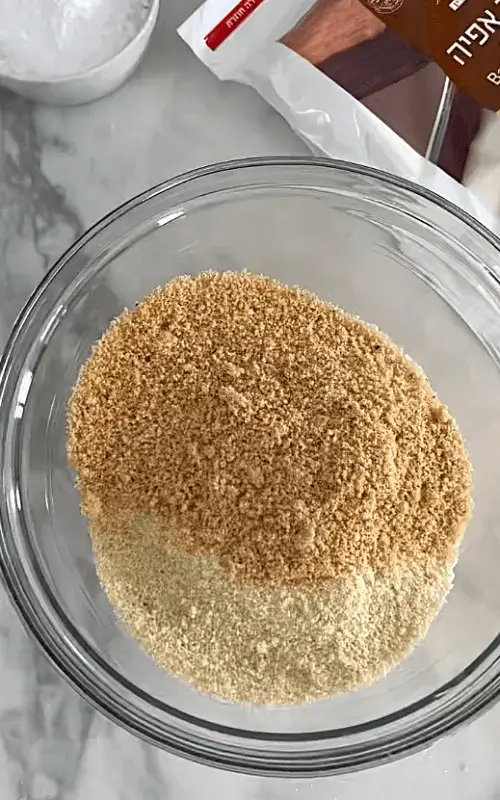
- 2 cups/200 grams almonds, finely ground
- 1 cup/100 grams hazelnuts, roasted and finely ground
- 1 cup/200 grams sugar
- Pinch of salt

INSTRUCTIONS
- Heat the oven to 320°F/160°C and line a large baking sheet with parchment paper.
- In a medium bowl, whisk together the ground almonds, ground hazelnuts, and sugar.
- In the bowl of a stand mixer fitted with the whisk attachment, beat the egg whites and salt on medium-high speed until stiff peaks form. Reduce speed to low and gradually fold in the nut mixture in small additions, mixing until a thick, even dough forms.
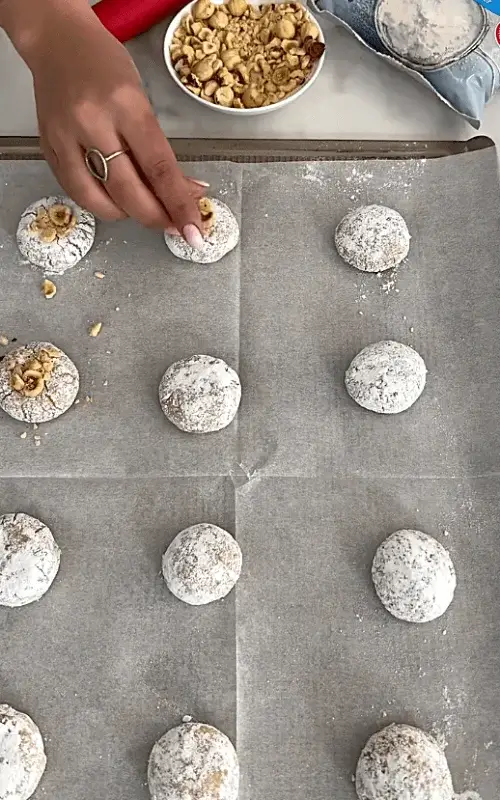
- Using your hands or a small scoop, shape the dough into 1-inch/2.5 cm balls. Roll each ball in powdered sugar and place on the prepared baking sheet, leaving about 1 inch/2.5 cm of space between cookies. Top each with a halved hazelnut.
- Bake for 13 to 15 minutes, until the cookies are lightly cracked and just golden around the edges. Let cool on the sheet for 5 minutes before transferring to a rack.
FAQ
How can I make gluten free amaretti cookies softer or chewier?
You can slightly adjust the nut-to-sugar ratio and avoid overbaking. Using freshly ground almonds and hazelnuts helps maintain moisture, while folding the nut mixture gently into whipped egg whites preserves a light, airy texture. Reducing baking time by one or two minutes and removing the cookies from the oven when edges are just golden ensures a soft interior. Storing the cookies in an airtight container with a slice of bread or apple can also help maintain chewiness by retaining moisture.
Is it possible to make these gluten free amaretti cookies without egg whites?
Egg whites provide structure and help gluten free amaretti cookies rise and hold their shape, so removing them requires a substitute that mimics these properties. Aquafaba, the liquid from canned chickpeas, is the best alternative and can be whipped to stiff peaks just like egg whites. Use approximately 3 tablespoons of aquafaba per egg white. Another option is using commercial egg replacers designed for meringues. Keep in mind that texture may be slightly different, potentially less airy, but the cookies will still retain their nutty flavor and crisp exterior.
Can I use different types of sugar?
You can experiment with different sugars in gluten free amaretti cookies, but this will affect texture and sweetness. Granulated white sugar produces a classic light and crisp texture, while coconut sugar or raw cane sugar may make cookies slightly denser and darker. Powdered sugar is ideal for rolling the cookies and creating a delicate exterior. Brown sugar can add moisture and chewiness but may reduce the crisp edges. It’s important to keep the total sugar weight consistent to maintain the structure and prevent the cookies from spreading too much during baking.
What is the best way to prevent the cookies from cracking too much?
To minimize excessive cracking in gluten free amaretti cookies, ensure the dough is mixed gently and evenly. Folding the nut mixture into the whipped egg whites carefully maintains the right balance of structure and moisture. Avoid overbaking, as high heat and long bake times can cause deep cracks. Rolling the dough balls evenly and coating them thoroughly in powdered sugar helps create a smooth outer layer, which also controls cracking. Letting the cookies rest for a few minutes on the baking sheet after removing from the oven allows them to set gradually and reduces abrupt cracks
What flavor variations can i add to these gluten free amaretti cookies?
Adding finely grated citrus zest such as orange or lemon can brighten the nutty flavor, while a pinch of cinnamon or cardamom adds warmth. A few drops of almond or hazelnut extract can intensify the nut flavor without affecting texture. You could also fold in mini chocolate chips or dip the baked cookies in dark chocolate for extra richness. It’s important to avoid adding wet ingredients, which can alter dough consistency and affect the cookies’ ability to hold shape and develop the classic lightly cracked exterior.
What is the best method for shaping the cookies?
After the dough is mixed, use a small scoop or your hands to form 1-inch/2.5 cm balls. Rolling them evenly in powdered sugar ensures a crisp exterior and prevents sticking to the baking sheet. Pressing a halved hazelnut gently into the top helps the cookie bake evenly and adds visual interest. Avoid flattening the balls too much, as this can cause them to spread excessively in the oven. Maintaining consistent spacing of about 1 inch/2.5 cm ensures even heat circulation and prevents cookies from merging during baking.