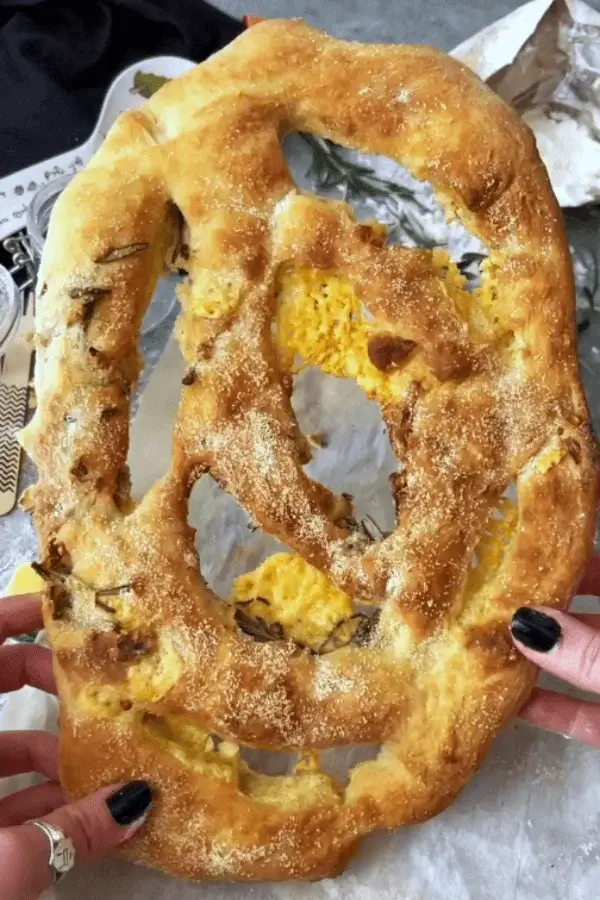
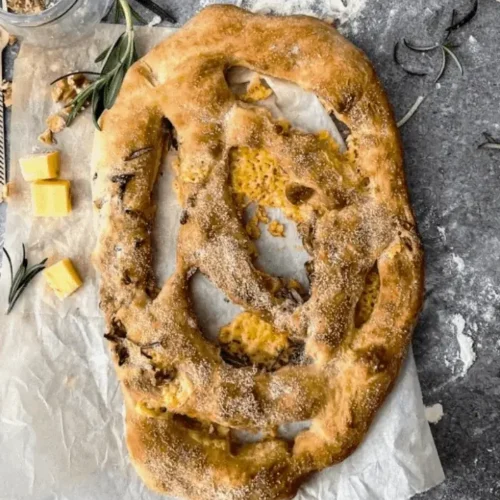
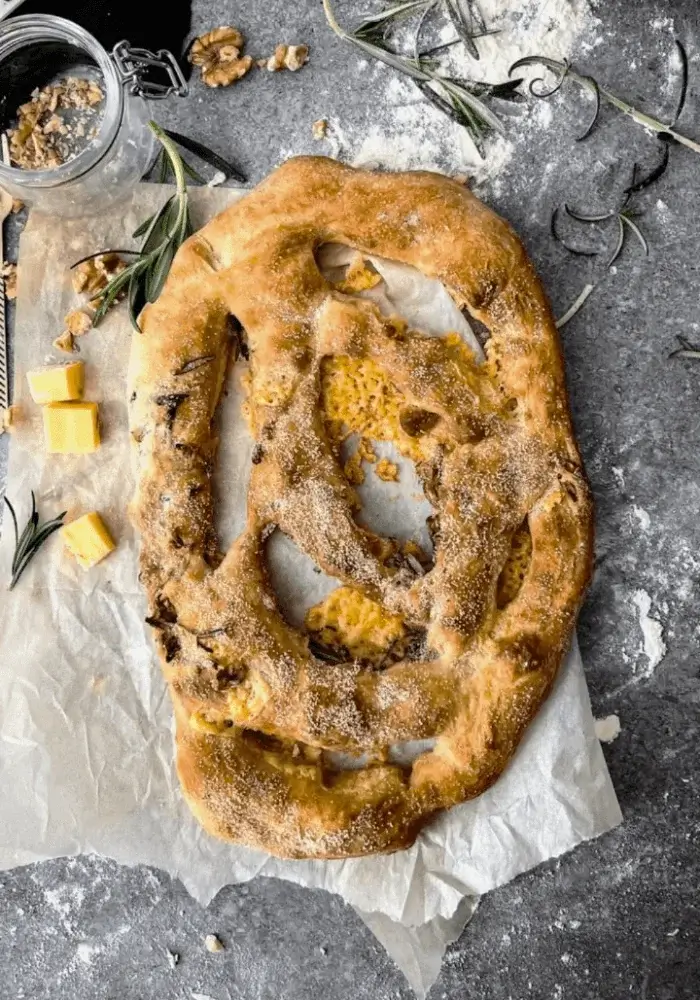
Fougasse Bread with Gouda and Walnuts
Watch the Full Step-by-Step
- Large mixing bowl
- Bench scraper
- Rolling Pin
- Baking sheet
- Wire rack
INGREDIENTS
- 3 ½ cups/500 grams bread flour, sifted
- 1 tablespoon/10 grams dry yeast
- 1 teaspoon/8 grams salt
- 1 teaspoon/5 grams sugar
- 3 tablespoons/50 milliliters olive oil
- 1 ½ cups/340 milliliters water
Toppings:
- ¾ cup/75 grams walnuts, coarsely chopped
- 5 ½ ounces/150 grams Gouda cheese, cut into cubes
- 3 sprigs fresh rosemary
- 3 tablespoons olive oil, for brushing
- 3 tablespoons semolina, for sprinkling

INSTRUCTIONS
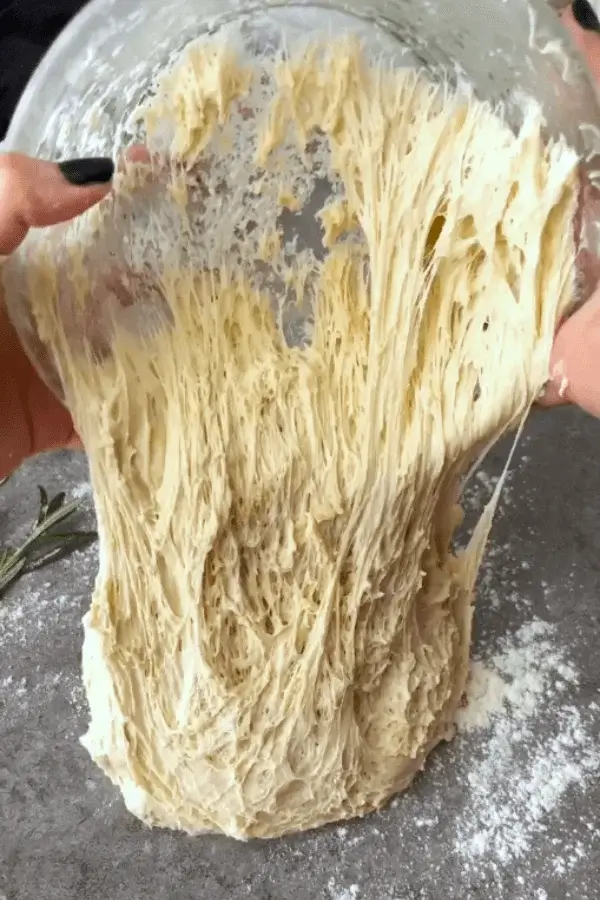
- In a large mixing bowl, combine the flour, yeast, salt, and sugar. Add the olive oil and water, and mix by hand just until a cohesive dough forms. Cover with plastic wrap and let rest for 30 minutes.
- Lift four corners of the dough and fold them into the center. Cover and let rest for another 30 minutes. Repeat the folding process once more, then let rest again for 30 minutes.
- Transfer the dough to a lightly floured surface, making sure it is dusted on all sides. Divide into three equal portions. Roll each into a rectangle, scatter walnuts, Gouda, and rosemary on top, then press gently to secure. Fold one half of the rectangle toward the center, then fold the other half over it. Press lightly to flatten and cut slits into the surface. Repeat with the remaining portions.
- Preheat the oven to 450°F (230°C). Arrange the loaves on a baking sheet lined with parchment. Brush with olive oil, sprinkle with semolina, and bake for 15 minutes, until deeply golden and the cheese is bubbling. Cool slightly on a wire rack before serving.
FAQ
How do I keep the fougasse bread soft after baking?
Allow it to cool slightly on a wire rack and then wrap it in a clean kitchen towel to trap some moisture. Once cooled, transfer it to an airtight container or bread bag at room temperature, which helps prevent the crust from hardening too much. Fougasse is best eaten the same day, but if storing overnight, avoid refrigerating as that dries it out. Instead, reheat in a warm oven for 5 minutes to refresh the texture.
Can I prepare the dough ahead of time?
The dough can be prepared ahead of time to develop more flavor and flexibility in baking schedules. After the first rise, cover the dough tightly and refrigerate it for up to 24 hours. This slow fermentation improves the taste and makes the dough easier to handle. When ready to bake, remove it from the refrigerator, let it come back to room temperature, and continue shaping and adding toppings as directed.
What other cheeses can I use in this fougasse bread?
Gruyère, Emmental, or Fontina melt beautifully while adding depth of flavor. For a stronger option, try blue cheese crumbles combined with walnuts for a savory twist. Softer cheeses like mozzarella can be used but will create more moisture, so pair them with drier toppings such as sun-dried tomatoes. The key is selecting cheeses that melt evenly and complement the bread’s rustic character without overwhelming the rosemary and walnut balance.
Can I freeze this bread?
Sure. Once baked and fully cooled, wrap each piece tightly in plastic wrap and place in a freezer-safe bag. It will keep for up to two months. To serve, thaw at room temperature and warm in a 350°F oven for about 8–10 minutes until crisped again and the cheese is melty. Freezing shaped but unbaked dough is another option, though it must be thawed overnight in the refrigerator before baking.

Can I make the fougasse bread without yeast?
Traditional fougasse bread relies on yeast for its airy texture and characteristic chew, but it can be adapted with baking powder if yeast is unavailable. The texture, however, will be denser and more biscuit-like rather than light and open-crumbed. To substitute, use about 2 teaspoons of baking powder for every 3 ½ cups/500 grams of flour and reduce the resting time since no fermentation is needed.
What is the best way to serve the bread?
The bread can be served warm as an appetizer with dips like hummus or olive tapenade, or as part of a cheese and charcuterie board. It also complements soups, stews, or roasted meats because of its chewy crust and savory toppings. When sliced into strips, it makes an excellent accompaniment to salads, especially those with vinaigrettes that balance the richness of the bread. Because it is so aromatic and flavorful, fougasse bread is often enjoyed on its own with just a drizzle of olive oil.
Is this fougasse bread similar to focaccia?
Although fougasse bread and focaccia share similarities, they are distinct styles of bread. Focaccia is typically baked as a thick, fluffy sheet pan bread topped with olive oil, herbs, or vegetables, while fougasse is shaped into flat, decorative loaves, often resembling leaves. The texture of fougasse is slightly chewier and crispier at the edges, and it is usually stuffed or topped with cheese, nuts, or herbs. Both breads originate from Mediterranean traditions, but fougasse bread is more closely associated with the rustic, artisanal loaves of Provence in southern France.