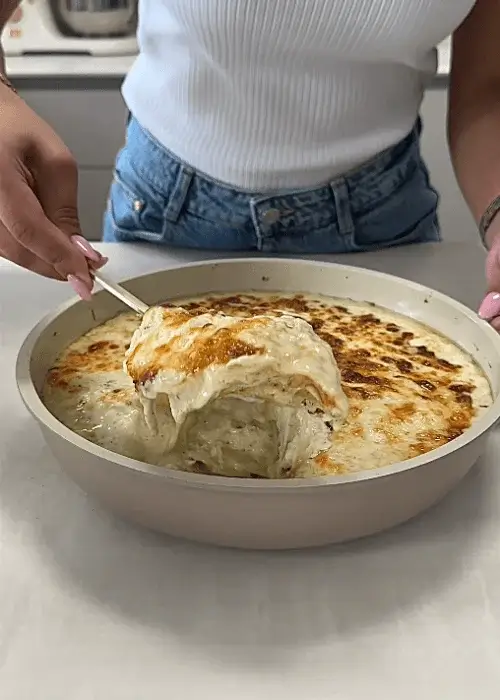
Classic Creamy Potato Gratin
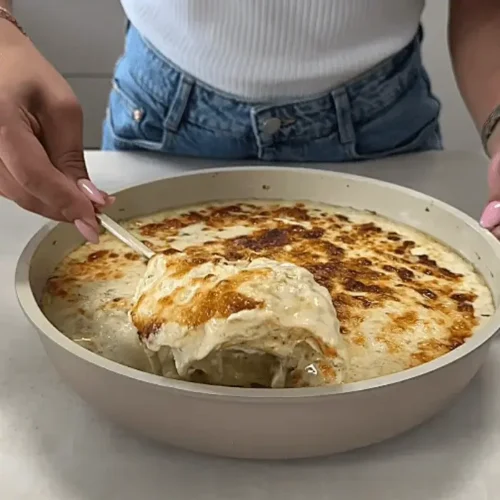
Watch the Full Step-by-Step
- Mandoline slicer
- Large skillet
INGREDIENTS
- 5 medium potatoes, peeled and thinly sliced
- 2 tablespoons unsalted butter
- 1 tablespoon olive oil
- 2 shallots, finely chopped
- 1 leek, thinly sliced
- 1 sprig fresh thyme
- 2 cups/480 grams heavy cream
- 1 teaspoon salt
- ½ teaspoon ground black pepper
- ½ cup/50 grams Parmesan cheese, finely grated
- 1 cup/100 grams mozzarella, grated
- 1 cup/100 grams Gouda, grated

INSTRUCTIONS
- Heat the oven to 350°F/180°C.
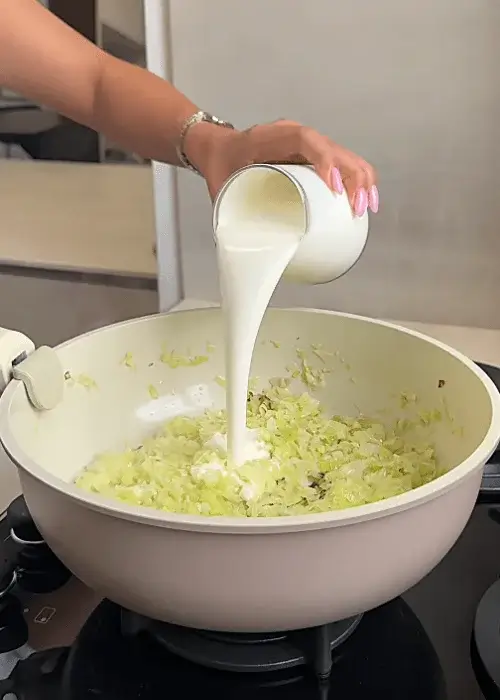
- In a large skillet over medium heat, melt the butter with the olive oil. Add the shallots and cook, stirring occasionally, until soft and translucent, 3 to 4 minutes. Add the leek and cook until tender and lightly softened, about 5 minutes. Add the thyme and cream, season with the salt and pepper, and bring to a gentle simmer. Cook until slightly thickened and the flavors meld, 8 to 10 minutes. Remove from heat, discard the thyme sprig, and stir in the Parmesan.
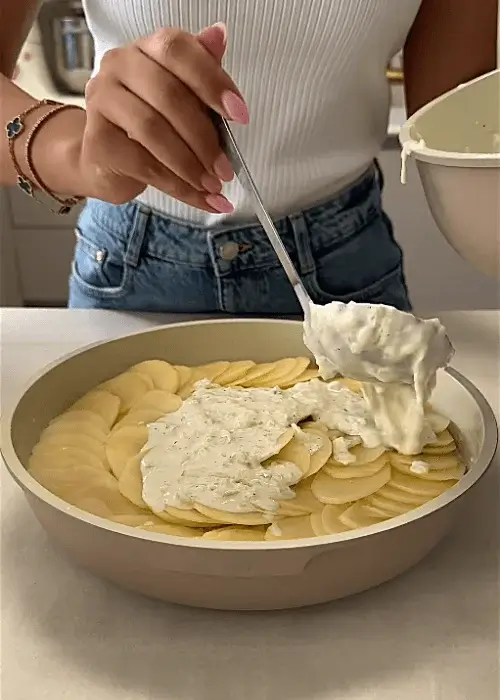
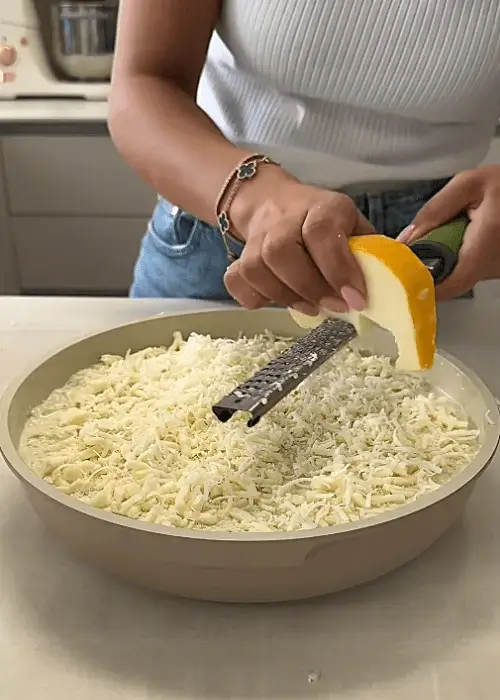
- Arrange a tight, slightly overlapping layer of potato slices in a buttered baking dish. Spoon over half of the cream mixture and spread evenly. Sprinkle half of the mozzarella. Add a second layer of potatoes, then pour over the remaining cream mixture and smooth the top. Finish with the remaining mozzarella and the Gouda.
- Cover tightly with foil and bake until the potatoes are tender when pierced with a knife, about 45 minutes. Remove the foil and continue baking until the top is deeply golden brown and bubbling, 20 to 25 minutes more. Let rest for 10 minutes before serving.
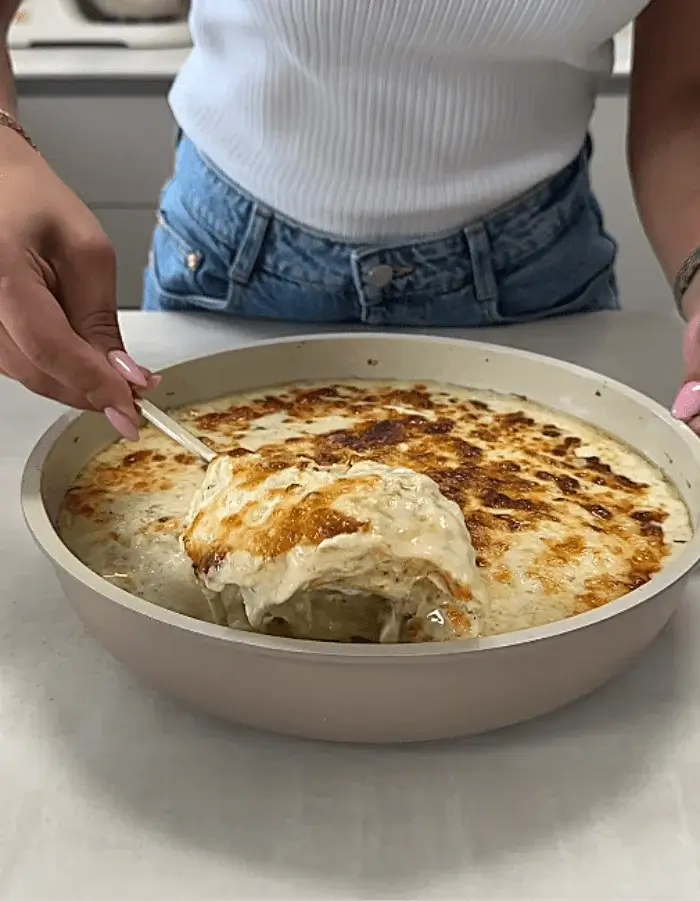
FAQ
Why is mandoline slicing important for creamy potato gratin?
A mandoline is essential for creamy potato gratin because it ensures uniform, paper-thin slices that cook evenly in the same amount of time. When potato slices vary in thickness, some remain firm while others overcook and break down, leading to a layered dish with inconsistent texture. Thin, even slices allow the cream mixture to penetrate between layers, creating a cohesive structure rather than a separated bake.
Ideally, the potatoes should be sliced about 1–2 mm thick. This precision is what produces the signature tender, sliceable layers rather than a loose casserole. Without a mandoline, a very sharp knife can work, but achieving consistency becomes more difficult, and cooking time may need adjustment to ensure the creamy potato gratin bakes evenly throughout.
Can creamy potato gratin be made ahead of time and reheated?
Yes, this potato gratin can be made ahead, and it often benefits from resting, which allows the starches to fully absorb the cream mixture and set into a more structured dish. To prepare in advance, assemble the entire gratin, cover it tightly, and refrigerate for up to 24 hours before baking. When ready to cook, allow it to sit at room temperature for about 30 minutes before placing it in the oven to reduce temperature shock and promote even cooking.
If reheating a fully baked creamy potato gratin, cover it with foil and warm it in a 325°F/165°C oven until heated through. The texture may tighten slightly after refrigeration, but the cream and cheese still hold the layers together well. Avoid microwaving if possible, as it can cause uneven heating and a rubbery texture in the cheese.
Why does the cream sometimes curdle or separate during baking?
Cream separation in creamy potato gratin usually happens when the dairy overheats, when there is insufficient starch stabilization, or when the oven temperature is too high or uneven. Heavy cream is generally stable, but prolonged exposure to high heat or direct boiling can cause the fat to separate from the liquid, resulting in a broken or grainy texture.
In this recipe, simmering the cream briefly with aromatics and Parmesan helps stabilize it, while the potatoes naturally release starch that further emulsifies the mixture during baking. Using full-fat cream is essential, as lower-fat alternatives are more prone to curdling. Keeping the oven at a steady 350°F/180°C and covering the dish during the initial bake also helps maintain gentle heat distribution, ensuring a smooth and cohesive creamy potato gratin rather than a split sauce.
What cheeses can be substituted in creamy potato gratin?
Creamy potato gratin is flexible when it comes to cheese, but substitutions should prioritize meltability and flavor balance. Parmesan provides sharpness and umami, while mozzarella offers stretch and mild creaminess, and Gouda contributes a buttery, slightly nutty profile. If substituting, Gruyère is one of the best alternatives to Gouda due to its similar melt quality and deeper savory flavor.
Fontina can replace mozzarella for a richer, silkier melt, while aged Asiago can stand in for Parmesan if a sharper profile is desired. Avoid overly dry or low-moisture hard cheeses as the primary melting component, as they can become grainy or oily under heat. The key to a successful creamy potato gratin is balancing at least one meltable cheese with one that adds structure and depth, ensuring both texture and flavor complexity remain intact.
How do you know when creamy potato gratin is fully cooked?
Creamy potato gratin is fully cooked when the potatoes are completely tender throughout and the top is evenly golden brown with bubbling edges. The most reliable test is inserting a thin knife or skewer into the center; it should glide through the layers without resistance. If there is any firmness, the dish needs additional baking time covered to allow the steam and cream to continue softening the potatoes.
Visual cues are also important: the cream should have thickened into a cohesive sauce rather than remaining liquid, and the cheese on top should be deeply caramelized but not burnt. Resting time is also critical, as creamy potato gratin continues to set after removal from the oven. A 10-minute rest allows the layers to stabilize so the dish can be cut cleanly while still remaining rich and creamy inside.
Can creamy potato gratin be frozen and baked later?
Creamy potato gratin can be frozen, but it is not ideal if you are aiming for the cleanest texture and most stable cream emulsion. Freezing raw or unbaked gratin often leads to slight breakdown of the cream and a softer, more watery structure once baked. If you choose to freeze it, assemble the creamy potato gratin completely, wrap it tightly to prevent freezer burn, and freeze for up to 1 month.
Bake directly from frozen at a lower temperature first, around 325°F/165°C, to allow even thawing and cooking, then finish at 350°F/180°C for browning. A better option is to bake it fully, cool it completely, then freeze portions. Reheating baked creamy potato gratin preserves flavor better, though the texture will be slightly looser than fresh.
Why do the potatoes sometimes stay firm in creamy potato gratin?
Undercooked potatoes in creamy potato gratin usually come down to slice thickness, oven temperature, or insufficient moisture penetration. If potato slices are too thick or uneven, the outer layers may soften while the center remains firm. Another common issue is inadequate cream coverage between layers, which prevents proper steam and starch absorption during baking.
Oven temperature fluctuations can also slow down gelatinization of the potato starch, especially if the dish is baked uncovered too early. For reliable results, potatoes should be sliced thin and uniformly, ideally using a mandoline, and fully coated with the cream mixture. Covering the dish for the majority of the bake traps steam, which is essential for breaking down the starch structure and ensuring a fully tender creamy potato gratin.
How can you get a crispier top on creamy potato gratin?
A crispier top on creamy potato gratin depends on both cheese selection and finishing technique. Using a combination of mozzarella and Gouda already promotes good browning and melt, but for extra crispness, ensure the top layer is evenly distributed without excess moisture pooling before baking. Removing the foil for the final stage of baking is essential, as it allows steam to escape and the surface to dry slightly.
You can also extend the final bake by a few minutes while closely monitoring color development. For an even more pronounced crust, placing the dish under the broiler for 1 to 3 minutes at the end can intensify browning, but it requires close attention to avoid burning. Letting the creamy potato gratin rest briefly after baking also helps the top firm up slightly while maintaining a creamy interior.
What type of cream works best for creamy potato gratin?
Heavy cream with a fat content around 36 to 40 percent is the most reliable choice. This high fat content stabilizes the sauce during baking, preventing separation and ensuring a rich, cohesive texture. Lower-fat creams or half-and-half tend to break under prolonged heat, leading to a watery or grainy gratin.
The cream should also be fresh and not ultra-pasteurized if possible, as less processed cream emulsifies more smoothly. In this recipe, the cream is gently simmered with aromatics and Parmesan before baking, which further stabilizes it and enhances flavor integration. The result is a creamy potato gratin with a silky, cohesive sauce that clings to each layer of potato rather than pooling at the bottom of the dish.