Classic Dulce de Leche Cookies
Watch the Full Step-by-Step
- Mixing bowls
- Fine-mesh sieve
- Rolling Pin
- Round cookie cutter
- Baking sheets
- Kitchen scale
INGREDIENTS
- 7 ounces/200 grams unsalted butter, softened
- 1 cup/150 grams powdered sugar
- 4 large egg yolks
- 1½ cups/210 grams cornstarch
- 1¼ cups/160 grams all-purpose flour
- 1½ teaspoons/5 grams baking powder
- 1 cup/250 grams dulce de leche, for filling
- 1 cup shredded coconut, for coating

INSTRUCTIONS
- Beat the butter and powdered sugar until smooth, pale, and creamy. Add the egg yolks and mix just until incorporated. Sift together the cornstarch, flour, and baking powder, then gently fold into the mixture until a soft, smooth dough forms.
- Divide the dough in half. Roll each portion between two sheets of parchment paper into an even rectangle about ¼ inch thick. Transfer to the freezer and chill until firm but pliable, 10 to 15 minutes.
- Heat the oven to 350°F/175°C convection. Remove the parchment, cut the dough into rounds of the desired size, and arrange on parchment-lined baking sheets, leaving a small space between cookies. Bake until set but still pale, about 12 minutes; the cookies should not brown.
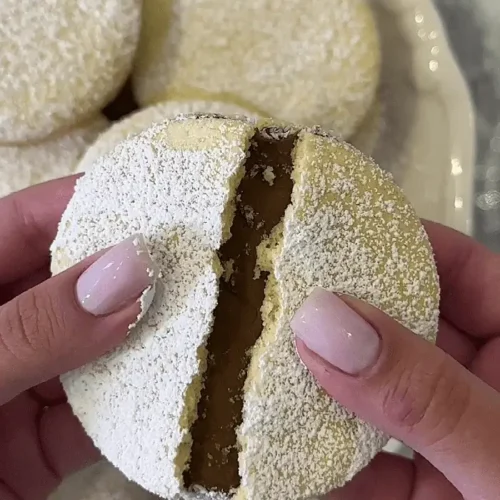
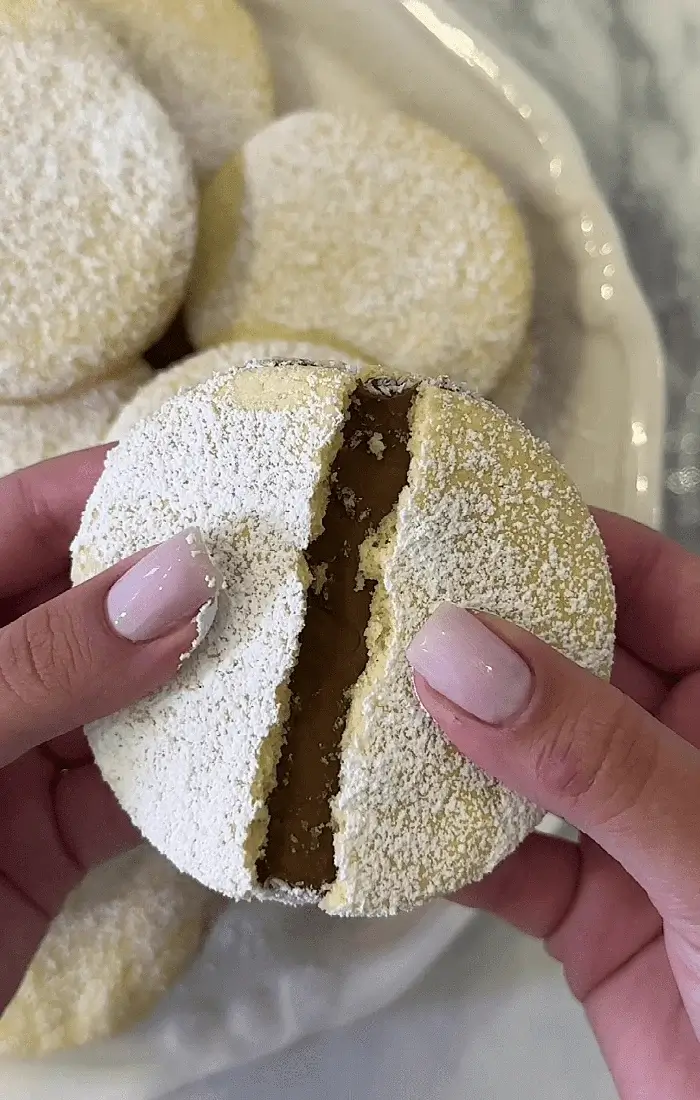
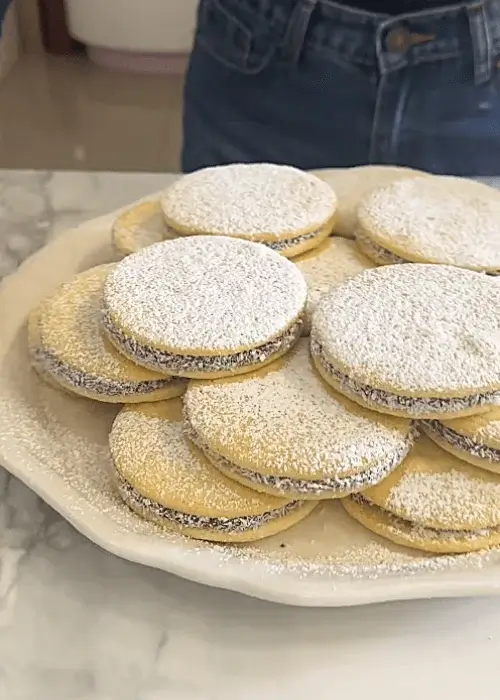
- Let cool completely. Spoon dulce de leche onto the flat side of half the cookies, sandwich with the remaining cookies, and gently roll the edges in shredded coconut. Store airtight or serve immediately.
FAQ
Why is cornstarch used instead of more flour in dulce de leche cookies?
Cornnstarch is essential to the signature texture of dulce de leche cookies, especially classic alfajores-style cookies. Unlike flour, cornstarch contains no gluten-forming proteins, so it does not create structure or chew when mixed with fat and liquid. Instead, it produces an extremely tender, delicate crumb that almost dissolves on the tongue. Using more flour would introduce gluten development, resulting in firmer, breadier cookies that lose the characteristic melt-in-your-mouth quality associated with dulce de leche cookies.
Cornstarch also absorbs moisture differently than flour, helping the cookies remain soft even after filling. The balance between cornstarch and flour is critical: the flour provides just enough structure to handle rolling and baking, while the cornstarch keeps the final cookie light, fragile, and pale. This is why these cookies are baked until just set, not browned, preserving their refined texture.
How do you prevent the cookies from spreading or browning too much?
It comes down to temperature control, fat management, and baking technique. First, the dough must be chilled thoroughly before baking. Cold butter solidifies the fat, slowing melt in the oven and helping the cookies retain sharp edges. Rolling the dough evenly to about ¼ inch thickness ensures consistent baking and prevents thin spots that brown too quickly.
Baking at a moderate temperature, such as 350°F/175°C convection, allows the cookies to set gently without caramelizing the sugars. Powdered sugar is another key factor, as it dissolves easily and browns less aggressively than granulated sugar. Finally, removing the cookies as soon as they are set but still pale is crucial.

What is the best way to fill and store the cookies for optimal texture?
Dulce de leche should be at room temperature so it spreads easily without pressure, which could crack the cookies. Apply a modest, even layer to the flat side of one cookie, then gently press the second cookie on top until the filling reaches the edges. Rolling the sides in shredded coconut not only adds flavor but also helps seal the filling and protect the cookie edges.
For storage, place the filled dulce de leche cookies in an airtight container in a single layer or separated by parchment. At room temperature, they keep well for up to three days and actually improve in texture as the filling softens the cookies slightly. Refrigeration firms the cookies and filling, but they should be brought back to room temperature before serving for the best texture.
Can dulce de leche cookies be made ahead of time and frozen?
The unbaked dough freezes exceptionally well and is the best option for make-ahead baking. Once rolled and chilled between parchment, the dough can be frozen for up to one month, tightly wrapped to prevent moisture absorption. When ready to bake, thaw just until pliable, cut, and bake as directed. Baked but unfilled cookies can also be frozen successfully.
They should be cooled completely, layered with parchment, and stored in an airtight container for up to six weeks. Filled dulce de leche cookies are more delicate and do not freeze as cleanly; the filling can weep slightly upon thawing, softening the cookies unevenly. For best results, freeze components separately and assemble after thawing to maintain the refined texture that defines classic dulce de leche cookies.
What type of dulce de leche works best for sandwiching cookies?
The ideal dulce de leche for sandwiching dulce de leche cookies is thick, smooth, and spoonable, not pourable. A pastry-grade dulce de leche with a high milk solids content provides structure and prevents excessive seepage into the cookies. Thin caramel-style products tend to leak, making the cookies soggy and difficult to handle.
When selecting store-bought dulce de leche, look for one labeled as repostero or pastry-style, which is formulated specifically for fillings. Homemade dulce de leche can also be used, but it should be cooked until dense and fully cooled before filling. Texture matters more than sweetness, as overly loose filling compromises the delicate crumb of dulce de leche cookies.
Why do dulce de leche cookies crack easily?
The cookies are intentionally fragile due to their high cornstarch content, which gives them their signature tenderness but also makes them prone to cracking. Cracks usually occur when the dough is too cold, rolled too thin, or overworked. Allowing the dough to rest briefly after chilling helps prevent fractures during cutting. Rolling evenly between parchment paper avoids stress points that lead to breakage.
During assembly, cookies should be completely cooled and handled gently, especially when spreading the filling. Pressing too firmly can cause the cookie to split at the edges. Using room-temperature dulce de leche minimizes pressure and allows the cookies to adhere naturally.
Can you flavor or customize dulce de leche cookies without affecting texture?
Small amounts of vanilla extract, citrus zest, or finely ground espresso powder can be incorporated into the butter mixture without altering dough behavior. Dry flavorings should be finely milled and added sparingly, as excess solids can weaken cohesion. Spices such as cinnamon or cardamom should be used in minimal quantities, as they can absorb moisture and affect tenderness.
The dough does not tolerate heavy inclusions like nuts or chocolate chips, which disrupt the crumb and cause cracking. Flavor variation is better introduced through the filling or coating rather than the dough itself. Maintaining the cornstarch-to-flour ratio is essential; altering it for flavor will fundamentally change the texture of classic dulce de leche cookies.
How long do dulce de leche cookies improve after filling, and why?
The cookies typically improve within the first 12 to 24 hours after assembly. During this resting period, moisture from the filling migrates gently into the cookie layers, softening them slightly without making them soggy. This process creates a more cohesive bite and enhances the melt-in-the-mouth quality that defines well-made dulce de leche cookies.
Freshly assembled cookies can feel crumbly or dry at the edges, but a short rest allows the sandwich to settle and mature. Proper storage in an airtight container at room temperature is key to controlled moisture exchange. Beyond two to three days, the cookies remain enjoyable but may lose some structural integrity. This brief maturation window is intentional and is part of why dulce de leche cookies are often assembled a day before serving in professional kitchens.