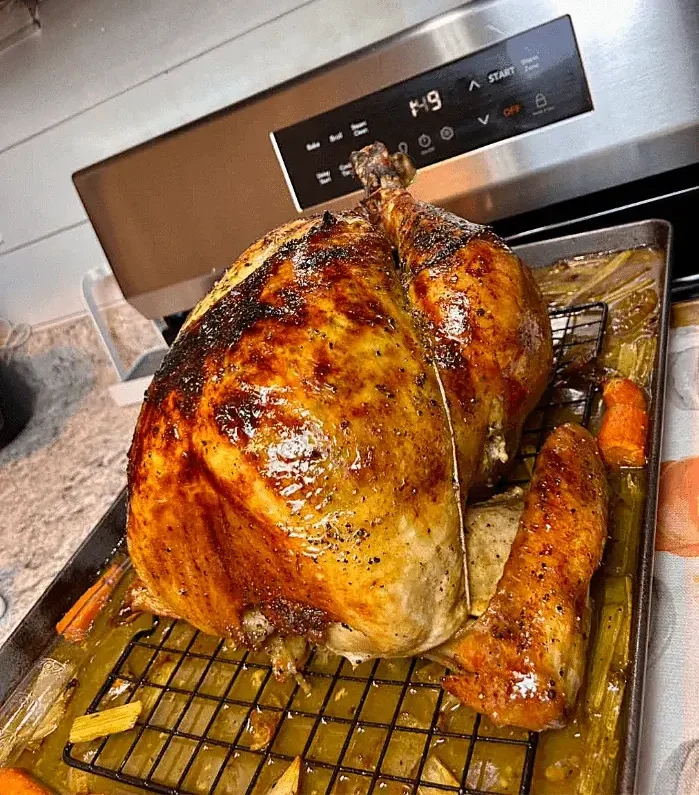
Citrus Turkey Recipe with Herb Butter
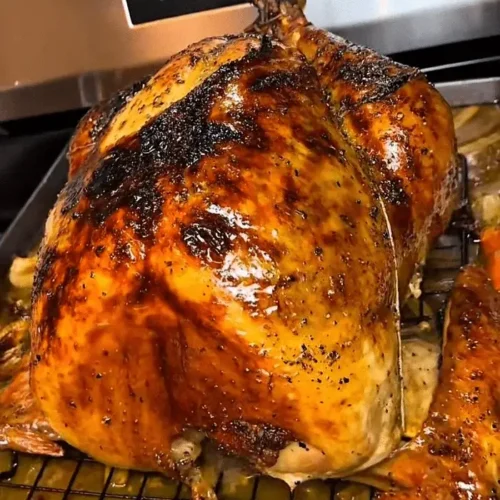
Watch the Full Step-by-Step
- Roasting pan
- Meat thermometer
- Mixing bowls
- Basting brush
INGREDIENTS
- 1 whole turkey, 12–14 lbs, thawed
- 8 –12 ounces/230–340 grams unsalted butter, room temperature
- ½ cup roasted garlic paste
- 2 tablespoons fresh rosemary, finely chopped, plus extra stems
- 2 tablespoons fresh sage, finely chopped, plus extra stems
- 1 tablespoon fresh thyme, finely chopped, plus extra stems
- 1 teaspoon orange pepper
- Zest of 1 lemon and 1 orange
For basting and roasting:
- ½ cup/115 grams unsalted butter, room temperature
- 2 tablespoons garlic oil
- ½ cup white wine
- Juice of 1 lemon and 1 orange
- 1 garlic bulb, halved
- Salt, for dry brining

INSTRUCTIONS
- Cover the turkey in salt and refrigerate for 2 days to dry-brine.
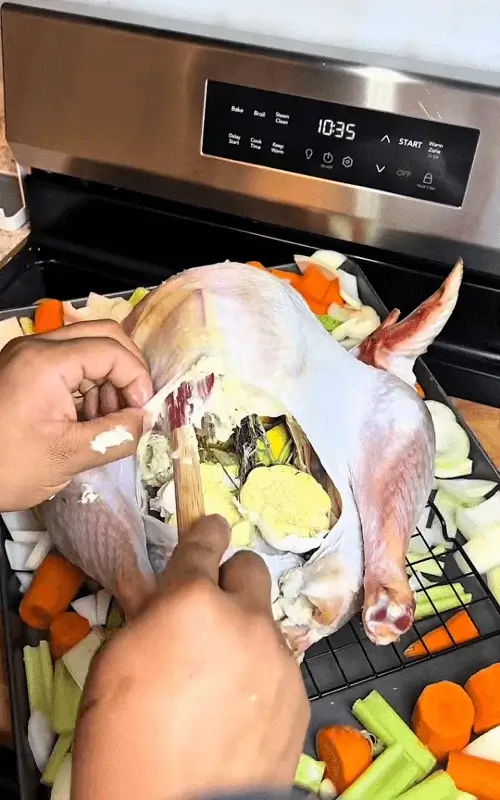
- Combine 8–12 ounces/230–340 grams unsalted butter, roasted garlic paste, chopped rosemary, sage, thyme, orange pepper, and citrus zest until smooth. Loosen the skin over the breast, thighs, and legs, and spread the compound butter underneath.
- Stuff the cavity with reserved lemon and orange, garlic halves, and extra herb stems.
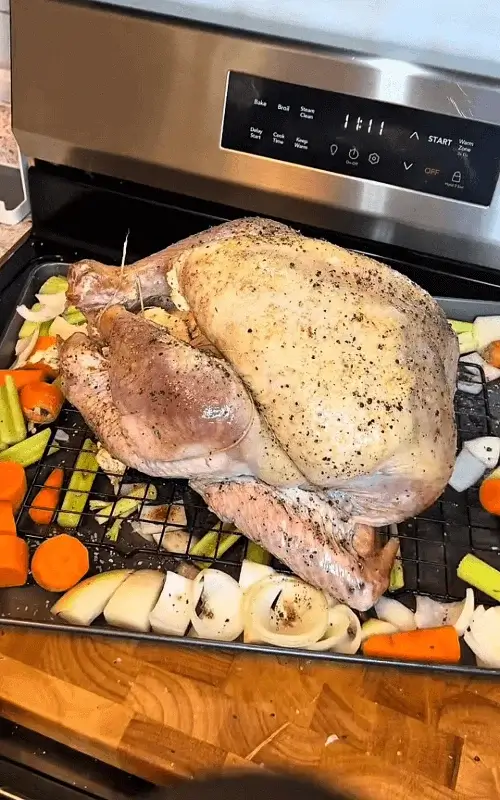
- Mix ½ cup/115 grams unsalted butter with garlic oil and brush over the exterior of the turkey. Pour white wine into the roasting pan.
- Roast at 375°F/190°C for 1.5 hours. Baste periodically with pan juices, covering the breast with foil if it darkens too quickly. Continue roasting another 1–1.5 hours until the internal temperature reaches 165°F/74°C in the thickest part of the thigh.
- Rest the turkey for 20 minutes before carving. Slice against the grain and serve with pan juices.
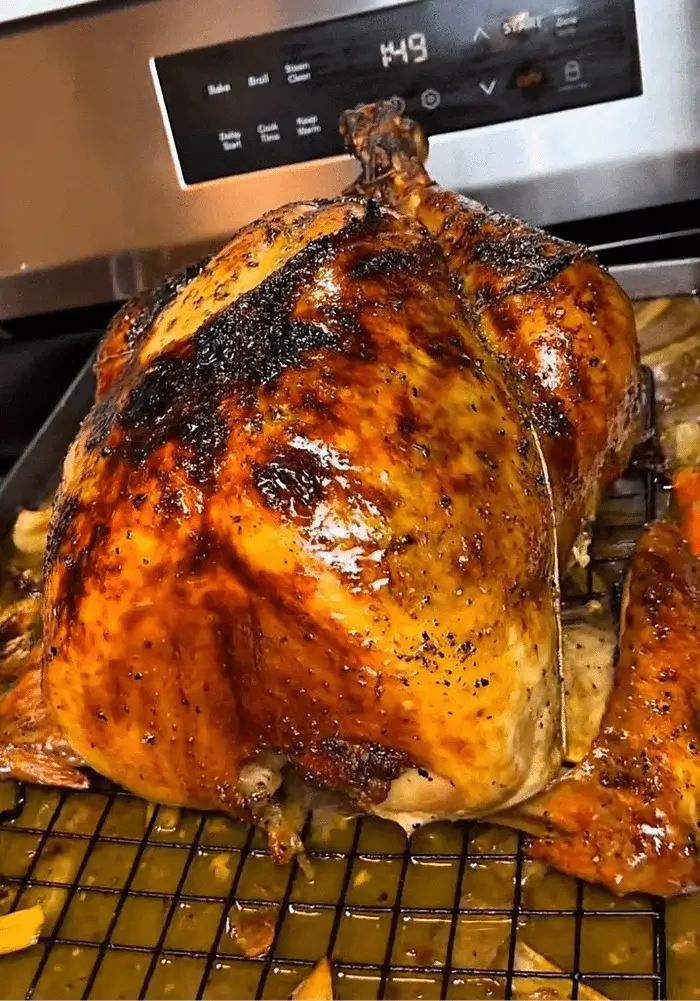
FAQ
What is the best way to ensure a juicy turkey?
Start with a proper dry brine or salt cure for at least 24 to 48 hours. This draws moisture out of the skin but allows it to be reabsorbed into the meat, resulting in tender and flavorful turkey. Using a compound butter infused with citrus zest, garlic, and fresh herbs under the skin adds moisture and aroma directly to the meat during roasting. Basting periodically with pan juices, wine, and butter keeps the exterior from drying, while monitoring the internal temperature ensures the turkey remains juicy. Even resting the turkey for 20 minutes after roasting allows the juices to redistribute fully, locking in flavor.
What side dishes pair best with this citrus turkey recipe?
Roasted root vegetables such as carrots, parsnips, and sweet potatoes bring earthy sweetness, while creamy mashed potatoes or a garlic-parmesan cauliflower mash provide richness. Lightly sautéed greens or a citrusy salad can balance the buttery, savory notes of the turkey. For a starch component, herbed stuffing or wild rice pilaf infused with dried fruit and nuts works well. Finishing with pan gravy made from the turkey drippings ties all flavors together, creating a cohesive and memorable holiday meal.
Can I make the citrus turkey recipe without a two-day dry brine?
For quicker preparation, a wet brine or overnight brine with salt, citrus juice, and aromatics can partially tenderize the meat and enhance flavor. Using a well-seasoned compound butter spread under the skin can compensate by delivering moisture and aromatics during roasting. Careful attention to roasting time and internal temperature is critical to prevent dryness. Basting the turkey with butter, garlic oil, and citrus juice during cooking also helps maintain juiciness, while resting before carving ensures that the juices remain in the meat rather than pooling in the pan.
What herbs work best in this citrus turkey recipe?
Fresh herbs are essential for elevating a citrus turkey recipe. Classic combinations include rosemary, sage, and thyme, which complement the bright citrus flavors and add aromatic depth. Rosemary offers piney, woodsy notes, sage adds earthiness, and thyme provides subtle floral undertones. Chopping the herbs finely and mixing them into a compound butter ensures even distribution under the skin, flavoring both the breast and the thighs. Additional stems can be added to the cavity with lemon, orange, and garlic halves to infuse the turkey from the inside out, creating a well-rounded, herb-forward flavor profile that pairs naturally with citrus.
How do I prevent the skin from burning while roasting?
Monitor the breast closely during roasting. Using a mixture of butter and garlic oil brushed over the exterior helps regulate heat and prevents scorching. If the skin begins to darken too quickly, tent the turkey loosely with aluminum foil, particularly over the breast area. Roasting at a consistent 375°F allows even browning, and basting periodically with pan juices or melted butter ensures that the skin remains moist without overcooking.
What is the internal temperature for the turkey to be fully cooked?
The thickest part of the thigh should reach 165°F/74°C. Using a reliable meat thermometer inserted into the center of the thigh, without touching the bone, ensures accurate measurement. The breast should also be at least 160°F/71°C. Removing the turkey from the oven slightly before the final target temperature, then allowing it to rest for 20 minutes, ensures residual heat finishes cooking the meat while keeping it moist.
Can I make this citrus turkey recipe in a convection oven?
Convection ovens circulate hot air, allowing for even browning and faster cooking. Reduce the temperature by about 25°F compared to a conventional oven, and monitor the turkey closely for the proper internal temperature of 165°F/74°C in the thigh. Place the turkey on a rack in a roasting pan to allow air circulation underneath. You may still want to tent the breast with foil if it begins to darken too quickly. Basting is optional, as convection heat helps retain moisture, but adding pan juices periodically enhances flavor and ensures a crisp, golden skin.
How do I incorporate citrus flavors without making the turkey too sour?
To balance citrus in a citrus turkey recipe, use both zest and juice sparingly. Zest delivers aromatic oils without acidity, while juice provides subtle flavor and moisture. Combine the zest with compound butter and fresh herbs for under-skin application, and use small amounts of juice in the roasting pan for basting. Avoid pouring large quantities of juice directly over the meat, as excessive acidity can cook proteins prematurely, resulting in dry or overly tangy meat. Citrus flavors are best layered with herbs, garlic, and butter to create a balanced profile that enhances the turkey without overwhelming it.