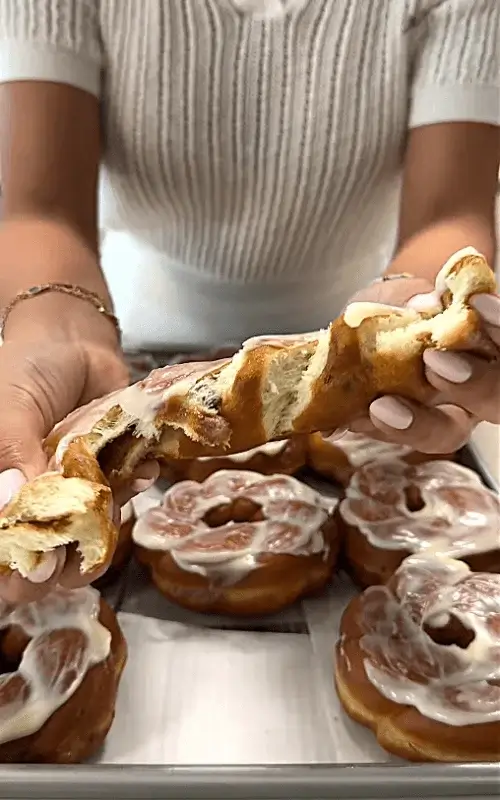
Cinnamon Roll Donuts
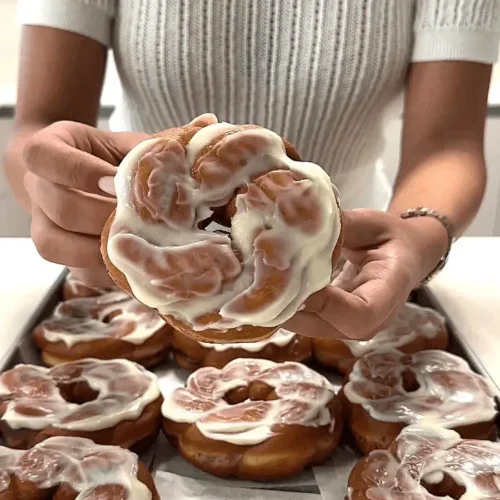
Watch the Full Step-by-Step
- Mixing bowls
- Kitchen scale
- Rolling Pin
- Thermometer
- Wide heavy-bottomed pot
INGREDIENTS
- 4 cups/500 grams all-purpose flour
- 1 tablespoon/9 grams active dry yeast or 2¾ tablespoons/25 grams fresh yeast
- ½ cup/100 grams granulated sugar
- 1 cup/240 grams whole milk
- 1 large egg/50 grams
- 1.75 ounces/50 grams unsalted butter, softened
- 1 teaspoon fine salt
Filling:
- 4.25 ounces/120 grams unsalted butter, softened
- 1 cup/200 grams brown sugar
- 2 tablespoons ground cinnamon
Glaze:
- 1.75 ounces/50 grams unsalted butter, melted
- ¾ cup powdered sugar
- 3.5 ounces/100 grams cream cheese, softened

INSTRUCTIONS
- Combine milk, yeast, sugar, egg, flour, butter, and salt in a stand mixer fitted with a dough hook. Knead on medium-high speed until smooth and elastic, about 8 minutes. Cover and let rise at room temperature until doubled, about 1 hour.
- Mix butter, brown sugar, and cinnamon into a smooth paste and transfer to a piping bag.
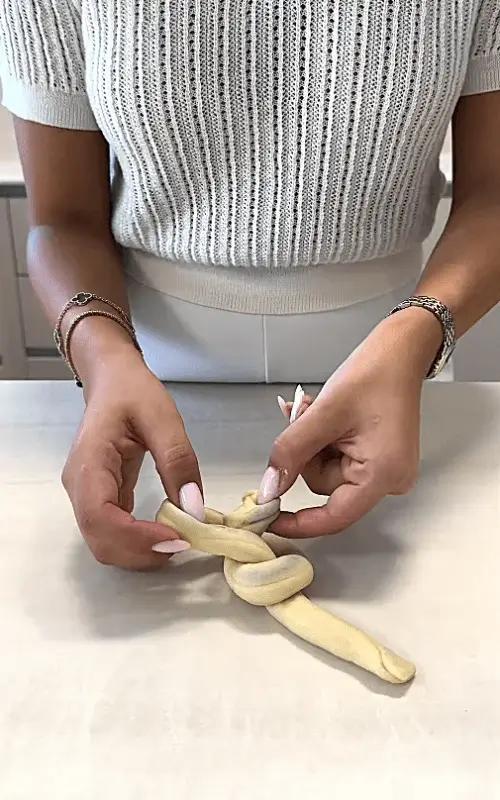
- Divide dough into 2-ounce/60-gram portions. Roll each into a rectangle, pipe filling along one long edge, roll tightly, and gently stretch into an even rope. Shape into a loop, twisting the ends together to seal.
- Place donuts on individual squares of parchment, cover, and let rise until doubled, about 1 hour.
- Heat 1½ quarts/liters canola oil to 330°F/165°C. Remove parchment and fry donuts until deep golden, 1½ to 2 minutes per side. Transfer to paper towels to cool slightly.
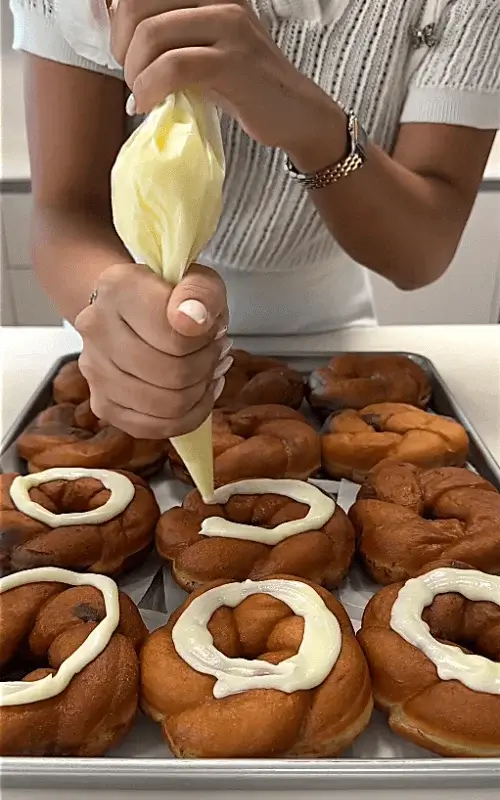
- Whisk melted butter and powdered sugar until smooth, then mix in cream cheese. Drizzle glaze over warm donuts and serve.

FAQ
What is the ideal dough texture before the first rise?
The ideal dough texture should be smooth, elastic, and slightly tacky but not sticky. When properly kneaded, the dough should pull cleanly away from the sides of the mixing bowl and form a cohesive mass that stretches without tearing. This level of gluten development is critical for cinnamon roll donuts because it allows the dough to expand evenly during proofing and frying, producing a light interior rather than a dense crumb.
If the dough feels stiff or dry, the finished donuts may crack or fry unevenly. Conversely, overly soft or sticky dough can absorb excess oil during frying, resulting in greasy cinnamon roll donuts. A properly mixed dough will feel soft to the touch, hold its shape when portioned, and relax slightly after resting, indicating it is ready for fermentation.
What is the best method for glazing cinnamon roll donuts evenly?
It’s important that the donuts are slightly warm but not hot. The glaze, made of powdered sugar, butter, and cream cheese, should be fully mixed to a lump-free, pourable consistency. Using a spoon or small offset spatula, drizzle or spread the glaze evenly across the surface. Allow excess glaze to drip off naturally; this prevents pooling at the base, which can make the donuts soggy. For thicker coverage, dip the tops into the glaze rather than brushing, ensuring a consistent layer. Let the glaze set for a few minutes at room temperature before serving. This method maintains the visual appeal and sweet flavor balance of cinnamon roll donuts without compromising texture.
Can cinnamon roll donuts be prepared ahead of time?
The most effective method is to prepare and shape the donuts, then refrigerate them after the first rise but before frying. Cold fermentation slows yeast activity while improving flavor development, which benefits cinnamon roll donuts by enhancing their richness and aroma. When ready to fry, the donuts should be brought back to room temperature and allowed to complete their final rise until visibly puffed.
Frying directly from the refrigerator can result in uneven cooking and dense centers. Fully fried cinnamon roll donuts are best enjoyed the same day, as refrigeration after frying can dull the glaze and firm the crumb. However, unglazed donuts can be frozen after frying and reheated gently, then glazed just before serving.
What oil temperature is best for frying the donuts evenly?
Maintaining a stable oil temperature of 320°F to 330°F (160°C to 165°C) is essential for frying cinnamon roll donuts evenly. This range allows the dough to cook through fully while developing a golden exterior without burning. If the oil is too hot, cinnamon roll donuts will brown too quickly on the outside while remaining undercooked inside.
If the oil is too cool, the donuts will absorb excess oil and become heavy and greasy. Using a thermometer is strongly recommended, as temperature can drop rapidly when multiple donuts are added to the oil. Frying in small batches helps maintain consistent heat and ensures each cinnamon roll donut cooks evenly, producing a tender interior and crisp, well-colored exterior.
What type of yeast is best for cinnamon roll donuts?
Both active dry yeast and fresh yeast can be used for cinnamon roll donuts, but adjustments are necessary due to differences in potency and moisture content. Active dry yeast is convenient, shelf-stable, and can be sprinkled directly into warm milk or proofed first; it usually requires slightly less by weight than fresh yeast. Fresh yeast is moist and perishable but produces a subtle, rich flavor in cinnamon roll donuts.
The standard conversion is roughly 3 times the weight of active dry yeast to match fresh yeast, so 1 tablespoon/9 grams active dry yeast equals approximately 2¾ tablespoons/25 grams fresh yeast. Proper yeast measurement is critical for achieving the ideal rise and texture in cinnamon roll donuts. Always check the expiration date and proof the yeast in warm milk to ensure activity, especially when using older or dry yeast.
How long should the dough rise for optimal texture and flavor?
The rising time for cinnamon roll donuts is critical to developing flavor, structure, and lightness. The first rise, or bulk fermentation, should continue until the dough doubles in size at room temperature, usually around 1 hour, depending on ambient temperature and yeast activity. Overproofing can cause the dough to collapse during frying, resulting in flat, dense donuts, while underproofing produces tight, heavy centers.
After shaping, the second rise allows the rolls to puff and relax before frying, usually another hour at room temperature. Proper proofing ensures the cinnamon roll donuts have a tender, airy crumb and can absorb the glaze without becoming soggy. Visual cues, like a smooth, slightly domed surface and gentle spring back when pressed, indicate readiness for frying.
Can I use alternative sweeteners without affecting texture?
Granulated sugar or packed brown sugar contributes to caramelization and structure. Replacing sugar with liquid sweeteners like honey or maple syrup requires adjusting the liquid content, as these are hygroscopic and can make dough sticky. Powdered sugar is not suitable in the dough stage but works well for glaze.
Artificial sweeteners may affect yeast fermentation, slowing or inhibiting rise. Using a blend of natural sugars, such as coconut sugar or turbinado, can create slightly darker color and richer flavor without compromising dough elasticity. Adjusting hydration and monitoring proofing is essential to ensure cinnamon roll donuts rise correctly and fry evenly.
How should cinnamon roll donuts be stored to maintain freshness?
Cinnamon roll donuts are best eaten fresh, but proper storage can extend their shelf life without losing quality. After frying and cooling, store unglazed donuts in an airtight container at room temperature for 1–2 days to prevent the crust from becoming soggy. Glazed cinnamon roll donuts should be stored separately to avoid melting or sticking.
Refrigeration is not recommended for long-term storage of glazed donuts because it can firm the glaze and dry the interior. For longer storage, freeze fully fried, unglazed donuts in a single layer in a freezer-safe container, then thaw at room temperature and apply glaze just before serving. Proper storage preserves both the tender crumb and the characteristic sweet, spiced flavor of cinnamon roll donuts.