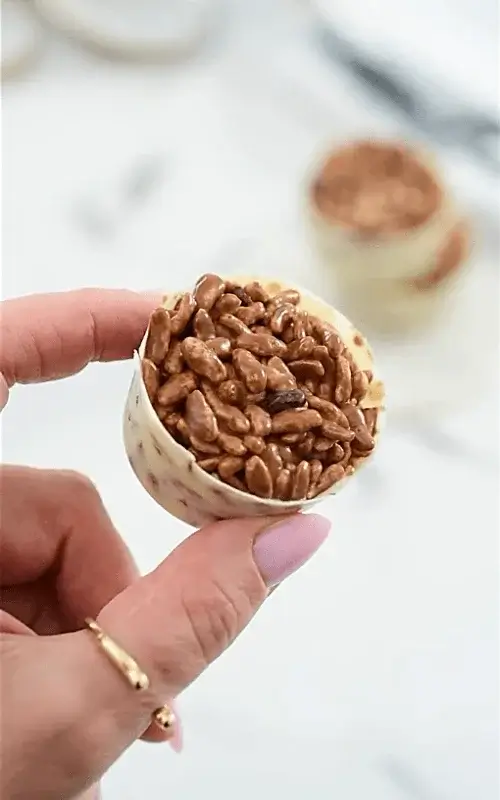
No-Bake Chocolate Rice Krispie Treats
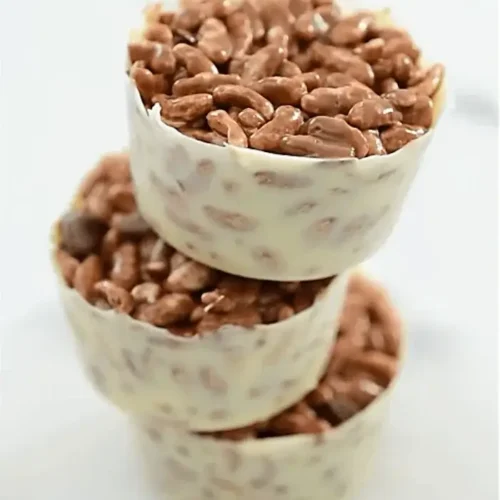
Watch the Full Step-by-Step
- Silicone muffin pan
- Mixing bowls
- Microwave-safe bowl
INGREDIENTS
- 1 cup rice crisps
- 2.5 ounces/70 grams milk chocolate, melted
- 1 tablespoon coconut oil or butter, melted
- 3 tablespoons peanut butter
- 1 teaspoon maple syrup, optional
- 1.75 ounces/50 grams white chocolate, melted, for coating

INSTRUCTIONS
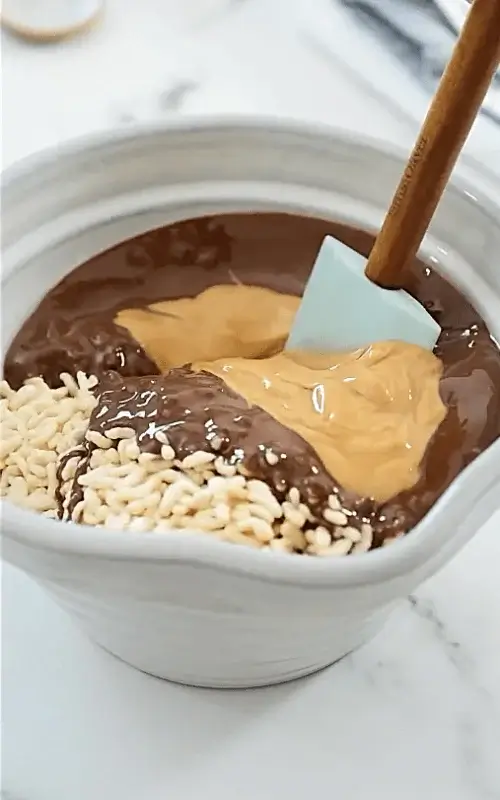
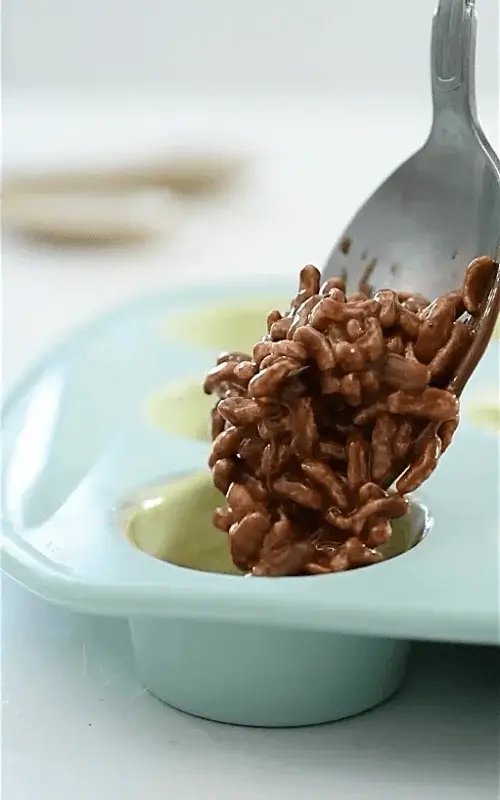
- Place rice crisps in a bowl. Add melted milk chocolate, coconut oil or butter, and peanut butter. If needed, microwave peanut butter for a few seconds to soften. Mix until all crisps are coated. Taste and add sweetener if desired.
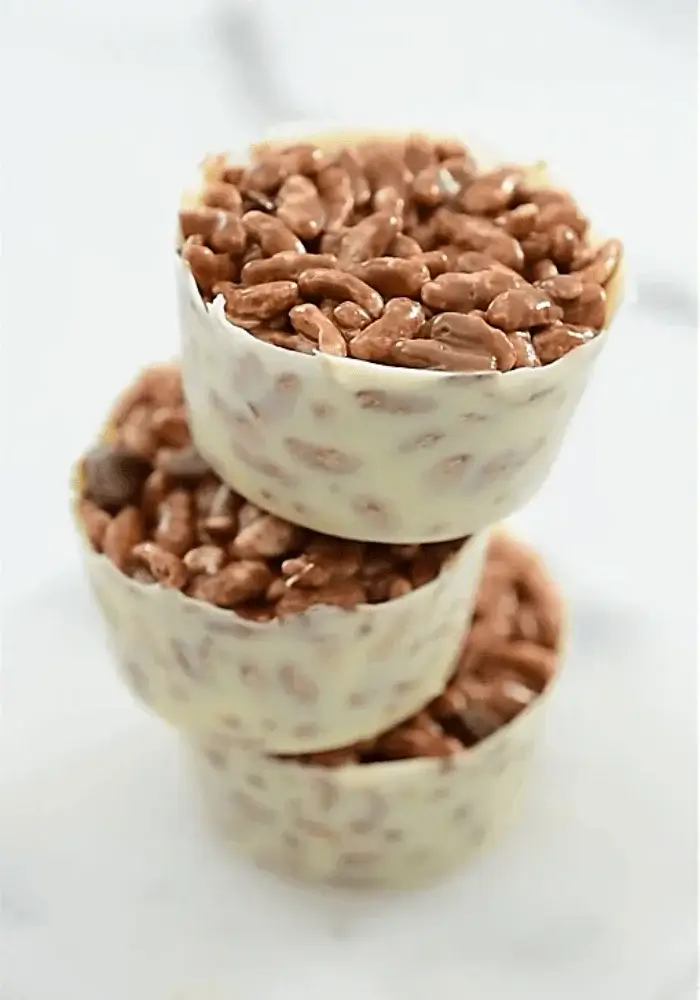
- Brush silicone muffin cups with a thin layer of melted white chocolate. Fill cups with the rice crisp mixture and press gently. Refrigerate until set, about 2 hours.
- Remove from molds and serve, or store in the refrigerator.
FAQ
What type of chocolate works best for chocolate rice Krispie treats?
Milk chocolate offers a creamy, sweet taste and a softer finish that is ideal for those who prefer a milder flavor. Dark chocolate, with higher cocoa content, delivers a richer and more intense chocolate flavor while providing slightly firmer structural integrity once cooled. White chocolate, typically used for coating, adds sweetness and a smooth, glossy finish but contains more sugar and fat, so it must be tempered or melted carefully to avoid graininess.
Using high-quality chocolate ensures better melting, smoothness, and flavor. Avoid low-grade baking chocolate that may contain stabilizers or waxes, which can prevent even melting. For a vegan version of chocolate rice Krispie treats, ensure the chocolate is dairy-free. Combining different types of chocolate can also create layered flavors.
Can chocolate rice Krispie treats be made gluten-free?
Chocolate rice Krispie treats can be made gluten-free easily, provided the rice crisps used are certified gluten-free. Many traditional rice cereal brands contain malt flavoring derived from barley, which contains gluten, so it is essential to check labels. Using gluten-free rice crisps maintains the classic light, crunchy texture without any risk of gluten contamination.
All other ingredients, including chocolate, peanut butter, and optional syrups, are naturally gluten-free, but cross-contamination can occur in some manufacturing facilities, so reading packaging is important. Gluten-free chocolate rice Krispie treats are perfect for those with celiac disease, gluten intolerance, or anyone avoiding gluten. They offer the same sweet, satisfying crunch as traditional treats while accommodating dietary restrictions.
How can I make chocolate rice Krispie treats vegan?
Replace milk chocolate with dairy-free or vegan chocolate and ensure any white chocolate used for coating is also vegan. Coconut oil can replace butter to maintain richness without dairy. Additionally, check that any sweeteners like maple syrup, agave, or sugar do not involve animal products or bone char processing.
Peanut butter and rice crisps are naturally vegan, but verify that the rice cereal is free from milk-based flavorings. Using these substitutions, the treats remain fully plant-based while keeping the classic crisp and chewy texture. Vegan chocolate rice Krispie treats are ideal for those avoiding animal products, yet they still deliver indulgent chocolate flavor, a satisfying crunch, and versatility in presentation.
What is the best way to store the treats?
Chocolate rice Krispie treats should be stored in an airtight container to preserve their crispiness and prevent moisture absorption. Room temperature storage works well for up to three days, keeping the texture slightly chewy yet crisp. For longer storage, refrigeration is recommended, which can extend freshness to about a week; however, the treats may firm up slightly and require a few minutes at room temperature before serving.
Avoid storing near heat sources, which can cause the chocolate to melt or the coating to bloom, resulting in a dull appearance. Wrapping individual pieces in wax or parchment paper before placing them in the container prevents sticking and makes them easy to serve.
Can the treats be customized with other ingredients?
The treats are extremely versatile and can be customized with additional ingredients to enhance flavor, texture, or nutrition. Mix-ins such as chopped nuts, dried fruits, or seeds add crunch and natural sweetness. Flavor extracts like vanilla, almond, or coconut can be incorporated into the chocolate mixture to create unique taste profiles.
You can also layer or drizzle different types of chocolate—milk, dark, or white—for a decorative finish. For a healthier twist, consider adding oats, puffed quinoa, or cacao nibs. Even coatings can be varied: colored chocolate, sprinkles, or crushed cookies provide festive touches.
What is the ideal chocolate-to-rice ratio?
A good starting point is roughly 2.5 ounces of chocolate for every 1 cup of rice crisps, which ensures each crisp is evenly coated without weighing down the texture. Adjusting slightly can allow for firmer or softer treats depending on preference.
Milk chocolate provides a sweeter, creamier coating, whereas dark chocolate creates a richer, slightly firmer result. Ensuring the chocolate is fully melted and evenly mixed prevents clumps and promotes a uniform coating. This ratio also works well when adding peanut butter or coconut oil, which add flavor and help bind the mixture while maintaining the classic crisp and chewy texture.
Can chocolate rice Krispie treats be frozen?
Yes, though it requires careful handling to preserve texture. Wrap individual pieces tightly in parchment or wax paper and place them in a sealed freezer-safe container or bag to prevent moisture and freezer burn.
Freezing can extend their shelf life up to one month without compromising flavor. When ready to serve, allow the treats to thaw at room temperature for 30 to 60 minutes; avoid microwaving, which can cause the chocolate coating to bloom or become grainy.
How can these treats be made nut-free?
Chocolate rice Krispie treats can be made nut-free by omitting peanut butter or any other nut-based ingredients. Nut-free alternatives like sunflower seed butter, soy butter, or tahini can provide similar binding and flavor without allergens.
Ensure that the chocolate used is also free from cross-contamination with nuts, as some brands process chocolate in facilities that handle peanuts or tree nuts. Using a nut-free recipe maintains the classic chewy-crisp texture and chocolate flavor of the treats while making them safe for children or anyone with nut allergies. Additional mix-ins like seeds, dried fruit, or cereal variations can also be added safely.