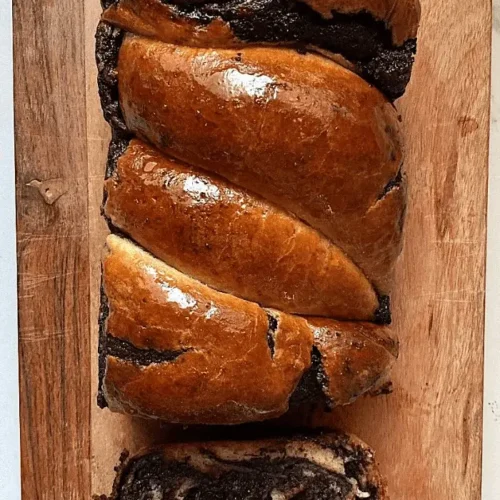
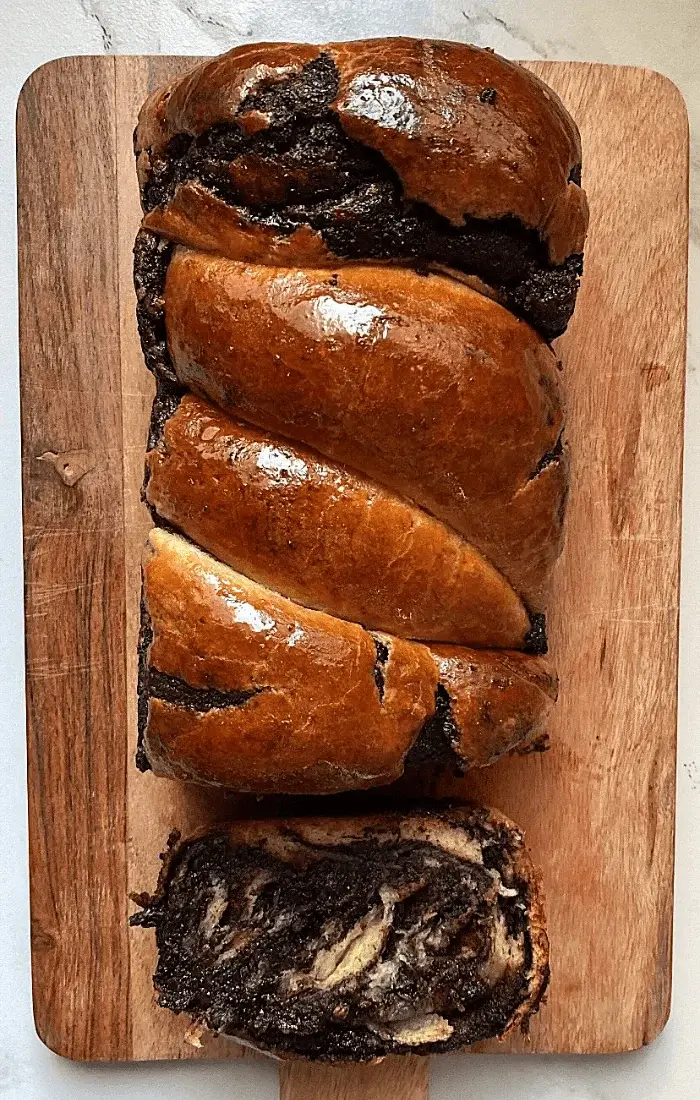
Rich Chocolate Babka Bread
Watch the Full Step-by-Step
- Mixing bowls
- Offset spatula
- Rolling Pin
- 2 Loaf pans
- Pastry brush
- Small saucepan
- Kitchen scale
INGREDIENTS
Dough:
- 2 teaspoons/8 grams active dry yeast
- 1 cup/240 grams sour cream
- ¼ cup/60 milliliters whole milk
- 1 large egg/50 grams
- 4 cups/500 grams all-purpose flour
- 4 tablespoons/50 grams sugar
- 3.5 ounces/100 grams unsalted butter, softened
- ¼ teaspoon fine salt
Filling:
- 3.5 ounces/100 grams dark chocolate
- 7 ounces/200 grams unsalted butter
- 1 cup unsweetened cocoa powder
- 1 cup sugar
For finishing:
- 1 large egg, beaten
- ½ cup sugar
- ½ cup water

INSTRUCTIONS
- In a stand mixer fitted with a dough hook, mix yeast, sour cream, milk, egg, flour, and sugar on low until a shaggy dough forms. Add butter gradually, then salt, and knead on medium until smooth and elastic, 10 to 12 minutes. Transfer to a lightly greased bowl, cover, and let rise until doubled, 1½ to 2 hours, or refrigerate overnight.
- Melt chocolate and butter together in short microwave intervals, stirring until smooth. Mix in cocoa powder and sugar; set aside at room temperature until spreadable.
- Divide dough in half, then divide each half again. Roll each piece into a thin rectangle, spread evenly with filling, and roll tightly from the short side into logs. Twist two logs together, place in a parchment-lined loaf pan, and repeat with remaining dough. Cover and let rise until slightly puffed, about 30 minutes.
- Heat oven to 350°F/175°C. Brush loaves with egg and bake until deeply golden, 40 to 45 minutes.
- While baking, boil sugar and water for 2 minutes, then cool. Brush hot loaves generously with syrup. Cool briefly in pans, then transfer to a rack.
FAQ
What type of chocolate is best for babka bread?
High-quality dark chocolate with at least 60 to 70 percent cocoa content is ideal, as it provides a rich, deep flavor without being overly sweet. Semi-sweet chocolate can also be used if a slightly sweeter filling is preferred, but avoid milk chocolate because it tends to be too soft and overly sweet, which can make the filling runny during baking. Chopping chocolate into small pieces or melting it before mixing with butter and cocoa powder ensures a smooth, spreadable filling. Using chocolate with a high cocoa butter content helps maintain the glossy, ribboned swirls that are characteristic of babka bread.
How do I prevent chocolate filling from leaking during baking?
The filling should be spread evenly and thick enough to stay in place; melted chocolate mixed with butter and cocoa powder creates a spreadable, stable consistency. Avoid overfilling, as excess can ooze during baking. Roll the dough tightly from the short side and twist gently to seal edges without compressing the layers. Using loaf pans lined with parchment ensures any minor leaks are contained. Chilling the shaped dough briefly before baking can also reduce filling movement.

Can the babka bread dough be prepared ahead of time?
Yes, the dough can be prepared ahead of time, and chilling it overnight often improves flavor and texture. After kneading, cover the dough tightly and refrigerate for up to 12 to 24 hours. This slow, cold fermentation allows the yeast to develop more complex flavors while keeping the dough manageable. When ready to bake, remove the dough from the refrigerator, let it come to room temperature, and proceed with rolling, filling, and shaping.
How should babka bread be stored to maintain freshness?
Babka bread should be stored carefully to maintain its rich, moist texture. Once fully cooled, wrap the loaf tightly in foil or plastic wrap to prevent drying and store it at room temperature for up to four days. Avoid refrigerating babka bread, as the cold air can dry it out and alter its delicate crumb. For longer storage, babka bread can be frozen after baking; wrap the loaf in plastic wrap, then in foil, and freeze for up to two weeks. To enjoy after freezing, thaw at room temperature, then optionally warm slightly in the oven to refresh the soft, tender texture and glossy filling swirls.
How to make eggless or vegan babka bread
You can replace the egg with additional dairy to maintain richness and structure. Use 3 tablespoons/45 milliliters whole milk or heavy cream in place of the egg, and increase the sour cream slightly to keep the dough soft. Mix yeast, sour cream, milk, flour, and sugar until a shaggy dough forms. Add butter gradually, then salt, and knead until smooth and elastic, about 12 to 14 minutes.
For a vegan babka bread, replace the egg with a plant-based binder that adds moisture without weighing down the dough. The most reliable option is a flax egg: mix 1 tablespoon/7 grams ground flaxseed with 3 tablespoons/45 milliliters warm water and let it thicken for 5 minutes. Alternatively, use 3 tablespoons/45 milliliters unsweetened soy milk mixed with 1 teaspoon apple cider vinegar. Prepare the dough as usual, adding the egg replacement with the liquids. Knead until smooth and elastic, allowing slightly longer mixing if needed. Expect a softer dough and a slightly longer rise. For finishing, just skip the egg.

What is the best way to achieve the glossy top on babka bread?
A sugar syrup or simple egg wash is essential. Brushing the dough with beaten egg just before baking provides an initial shine and helps the crust develop a golden color. After baking, brushing a warm sugar syrup made from equal parts sugar and water seals in moisture, giving the loaf a professional, glossy finish. Applying syrup while the bread is still hot ensures it soaks into the swirls without flattening the texture. Using this two-step approach enhances both appearance and flavor, creating the rich, indulgent finish that is characteristic of classic babka bread.
Why is my babka bread dense?
Dense babka bread usually results from under-proofing, overmixing, or using too little fat in the dough. Proper kneading develops gluten, which provides structure, but over-kneading can create a tight crumb. Allow the dough to rise until it has doubled in size and the texture is light and airy. Room temperature and freshness of ingredients, especially yeast and butter, also affect rise. Using a rich, butter-heavy dough, rolling it gently, and shaping carefully ensures layers are soft and swirled without compression.

Can babka bread be made with a sourdough starter?
Yes, though the timing and technique change. Use an active, bubbly starter to replace commercial yeast, typically 150–200 grams for a similar dough yield. Because sourdough rises more slowly, the first fermentation will take longer, often several hours or overnight. This slow rise adds complex, slightly tangy flavors to the dough while retaining the rich, tender texture. Shaping, filling, and baking remain the same, though sourdough babka may require slightly longer baking to ensure the interior is fully cooked. Sourdough can produce a more nuanced taste while still keeping the classic chocolate swirls intact.
Is it necessary to use high-fat butter?
Yes, using high-fat butter, ideally European-style with 82–84 percent fat, is important for authentic babka bread. Butter contributes to a soft, tender crumb and rich flavor, while also helping create the distinct layers and swirls when combined with chocolate or cocoa filling. Lower-fat or spreadable butters contain more water, which can make the dough sticky, affect rise, and dilute flavor. Softened, not melted, butter should be incorporated gradually to maintain dough elasticity and structure. High-fat butter ensures the babka bread stays moist, tender, and rich while achieving the beautiful, defined chocolate ribbons that are the hallmark of this classic pastry.
