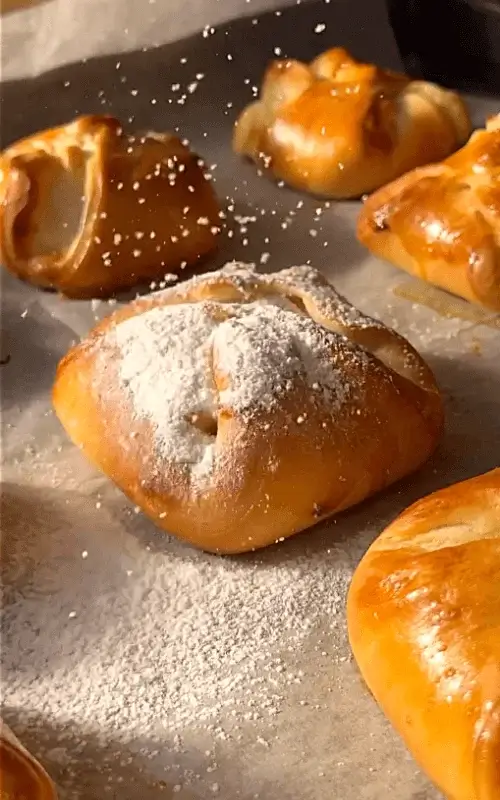
Sweet Cheese Buns
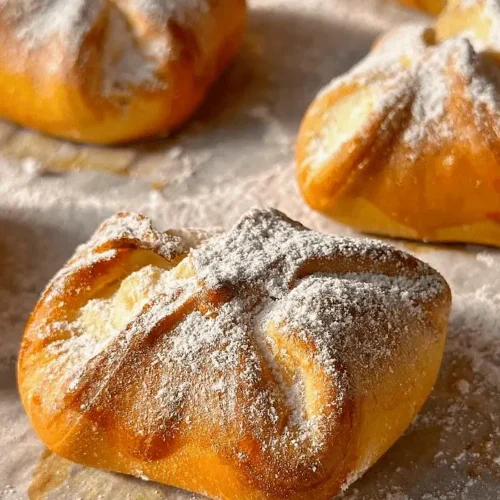
Watch the Full Step-by-Step
- Rolling Pin
- Kitchen scale
INGREDIENTS
- 1 large egg, beaten
- Powdered sugar
Dough:
- 4 cups/500 grams all-purpose flour
- 2 tablespoons sugar
- 1 large egg
- 2/3 cup/150 grams whole milk
- 1/2 cup/130 grams cool water
- 1 tablespoon/10 grams dry yeast
- 3.5 ounces/100 grams cold unsalted butter, cubed
Filling:
- 8 ounces/225 grams farmer's cheese
- 1/4 cup sugar
- 1 large egg yolk
- 2 tablespoons cornstarch
- 1 tablespoon heavy cream
- Zest of 1 lemon
- Pinch of salt

INSTRUCTIONS
- In a stand mixer bowl, combine flour, sugar, egg, milk, water, and yeast in a stand mixer. Knead 10 minutes on medium speed, adding butter cube by cube until incorporated. Alternatively, knead by hand. Lightly grease the bowl and dough, cover, and let rise until doubled, 1–2 hours.
- Mix all filling ingredients and refrigerate until ready to use.
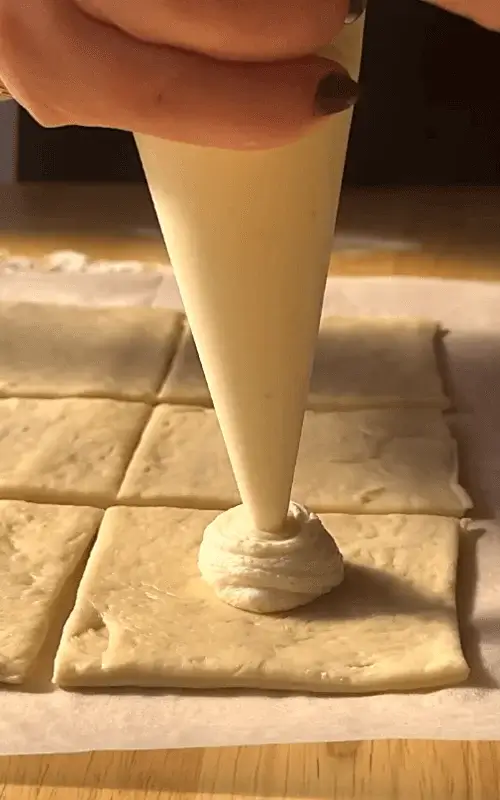
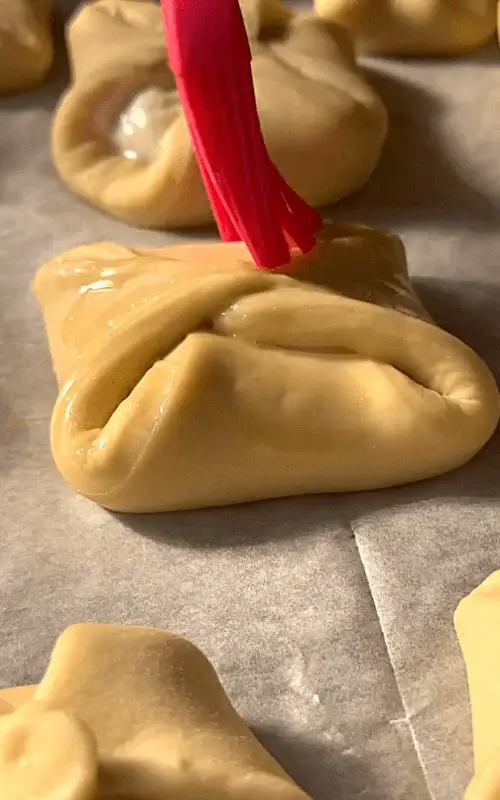
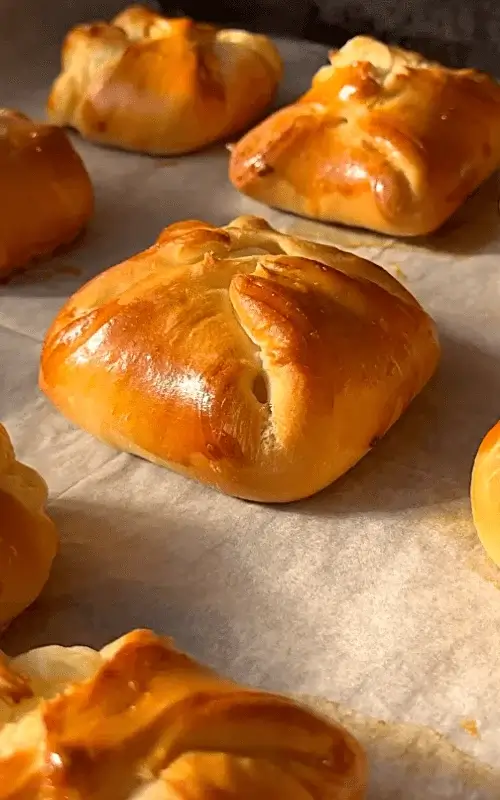
- Roll dough on a floured surface and cut into small squares. Pipe filling onto each square, fold into an envelope, and seal edges tightly. Arrange on a parchment-lined baking sheet. Let rise for 30 minutes while the oven preheats to 350°F/180°C, conventional bake. Brush with beaten egg and bake for 18–20 minutes.
- Cool slightly, dust with powdered sugar, and serve.
RECIPE NOTES
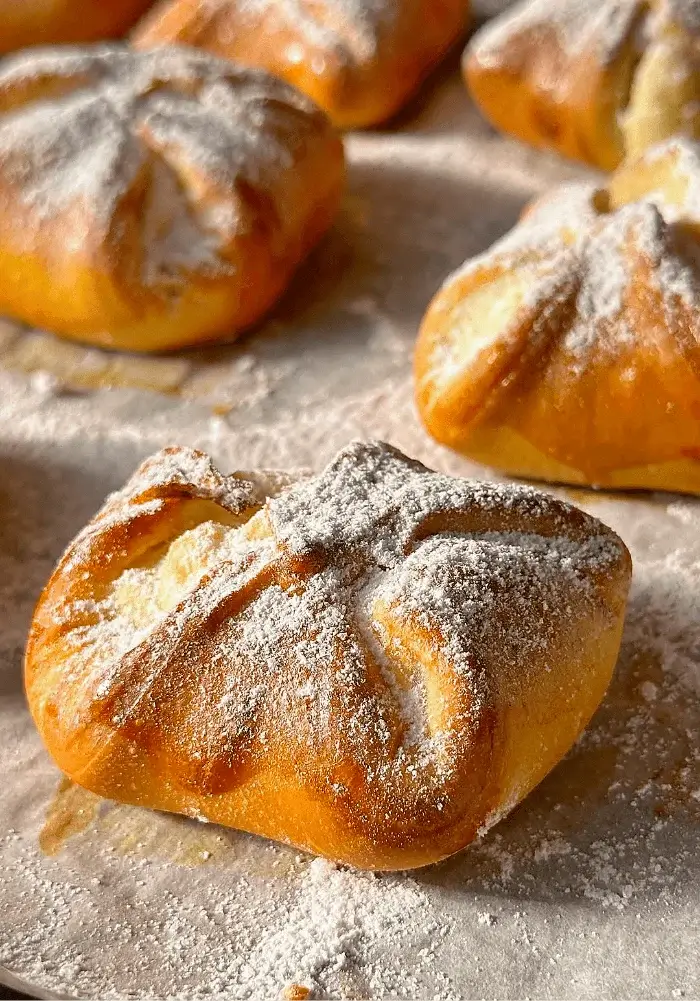
FAQ
What is the best type of cheese to use in cheese buns?
Farmer’s cheese is the ideal choice for the filling. It is soft, slightly tangy, and holds its shape well during baking, creating a creamy yet stable interior. Farmer’s cheese is milder than cream cheese and less grainy than ricotta, making it perfect for achieving the traditional texture of cheese buns. You can combine it with an egg yolk, sugar, and a splash of cream to enhance smoothness without making the filling runny. Avoid aged or crumbly cheeses like cheddar or feta, as they can alter both flavor and texture. Using farmer’s cheese ensures that the filling stays moist, creamy, and mild, complementing the soft, fluffy dough while producing a visually appealing and professional-looking cheese bun.
Can I make these cheese buns ahead of time and freeze them?
If freezing before baking, shape the buns and place them on a parchment-lined tray, then flash freeze until firm. Transfer to an airtight container or freezer bag and store for up to two months. When ready to bake, allow the buns to thaw in the refrigerator overnight and then rise for 30–60 minutes before brushing with egg wash and baking. If freezing after baking, fully cool the buns, wrap individually or in batches with plastic wrap and aluminum foil, and freeze for up to two months. To serve, reheat in a 325°F oven for 10–15 minutes or until warmed through. Freezing may slightly change texture, but the flavor of the cheese buns remains excellent.
How do I prevent the dough from sticking while rolling and shaping?
Lightly flour your work surface and rolling pin before rolling out the dough. Ensure the dough itself is not overly warm, as this can make it sticky; if it is, chill for 10–15 minutes. Roll gently from the center outward rather than pressing hard, which can cause sticking and uneven squares. Keep extra flour nearby to lightly dust the surface or the backs of your hands when shaping. For filling, use a piping bag or spoon sparingly to avoid excess liquid that can seep and stick. Using parchment paper on the baking sheet also prevents sticking during baking, ensuring the cheese buns retain their shape.
Can I use a sugar substitute for the filling without affecting taste?
Choose a substitute that measures cup-for-cup like sugar to maintain the correct texture, such as erythritol or a blend of monk fruit and erythritol. Certain substitutes can slightly alter the sweetness or mouthfeel, so taste the mixture before filling the buns. The stability of the filling may also change; cornstarch helps compensate for liquid variations, keeping the filling firm during baking. Sugar substitutes work especially well when you want to reduce calories but still enjoy the creamy flavor of cheese buns, and they will not drastically change the final baked texture when used correctly.
How do I store leftover cheese buns to maintain freshness?
Allow them to cool completely to room temperature before storing. Place them in an airtight container or tightly wrapped in plastic wrap to prevent drying. Stored at room temperature, they remain fresh for 2–3 days, maintaining softness and flavor. For longer storage, cheese buns can be frozen; wrap each bun individually and place in a freezer-safe bag or container for up to two months. When ready to enjoy, thaw at room temperature or reheat in a 325°F oven for 10–15 minutes. Proper storage preserves the texture of the dough and the creaminess of the filling, ensuring the cheese buns taste as fresh as when first baked.
How can I make these cheese buns vegan or dairy-free?
Replace whole milk with unsweetened plant-based milk such as almond, oat, or soy, and use a vegan butter alternative that can be cubed and added similarly to the original recipe. For the filling, vegan ricotta, cashew cream, or tofu blended with a touch of lemon juice can mimic the creamy texture and tang of farmer’s cheese. Egg yolk can be replaced with a flax or chia egg (1 tablespoon ground seed + 3 tablespoons water, set to gel).
How do I ensure the buns rise evenly and don’t collapse?
Start with properly proofed yeast and room-temperature ingredients. Knead the dough until smooth and elastic, which develops the gluten necessary for structure. When shaping, avoid overfilling each bun and seal edges tightly to prevent leaks. Allow the buns to rise in a warm, draft-free environment until doubled in size, usually 1–2 hours, and do not rush this step. During baking, preheat the oven to 350°F/180°C and avoid opening the door too early, as sudden temperature changes can cause buns to collapse. Even spacing on the baking sheet helps heat circulate, allowing cheese buns to bake evenly and retain their soft, airy texture.
What is Borekitas?
The name “borekitas” is thought to come from the Turkish word “börek”, which means “pie”. Borekas are believed to have originated in Asia, and were brought to the Middle East by Sephardic Jews during the 15th century. They quickly became popular throughout the region, and today there are many different variations of borekas, each with its own unique flavor.