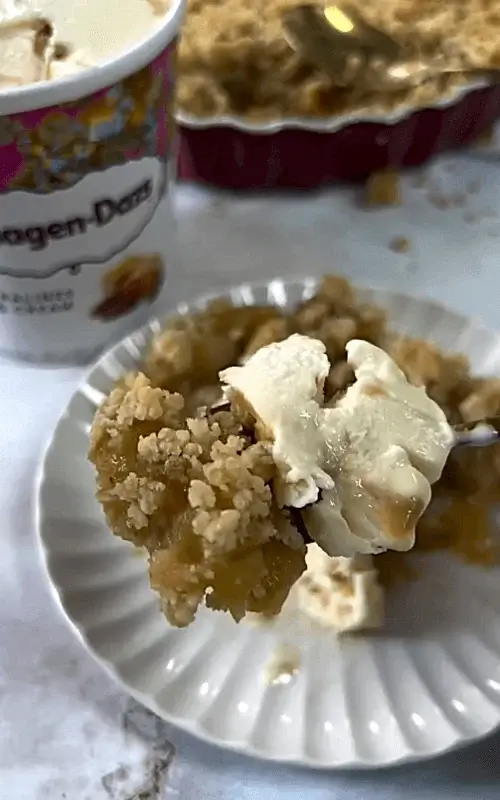
Caramel Apple Crisp Recipe (Winter-Style)
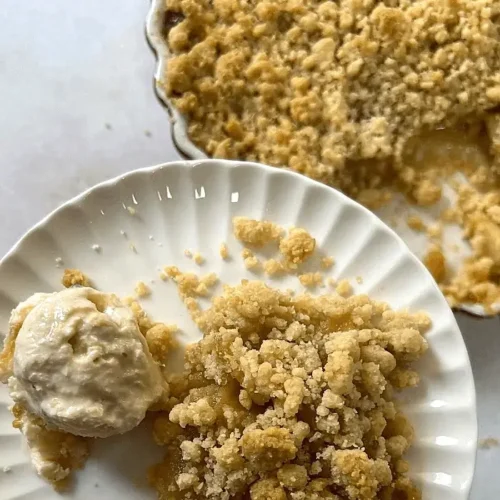
Watch the Full Step-by-Step
- Large mixing bowl
- Wide skillet
- 9½-inch/24 cm baking dish
- Kitchen scale
INGREDIENTS
- 6 Granny Smith apples, peeled and chopped
- Juice of 1 lemon
- ⅓ cup granulated sugar
- 1.8 ounces/50 grams unsalted butter
- 3 tablespoons water
- 2 heaping teaspoons instant vanilla pudding mix
- ¼ teaspoon ground cinnamon
Crumble:
- ¼ cup brown sugar
- 1.8 ounces/50 grams cold unsalted butter, cubed
- ⅓ cup/50 grams all-purpose flour
- ½ cup/50 grams almond flour
- ½ teaspoon fine salt

INSTRUCTIONS
- Heat the oven to 320°F/160°C. Generously grease a 9½-inch/24 cm round baking dish.
- Place the lemon juice in a large bowl. Add the apples and toss until evenly coated to prevent browning.
- Add the sugar to a wide skillet and cook over medium heat without stirring, gently swirling the pan, until fully melted and amber in color. Gradually whisk in the butter until smooth. Add the apples, leaving excess lemon juice behind.
- Cook, stirring occasionally, until the apples are just tender and the caramel has loosened, about 15 minutes. Avoid overcooking; the apples should retain their shape.
- Whisk the water, vanilla pudding mix, and cinnamon in a small bowl. Stir into the apples and cook until lightly thickened, 30 to 60 seconds. Remove from heat.
- Combine the brown sugar, butter, flour, almond flour, and salt. Rub together by hand or mix with a paddle attachment until coarse, crumb-like pieces form.
- Transfer the apple mixture to the prepared dish, scatter the crumble evenly over the top, and bake until deeply golden, about 40 minutes. Let rest for 10 minutes before serving.
- Serve warm, ideally with vanilla ice cream.
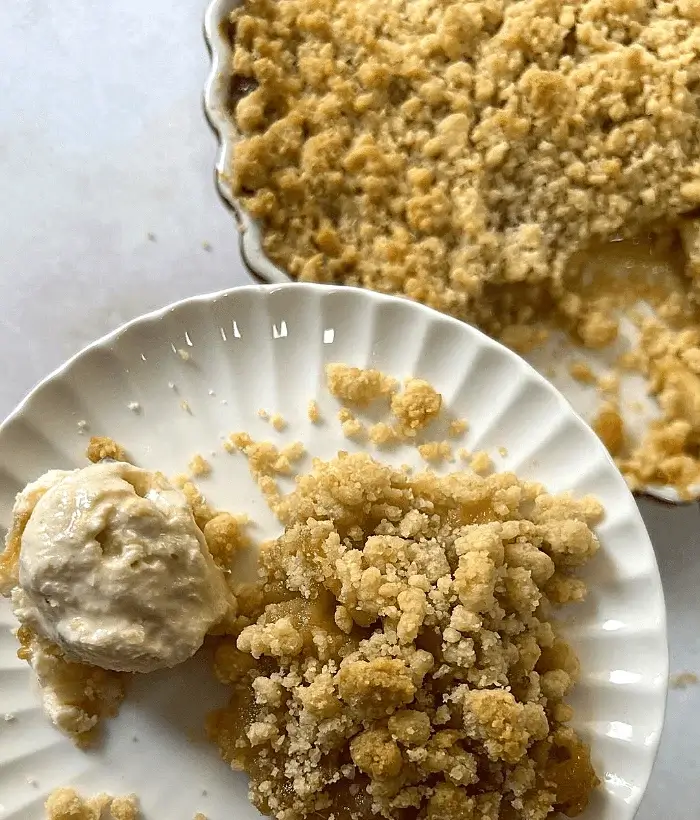
FAQ
What apples work best for a caramel apple crisp recipe?
Firm, tart apples are essential to balance the sweetness of the caramel and crumble while holding their shape during baking. Granny Smith apples are the gold standard because their high acidity cuts through the richness of butter and sugar, and their dense flesh resists turning mushy even after stovetop cooking and oven baking.
Other suitable options include Honeycrisp, Braeburn, or Pink Lady apples, which offer a balance of sweetness and structure, though they will yield a slightly softer filling. Avoid apples like Red Delicious or McIntosh, which break down quickly and release excess moisture, resulting in a watery or overly soft crisp. For best results, apples should be peeled and cut into evenly sized pieces so they cook at the same rate.
Can this caramel apple crisp recipe be made ahead?
The apple filling can be cooked, cooled completely, and refrigerated for up to 48 hours before assembling and baking. The crumble topping can also be prepared separately and stored in the refrigerator for up to three days or frozen for several weeks. For freezing, assemble the crisp fully in a freezer-safe baking dish, wrap tightly, and freeze unbaked for up to one month.
Bake directly from frozen, adding 15 to 20 minutes to the baking time and covering loosely if browning too quickly. While the texture remains excellent, freezing may slightly soften the apples due to ice crystal formation. Reheating leftovers is best done in the oven rather than the microwave to maintain the crisp topping and overall balance expected from a caramel apple crisp recipe.
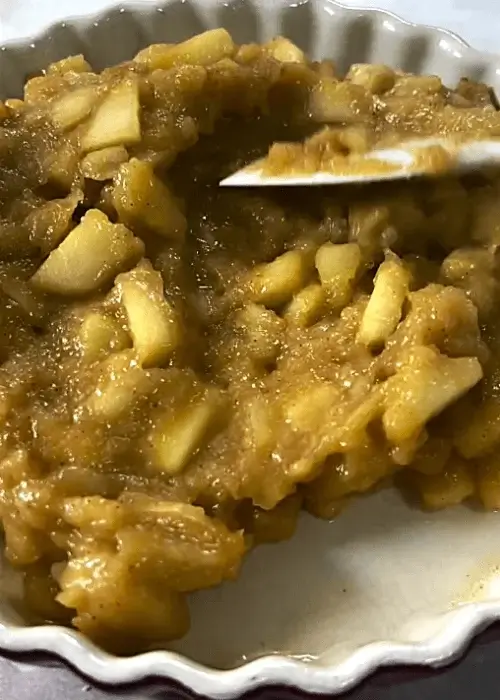
Why does this caramel apple crisp recipe use instant vanilla pudding mix?
Unlike flour, which can leave a pasty taste if undercooked, or cornstarch, which can thin out after reheating, pudding mix contains modified starches designed to thicken quickly and remain stable under heat. It also adds a subtle vanilla note that complements the caramel and apples without overpowering them.
Because the apples are partially cooked before baking, the pudding mix thickens the juices efficiently in a short window, preventing excess liquid from pooling in the baking dish. This technique results in a glossy, cohesive filling that slices cleanly while maintaining a soft but structured texture.
How do you prevent the apples from becoming mushy?
It comes down to apple choice, cut size, and controlled cooking. Firm, high-acid apples such as Granny Smith are essential because their cell structure holds up under prolonged heat. Cutting the apples into evenly sized chunks rather than thin slices slows breakdown and ensures uniform cooking.
The stovetop step is critical: the apples should be cooked only until just tender, not fully soft, because they continue cooking in the oven. Overcooking at this stage leads to collapse during baking. Using lemon juice early helps maintain structure by slowing enzymatic breakdown, while caramelizing the sugar separately limits moisture release. Finally, baking at a moderate temperature allows the filling to finish gently without aggressive boiling.
What makes the crumble topping crisp?
Cold butter is essential; when rubbed into the dry ingredients, it creates small pockets that melt during baking, producing a crumbly, crisp texture rather than a paste. Brown sugar contributes both sweetness and caramelization due to its molasses content, while almond flour adds fat and reduces gluten formation, preventing toughness.
Salt sharpens flavor and enhances browning. Even distribution over the apples is important, as thick clumps can trap steam and soften. Baking uncovered allows moisture to escape, and resting the crisp after baking lets steam dissipate, preventing condensation from softening the topping once removed from the oven.
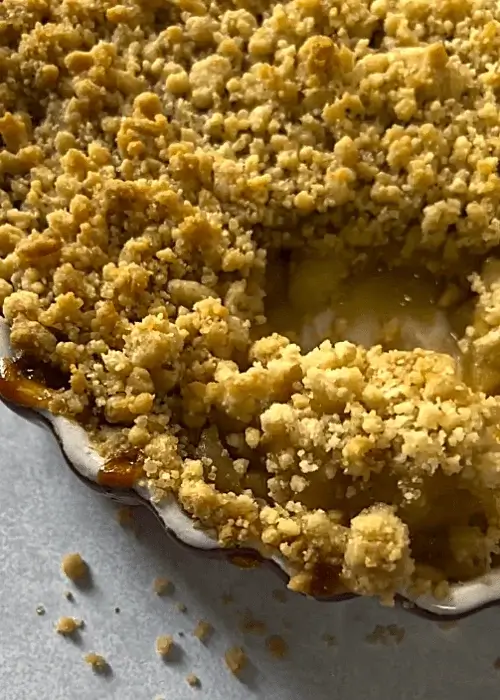
How can this caramel apple crisp recipe be adjusted for different pan sizes or servings?
For a smaller batch, halve the ingredients and use an 8-inch square or similar volume dish, reducing bake time by about 5 to 10 minutes while watching browning closely.
For a larger crowd, doubling the recipe works well in a 9-by-13-inch pan; increase bake time by 10 to 15 minutes, rotating the pan halfway for even color. The key is maintaining a similar depth of apples and crumble so heat penetrates evenly. If the dish is too deep, the apples may steam rather than bake.
Why is the sugar caramelized separately in this caramel apple crisp recipe?
Caramelizing the sugar separately is a defining technique in this caramel apple crisp recipe because it allows precise control over flavor and texture. Cooking the sugar on its own ensures it reaches a true caramel stage, developing deep, bittersweet notes that cannot be achieved by simply baking sugar with apples.
If sugar is added directly to the apples, the released fruit juices dilute it before caramelization can occur, resulting in sweetness without complexity. By forming caramel first, then emulsifying it with butter, the recipe creates a stable base that coats the apples evenly. This method also limits excess liquid release during baking, producing a more cohesive filling.
What causes a watery filling in a caramel apple crisp?
A watery filling in a caramel apple crisp recipe is usually caused by excess moisture from the apples or insufficient thickening. Apples with high water content or overripe fruit release more liquid during cooking and baking. Skipping the stovetop pre-cook can also lead to uncontrolled moisture release in the oven.
This recipe avoids those issues by partially cooking the apples and thickening the juices before baking. Using instant vanilla pudding mix stabilizes the filling more effectively than flour alone, preventing separation during reheating. Avoid covering the dish while baking, as trapped steam can loosen the filling.