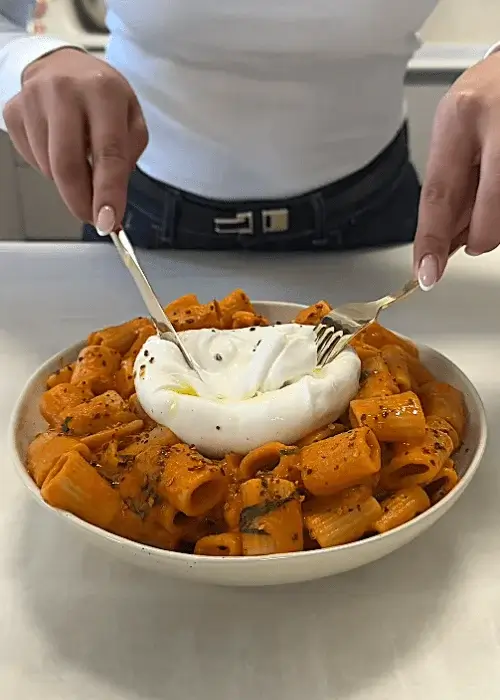
30-Minute Creamy Burrata Tomato Pasta
Watch the Full Step-by-Step
- Large pot
- Colander
- Blender
- Chef's knife
- Box grater
INGREDIENTS
- 10.5 ounces/300 grams rigatoni
- 6 medium Roma tomatoes, halved
- 12 grape or cherry tomatoes, halved
- 1 tablespoon unsalted butter
- 2 tablespoons olive oil
- 1 medium shallot, finely chopped
- 4 garlic cloves, finely crushed
- 2 tablespoons unsalted butter, cold and cubed
- ⅓ cup reserved pasta cooking water
- 5 fresh basil leaves, finely chopped
- ½ cup/50 grams Parmigiano Reggiano, finely grated
- 8 ounces/225 grams burrata cheese
- Fine sea salt, to taste
- Chili flakes, optional

INSTRUCTIONS
- Cook the pasta in generously salted water until al dente. Reserve ⅓ cup of the cooking water, then drain.
- In a wide skillet over medium heat, melt the butter with the olive oil. Add the shallot and cook, stirring occasionally, until soft and translucent, about 3 minutes. Add the garlic and cook until fragrant, about 30 seconds.
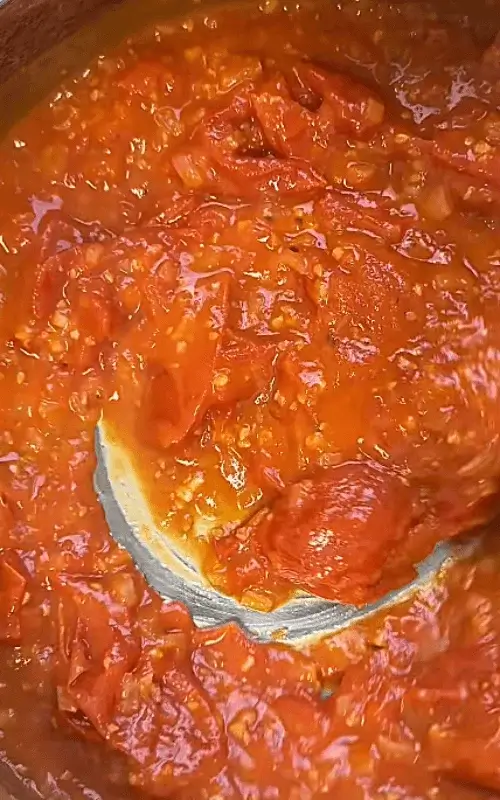
- Add the tomatoes and season lightly with salt. Cook, stirring occasionally, until the tomatoes collapse and the mixture becomes jammy, 8 to 10 minutes. Stir in the cold butter until fully emulsified.
- Transfer the mixture to a blender or food processor and blend until completely smooth. Return the sauce to the skillet over low heat. Add the reserved pasta water and stir to loosen. Taste and adjust seasoning.
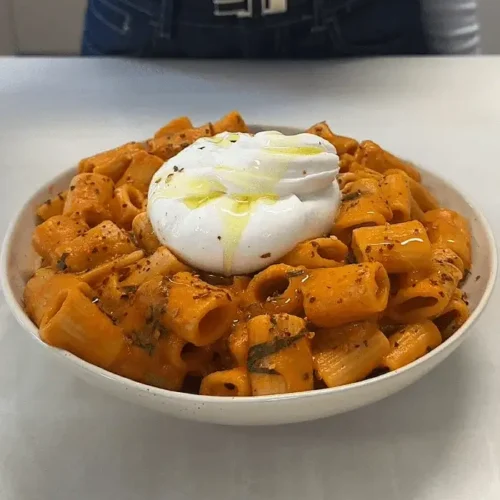
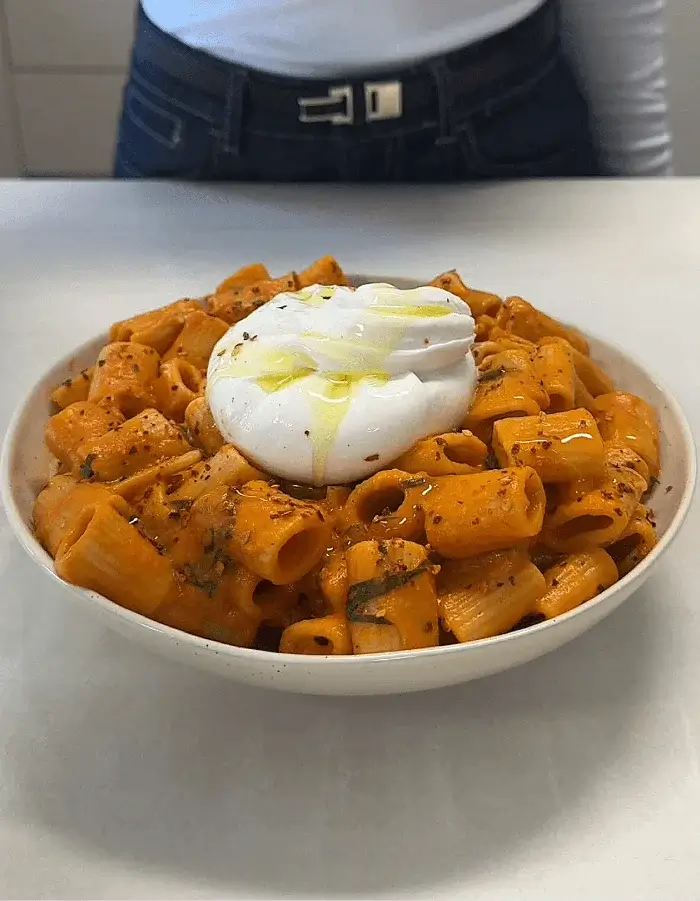
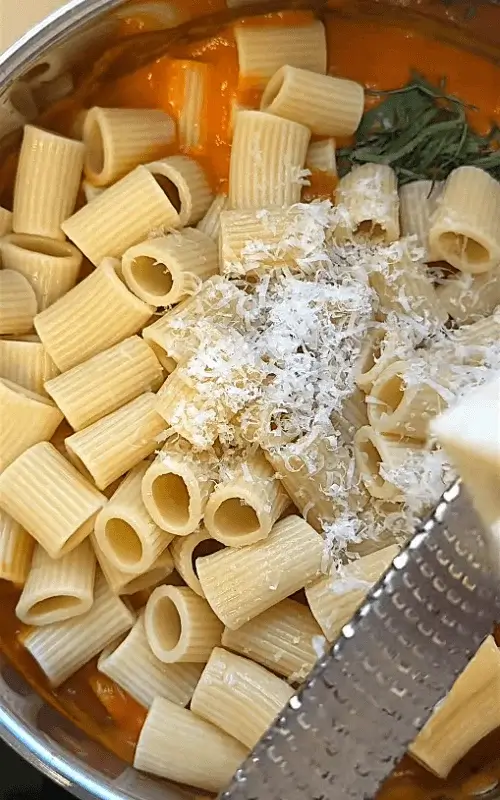
- Add the pasta, basil, and Parmigiano Reggiano, tossing until evenly coated. Serve immediately with burrata torn over the top and chili flakes, if using.
FAQ
What type of tomatoes work best for burrata tomato pasta?
The best tomatoes are those that are firm, flavorful, and low in water content. Roma tomatoes are ideal because they hold their shape when cooked, provide a naturally sweet flavor, and create a rich, thick sauce without excess liquid.
Grape or cherry tomatoes work well for adding small bursts of sweetness and color, complementing the Roma base. Avoid overly soft or watery tomatoes, as they can make the sauce thin and dilute the flavor. Using ripe, in-season tomatoes ensures the sauce is naturally sweet and vibrant.
What pasta shapes pair best with this tomato sauce?
The ideal pasta shapes are those that can hold and capture the creamy tomato sauce effectively. Short, tubular pastas like rigatoni, penne, or ziti are perfect because their hollow centers trap sauce and cheese, giving each bite maximum flavor.
Alternatively, medium-width long pastas such as fettuccine or linguine work well, allowing the sauce to coat the strands evenly. Avoid very thin pastas like angel hair, which won’t hold the sauce well.
What herbs and spices enhance burrata tomato pasta the most?
Fresh basil is the classic herb for burrata tomato pasta, adding bright, aromatic notes that complement the creamy cheese and sweet tomato sauce. Additional herbs like thyme or oregano can add subtle complexity, while parsley can contribute freshness. Lightly crushed red chili flakes introduce a gentle heat that balances the richness of the butter and burrata.
How do I prevent the sauce from being too watery?
Start with low-moisture tomatoes like Roma, and cook them until they collapse and become jammy. Adding cold butter at the end helps emulsify the sauce and gives it a glossy, cohesive texture. Blending the sauce until smooth ensures even consistency, and using reserved pasta cooking water sparingly allows control over thickness. Avoid adding excess liquid during cooking, and taste frequently to balance salt and flavor.
Can I substitute the burrata with another cheese?
Fresh mozzarella provides a similar mild flavor, though it is firmer and slightly less creamy. Ricotta can work for a softer, lighter texture, blending into the sauce rather than sitting on top. For a more intense flavor, Stracciatella or mascarpone can be used. It’s important to add the cheese at the very end, off the heat, to preserve its creaminess.
Can I make burrata tomato pasta vegan or dairy-free?
The burrata can be replaced with vegan mozzarella or cashew cream, which provides a similar creamy texture and mild flavor. Butter in the sauce can be substituted with olive oil or a plant-based margarine. Ensure the Parmigiano Reggiano is replaced with a vegan parmesan alternative or nutritional yeast for the salty, umami element.
How should I store leftovers?
Separate the pasta from the burrata, as reheating the cheese directly will cause it to lose its creamy consistency. Place the pasta and sauce in an airtight container and refrigerate for up to two days. When ready to serve, gently reheat on low heat, adding a small amount of reserved pasta water to loosen the sauce. Once warm, add fresh burrata or a substitute on top.
What protein can I add to this burrata tomato pasta?
Grilled chicken, shrimp, or Italian sausage, which pair well with the creamy tomato sauce. For a vegetarian approach, pan-seared tofu, chickpeas, or white beans can be stirred in, offering protein while maintaining the rich, creamy texture. Add protein during the final tossing stage to ensure it absorbs the sauce without overcooking.
How do I reheat burrata tomato pasta without losing texture?
Rewarm the pasta and sauce gently over low heat, stirring occasionally, and add a small amount of reserved pasta water to maintain the sauce’s consistency. Avoid using high heat or a microwave at full power, as this can make the pasta dry and the sauce separate. Once the pasta is evenly warmed, place fresh burrata on top.
How do I get a creamy sauce without using too much butter?
Use a combination of proper tomato cooking and emulsification techniques. Cook the tomatoes slowly until they break down and become jammy, then add cold butter at the end while stirring to emulsify. Reserve a small amount of pasta cooking water to adjust consistency; the starch helps the sauce cling to the pasta and adds silkiness.