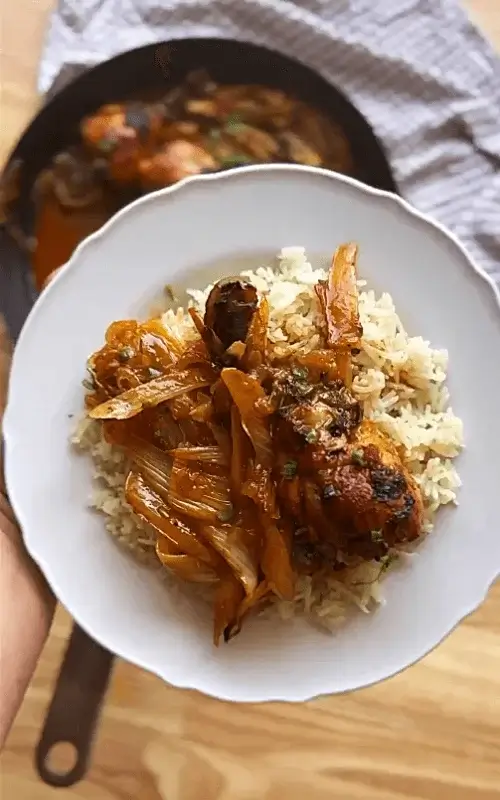
Simple One-Pot Braised Chicken Drumsticks
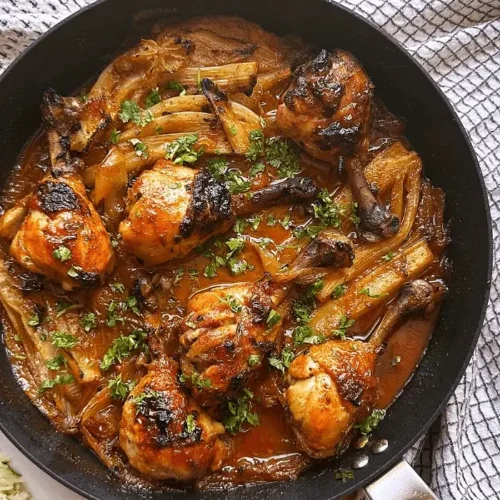
Watch the Full Step-by-Step
INGREDIENTS
- 6 –8 chicken drumsticks, skin on
- 2 –3 fennel bulbs, trimmed and sliced
- 1 large onion, thinly sliced
- 1 tablespoon oil
- 3 cups chicken or vegetable stock
- 1 tablespoon honey or date syrup
- 1 tablespoon smoked paprika
- 3 garlic cloves, crushed
- 1 lemon, sliced
- Salt to taste
- Chopped cilantro for garnish, optional

INSTRUCTIONS
- Preheat the oven to 350°F/180°C.
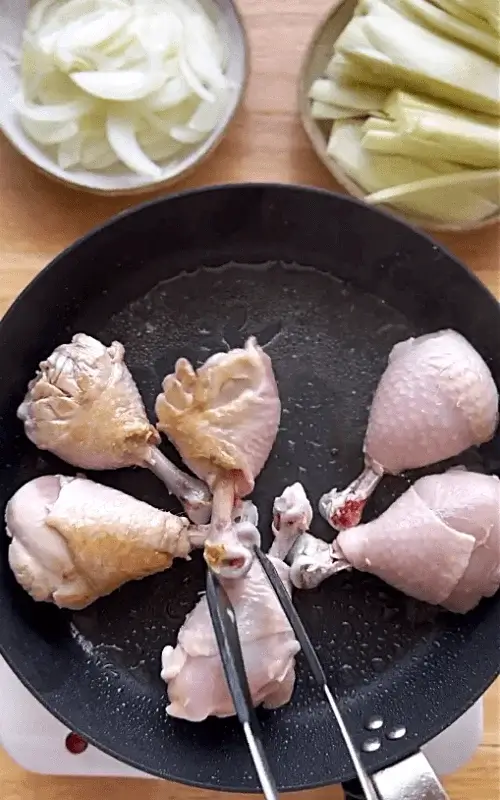
- Heat oil in a large oven-safe skillet or Dutch oven over medium-high heat. Sear chicken drumsticks on both sides until golden. Remove from the pan.
- Add onion to the same pan with a pinch of salt and cook 7–10 minutes until starting to brown. Add fennel and cook until lightly caramelized.
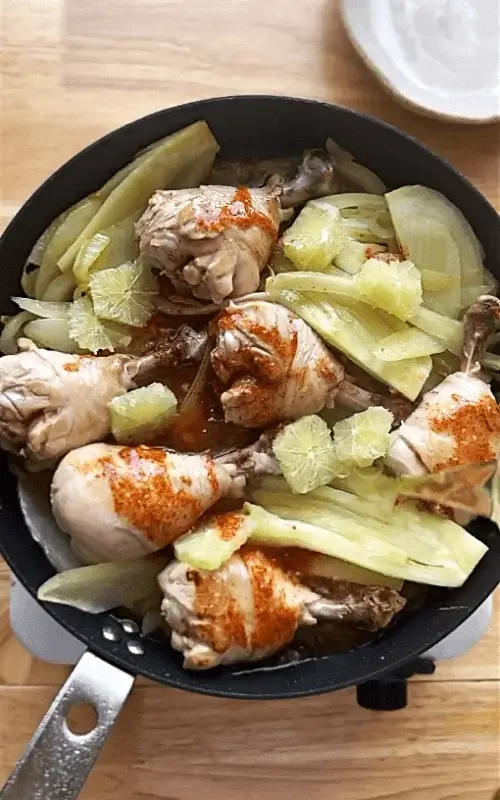
- Return chicken to pan, nestling between onions and fennel. Scatter lemon slices on top. Mix stock, honey, paprika, and garlic, then pour over chicken. Cover with parchment and foil, simmer on medium heat for 10–15 minutes.
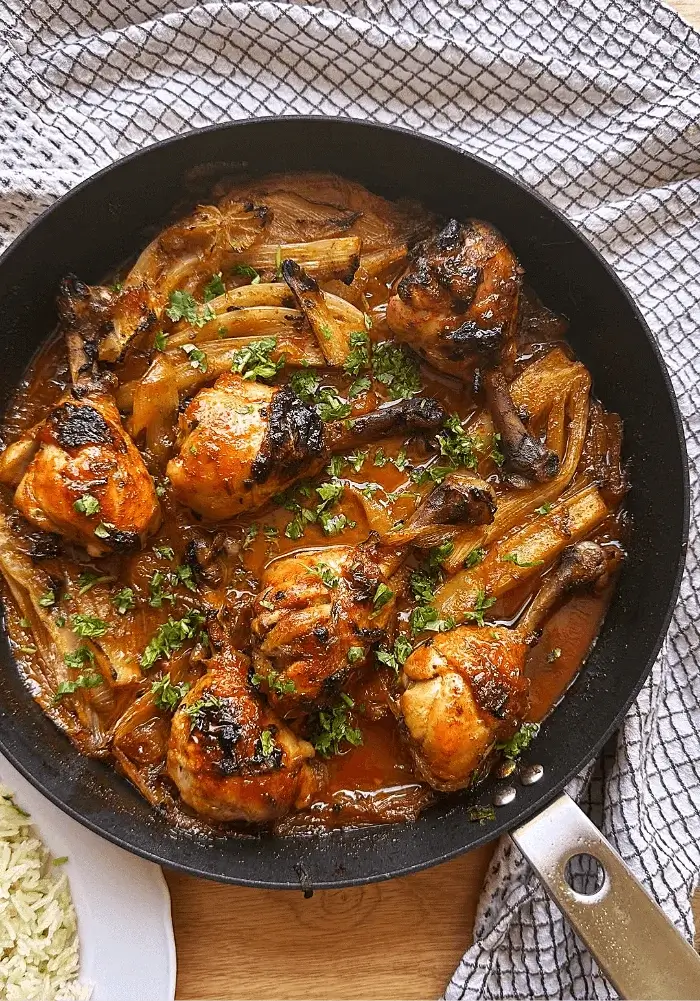
- Transfer pan to oven. Bake covered for 10 minutes, then uncovered for 25–30 minutes, occasionally spooning sauce over chicken. Chicken should be tender and golden.
- Remove from the oven, sprinkle with cilantro, adjust salt if needed, and serve with rice.
FAQ
How do I know when the drumsticks are fully cooked?
The most reliable approach is checking the internal temperature. Drumsticks should reach 165°F at the thickest point without touching the bone. Since this recipe uses both stovetop simmering and oven braising, the meat becomes tender before it technically finishes cooking, so temperature helps confirm doneness. Another indicator is how easily the meat pulls away from the bone.
Well-braised chicken should feel soft when prodded with a fork, with juices running clear instead of pink. Because braised chicken drumsticks sit partially submerged in liquid, the exposed side may brown faster, but color alone is not enough to judge. If you notice resistance when twisting the drumstick or the joint still feels stiff, give it additional time in the oven.
Can I make braised chicken drumsticks without using the oven?
You can absolutely make braised chicken drumsticks without an oven by completing the entire process on the stovetop. After searing the chicken and caramelizing the onions and fennel, return everything to the pot, add the braising liquid, and bring it to a gentle simmer. Reduce the heat to low, cover tightly, and cook for 45 to 55 minutes. The key is maintaining a low, steady simmer so the chicken cooks slowly without boiling. You may need to adjust the heat occasionally to keep the liquid from evaporating too quickly.
While the oven provides even all-around heat, stovetop braising works well as long as you keep the lid on throughout the cooking time. Turn the drumsticks once or twice to ensure even cooking. The final texture will be slightly different, since stovetop heat comes from the bottom only, but the overall flavor and tenderness of the braised chicken drumsticks will still be excellent.
What can I substitute the fennel with?
Good substitutes include leeks, which also add mellow sweetness, or carrots and celery, which create a classic braising base. Cabbage works surprisingly well because it softens into the broth and adds body to the sauce. If you prefer something more robust, sliced mushrooms add depth and umami. The key is choosing vegetables that hold up to long simmering and won’t turn mushy. When replacing fennel, adjust cooking times so the substitute softens enough to meld with the onions and stock. Harder vegetables like carrots may need a few extra minutes before the chicken returns to the pot.
Do these braised chicken drumsticks taste better the next day?
Yes, braised chicken drumsticks generally taste even better the next day because the flavors have time to deepen and absorb into the meat and vegetables. During cooling, the sauce thickens naturally, allowing the smoked paprika, lemon, garlic, and honey or date syrup to blend more harmoniously. Reheating gently, ideally on the stovetop over low heat, keeps the meat tender and prevents it from drying out. The fennel and onions also continue to soften and release sweetness into the broth overnight.
If you plan to serve the dish later, storing the chicken submerged in its braising liquid helps preserve moisture. Some people even prefer next-day braises because the aromatics mellow and the acidity from the lemon becomes more balanced. The structure of braised chicken drumsticks remains firm enough that reheating does not cause them to fall apart, yet the texture becomes silkier, making leftovers just as satisfying as the freshly cooked version.
How can I thicken the sauce?
The simplest method is reducing the liquid on the stovetop after cooking. Remove the chicken and vegetables, then simmer the liquid uncovered until it concentrates to your preferred consistency. This creates a richer, more intensely flavored sauce without adding extra ingredients. Another option is whisking in a small slurry of cornstarch and cold water, then simmering for a few minutes until it thickens.
If you prefer a natural thickening method, mash some of the softened onions and fennel into the broth to give it body. Some cooks even add a small knob of cold butter at the end for a glossy finish, though this is optional. Avoid thickening too early in the braising process because the liquid continues to reduce during oven cooking. Thicken only after the chicken is fully cooked so the texture remains smooth. This ensures your braised chicken drumsticks end up with a sauce that clings beautifully to the meat.
What is the best way to store and reheat the drumsticks?
The best way to store braised chicken drumsticks is to cool the dish completely, then transfer the chicken and its liquid to an airtight container. Most braises keep well for 3 to 4 days in the refrigerator because the broth helps protect the meat from drying out. If freezing, remove the lemon slices to avoid bitterness and store the chicken fully submerged in sauce.
For reheating, warm gently on the stovetop over low heat, allowing the liquid to loosen before stirring or turning the drumsticks. This prevents the meat from sticking and breaking apart. You can also reheat in the oven at 300°F, covered, until hot throughout. Using the microwave works but should be done at low power with short intervals to avoid drying. Because the flavors intensify over time, properly stored braised chicken drumsticks often taste richer and more cohesive after a day or two.
Can I make the braised chicken drumsticks spicy?
You can easily make braised chicken drumsticks spicy by adjusting the aromatics and seasoning in the braising liquid. Smoked paprika gives warmth but not heat, so adding chili flakes, fresh chilies, or a spoonful of harissa creates a deeper kick without disrupting the balance of sweetness from the honey or date syrup. If you want a bolder heat, a small amount of cayenne or hot paprika works well and blends smoothly into the broth. Always add spicy ingredients gradually because the heat intensifies during simmering and again in the oven.
If using fresh chili slices, place some under the chicken and some on top for a layered flavor. The fennel and onion base helps mellow excess heat, so you can adjust the spice level confidently. Spicy braised chicken drumsticks stay tender as long as the liquid level remains high, so adding heat doesn’t affect the cooking method, only the final flavor.
Can I use chicken thighs instead?
Bone-in, skin-on thighs work best because they behave similarly to drumsticks and stay moist during braising. The only difference you may notice is that thighs cook slightly faster because their shape is flatter, so check for doneness around the 40 to 45 minute mark. Thigh meat absorbs aromatics beautifully, making this swap ideal if you prefer more evenly textured bites.
If you want a more rustic feel, keep the skin on so it crisps lightly during the uncovered oven stage. Although the keyword refers to braised chicken drumsticks, the recipe is flexible enough to allow mixed cuts without compromising flavor. Just be sure all pieces are nestled into the fennel and onions so they cook in both steam and liquid. This ensures even tenderness whether you use drumsticks, thighs, or a combination of both.