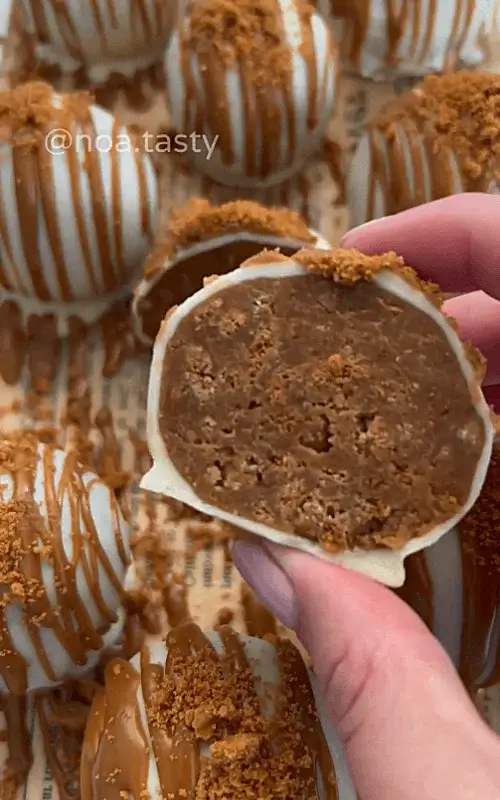
White Chocolate Biscoff Truffles
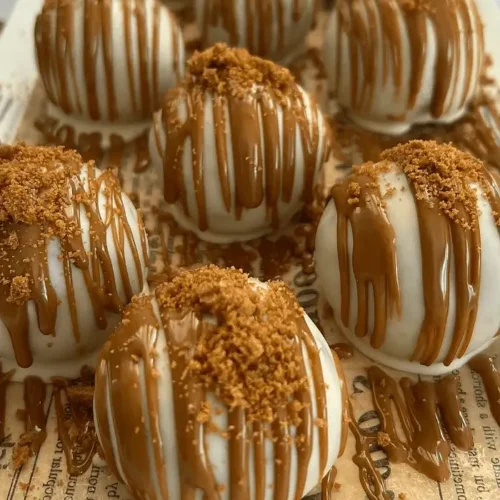
Watch the Full Step-by-Step
INGREDIENTS
- 8.6 ounces/245 grams Biscoff cookies
- 3.5 ounces/100 grams cream cheese
- 3 tablespoons/60 grams Biscoff spread
- 3.5 ounces/100 grams white chocolate, melted
Coating:
- 7 ounces/200 grams white chocolate, melted
- 2 tablespoons Biscoff spread, warmed
- 2 tablespoons Biscoff cookies, crushed

INSTRUCTIONS
- Process the cookies to fine crumbs. Transfer to a bowl and mix with the cream cheese, Biscoff spread, and melted white chocolate until evenly combined.
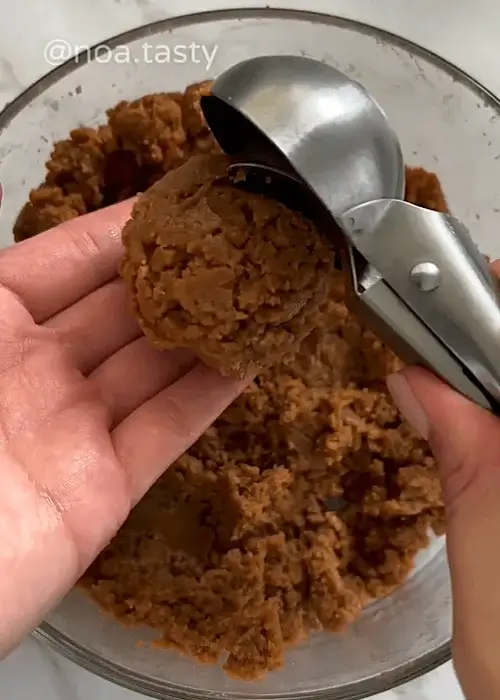
- Shape the mixture into 9 balls, about the size of a small ice cream scoop. Insert a toothpick into each truffle and freeze until firm, about 1 hour.
- Melt the white chocolate until smooth. Dip each truffle to coat, letting the excess drip off. Set on a parchment-lined baking sheet and remove the toothpick.
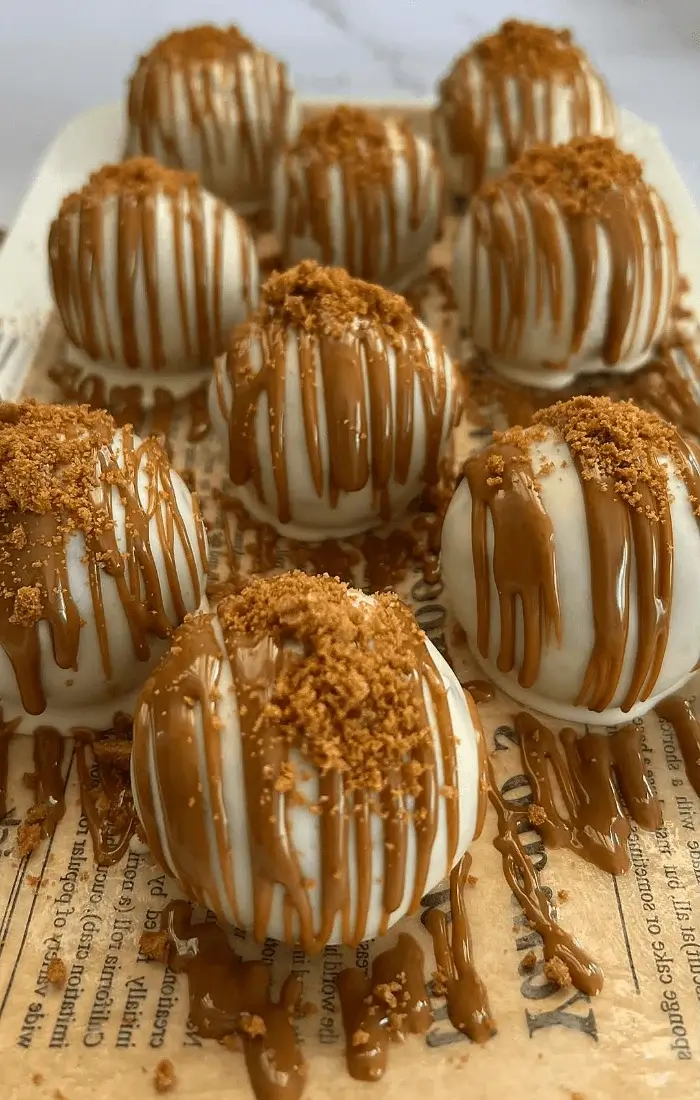
- Warm the Biscoff spread briefly until pourable, then drizzle over the truffles. Finish with the crushed cookies. Chill until set.
FAQ
How do you keep Biscoff truffles from becoming too soft or falling apart?
Maintaining the structure of Biscoff truffles depends on proper ratios and temperature control. The balance between crushed cookies and wet ingredients like cream cheese and melted chocolate is critical; too much moisture will cause the mixture to loosen and lose shape. Processing the cookies into fine, even crumbs ensures better binding, while thorough mixing distributes fat evenly. After shaping, freezing the truffles for at least one hour is essential to solidify the fats and stabilize the structure before coating.
If your kitchen is warm, the mixture may soften quickly during shaping, so working in batches and returning portions to the refrigerator helps maintain consistency. During dipping, if the truffles begin to soften, pause and refreeze briefly. Using properly tempered or smoothly melted white chocolate creates a firm outer shell that reinforces the structure. Storing finished Biscoff truffles in the refrigerator prevents them from softening excessively and preserves their clean, round shape.
Do Biscoff truffles need to be tempered when using white chocolate?
Tempering is not strictly required for Biscoff truffles, but it significantly improves the final result. Properly tempered white chocolate forms stable cocoa butter crystals, which give the coating a glossy finish and a firm snap when bitten.
Without tempering, the coating may appear dull, develop streaks, or soften quickly at room temperature. For home preparation, simply melting the chocolate is sufficient, especially if the truffles are stored refrigerated and served chilled.
However, if presentation and texture are priorities, tempering is worth the extra step. This involves melting the chocolate to a specific temperature, cooling it while stirring, and then gently reheating to a working range. This process stabilizes the structure of the chocolate. Even without full tempering, maintaining controlled melting temperatures and avoiding overheating will still yield good results.
Why is white chocolate used in Biscoff truffles instead of dark or milk chocolate?
White chocolate is used in Biscoff truffles primarily to complement and amplify the caramelized spice profile of Biscoff cookies. Since Biscoff spread already has a deep, warm flavor with notes of cinnamon and brown sugar, white chocolate provides a neutral, creamy sweetness that does not compete with or overpower those flavors. In contrast, dark chocolate introduces bitterness, and milk chocolate adds additional cocoa solids, both of which can mask the signature taste of Biscoff truffles.
From a technical standpoint, white chocolate also contributes to texture. Its high cocoa butter content helps create a smooth, cohesive filling when melted and combined with cream cheese. When used as a coating, it sets into a firm shell that contrasts with the soft interior, enhancing the eating experience.
Can Biscoff truffles be made ahead of time and how should they be stored?
Biscoff truffles are well-suited for advance preparation because their texture and flavor hold up well under refrigeration. Once coated and set, they can be stored in an airtight container in the refrigerator for up to five days without significant loss of quality. The fat content in both the white chocolate and Biscoff spread helps preserve moisture, preventing the truffles from drying out. For best results, keep them in a single layer or separated by parchment to avoid sticking or damage to the coating.
If you need to store Biscoff truffles for a longer period, freezing is effective. Place them in a freezer-safe container with minimal air exposure, and they can last for up to one month. When ready to serve, thaw them gradually in the refrigerator to prevent condensation from forming on the chocolate coating, which could affect texture and appearance. Avoid storing at room temperature for extended periods.
What is the best way to fix Biscoff truffles if the mixture is too soft?
If Biscoff truffles mixture becomes too soft, the issue is almost always excess moisture or insufficient chilling. The fastest correction is refrigeration. Chilling the mixture for 20 to 40 minutes allows the fats in the cream cheese and white chocolate to firm up, making the dough easier to handle. If it is still too soft after chilling, additional finely crushed Biscoff cookies can be incorporated to absorb excess moisture and reinforce structure without altering flavor significantly.
Another adjustment is checking the ratio of melted white chocolate. If too much was added or it was too warm during mixing, it can loosen the mixture. In that case, balancing with more cookie crumbs is the safest correction. Avoid adding more cream cheese, as this will worsen the softness.

What is the best way to achieve a smooth coating on Biscoff truffles?
The white chocolate should be fully melted and fluid, ideally between 100°F and 110°F, to ensure it flows evenly over the surface. If the chocolate is too thick, adding a small amount of neutral oil or cocoa butter can improve viscosity. Stirring gently prevents air bubbles, which can lead to an uneven finish.
When dipping, hold each truffle by the toothpick and submerge it completely, then lift and allow excess chocolate to drip off naturally. Gently tapping the hand holding the toothpick helps remove excess coating without creating streaks. Placing the truffles on parchment paper ensures a clean base as they set. If a perfectly smooth finish is critical, lightly smoothing over the toothpick hole immediately after removal helps maintain a uniform surface.
Why are my Biscoff truffles grainy instead of smooth?
Grainy texture in Biscoff truffles usually comes from improper mixing or chocolate handling. If the cookie crumbs are too coarse, they will not fully integrate with the cream cheese and melted white chocolate, resulting in a rough consistency. Processing the cookies into very fine crumbs is essential for a smooth interior.
Another common issue is overheated or seized white chocolate. When white chocolate is heated too quickly or comes into contact with even a small amount of water, it can become thick and grainy, which carries through into the mixture.
To avoid this, melt the white chocolate gently using short microwave intervals or a double boiler, stirring frequently until just smooth. Ensure the cream cheese is fully softened before mixing, as cold cream cheese can cause uneven blending. Mixing thoroughly until the mass is completely homogeneous is key.
Can Biscoff truffles be made without a food processor?
Biscoff truffles can absolutely be made without a food processor, but the key variable becomes crumb size and consistency. Instead of processing, place the cookies in a sealed plastic bag and crush them using a rolling pin or heavy object. The goal is to achieve very fine, uniform crumbs, as larger chunks will prevent the mixture from binding smoothly and may cause structural weak points. Sifting out larger pieces can help refine the texture further.
Once crushed, mix thoroughly with the cream cheese, Biscoff spread, and melted white chocolate until fully homogeneous. Expect slightly more manual effort to achieve a cohesive mixture. Pressing the mixture firmly while shaping helps compensate for any variation in crumb size.
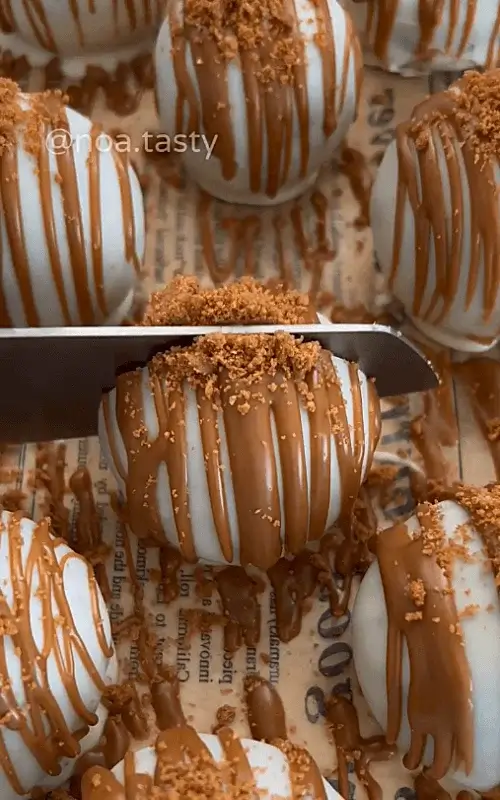
What is the best way to achieve a smooth coating on Biscoff truffles?
The white chocolate should be fully melted and fluid, ideally between 100°F and 110°F, to ensure it flows evenly over the surface. If the chocolate is too thick, adding a small amount of neutral oil or cocoa butter can improve viscosity. Stirring gently prevents air bubbles, which can lead to an uneven finish.
When dipping, hold each truffle by the toothpick and submerge it completely, then lift and allow excess chocolate to drip off naturally. Gently tapping the hand holding the toothpick helps remove excess coating without creating streaks. Placing the truffles on parchment paper ensures a clean base as they set. If a perfectly smooth finish is critical, lightly smoothing over the toothpick hole immediately after removal helps maintain a uniform surface.
Can Biscoff truffles be made without cream cheese?
Cream cheese provides tanginess and moisture while helping bind the mixture into a smooth, scoopable consistency. Without it, the mixture may become denser and less creamy. Alternatives such as mascarpone, heavy cream, or even additional melted white chocolate can be used, but each changes the balance of fat and firmness.
For example, mascarpone creates a richer and slightly softer interior, while increasing white chocolate results in a firmer, more candy-like texture. If removing cream cheese entirely, it is important to adjust the ratio of wet to dry ingredients carefully to maintain structure. Chilling becomes even more critical to help the mixture set properly.
Can Biscoff truffles be made vegan or dairy-free?
Standard Biscoff cookies and spread are typically vegan, but the cream cheese and white chocolate are not. Replacing cream cheese with a plant-based alternative made from coconut or cashews can replicate the creamy binding function, though texture may vary slightly depending on the brand. Vegan white chocolate can be used both in the filling and for coating, but it often has a different melting profile and may require more controlled heating.
It is important to monitor consistency when making these substitutions, as plant-based ingredients can behave differently in terms of fat content and firmness. Additional chilling time may be needed to achieve the same structural integrity.