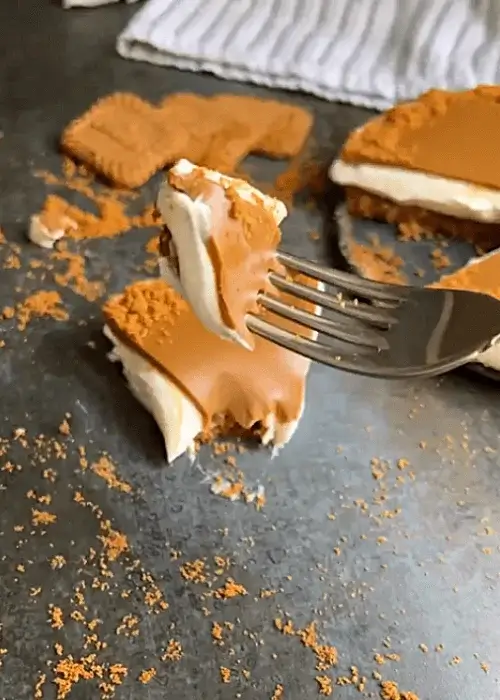
5-Ingredient No Bake Biscoff Cheesecake Recipe
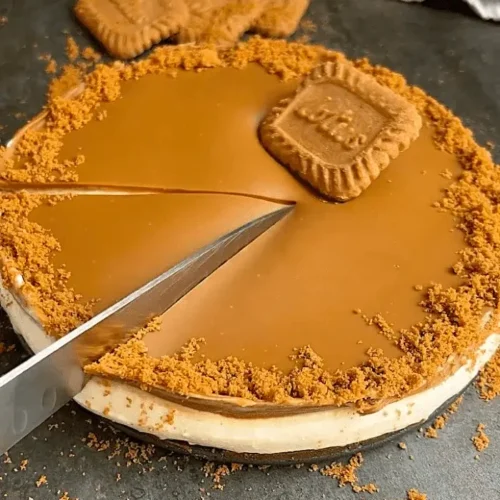
Watch the Full Step-by-Step
- 7-inch/18 cm springform pan
- Kitchen scale
INGREDIENTS
- 5⅓ ounces/150 grams Biscoff cookies, finely ground
- 3 ounces/85 grams unsalted butter, melted
- 14 ounces/400 grams cream cheese, room temperature
- 1⅓ cups/170 grams powdered sugar
- ½ cup/150 grams smooth Biscoff spread

INSTRUCTIONS
- Stir the ground Biscoff cookies with the melted butter until evenly moistened. Press firmly into the bottom of a 7-inch/18 cm springform pan, creating a compact, even layer. Chill while preparing the filling.
- Beat the cream cheese and powdered sugar on medium speed until completely smooth, about 2 minutes, scraping the bowl once to ensure no lumps remain. Spread evenly over the chilled crust and smooth the top. Freeze until firm, about 2 hours.
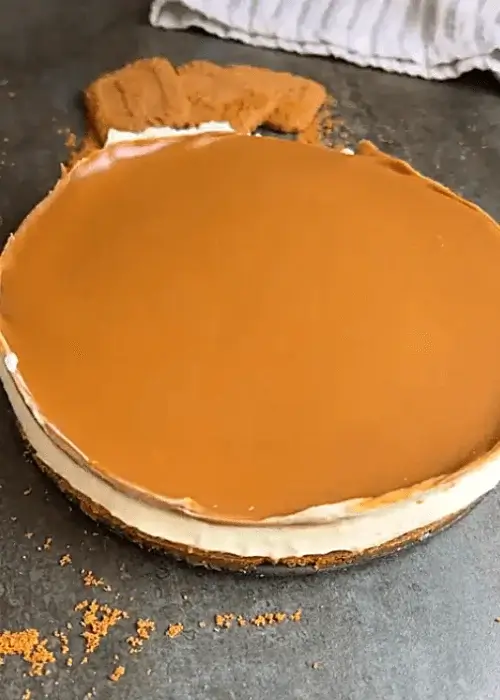
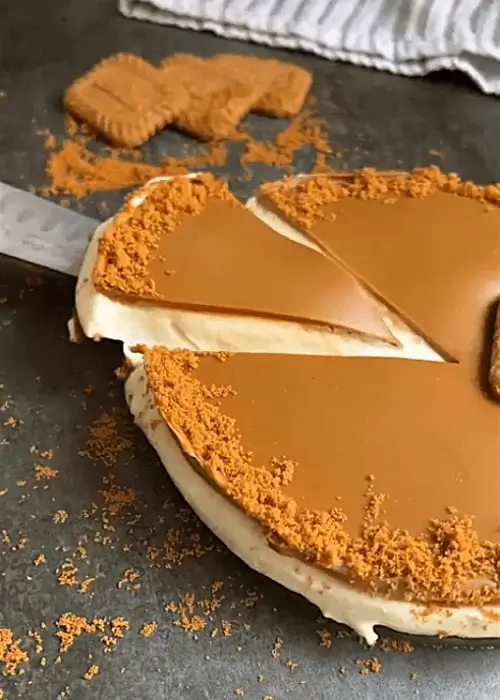
- Warm the Biscoff spread in the microwave just until fluid, 30 to 60 seconds. Pour over the frozen cake, tilting the pan so the topping reaches the edges in an even layer. Refrigerate until set, about 15 minutes, before slicing.
FAQ
What type of cream cheese works best for this Biscoff cheesecake recipe?
Full-fat block cream cheese is the best choice for this Biscoff cheesecake recipe because it provides structure, richness, and a stable set once chilled or frozen. Avoid whipped or spreadable cream cheese sold in tubs, as these contain added air and stabilizers that can result in a softer, less stable filling. The higher fat content in full-fat cream cheese ensures a smooth texture and prevents the filling from becoming watery.
It is also essential that the cream cheese is at room temperature before mixing. Cold cream cheese can create lumps that are difficult to smooth out, even with extended mixing. If using a stand mixer or hand mixer, beat just until fully smooth to avoid incorporating excess air, which can cause slight cracking or uneven texture after freezing.
How do I prevent the crust from crumbling?
The cookies should be processed into fine, uniform crumbs without large fragments. Coarse crumbs create structural gaps that weaken the base. The butter must be fully melted and evenly distributed so every crumb is lightly coated. If the mixture looks dry or sandy, it may need slightly more butter, but avoid oversaturating, which can cause greasiness.
Press the crust firmly into the pan using the flat bottom of a measuring cup or glass to create a compact layer with even thickness. Chilling the crust before adding the filling helps solidify the butter, locking the crumbs together. Using a springform pan also reduces stress on the crust during unmolding, minimizing the risk of cracking or breaking when slicing.
Can I use a different cookie base in this Biscoff cheesecake recipe?
Graham crackers are the most neutral alternative and will create a milder, slightly honeyed crust. Digestive biscuits provide a firmer structure with subtle wheat flavor. Chocolate sandwich cookies can be used for a more intense contrast, though their filling should be removed to control sweetness and fat content. When substituting, maintain the same total weight, 5⅓ ounces/150 grams of crumbs, and keep the butter ratio consistent to preserve structural integrity.
The key technical factors are crumb fineness and fat distribution. Any cookie used should be processed to a fine, sandy texture and thoroughly combined with melted butter. Because the filling is already sweet, avoid heavily frosted or highly sweetened cookies that could overpower the profile of this Biscoff cheesecake recipe.
Can this Biscoff cheesecake be made without freezing?
Freezing accelerates structure development in this Biscoff cheesecake, but it is not strictly mandatory. If you prefer refrigeration only, allow at least 6 hours, preferably overnight, for the filling to firm properly. The freezing step primarily stabilizes the cream cheese mixture quickly, making it easier to apply the topping cleanly. Without freezing, the filling will remain slightly softer, though still sliceable if adequately chilled.
To improve firmness without freezing, ensure the cream cheese is full-fat and avoid overmixing, which can loosen the structure. Using a well-chilled pan and keeping the cake refrigerated at or below 40°F/4°C helps maintain stability. If serving in warm environments, brief freezer exposure of 20 to 30 minutes before slicing can improve clean cuts.
Why is my filling too soft?
Using reduced-fat or whipped cream cheese significantly lowers structural stability because the fat percentage is reduced and additional stabilizers alter texture. Always use full-fat block cream cheese for proper firmness. Overmixing can also incorporate excess air, which weakens the set once chilled. Beat only until smooth and uniform.
Insufficient chilling is another common cause; freezing for the full 2 hours or refrigerating at least 6 hours is critical for proper structure. Warm kitchen conditions can further soften the filling during assembly. If necessary, return the cake to the freezer for 20 to 30 minutes before slicing to restore firmness.
How do I get clean slices?
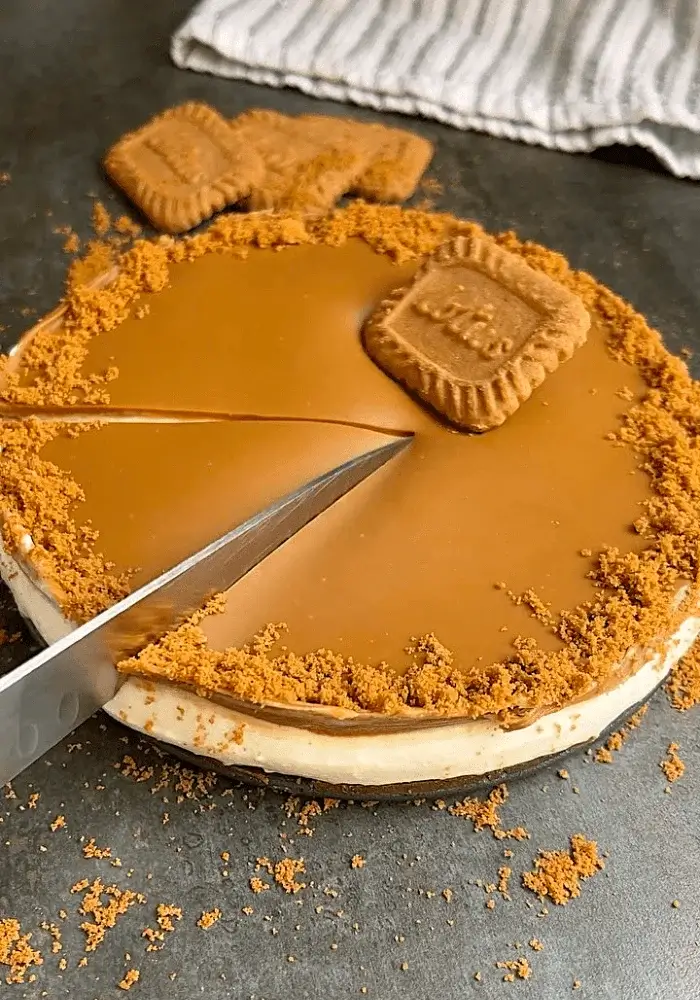
The cake should be thoroughly chilled before cutting. If refrigerated overnight, place it in the freezer for 15 to 20 minutes before slicing to slightly firm the interior. Use a long, sharp chef’s knife dipped in hot water and wiped dry between each cut. This prevents dragging through the topping and smearing the filling.
Apply steady downward pressure rather than sawing motions, which disturb the crust. Removing the springform ring carefully before slicing ensures smooth edges. If the topping is very thick, allow it to soften slightly at room temperature for 5 minutes to prevent cracking.
Can I double this Biscoff cheesecake recipe for a larger pan?
For a 9-inch/23 cm springform pan, increase all ingredients proportionally and expect a slightly longer freezing or refrigeration time to ensure full firmness. The thicker filling layer will require additional chilling to stabilize completely. Maintain the same crumb-to-butter ratio to preserve crust integrity.
Press the crust evenly and avoid making it too thick, which can lead to imbalance between crust and filling. When doubling, mix the filling thoroughly but do not overwhip. The topping quantity should also increase proportionally to maintain even coverage. Allow additional resting time before slicing to ensure structural stability throughout the larger cake.
Can I add gelatin in this Biscoff cheesecake recipe?
Gelatin can be incorporated into this Biscoff cheesecake recipe if a firmer, fully refrigerated set is preferred without relying on freezing. Bloom 1 teaspoon/3 grams powdered gelatin in 1 tablespoon/15 grams cold water for 5 minutes, then gently warm until fully dissolved but not boiling. Allow it to cool slightly before streaming it into the cream cheese mixture while mixing on low speed. The filling should be smooth and fluid but not warm.
Once assembled, refrigerate at least 6 hours or overnight for a stable set. Gelatin creates a cleaner slice and more resilient texture, especially in warm climates or for extended display. However, when properly chilled, the original five-ingredient Biscoff cheesecake is structurally sound without gelatin, provided full-fat cream cheese and adequate chilling time are used.
Why does the topping separate or look oily?
Biscoff spread contains oils that can separate when microwaved excessively or at high power. Heat it gently in short intervals of 15 to 20 seconds, stirring between each interval until just fluid. Overheating causes the fat to rise and creates an oily surface once cooled.
If separation occurs, stir vigorously while still warm to re-emulsify before pouring. Applying the topping to a properly chilled cake also helps it set evenly and maintain a glossy finish. Avoid spreading it over a warm filling, as temperature contrast can disrupt texture.
Can I turn this Biscoff cheesecake recipe into individual servings?
This Biscoff cheesecake recipe adapts well to individual portions using ramekins, jars, or muffin tins lined with paper liners. Divide the crust mixture evenly and press firmly into each base using the back of a spoon. Chill briefly to set before adding the filling. Portion the cream cheese mixture evenly to ensure consistent thickness and even chilling.
Individual servings typically firm faster, requiring about 1 to 1½ hours in the freezer instead of 2 hours. Apply the warmed Biscoff spread carefully to avoid overflow, especially in shallow containers. For clean presentation, chill thoroughly before serving and, if using liners, peel them away slowly to maintain smooth edges.