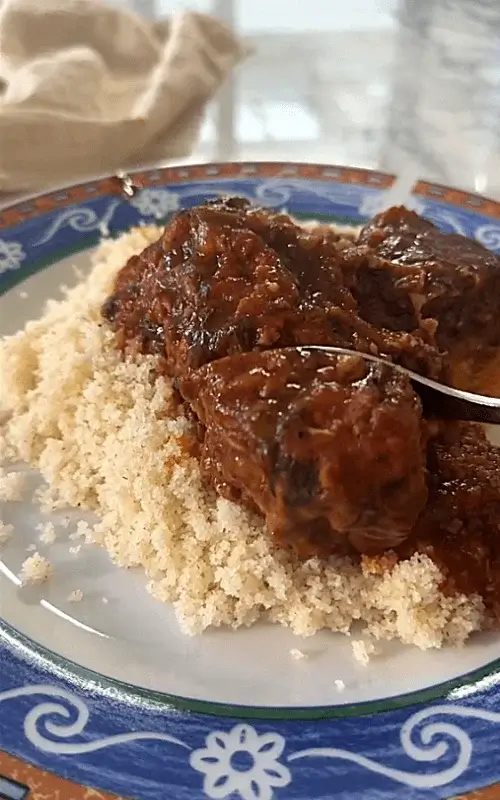
Libyan-Style Beef Stuffed Potatoes (Mafrum)
Watch the Full Step-by-Step
- Chef's knife
- Food processor
- large mixing bowls
- Wide skillet
INGREDIENTS
- 6 medium gold potatoes, peeled
- 1.1 pound/500 grams ground beef
- 1 medium onion
- 1 bunch fresh cilantro
- 1/2 medium potato
- 5 garlic cloves
- 1/3 cup breadcrumbs
- 1 tablespoon paprika
- 1/2 tablespoon baharat spice blend
- 1/2 tablespoon ground black pepper
- 1/2 tablespoon salt
- 2 tablespoons oil
- 2 large eggs
- 1 tablespoon tomato paste
- 1 cup all-purpose flour
Sauce:
- 7 garlic cloves, crushed
- 1 heaping tablespoon paprika
- 1/2 tablespoon baharat spice blend
- 1/2 tablespoon ground black pepper
- 1/2 tablespoon salt
- 14 ounces/400 grams diced tomatoes
- 4 cups water
- 1 handful cilantro, chopped
- 1/4 cup oil

INSTRUCTIONS
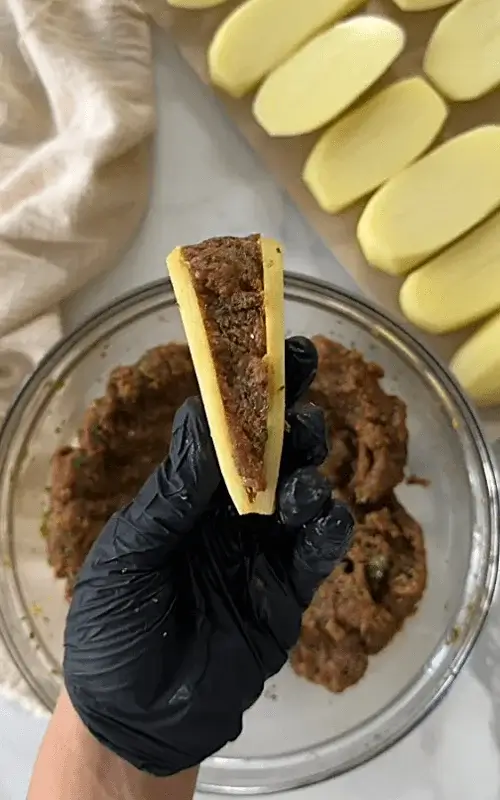
- Slice each potato into thick rounds, alternating between cuts that go almost through and cuts that go fully through to create pockets. Each potato should yield about 3 pieces. Soak in salted water for 20 minutes, then drain and dry well.
- In a food processor, finely chop the onion, cilantro, half potato, and garlic. Combine with the ground beef, breadcrumbs, spices, salt, and oil. Mix until uniform. Cover and refrigerate.
- Stuff each potato pocket with the meat mixture, pressing gently to seal.
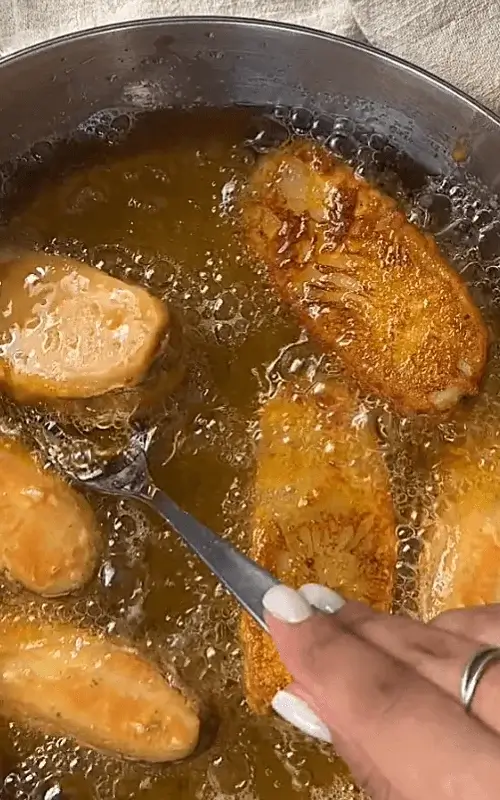
- Whisk eggs with tomato paste in a bowl and place flour in a second bowl. Heat a wide skillet with about 1 cup vegetable oil over medium heat. Dredge potatoes in flour, then egg, and fry until golden on all sides. Transfer to paper towels.
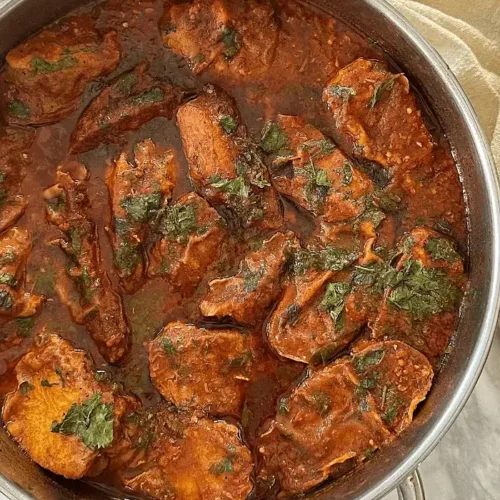
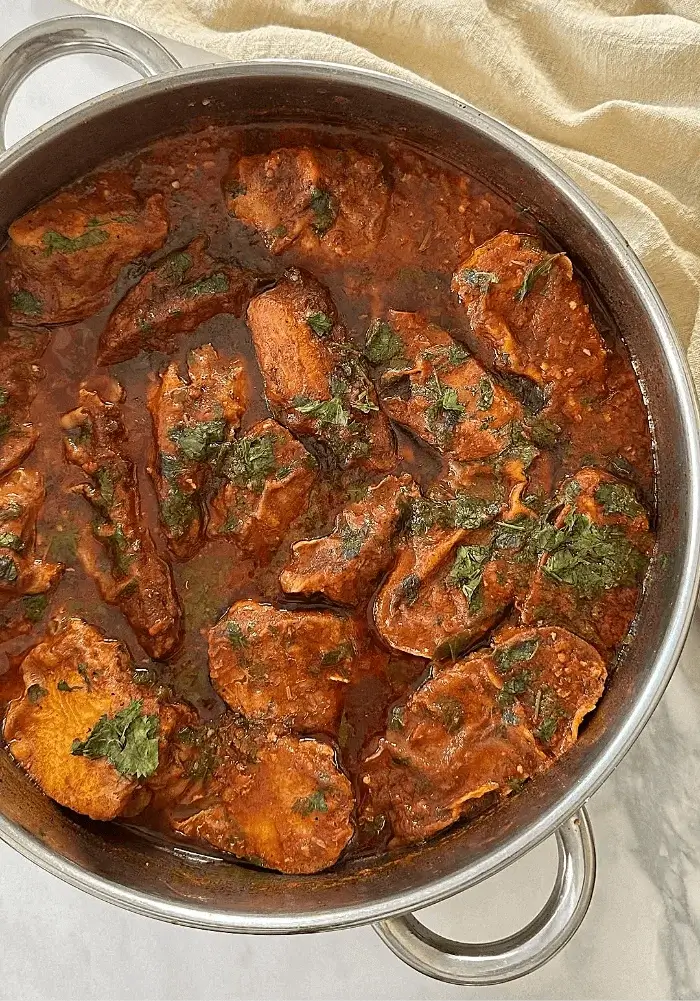
- Heat oil in a wide pot over medium heat. Add garlic and cook until fragrant, about 1 minute. Lower heat, add spices, and stir briefly. Add tomatoes and water; bring to a boil. Add potatoes, arranging snugly so they are nearly submerged.
- Cover and simmer on low until the potatoes are tender, about 40 minutes. Sprinkle with cilantro and cook 5 minutes more. Serve hot, preferably with couscous.
FAQ
What type of potatoes work best for making this recipe?
Waxy to medium-starch potatoes such as Yukon Gold or gold potatoes are ideal because they hold their shape during frying and simmering without falling apart. Their flesh is dense yet tender, allowing the potato slices to remain intact while being stuffed, fried, and braised. Russet potatoes, which are higher in starch, tend to absorb more liquid and can break down during the long simmer, making them less suitable for beef stuffed potatoes that require structural integrity.
Uniform size is also important, as evenly sized potatoes cook at the same rate and ensure consistent doneness. Peeling the potatoes is traditional, as it allows better adhesion during frying and a smoother final texture. Soaking the sliced potatoes in salted water removes excess surface starch, which helps prevent sticking and promotes even browning during frying, a key step in achieving properly cooked beef stuffed potatoes.
What role do breadcrumbs play in beef stuffed potatoes?
Their primary purpose is moisture retention and structural binding. As the beef cooks, breadcrumbs absorb rendered fat and released juices, preventing the filling from shrinking, drying out, or pulling away from the potato. This is especially important during the long simmer, when the filling must remain cohesive while fully cooking through. Breadcrumbs also help distribute seasoning evenly, ensuring consistent flavor in every bite of beef stuffed potatoes.
Fine, neutral breadcrumbs work best, as coarse crumbs can create gaps in the filling. Substitutions are possible but should be chosen carefully. Soaked white bread, matzo meal, or finely ground crackers can be used, provided they are evenly hydrated before mixing. Skipping a binder entirely often results in crumbly filling and compromised structure, which is why breadcrumbs are considered essential in traditional beef stuffed potatoes.
Can this recipe be prepared ahead of time without affecting texture or flavor?
The potatoes can be cut, soaked, dried, and stuffed up to 24 hours in advance, then stored tightly covered in the refrigerator. The meat mixture itself benefits from resting, as the flavors meld and the breadcrumbs hydrate fully. For best results, the frying step should be done shortly before cooking in the sauce, as pre-fried potatoes can lose crispness if stored too long.
However, beef stuffed potatoes can be fully cooked in the sauce and refrigerated for up to two days, as the dish actually improves in flavor over time. When reheating, use low heat and add a small amount of water to loosen the sauce and prevent scorching. Avoid reheating uncovered, as moisture loss can dry out both the potatoes and the beef filling.
Is frying the beef stuffed potatoes necessary?
Frying is a critical step in traditional beef stuffed potatoes and should not be skipped if optimal flavor and texture are the goal. Frying seals the meat filling, helping it stay compact during simmering, and creates a protective crust on the potato surface that prevents it from absorbing too much liquid. This step also develops deep caramelized flavors that cannot be achieved through simmering alone.
Without frying, beef stuffed potatoes are more likely to fall apart, release fat into the sauce, and develop a softer, less defined texture. While it is technically possible to skip frying for a lighter version, the result will resemble a braised potato-meat dish rather than classic beef stuffed potatoes. If frying is omitted, the sauce should be reduced and thickened separately to compensate for the loss of structure and flavor created during the frying stage.
How do you know when the stuffed potatoes are fully cooked?
A paring knife should slide easily into the thickest part of the potato with little resistance, indicating that the starches have fully softened. Internally, the meat filling should be fully cooked and cohesive, not crumbly or pink. Because beef stuffed potatoes simmer gently in sauce, they rely on time rather than high heat; rushing this step can leave the potato undercooked even if the meat is done. The sauce should thicken slightly and cling to the potatoes, signaling that starch and fat have emulsified. Typically, this occurs after about 40 minutes of low simmering, though thicker potatoes may require a few additional minutes to reach full doneness.
How do you keep the stuffed potatoes from falling apart during cooking?
It depends on a combination of potato choice, proper cutting, and correct cooking order. Using medium-starch potatoes such as Yukon Gold provides enough firmness to withstand frying and simmering. The cutting technique is critical: alternating partial cuts with full cuts creates pockets that hold the filling securely while maintaining structural support.
Packing the meat mixture firmly, without overstuffing, helps the filling bind to the potato during frying. Frying the beef stuffed potatoes before simmering is essential, as it creates a sealed exterior that stabilizes both the potato and the meat. During the simmer, the potatoes should be arranged snugly in the pot so they support one another and do not move excessively. Gentle heat is equally important; a low simmer prevents agitation that could cause the beef stuffed potatoes to break apart or unravel.
What type of ground beef works best for this recipe?
Typically an 80/20 or 85/15 lean-to-fat ratio. This level of fat keeps the filling moist and flavorful while preventing excessive grease from leaking into the sauce. Leaner beef, such as 90/10, can result in a dry, crumbly filling that does not bind well inside the potato. The addition of breadcrumbs and finely chopped onion helps retain moisture and improves texture.
Grinding the aromatics finely ensures even distribution and prevents large chunks from compromising the integrity of the beef stuffed potatoes. Mixing the filling thoroughly but gently is important; overmixing can lead to a dense, tough interior. Allowing the mixture to rest before stuffing gives the breadcrumbs time to absorb moisture, which further stabilizes the filling during cooking.
Can beef stuffed potatoes be frozen after cooking?
They can be frozen successfully after they are fully cooked and cooled, though texture is best preserved with careful handling. Arrange the potatoes in a single layer, fully coated in sauce, and freeze in airtight containers to prevent freezer burn. When properly stored, beef stuffed potatoes can be frozen for up to two months without significant loss of flavor.
To reheat, thaw overnight in the refrigerator, then warm gently in a covered pot over low heat. Adding a small amount of water or tomato sauce helps restore moisture and prevents scorching. Avoid reheating over high heat, as rapid boiling can cause the potatoes to split and the filling to dry out. Slow reheating preserves the structure and richness that define well-made beef stuffed potatoes.