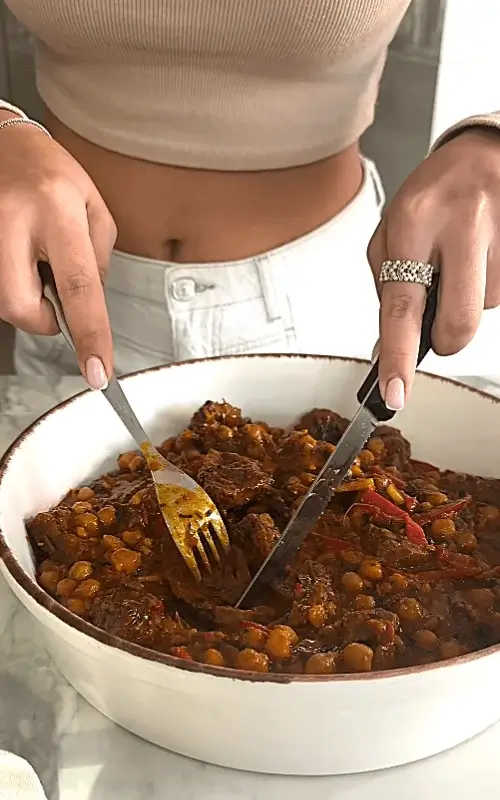
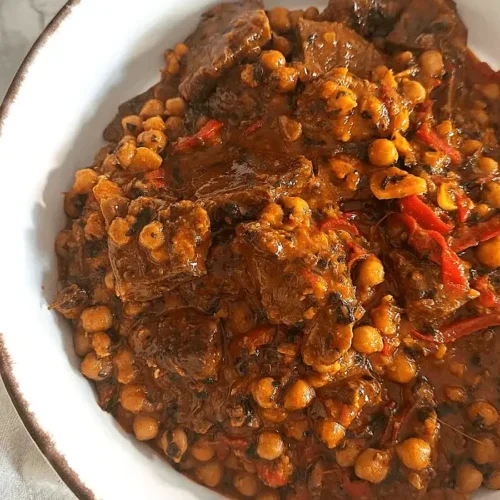
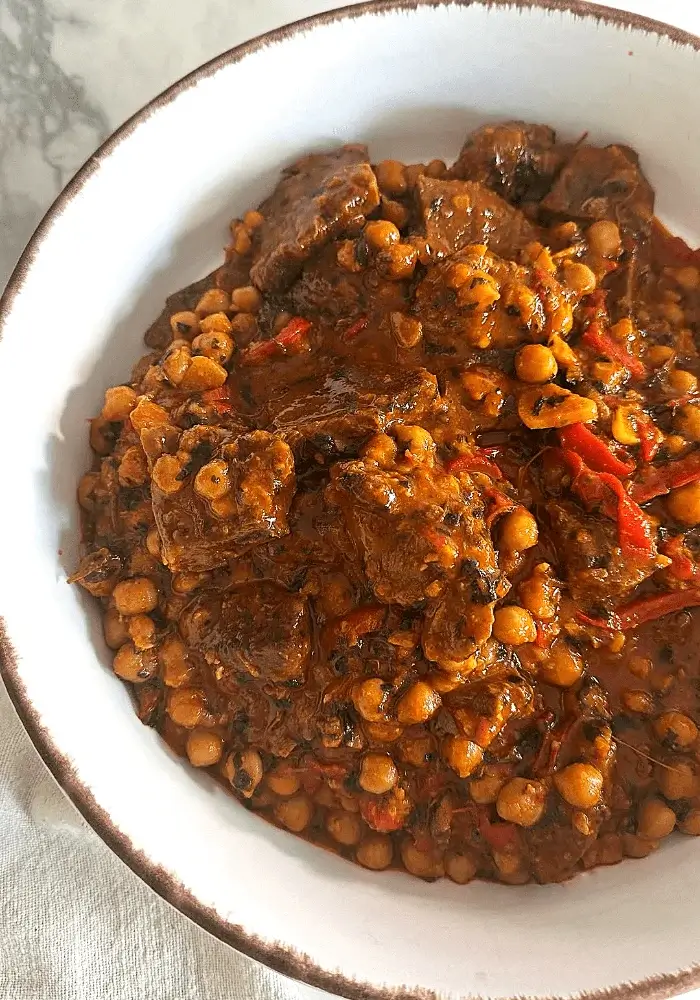
Moroccan Beef Shoulder Roast with Chickpeas
Watch the Full Step-by-Step
- Pressure cooker
- Large pot for boiling chickpeas
- Fine-mesh sieve
- Mixing bowls
- Chef's knife
INGREDIENTS
- 2.2 pounds/1 kilogram beef shoulder roast, trimmed and cut into 1-inch/2.5 cm cubes
- 1 cup water
- 1 1/2 cups/300 grams dried chickpeas, soaked overnight in cold water with 1 teaspoon baking soda
- 10 garlic cloves, sliced
- 2 chili peppers, sliced
- 2 red bell peppers, sliced
- 2 tablespoons sweet paprika
- 1 tablespoon ground turmeric
- 1/2 tablespoon salt, plus more to taste
- 1 bunch fresh cilantro, roughly chopped
- 3 tablespoons oil, divided

INSTRUCTIONS
- Soak the chickpeas overnight in cold water to cover by 2 inches/5 cm with 1 teaspoon baking soda; drain and rinse before cooking.
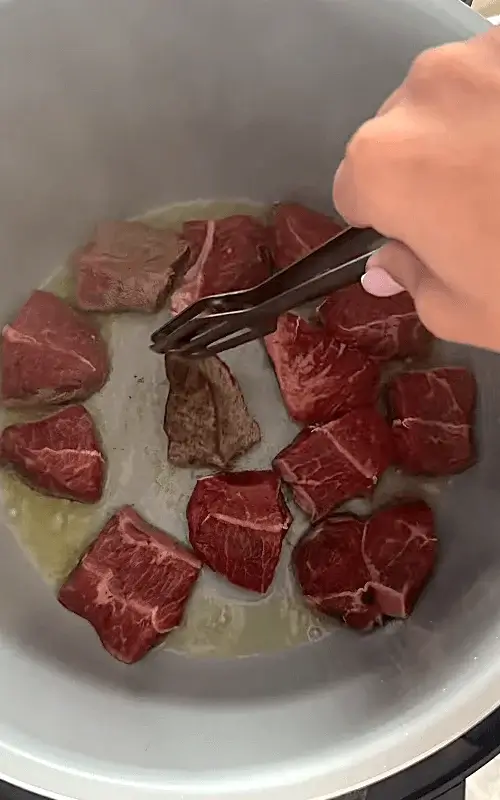
- Set the pressure cooker to sauté/sear and heat 1 tablespoon of the oil. Sear the beef cubes in batches until well browned all over, about 6 to 8 minutes total; transfer the beef to a plate.
- Add 1 cup water to the pot, scrape up any browned bits, lock the lid, select high-pressure cook, and cook for 30 minutes; allow a natural release for 30 minutes.
- While the beef cooks, place the soaked chickpeas in a large pot, cover with fresh water, add a pinch of salt, bring to a simmer, and cook until just tender, about 25 to 30 minutes; drain and set aside.
- When pressure cooking is complete, open the pot, reserve 1 1/2 cups of the cooking liquid, and remove the beef to a bowl. Return the pot to sauté, add the remaining 2 tablespoons of oil, then add sliced garlic and chili and cook, stirring, about 30 seconds until fragrant.
- Add the sliced red peppers and sauté 2 minutes. Stir in the drained chickpeas, paprika, turmeric, and 1/2 tablespoon salt. Pour in the reserved beef liquid plus 1/2 cup water and bring to a gentle simmer.
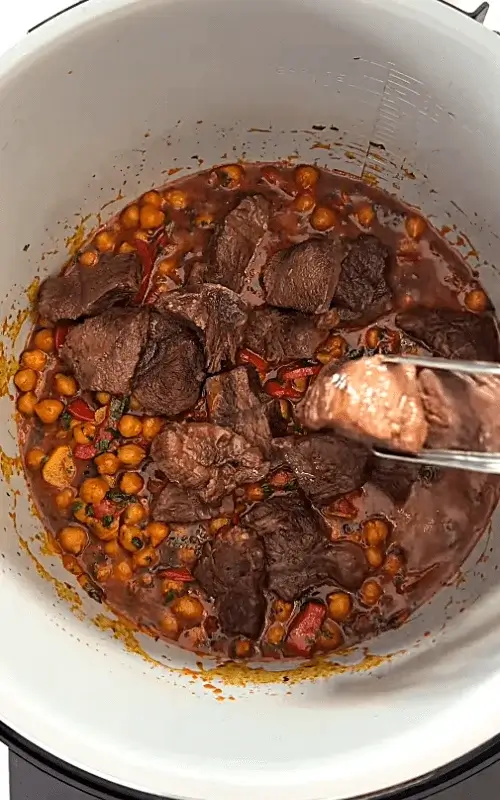
- Add the chopped cilantro and simmer until the chickpeas are fully tender and the sauce has slightly thickened, about 6 to 8 minutes. Return the beef to the pot, toss to combine, taste and adjust seasoning, and serve warm.
FAQ
What cut of meat works best if I cannot find beef shoulder roast?
Chuck roast, brisket, or short ribs are suitable alternatives. Cut the meat into 1-inch/2.5 cm cubes to match the recipe. Maintain the same cooking steps, including searing, pressure cooking, and simmering with chickpeas and spices. Adjust the natural release time if necessary, but the procedure for incorporating garlic, peppers, cilantro, and reserved cooking liquid remains identical. These cuts will develop similar tenderness and flavor as beef shoulder roast.
Can I replace fresh cilantro with another herb?
Substitute fresh cilantro with flat-leaf parsley in equal amounts, roughly chopped. Optionally, add a small amount of fresh mint for additional aromatic notes. Add the substitute herbs at the end of cooking, after simmering the chickpeas in the reserved beef liquid, to preserve flavor and color.
Can I make this recipe without a pressure cooker?
Use a large pot or Dutch oven. After searing the meat in oil, add 1 cup water, cover partially, and simmer over low heat (around 180–200°F / 80–90°C). Cook the beef for 2 to 2 1/2 hours until tender, stirring occasionally and adding additional water if needed. Prepare the chickpeas in a separate pot as in the original recipe, then combine them with the beef and spices, using the reserved cooking liquid to create the sauce.
Can I use canned chickpeas?
If using canned chickpeas, rinse and drain them, and skip the soaking and boiling steps. Add the canned chickpeas directly to the sautéed garlic, peppers, and spices along with the reserved beef liquid, and simmer until heated through. Adjust cooking times slightly to prevent over-softening the chickpeas while maintaining the intended texture in the beef shoulder roast dish.
What can I serve with this Moroccan beef shoulder roast?
Serve beef shoulder roast with grains such as couscous, rice, or quinoa to soak up the sauce. Crusty bread or flatbreads like pita or laffa also complement the dish. Include lightly cooked or raw vegetables, such as a salad with lemon vinaigrette, roasted carrots, or spiced eggplant, for balance. For plating, spoon the sauce over the beef shoulder roast and chickpeas, arranging any garnishes such as extra chopped cilantro on top. Portion to ensure each serving has both meat and legumes.
How do I store and reheat leftovers?
Cool the beef shoulder roast and chickpeas to room temperature before storing. Refrigerate in an airtight container for up to 3 days. To reheat, place the beef and chickpeas in a pot over medium-low heat, adding a small amount of water or broth to loosen the sauce. Stir occasionally until heated through. For freezing, place in an airtight container or freezer-safe bag for up to 2 months. Thaw in the refrigerator overnight before reheating to maintain the proper texture and flavor.
How can I adjust the spice level in this recipe?
Reduce the number of chili peppers or remove seeds for milder heat. Increase fresh or dried chili, cayenne, or smoked paprika for spicier results. Maintain the same cooking steps for searing, pressure cooking, and simmering. The timing and liquid amounts remain unchanged. Taste the dish during simmering and add spices gradually to reach the desired level of heat while ensuring even seasoning of the beef shoulder roast and chickpeas.
Can I make this recipe ahead of time?
Prepare the beef shoulder roast and chickpeas completely and allow to cool. Store in an airtight container in the refrigerator for up to 24 hours. Reheat on the stovetop over medium-low heat, adding 1/4 to 1/2 cup/60–120 grams water or reserved cooking liquid to restore sauce consistency. Stir occasionally until heated through. The reheating process does not require additional seasoning unless needed.
How do I ensure the beef shoulder roast stays tender?
Tenderness is achieved by cooking beef shoulder roast slowly with sufficient liquid. Sear the meat first to lock in juices, then cook under pressure or low simmer. Maintain 1 cup/240 grams water and 1 1/2 cups/360 grams reserved cooking liquid for the sauce. Incorporate chickpeas, peppers, garlic, and spices after searing, then simmer until both the meat and legumes are fully cooked. Avoid overcooking beyond the recommended times to prevent breakdown of meat fibers. Stir gently to keep cubes intact.