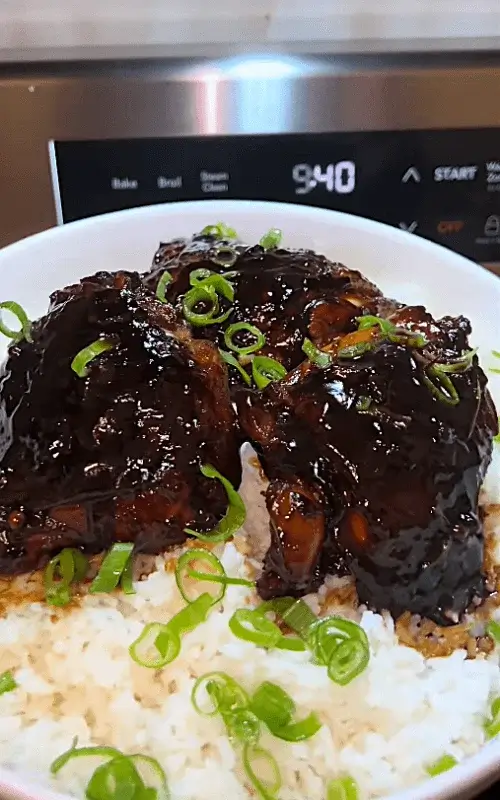
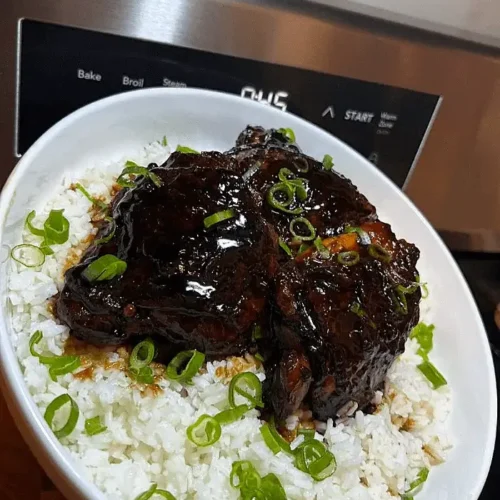
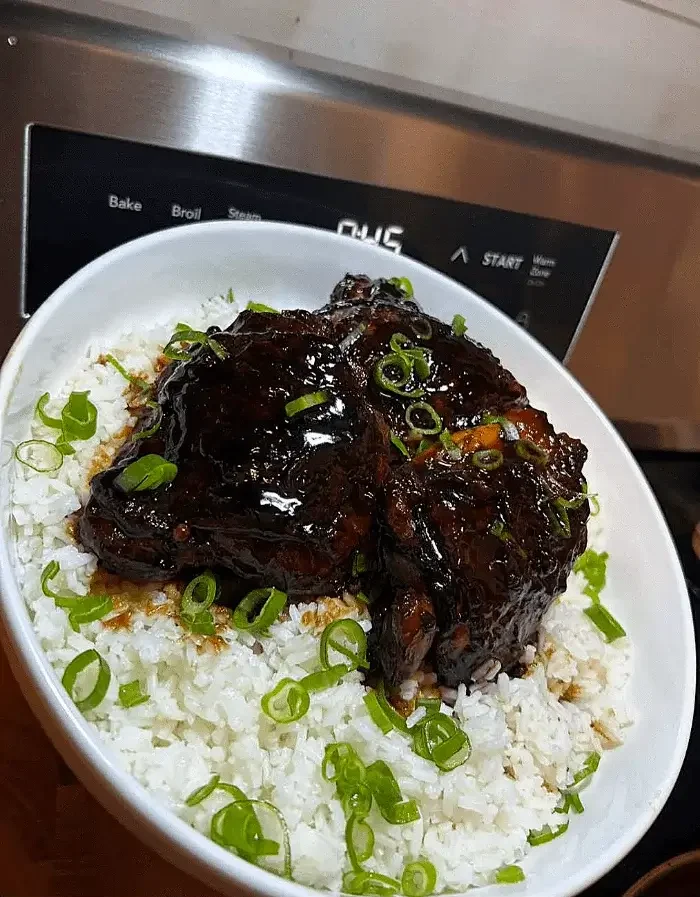
Sticky Soy-Garlic Adobo Chicken Bowl
Watch the Full Step-by-Step
- Large mixing bowl
- Large stainless-steel skillet with lid
INGREDIENTS
- 2 pounds/900 grams bone-in chicken thighs
- 1 cup soy sauce
- ½ cup packed dark brown sugar
- 4 garlic cloves, smashed
- 1 teaspoon whole black peppercorns
- ¼ cup cane vinegar or distilled white vinegar
- 1 medium yellow onion, thinly sliced
- ½ cup low-sodium chicken broth

INSTRUCTIONS
- In a large bowl, combine the chicken, soy sauce, brown sugar, garlic and peppercorns. Add the vinegar and turn to coat. Let stand at room temperature for 20 minutes, or cover and refrigerate for up to 2 hours.
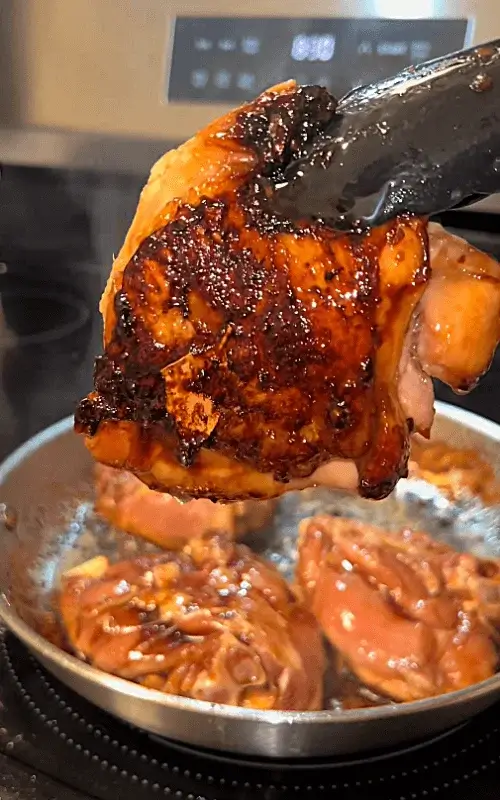
- Heat a large stainless-steel skillet with a lid over medium heat. Remove the chicken from the marinade, reserving the liquid. Place the chicken skin side down in the skillet and sear until deeply browned, 5 to 7 minutes. Turn and cook until browned on the second side, 3 to 4 minutes more, reducing the heat as needed to prevent burning from the sugar.
- Transfer the chicken to a plate. Add the onion to the skillet and cook, stirring occasionally, until softened and lightly caramelized, about 5 minutes.
- Return the chicken to the skillet, skin side up, nestling it among the onions. Pour in the reserved marinade and add the broth. Bring to a simmer, then cover and cook over medium-low heat until the chicken is very tender and an instant-read thermometer inserted into the thickest part registers at least 175°F/80°C, 25 to 35 minutes.
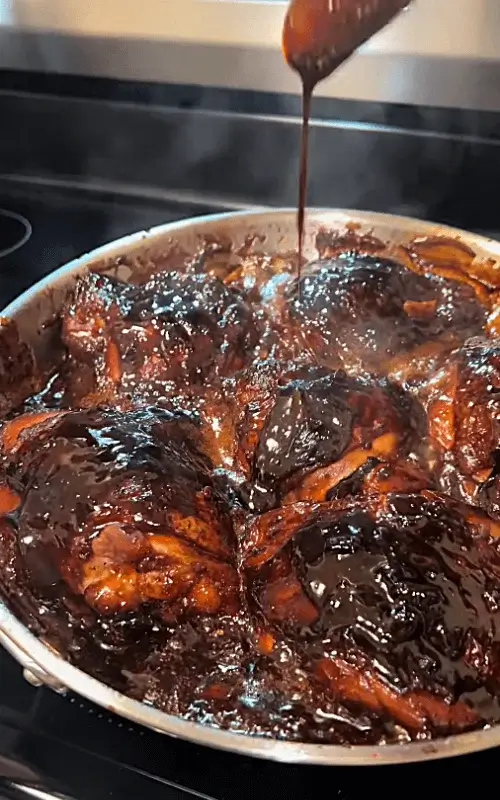
- Uncover and simmer briefly, if needed, until the sauce is glossy and slightly thickened. Spoon the onions and sauce over the chicken and serve hot, preferably over steamed white rice.
FAQ
What cut of chicken is best for making an adobo chicken bowl?
Bone-in, skin-on chicken thighs are the ideal choice. Thighs are naturally more flavorful and tender than breast meat because of their higher fat content and slightly darker meat, which holds up well during long simmering in the adobo sauce. The bones also contribute extra richness and depth to the sauce as it cooks, creating a more savory and satisfying dish. Skin-on thighs caramelize beautifully during searing, giving the finished adobo chicken bowl a glossy, slightly crisp exterior.
Chicken breasts can be used as a leaner alternative, but they are prone to drying out if simmered too long, so timing must be carefully monitored. Drumsticks are another option, offering similar flavor and moisture as thighs but with a different texture and slightly longer cooking time. Regardless of cut, ensure the pieces are uniform in size to cook evenly.
How long should the chicken be marinated for best flavor?
It should be marinated at least 20 minutes at room temperature, though refrigerating for up to two hours is ideal. The soy sauce, vinegar, brown sugar, garlic, and peppercorns penetrate the chicken during this time, infusing the meat with a balance of savory, tangy, and sweet flavors. Even a short marinade allows the chicken to absorb enough seasoning for a flavorful dish, but longer marinating ensures the flavors are more deeply integrated.
Marinating in the refrigerator is recommended if leaving the chicken for more than 20 minutes, as it prevents bacterial growth while still allowing the meat to absorb the sauce. When ready to cook, remove the chicken from the marinade and reserve the liquid to pour back into the skillet. This reserved marinade enhances the sauce’s depth and prevents waste.
Can I use other types of vinegar in an adobo chicken bowl?
While cane vinegar or distilled white vinegar is traditional for an adobo chicken bowl, you can use alternatives such as apple cider vinegar, rice vinegar, or even coconut vinegar. The type of vinegar affects the flavor profile slightly: cane vinegar provides a mild, slightly sweet tang; rice vinegar is lighter and less acidic; and apple cider vinegar adds a fruity note. Adjust the quantity slightly if the vinegar is more potent than the traditional choice.
The vinegar’s acidity is crucial because it tenderizes the chicken and balances the sweetness from the brown sugar, creating the signature tangy-sweet sauce. Avoid overly strong vinegars like balsamic, which may dominate the dish and change its authentic flavor. Always combine the vinegar with the soy sauce and sugar before marinating so the chicken absorbs a harmonious blend.
What is the best way to thicken the sauce?
The sauce in an adobo chicken bowl thickens naturally through reduction during simmering. As the chicken cooks over medium-low heat, water evaporates, and the soy sauce, brown sugar, and vinegar concentrate, creating a glossy, slightly sticky coating. To accelerate thickening, remove the lid in the last few minutes of cooking, letting the sauce reduce further. Stir occasionally to prevent sticking or burning.
If the sauce appears too thin, you can also briefly increase the heat while stirring continuously until it reaches the desired consistency. Another method is to remove the chicken temporarily, simmer the liquid alone until thicker, and then return the chicken to the skillet. Avoid adding flour or cornstarch, as traditional adobo chicken bowl sauce relies on natural reduction for texture.
What type of rice pairs best with an adobo chicken bowl?
long-grain white rice, such as jasmine or basmati, is the most common and versatile choice. Its light, fluffy texture soaks up the rich, savory-sweet adobo sauce without becoming mushy, creating a balanced bite with each mouthful. Short-grain rice can also be used, offering a slightly stickier texture that clings to the chicken and sauce, but it may alter the presentation and overall mouthfeel.
When cooking rice for an adobo chicken bowl, rinse it thoroughly to remove excess starch, ensuring grains remain separate. Cook with the proper water-to-rice ratio so it is neither too dry nor overly wet, which can dilute the sauce when served. For added aroma, you can lightly toast the rice before cooking or cook it in chicken broth instead of water.
Can I make this adobo chicken bowl spicy?
This adobo chicken bowl can be made spicy by incorporating fresh or dried chili peppers, chili flakes, or even a dash of hot sauce into the marinade or sauce. Fresh chilies such as red finger chili, bird’s eye chili, or serrano peppers can be sliced and sautéed with the onions before adding the chicken and marinade. Dried chili flakes or crushed dried chilies can be added to the sauce while simmering to infuse heat gradually.
Spicy adobo chicken bowls are popular in many Filipino households because the heat complements the savory-sweet sauce, creating a more complex flavor profile. Adding spice doesn’t just increase heat; it enhances aroma and deepens the overall taste experience. For milder versions, seeds can be removed from fresh chilies or only a small amount of dried chili used.
How can I get a glossy, caramelized finish on the chicken?
Searing the chicken skin side first is crucial. The combination of brown sugar and soy sauce in the marinade allows the surface to caramelize quickly, giving the chicken a deep, shiny appearance. Use medium heat and monitor carefully, reducing heat if the sugar begins to burn. Turn the chicken to sear the other side briefly before adding the onions and simmering in the reserved marinade and broth.
During simmering, keeping the lid partially on or removing it toward the end allows the sauce to thicken and glaze the chicken naturally. Spoon the reduced sauce over the chicken periodically to enhance the coating. Avoid stirring the chicken aggressively, as this can disturb the caramelization.
Can I use skinless chicken for adobo chicken bowl?
Yes, but it will produce a slightly different texture and appearance. Without the skin, the chicken won’t caramelize as deeply during searing, and the glossy finish on the surface will be less pronounced. Skinless chicken thighs or breasts are leaner, which can result in a lighter sauce, but care must be taken to avoid overcooking, as skinless meat dries out faster during the simmering process.
To maintain moisture with skinless chicken, simmer over lower heat and keep the pieces partially submerged in the marinade and broth. Adding a touch more sugar or briefly broiling at the end can help develop color and gloss.
How do I store and reheat leftovers?
Leftovers can be stored safely in the refrigerator for up to three days. Allow the chicken to cool to room temperature, then transfer to an airtight container along with the sauce to prevent drying out. Reheat gently on the stove over medium-low heat, stirring occasionally and adding a splash of broth or water if needed to loosen the sauce. Reheating in the microwave is possible, but stirring halfway through ensures even warming.
For longer storage, freeze portions in airtight containers for up to one month. Thaw overnight in the refrigerator before reheating on the stove to maintain texture and flavor. Proper storage preserves the savory-sweet balance of the adobo chicken bowl, allowing the soy, garlic, vinegar, and caramelized onions to remain fully infused.