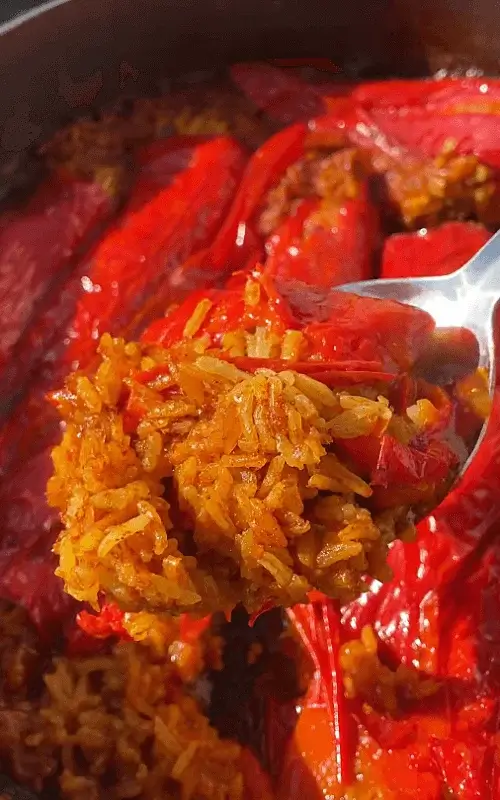
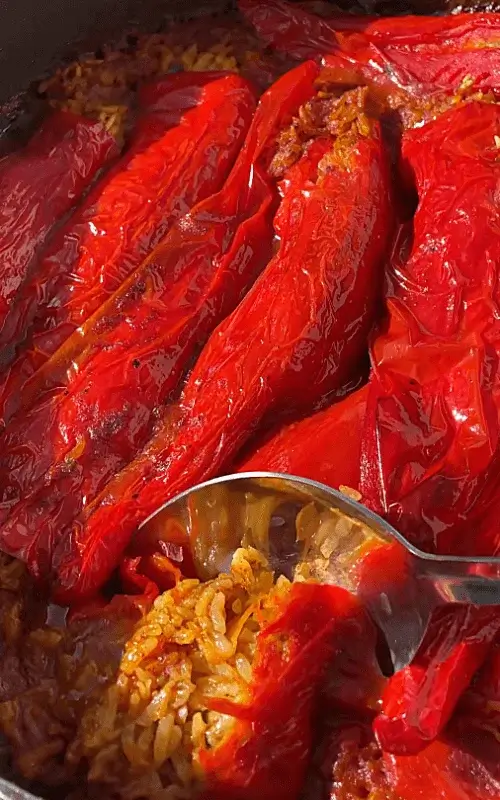
Easy Stuffed Italian Frying Peppers with Rice
Watch the Full Step-by-Step
- Wide Dutch oven
- Large mixing bowl
- Chef's knife
INGREDIENTS
Filling:
- 2 cups long-grain rice
- 1 medium onion, finely chopped
- 1 hot green pepper, finely chopped
- 1 tablespoon crushed garlic
- 3 tablespoons tomato paste
- 1½ teaspoons salt
- ½ teaspoon black pepper
- 1 tablespoon paprika
- ¼ teaspoon ground cumin
- ½ teaspoon ground turmeric
Peppers and sauce:
- 8 Italian frying peppers
- 3 tablespoons olive oil
- 2 cups water
- 4 tablespoons tomato paste
- 1 teaspoon salt
- ½ teaspoon black pepper
- 1 teaspoon paprika
- ½ teaspoon ground turmeric
- ¼ teaspoon ground cumin

INSTRUCTIONS
- Heat oven to 350°F/180°C. Rinse the rice until the water runs mostly clear and drain well.
- Combine the rice, onion, hot green pepper, garlic, tomato paste, salt, black pepper, paprika, cumin, and turmeric in a large bowl. Mix until evenly coated.
- Slice off the stem ends of the Italian frying peppers and remove seeds. Fill each pepper to the top with the rice mixture. Arrange snugly in a wide, oven-safe sauté pan.
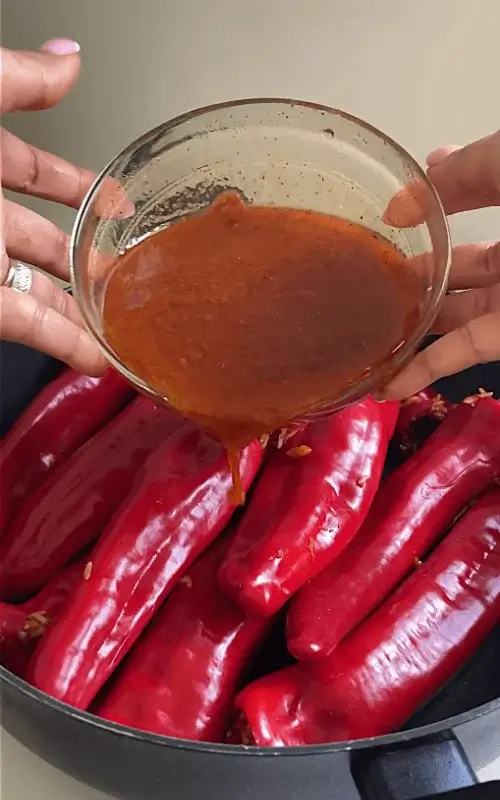
- Whisk olive oil, water, tomato paste, salt, black pepper, paprika, turmeric, and cumin until smooth. Pour over the peppers; liquid should come about two-thirds up their sides. Add a little more water if needed.
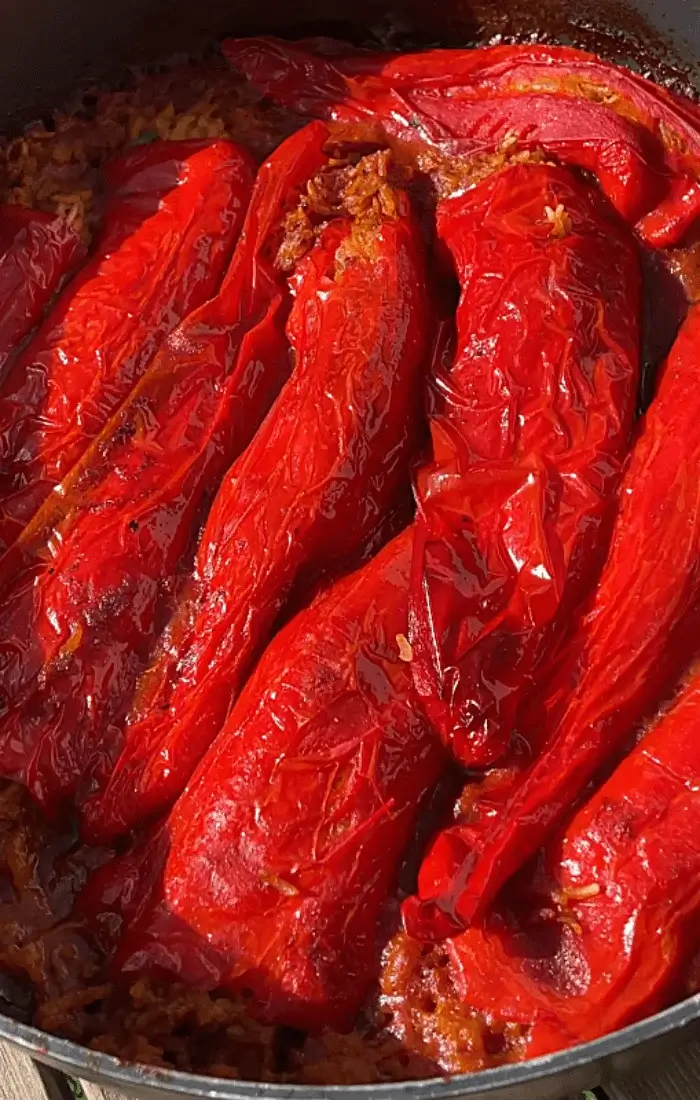
- Cover directly with a sheet of wet parchment paper and transfer to the oven. Bake until the rice is tender and peppers are completely soft, about 2 hours.
- Remove the parchment and bake on convection or increase heat to 425°F/220°C for 10 minutes to lightly reduce and deepen the sauce. Rest 10 minutes before serving.
FAQ
What type of rice works best for stuffed Italian frying peppers?
For stuffed Italian frying peppers, long-grain rice is the best choice because it cooks evenly and maintains a firm texture, which prevents the filling from becoming mushy during the long baking process. Varieties like basmati or jasmine offer a slightly aromatic flavor and separate grains, making them ideal for stuffing peppers.
Medium-grain rice can also be used if a slightly creamier texture is desired, but short-grain rice is generally avoided as it releases more starch and can make the peppers overly soft or sticky. Pre-rinsing the rice is important to remove excess surface starch, which further helps each grain stay distinct while baking.
How do you prepare Italian frying peppers for stuffing?
Italian frying peppers should be prepared by first washing them thoroughly and then trimming off the stem ends. Carefully remove all seeds and membranes to create a hollow cavity for the rice filling. The peppers should remain whole and intact to hold the stuffing during the long baking process, so handle them gently.
For even cooking, select peppers that are similar in size so they cook at the same rate. If the peppers are particularly thick-walled, consider lightly roasting or blanching them for a few minutes to soften the flesh before stuffing.
How long should stuffed Italian frying peppers bake for optimal texture?
Stuffed Italian frying peppers require a long, slow bake to ensure the rice inside cooks fully while the peppers become tender without burning. Baking at 350°F/180°C for around two hours allows the rice to absorb flavors from the tomato sauce, spices, and the peppers themselves while preventing the filling from drying out.
Covering the peppers with wet parchment paper helps trap steam, keeping the peppers soft and moist. After the initial bake, uncovering and finishing at a higher temperature for 10 minutes helps reduce the sauce slightly and deepen the flavor. Monitoring the peppers at the end ensures the texture is tender but intact.
What variations can I try with the filling for Italian frying peppers?
You can add cooked ground meat such as beef, lamb, or turkey to make the dish heartier, or include diced vegetables like zucchini, carrots, or mushrooms for added texture and nutrients. Incorporating fresh herbs such as parsley, basil, or thyme can elevate the flavor, while cheese like mozzarella or feta can add creaminess and richness. Using different spices, like smoked paprika or chili flakes, can introduce depth and heat.
What is the best way to serve stuffed Italian frying peppers?
Stuffed Italian frying peppers are best served warm, straight from the oven, with some of the baking sauce spooned over the top to keep the peppers moist and flavorful. They can be presented as a main dish alongside a simple green salad or roasted vegetables to balance the richness of the rice filling.
For a more Mediterranean-style meal, serve with a dollop of plain yogurt or a drizzle of extra virgin olive oil. Slicing the peppers in half before serving can make plating easier and help highlight the colorful rice and sauce inside. Leftovers can be reheated gently in the oven or microwave to preserve texture.
Can I freeze stuffed Italian frying peppers?
Peppers can be frozen for later use, but proper preparation is key to maintain flavor and texture. Allow the stuffed peppers to cool completely after baking, then wrap each individually in plastic wrap and place them in an airtight container or freezer bag.
Freezing before or after baking is possible, but pre-baking slightly reduces risk of overcooked filling upon reheating. When ready to serve, thaw in the refrigerator overnight and reheat gently in the oven at 350°F/180°C until warmed through. Freezing may slightly soften the peppers, but the flavor of the rice and sauce remains rich and satisfying.
Do Italian frying peppers need to be peeled before baking?
Italian frying peppers generally do not need to be peeled before baking because their skin is thin, tender, and edible when cooked. The skin softens during the long baking process and contributes to the overall structure of the stuffed pepper.
Peeling is optional and usually reserved for recipes where a very smooth texture is desired or if the peppers have a particularly tough or waxy skin. For most home cooking applications, keeping the skin on preserves nutrients, maintains shape during baking, and simplifies preparation. Removing the skin is unnecessary for stuffed Italian frying peppers to turn out tender and flavorful.
What are common mistakes to avoid when making stuffed Italian frying peppers?
Common mistakes when making stuffed Italian frying peppers include using the wrong type of rice, not trimming and cleaning the peppers properly, overfilling the cavities, and undercooking or overcooking in the oven. Using short-grain or sticky rice can result in a mushy filling, while leaving seeds and membranes in the peppers can create bitterness.
Overfilling can cause the rice to spill out during baking, and cooking at too high a temperature can burn the peppers or dry out the filling. Covering the peppers with parchment paper helps maintain moisture, and finishing with a brief uncovered bake allows the sauce to thicken without compromising the tender texture of the peppers.
Can I use different types of peppers instead of Italian frying peppers?
Bell peppers, mini sweet peppers, or even Cubanelle peppers can work, though their cooking times and texture may vary. Thicker-walled peppers like bell peppers may require slightly longer baking to fully cook the rice filling, while smaller peppers may need less time and could cook unevenly. When substituting, choose peppers that are fresh, firm, and without soft spots. The key is to maintain a cavity large enough to hold the filling and ensure that the pepper cooks evenly while staying intact.
How do I prevent the rice filling from drying out?
To prevent the rice filling from drying out in Italian frying peppers, it is important to maintain adequate moisture in the pan during baking. Covering the peppers with wet parchment paper or foil traps steam, which gently cooks the rice while keeping the peppers tender.
The sauce poured over the peppers should come at least two-thirds up the height of the filling so the rice can absorb moisture and flavor as it bakes. Checking the liquid level halfway through cooking can help, and adding a splash of water or tomato sauce if it looks dry ensures the filling stays moist. Using long-grain rice also helps, as it holds its shape better than sticky rice.
Is it necessary to pre-cook the rice before stuffing Italian frying peppers?
Pre-cooking the rice is not necessary when making stuffed Italian frying peppers because the long bake time allows uncooked rice to fully cook in the sauce. However, rinsing the rice beforehand is crucial to remove excess starch and keep the grains separate.
Uncooked rice absorbs the tomato sauce, oil, and spices during baking, enhancing flavor while maintaining a slightly firm texture. Using pre-cooked rice can speed up baking, but it may result in a softer, less structured filling and increase the risk of overcooking or mushiness. The key is balancing liquid levels so the rice cooks evenly without drying or becoming too soft.