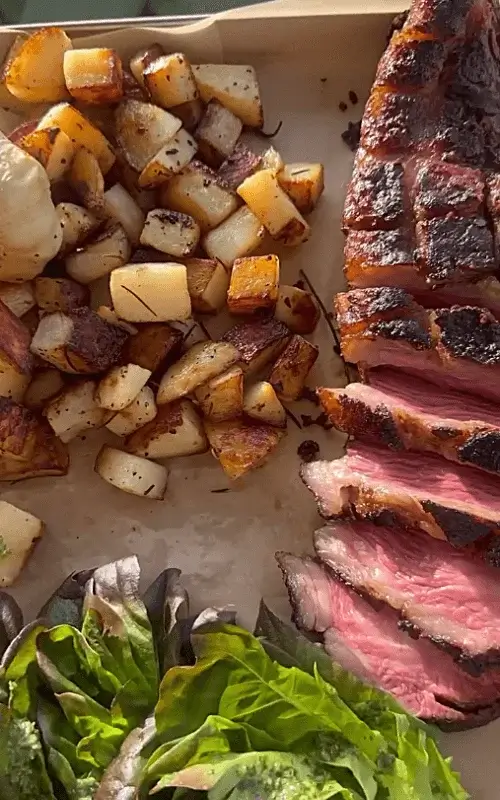
Mustard-Glazed Picanha Roast with Crispy Potatoes
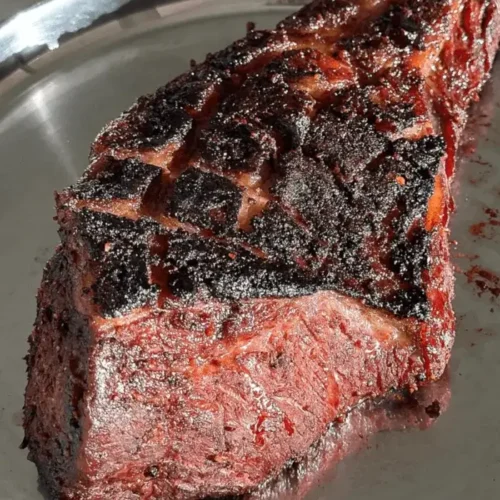
Watch the Full Step-by-Step
- Wire rack
- Mixing bowls
- Chef's knife
- Meat thermometer
INGREDIENTS
- 2.2 pounds/1 kilogram picanha, top sirloin cap
- 1 tablespoon salt, plus more to taste
- 1 tablespoon whole-grain mustard
- 8–10 soft dates
- ½ cup boiling water
- 1 teaspoon black pepper
- 1 teaspoon smoked paprika
- 1 teaspoon garlic powder
Potatoes:
- 6 medium Yukon Gold potatoes, peeled and cut into 1-inch pieces
- 2 tablespoons olive oil
- 1 teaspoon salt
- ½ teaspoon black pepper
- 4 garlic cloves, smashed
- 2 rosemary sprigs or thyme sprigs

INSTRUCTIONS
- Score the fat cap of the picanha in a 1-inch crosshatch pattern, cutting through the fat but not into the meat. Season all over with the salt and place on a rack set over a sheet pan. Refrigerate uncovered at least 8 hours or overnight. If skipping this step, season just before roasting.
- Heat oven to 250°F/120°C. Set a rack over a sheet pan.
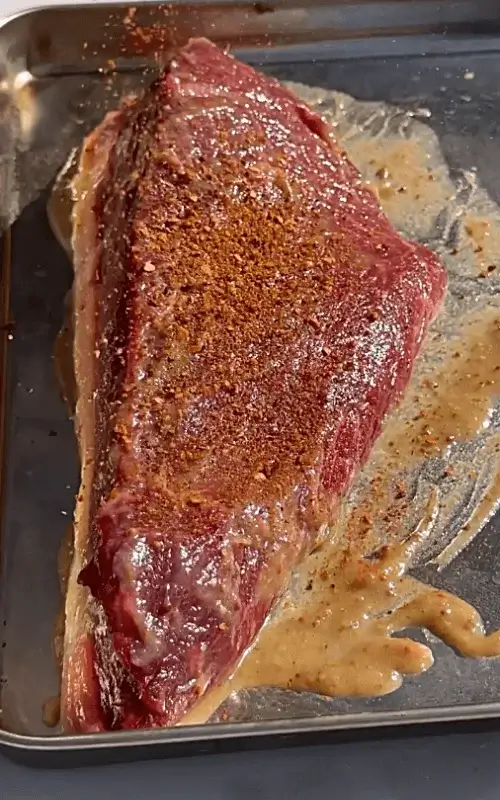
- Place the dates in a bowl, cover with the boiling water, and soak for 20 minutes until very soft. Slip off and discard the skins. Mash the dates into a smooth paste and stir in the mustard, adding a little soaking liquid as needed to make a thick, spreadable glaze.
- Spread the glaze over the meat and season with the black pepper, paprika, and garlic powder. Place fat side up on the rack. Toss the potatoes with the olive oil, salt, pepper, garlic, and herbs, then spread on the sheet pan beneath the rack so the drippings fall onto the potatoes.
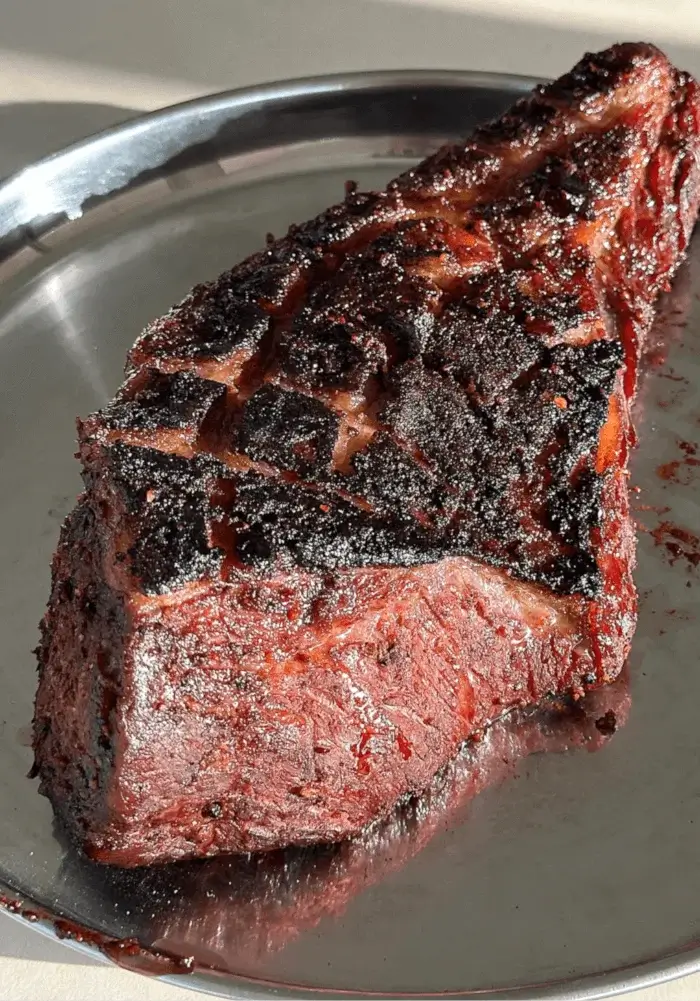
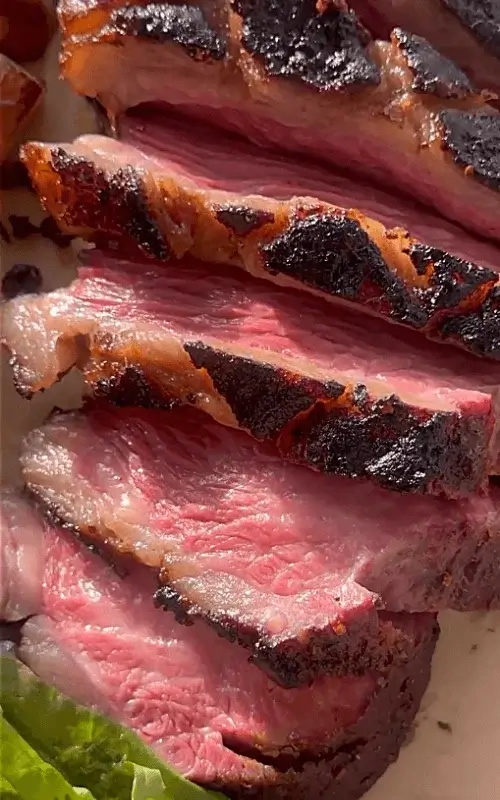
- Roast until the internal temperature reaches 130°F/55°C for medium-rare to medium, 1¼ to 1½ hours. Transfer the roast to a cutting board. Heat a skillet over medium-high and sear the fat cap until browned and crisp, 3 to 5 minutes. Let rest 15 minutes before slicing against the grain.
- While the meat rests, continue roasting the potatoes if needed until deeply golden and tender. Slice the picanha roast and serve with the potatoes and any pan drippings.
FAQ
What is the best way to season the picanha for maximum flavor?
The picanha should first be scored on the fat cap in a crosshatch pattern, which allows seasonings and heat to penetrate evenly while rendering the fat. Salt is the primary seasoning, applied generously over the entire roast, and it can be left to rest overnight in the refrigerator to enhance flavor and tenderize the meat.
Adding a glaze such as a date-mustard paste provides both sweetness and tang, complementing the beef’s natural richness. Additional spices like black pepper, smoked paprika, and garlic powder create aromatic depth. Applying the glaze right before roasting ensures it caramelizes without burning.
How do I know when a picanha roast is perfectly cooked?
The best way to determine doneness is with an instant-read meat thermometer. For medium-rare to medium, the internal temperature of a picanha roast should reach 130°F/55°C. Temperature readings ensure precision because thickness and size vary between cuts, and relying solely on cooking time can result in undercooked or overcooked meat.
Medium-rare provides a tender, juicy center, while medium ensures slightly firmer texture without drying out. After roasting, the meat should rest at least 15 minutes to allow juices to redistribute, preventing them from running out when sliced. Visual cues include a deep brown crust on the fat cap and slightly firm, springy texture in the center.
Can I prepare the potatoes in advance?
Peel and cut the six Yukon Gold potatoes into 1-inch pieces, then store them in water in the refrigerator for a few hours to prevent browning. Tossing the potatoes with olive oil, salt, pepper, garlic, and herbs before roasting ensures they are fully flavored and ready to absorb the picanha roast drippings. Placing the potatoes on the sheet pan beneath the rack while roasting allows them to cook in rendered fat, making them crispy and flavorful without extra steps.
How can I cook the picanha entirely on the stovetop or grill?
On the stovetop, you risk uneven doneness and over-searing the exterior before the interior reaches medium-rare. On the grill, use indirect heat and a lid to mimic oven roasting, keeping a consistent low temperature, and finish with direct heat to crisp the fat. Monitoring internal temperature is critical. For a reliable picanha roast with a crisp fat cap and juicy center, combining oven or smoker cooking with a final sear is the most dependable method.
How do I prevent the meat from drying out?
start by dry-salting the roast or allowing it to sit seasoned overnight. Roast at low temperatures, around 250°F/120°C, and monitor the internal temperature closely with a meat thermometer. Medium-rare to medium is ideal, reaching 130–135°F/55–57°C before resting.
Resting for at least 15 minutes is critical to allow juices to redistribute, keeping the meat moist. Do not slice immediately. Keeping the fat cap intact and properly scored allows fat to render into the meat, naturally basting it.
What is the difference between oven roasting and using a smoker?
Oven roasting a picanha roast at a controlled low temperature, such as 250°F/120°C, allows consistent cooking and precise control over internal temperature. It produces a tender, evenly cooked roast with a crisp fat cap if finished in a skillet. Using a smoker adds a distinct smoky flavor that infuses the beef over several hours and enhances the richness of the glaze.
Smoking can produce a deeper, more aromatic crust on the exterior while keeping the center juicy. Temperature monitoring is essential in both methods, and resting the meat afterward ensures optimal juiciness. Both methods work, but choosing a smoker versus an oven depends on flavor preference and available equipment.
How should I slice a picanha roast to keep it tender?
Slice a picanha roast against the grain, which shortens the muscle fibers and makes each bite easier to chew. Begin by letting the roast rest at least 15 minutes after cooking to allow juices to redistribute, preventing dryness. Use a sharp chef’s knife for clean cuts and aim for slices about ¼ to ½ inch thick. Avoid cutting through the fat cap directly, which can tear the meat; instead, trim or carve around it.
What other types of potatoes can be used for this recipe?
You can substitute with red potatoes, fingerlings, or Russet potatoes. Red potatoes hold their shape well and roast evenly, though they are slightly less creamy inside. Fingerlings offer a tender, waxy texture and are visually appealing when roasted whole or halved.
Russets become very fluffy inside but crisp nicely on the outside if cut into chunks similar in size to Yukon Golds. Whatever type you choose, ensure the potatoes are cut into uniform pieces to cook evenly.
Can I use a different glaze instead of the date-mustard glaze?
A honey-mustard glaze, balsamic-molasses mix, or even a garlic-herb paste can be applied instead of the date-mustard glaze. The key is balancing sweetness, acidity, and aromatics to complement the rich beef.
Ensure the glaze is thick enough to stick but not overly wet to prevent burning. Apply it just before roasting for optimal caramelization. While experimenting is encouraged, keep the natural flavor of the picanha roast as the star. Avoid overly strong sauces that may mask the beef’s flavor or interfere with the crisping of the fat cap.
How long can I store leftovers from a picanha roast?
Leftover picanha roast can be stored safely in the refrigerator for 3 to 4 days. Slice the meat against the grain and store it in an airtight container to maintain moisture and flavor. Keep the roasted potatoes in a separate container, as they may become soggy if stored with meat juices.
To reheat, use a low oven at 250°F/120°C to warm the meat slowly and preserve tenderness, or briefly sear slices in a skillet to refresh the crust. Potatoes can be reheated in the oven or in a skillet to restore crispness. Freezing cooked picanha roast is also possible for up to 2 months, ideally wrapped tightly to prevent freezer burn.
Is it necessary to score the fat cap on a picanha roast?
Scoring the fat cap is highly recommended for a picanha roast because it allows the fat to render evenly during cooking and lets seasonings and glazes penetrate the meat. Without scoring, the fat may remain solid in thick areas, reducing flavor infusion and creating uneven cooking. The crosshatch pattern also ensures that the exterior crisps uniformly when seared.
Proper scoring avoids curling of the meat and helps the roast maintain its shape. While it may seem like a small step, it significantly impacts texture and taste. Skipping this step can result in unevenly cooked meat and less flavorful drippings for the accompanying potatoes.
How do I adjust cooking time for larger or smaller picanha roasts?
Cooking time for a picanha roast depends primarily on weight, thickness, and your desired level of doneness. For larger roasts, expect an increase in roasting time; for example, a 3-pound roast may take 1 hour 45 minutes to 2 hours at 250°F/120°C for medium-rare to medium.
Smaller roasts may cook in just over an hour. Using an instant-read thermometer is essential because visual cues alone are unreliable. Aim for an internal temperature of 130°F/55°C for medium-rare or 140°F/60°C for medium. Always allow the roast to rest 15 minutes after removing from the oven so the juices redistribute.
Can I brine or dry-salt the meat before cooking?
Dry-salting a picanha roast overnight enhances flavor and tenderness. Sprinkle kosher salt evenly over the entire surface and refrigerate uncovered on a rack for at least 8 hours or overnight. This method allows the salt to penetrate deeply, seasoning the meat throughout while drawing out excess moisture, which helps develop a better crust during roasting.
Brining in liquid is less common for picanha because the fat cap already provides moisture and flavor, but a light brine can be used for leaner cuts. After dry-salting, rinse lightly if desired, pat dry, and apply the date-mustard glaze.