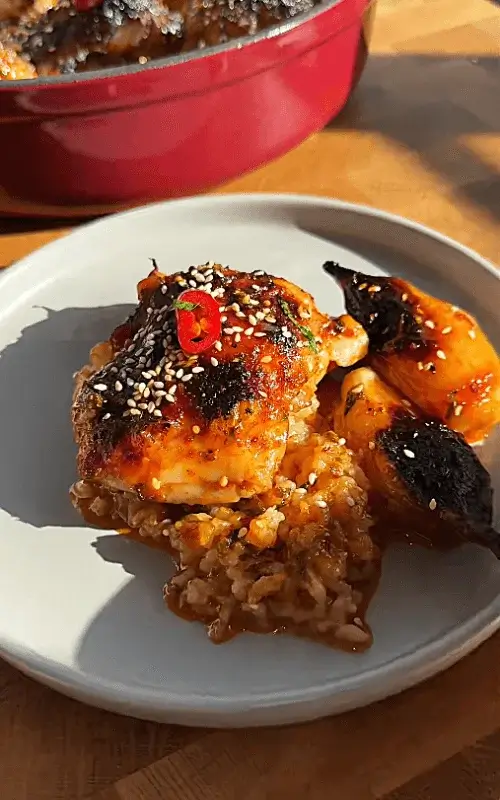
Apricot-Glazed Stuffed Chicken Thighs
Watch the Full Step-by-Step
- Small saucepan with lid
- Chef's knife
INGREDIENTS
- 2.5 pounds/1.15 kilograms bone-in chicken thighs
- 1 small hot chili pepper, thinly sliced
- 2 teaspoons sesame seeds
- ½ medium red onion, finely chopped
- 6 shallots, peeled
- ½ cup boiling water
Filling:
- ¾ cup short-grain rice
- ½ medium red onion, finely chopped
- ½ teaspoon salt
- 1 cup boiling water
Marinade:
- 2 tablespoons apricot jam
- 1 teaspoon sweet paprika
- 1 teaspoon Philadelphia-style spice blend
- ½ teaspoon chili seasoning
- ½ teaspoon black pepper
- ½ teaspoon salt
- 2 garlic cloves, finely crushed
- 4 tablespoons soy sauce
- ¼ cup olive oil
- ¼ cup fresh parsley, finely chopped
- ¼ cup water

INSTRUCTIONS
- Combine the rice, onion, salt, and boiling water in a small saucepan. Cover and cook over low heat until the liquid is absorbed and the rice is just tender, about 10 minutes. Remove from heat and let cool slightly.
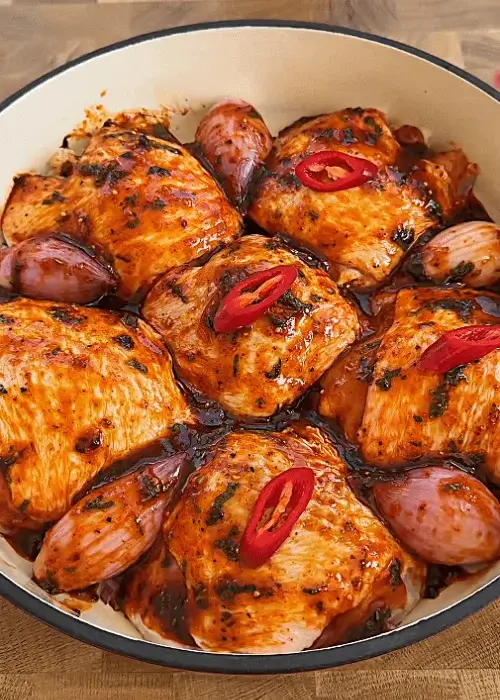
- Heat the oven to 400°F/200°C. Spread the chopped red onion evenly over the bottom of a wide Dutch oven or deep baking dish. Spoon the rice into small mounds, leaving space between them. Set one chicken thigh over each mound and gently fold it around the rice. Nestle the shallots between the thighs.
- Stir the marinade ingredients until smooth. Brush the chicken generously, reserving about 2 tablespoons. Scatter the chili slices over the dish. Carefully pour the boiling water down the side of the pot, avoiding the chicken. Cover tightly and bake for 1 hour.
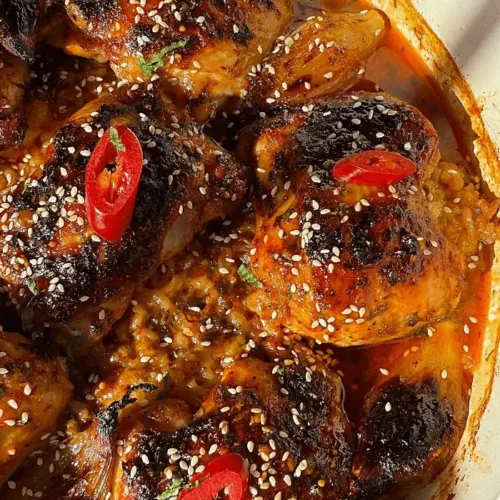
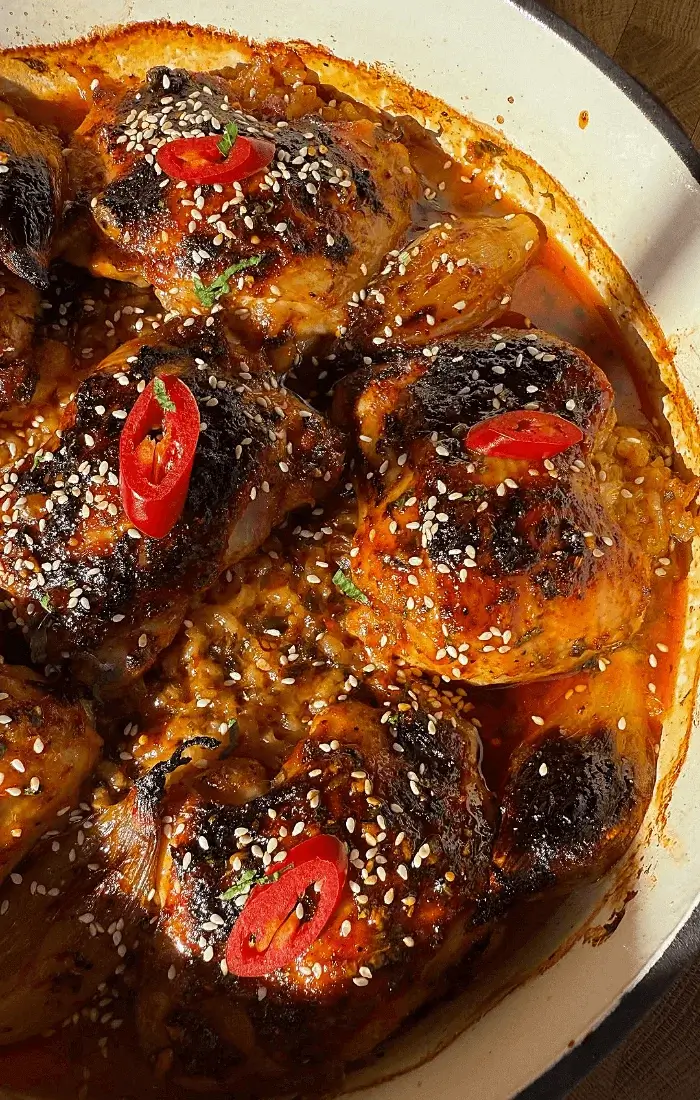
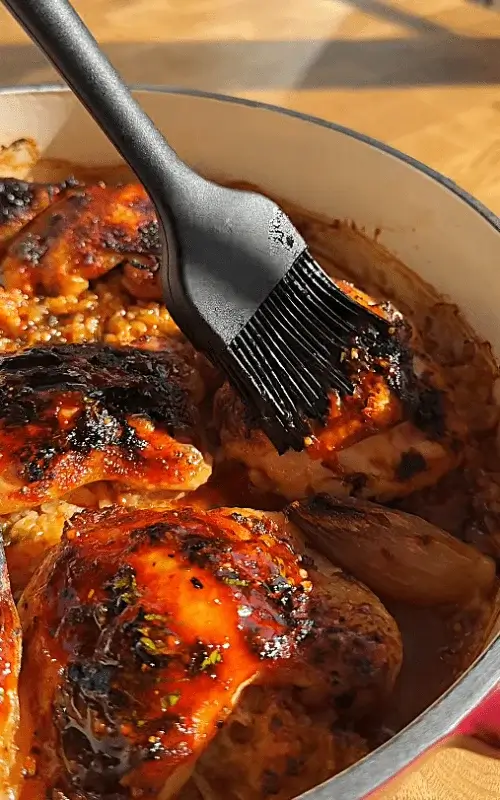
- Uncover and continue roasting until the chicken is deeply browned and glossy, about 15 minutes. Brush with the reserved marinade, sprinkle with sesame seeds, and serve hot.
FAQ
What type of chicken works best for making stuffed chicken?
Bone-in, skin-on chicken thighs are the best choice for making stuffed chicken because they offer superior flavor, moisture retention, and structural integrity during long roasting. The bone helps regulate heat, preventing the meat from drying out, while the skin protects the filling and bastes the chicken as it cooks. Thigh meat also contains more fat than chicken breast, which keeps the stuffed chicken thighs juicy even after extended oven time.
Boneless thighs can be used, but they require careful tying or snug wrapping to prevent the filling from escaping, and they cook faster, increasing the risk of overbrowning. When selecting thighs, look for evenly sized pieces so they cook at the same rate. Avoid very small thighs, which can dry out before the rice filling fully steams. Patting the chicken dry before assembly ensures better browning and helps the marinade cling evenly.
Can stuffed chicken thighs be prepared in advance?
The rice filling can be cooked up to one day ahead, cooled completely, and refrigerated in an airtight container. This prevents excess moisture and keeps the grains separate, which is important for even cooking inside stuffed chicken thighs. The chicken can also be assembled several hours ahead, wrapped tightly, and refrigerated until ready to bake.
However, it is best to apply the marinade just before cooking or no more than 2 hours in advance to prevent the skin from breaking down and losing its ability to brown. Before baking, allow the stuffed chicken thighs to sit at room temperature for about 20 minutes so they cook evenly. Fully cooking the dish in advance is not recommended, as reheating can dry out the chicken and overcook the rice, compromising the texture and gloss of the finished dish.
How do you prevent the filling from drying out?
Preventing a dry filling is essential for successful stuffed chicken thighs, and it starts with properly cooking the rice. The rice should be just tender, not fully soft or mushy, so it can finish steaming inside the chicken. Adding a measured amount of boiling water to the pan creates steam, which keeps the filling moist while the chicken roasts.
Covering the dish for the first stage of cooking traps moisture and allows the rice to absorb flavorful juices released from the chicken. Using bone-in thighs also helps, as they release collagen and fat during cooking, enriching the filling. Avoid packing the rice too tightly, which can block steam circulation and cause uneven cooking. Finally, uncovering the dish only toward the end allows the stuffed chicken thighs to brown without sacrificing interior moisture.
What sides pair best with apricot-glazed stuffed chicken thighs?
Apricot-glazed stuffed chicken thighs pair best with sides that balance their sweet-salty richness and absorb the savory juices. Light grains such as couscous, bulgur, or plain basmati rice work well, especially when dressed simply with olive oil and lemon. Roasted vegetables like carrots, fennel, cauliflower, or sweet potatoes complement the glaze without overpowering the dish.
A crisp salad with bitter greens, citrus segments, or a sharp vinaigrette provides contrast and refreshes the palate between bites of stuffed chicken thighs. Avoid heavy or creamy sides, which can compete with the glaze and make the meal feel overly rich. Flatbreads or crusty bread are also excellent for soaking up pan juices. When plating, keep sides restrained so the stuffed chicken thighs remain the focal point of the meal.
How do you know when the thighs are fully cooked?
The most reliable way to know stuffed chicken thighs are fully cooked is to use an instant-read thermometer inserted into the thickest part of the thigh meat, avoiding the bone. The target temperature is 175°F to 185°F, which is ideal for dark meat and allows connective tissue to fully break down without drying out. Unlike chicken breast, thighs benefit from slightly higher internal temperatures.
Visually, the skin should be deeply browned and glossy, and the juices should run clear when pierced near the bone. The rice filling should be hot throughout, with no crunchy center, indicating it has fully steamed. Resting the stuffed chicken thighs for 5 to 10 minutes after roasting is essential; it allows juices to redistribute and prevents moisture loss when serving. Cutting too early can cause both the chicken and filling to dry out prematurely.
Can stuffed chicken thighs be adapted with different fillings or grains?
Medium-grain rice, jasmine rice, or parboiled rice can be substituted, though cooking times for the filling should be adjusted so the grains are just tender before stuffing. Bulgur, freekeh, and quinoa are also excellent options, especially for a nuttier flavor profile.
When changing fillings, it is important to maintain a balance of moisture so the interior steams properly during roasting. Ingredients like sautéed onions, dried fruit, nuts, or herbs can be added, but overly wet vegetables should be pre-cooked to remove excess moisture.
Why is the dish covered for most of the cooking time?
The cover traps steam, allowing the rice filling to finish cooking gently while the chicken renders fat and releases juices. This creates a moist cooking environment that prevents the filling from drying out before the chicken is fully cooked. It also helps regulate temperature, ensuring even heat penetration through the thick thigh meat.
Uncovering too early can cause the skin to brown before the interior is ready, leading to undercooked filling or overcooked meat. By uncovering only during the final stage, the stuffed chicken thighs develop a concentrated glaze and crisp skin without sacrificing tenderness.
What role does the apricot glaze play in stuffed chicken thighs?
Its natural sugars promote caramelization during roasting, giving the chicken a deep, glossy finish without burning when applied correctly. The sweetness balances the saltiness of the soy sauce and spices, creating a rounded, savory-sweet profile that complements the richness of dark meat.
Apricot jam also thickens slightly as it cooks, helping the marinade cling to the chicken rather than sliding off. Brushing part of the glaze at the end refreshes the flavor and enhances visual appeal. Skipping this final glaze can result in a drier surface and muted sweetness.