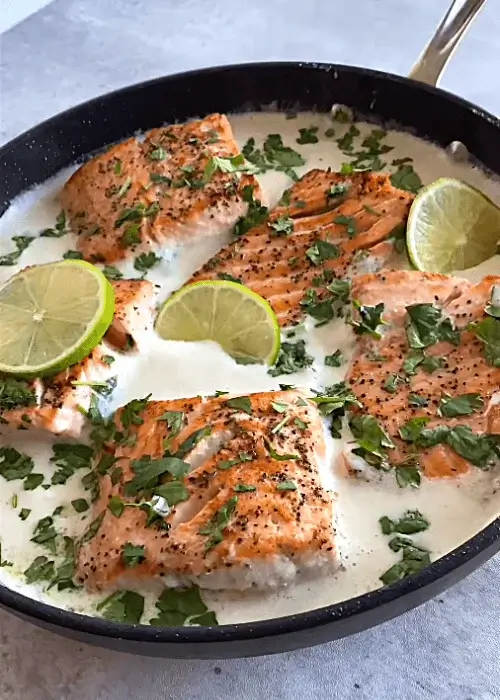
Creamy Coconut Salmon Skillet Recipe
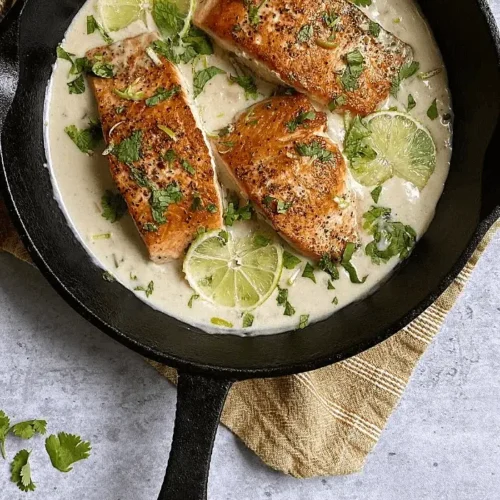
Watch the Full Step-by-Step
- Large skillet
- Chef's knife
- Box grater
INGREDIENTS
- 4 skinless salmon fillets, 4 ounces/115 grams each
- 2 tablespoons avocado oil or olive oil
- 1 teaspoon salt
- ½ teaspoon black pepper
- 1 teaspoon lime zest
- 2 tablespoons fresh cilantro, chopped
Sauce:
- 1 medium shallot, finely chopped
- 3 garlic cloves, minced
- 1 teaspoon fresh ginger, grated
- 1¾ cups/400 grams full-fat coconut milk
- 2 tablespoons fresh lime juice
- ½ teaspoon salt, plus more as needed
- ¼ teaspoon ground cumin
- 1 teaspoon tapioca flour
- 1 tablespoon water

INSTRUCTIONS
- Season the salmon with salt and pepper.
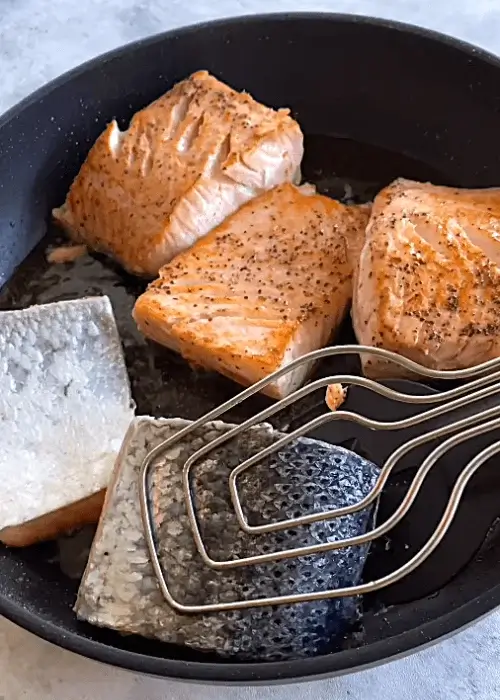
- Heat oil in a large skillet over medium heat. Add the salmon and sear until lightly browned, about 1½ minutes per side. Transfer to a plate.
- Reduce heat to medium. Add the shallot and cook until softened, about 1 minute. Stir in garlic and ginger and cook until fragrant, about 30 seconds.
- Add coconut milk, lime juice, salt, and cumin. Bring to a gentle simmer.
- Whisk the tapioca flour with water, then stir into the sauce. Simmer until slightly thickened, about 3 minutes. Taste and adjust seasoning.
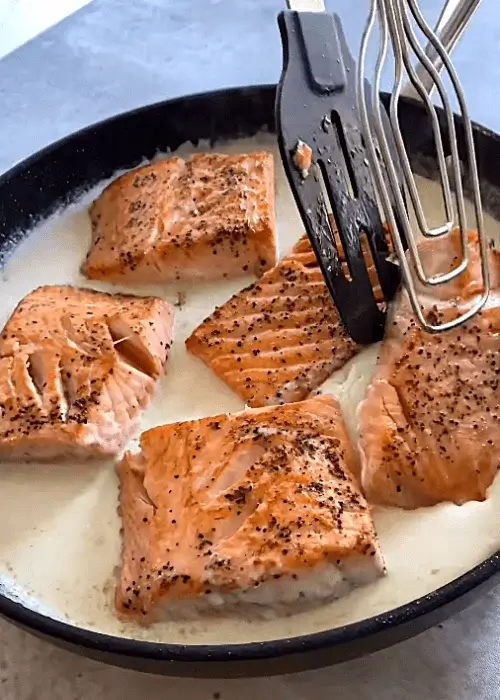
- Return the salmon to the skillet. Reduce heat to medium-low and simmer until just cooked through, 8 to 10 minutes. Finish with lime zest and cilantro.
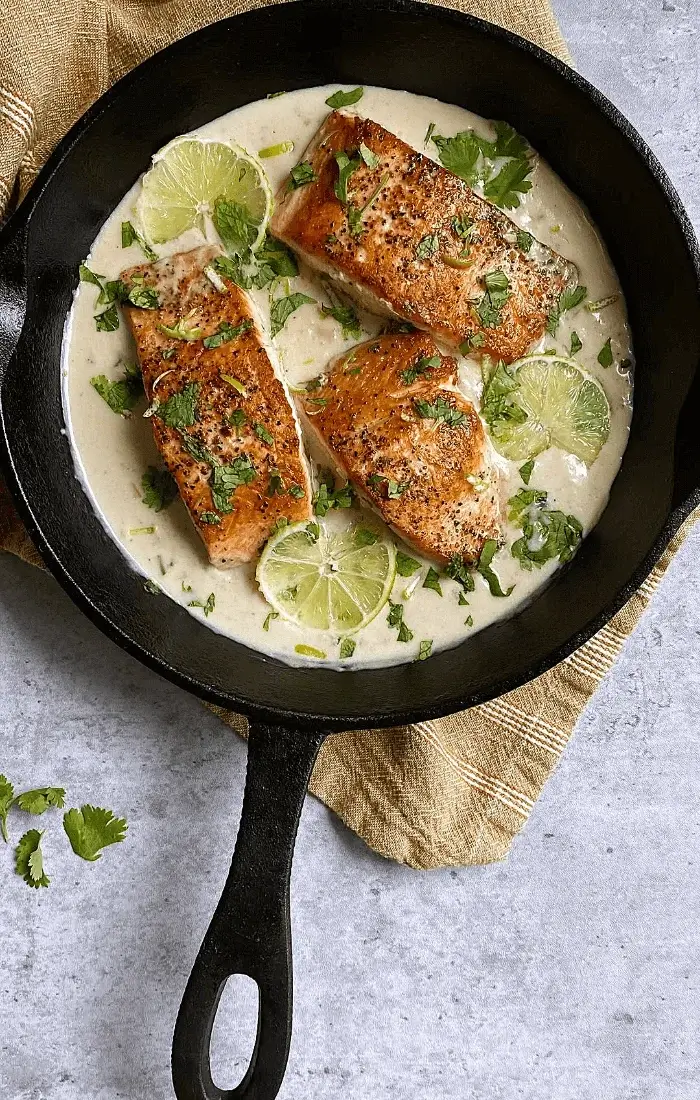
FAQ
What type of salmon works best for this recipe?
Center-cut salmon fillets with the skin removed work best because they cook evenly and sit cleanly in the sauce. Atlantic salmon, whether farmed or responsibly sourced, is ideal due to its higher fat content, which keeps the fish moist during searing and simmering. Sockeye salmon has a firmer texture and stronger flavor, but it is leaner and can dry out faster, making timing more critical.
Coho salmon is a good middle ground, offering moderate fat and clean flavor. Regardless of variety, uniform thickness matters more than species. Fillets that are about 1 to 1¼ inches thick ensure proper browning without overcooking. Avoid thin tail pieces, which cook too quickly and can fall apart when returned to the sauce in a salmon skillet recipe.
How do you prevent salmon from overcooking?
The key to preventing overcooked salmon is treating the initial sear as a flavor-building step, not the main cooking phase. Salmon should be seared briefly over medium heat just until lightly browned, then removed from the pan before it cooks through. This allows the fish to finish gently in the sauce, where heat is controlled and moisture is present.
Keeping the sauce at a low simmer rather than a boil is critical, as aggressive bubbling will tighten the proteins and dry out the fish. Using a thermometer can help; salmon is perfectly cooked at 120–125°F for a moist, tender texture. Resting the skillet off heat for a minute before serving also prevents carryover cooking from pushing the salmon past ideal doneness in a salmon skillet recipe.
Can this salmon skillet recipe be made ahead?
This salmon skillet recipe is best served fresh, but it can be partially prepared ahead for better results. The sauce can be made up to two days in advance and stored refrigerated, which actually allows the flavors to deepen. When ready to serve, gently reheat the sauce until just warm, then add freshly seared salmon to finish cooking.
Fully cooking and reheating salmon is not ideal, as fish proteins firm up significantly when reheated. If leftovers are unavoidable, reheat slowly over low heat, covered, and remove from heat as soon as the salmon is warmed through. Avoid microwaving, which overheats unevenly and breaks down the delicate texture.
What side dishes pair well with this salmon skillet recipe?
A coconut-based salmon skillet recipe pairs best with sides that absorb sauce without competing for attention. Steamed jasmine rice or basmati rice is the most practical choice, as it balances the richness of coconut milk and lime. Mashed potatoes or creamy polenta also work well, offering a neutral base that highlights the sauce.
For lighter options, serve with sautéed green beans, broccolini, or blistered snap peas to add texture and freshness. A simple cucumber salad with lime and salt can cut through richness without overpowering the dish. Avoid heavily spiced or sweet sides, which can clash with the delicate balance of acid, fat, and aromatics.
What is the best way to store leftovers?
Leftover salmon and coconut lime sauce should be stored separately when possible to maintain texture. Transfer cooled salmon fillets to an airtight container and refrigerate for up to two days. The sauce can be kept in its own sealed container for up to three days. If storing together, gently nestle the salmon in the sauce without submerging completely to prevent over-softening.
Always cool ingredients to room temperature before refrigerating to avoid condensation and bacterial growth. When reheating, use a low simmer for the sauce and warm the salmon briefly to prevent overcooking.
Can you substitute coconut without changing the structure of the dish?
Full-fat canned coconut milk is thick and emulsified, which helps the sauce cling to the salmon. If substituting, heavy cream can work at a one-to-one ratio, though the flavor will be richer and less aromatic. Cashew cream, made by blending soaked cashews with water, is another effective option, offering similar thickness with a neutral flavor.
Unsweetened oat cream or soy cream can also work, but they tend to be thinner and may require a slightly higher amount of thickener. Avoid carton coconut beverages, almond milk, or skim dairy, as they lack sufficient fat and will produce a watery sauce.
What pan works best for this salmon skillet recipe?
A wide, heavy-bottomed skillet is essential because it ensures even heat distribution and enough surface area for proper searing. Stainless steel skillets excel at browning salmon evenly and developing fond, which adds depth to the sauce. Cast iron also works well, retaining heat effectively, but it requires careful temperature control to avoid scorching the sauce.
Nonstick pans are acceptable for beginners, especially when working with skinless fillets, though they produce less browning. Regardless of material, the skillet should be large enough to hold the salmon in a single layer without crowding. Overcrowding traps steam and prevents browning, which affects both texture and flavor.
How can I make this salmon skillet recipe spicier?
To add heat without masking the bright coconut and lime notes, it’s best to use gentle, aromatic chilies rather than aggressive powders. Finely sliced fresh red chili or bird’s eye chili can be added during the shallot and garlic sauté to infuse heat slowly.
Chili flakes or a small pinch of cayenne can be stirred in with the sauce at the simmering stage, allowing controlled spiciness. Avoid adding hot sauces with vinegar or strong fermented flavors, as they can clash with the delicate lime and ginger in the sauce. Adding heat gradually and tasting as you go preserves balance.