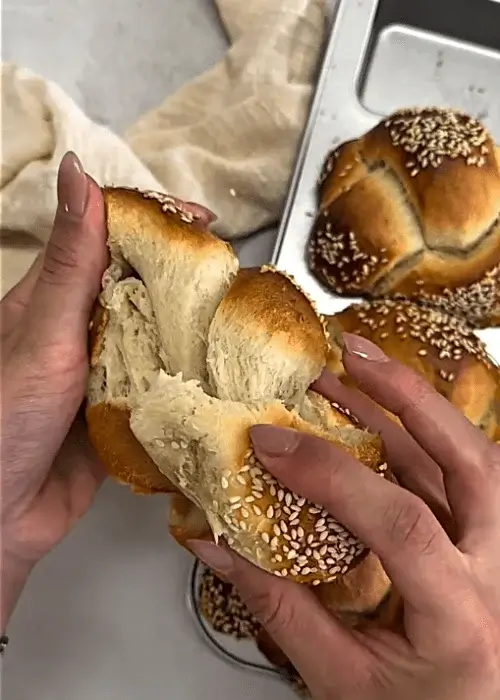
Sweet Shabbat Challah Rolls
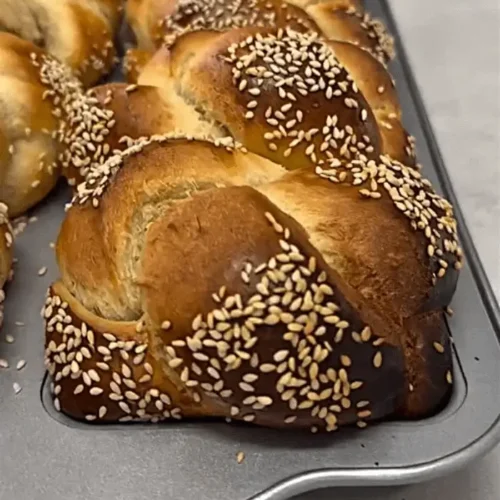
Watch the Full Step-by-Step
- Large mixing bowl
- Kitchen scale
- Bench scraper
- Pastry brush
INGREDIENTS
- 2.2 pounds/1 kilogram grams all-purpose flour
- 2 tablespoons/18 grams active dry yeast
- ¾ cup/150 grams sugar
- ¾ cup/165 grams oil
- 1 tablespoon salt
- 2 to 2¼ cups/500–520 grams lukewarm water
- Egg, for brushing
- Sesame seeds, optional

INSTRUCTIONS
- In a stand mixer fitted with the dough hook, combine the flour, yeast, sugar, oil, salt, and water.
- Mix until a soft, smooth dough forms; it should feel supple and slightly tacky.
- Transfer the dough to a lightly oiled bowl, cover, and let rise until doubled in size, about 1 hour in a warm kitchen.
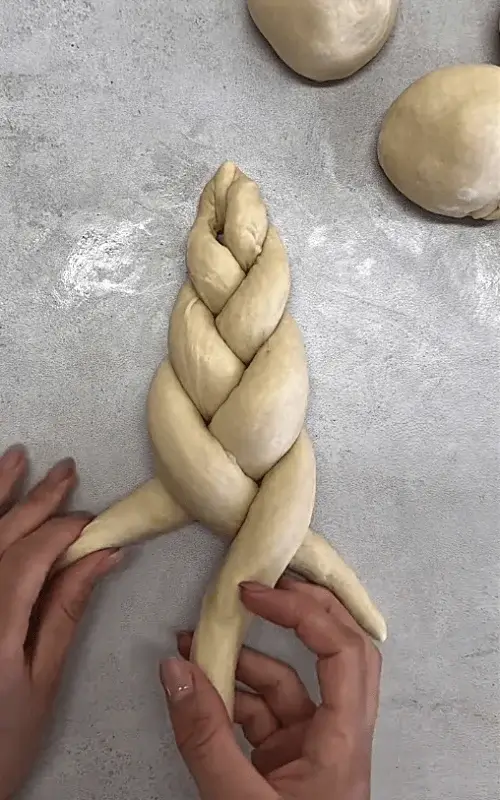
- Divide the dough into 12 portions of about 50 grams each. Shape into balls, then flatten slightly and roll each into a rope. Braid into small challah shapes, trimming the ends so they fit neatly into the pans.
- Arrange in pans, cover loosely, and let rise for 20 minutes.
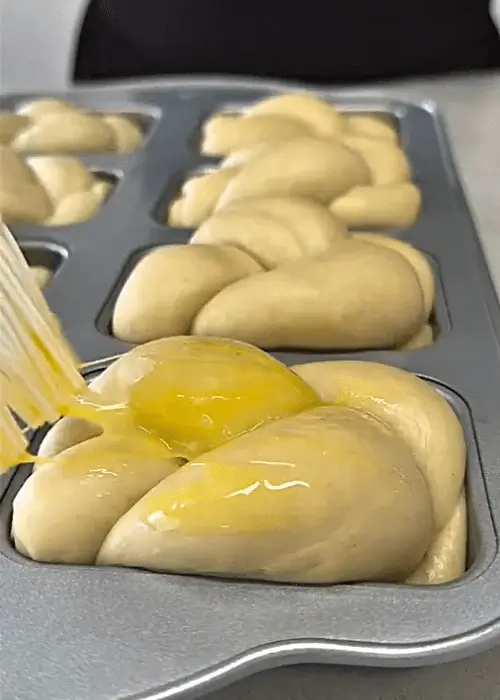
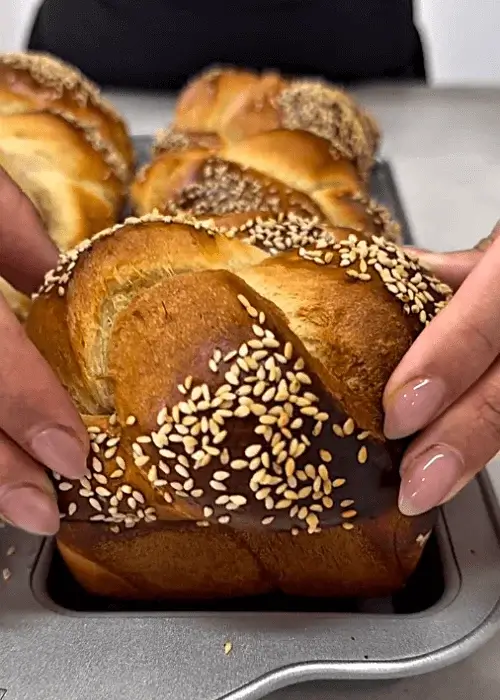
- Brush with beaten egg, sprinkle with sesame seeds, and bake in a preheated 375°F/190°C oven until deeply golden, about 35 minutes.
- Cool briefly, unmold, and serve.
FAQ
Why is the dough slightly sticky instead of firm?
A slightly sticky dough is intentional and essential for producing soft, tender challah rolls rather than dense or dry bread. Challah is an enriched dough containing oil and sugar, which interfere with gluten formation compared to lean doughs. If the dough feels too firm during mixing, it often indicates too much flour, which can lead to tight crumb and reduced oven spring.
Properly hydrated challah rolls dough should feel supple, elastic, and tacky to the touch, but not wet or unmanageable. As the dough kneads, gluten develops and structure improves, making it easier to handle after the first rise. Light stickiness also allows the dough to expand freely during fermentation, creating a lighter interior. During shaping, minimal flour should be used to avoid incorporating excess dryness, which would negatively affect the final texture of the challah rolls.
Can the challah rolls be made ahead and frozen?
Challah rolls are very well suited to make-ahead preparation and freezing, both before and after baking. Fully baked challah rolls can be cooled completely, wrapped tightly, and frozen for up to two months with minimal quality loss. To serve, they can be thawed at room temperature and refreshed briefly in a low oven to restore softness.
Unbaked shaped challah rolls can also be frozen after shaping but before the second rise. In that case, freeze them uncovered until solid, then store airtight. When ready to bake, allow them to thaw and rise until visibly puffy before applying egg wash and baking. Freezing works well because enriched doughs retain moisture better than lean breads, making challah rolls particularly resilient to temperature changes.
What is the best way to ensure the rolls bake evenly?
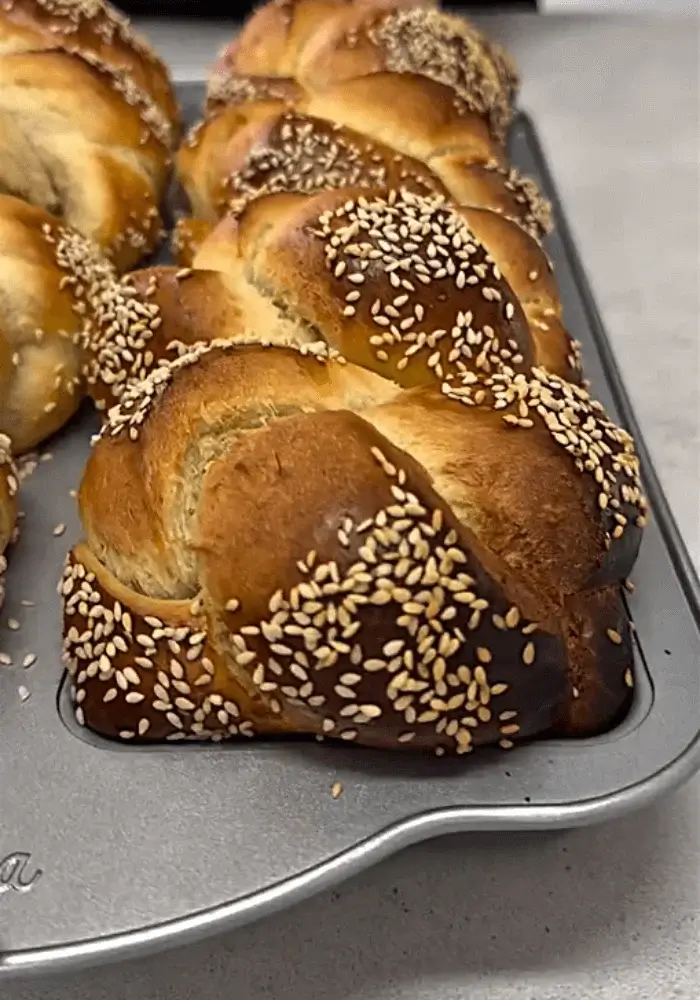
Even baking and interior softness depend on proper shaping, spacing, and oven management. Challah rolls should be shaped uniformly so they bake at the same rate. Crowding the pan can restrict airflow, while placing rolls too far apart may cause uneven browning. Baking in a fully preheated oven is critical, as enriched dough benefits from immediate heat to encourage oven spring.
Brushing with egg wash just before baking promotes even browning without drying the crust. Overbaking is a common mistake; challah rolls should be removed once deeply golden, not dark brown. Cooling briefly before unmolding allows the crumb to set while retaining internal moisture, ensuring soft, well-structured challah rolls.
Why is oil used instead of butter in this recipe?
Oil is traditionally used in challah rolls for both cultural and functional reasons. From a culinary standpoint, oil creates a softer, more flexible crumb than butter because it remains liquid at room temperature. This helps challah rolls stay tender for longer and prevents them from firming up quickly after baking. Oil also coats gluten strands more evenly, which limits excessive gluten tightening and contributes to a delicate interior texture.
From a traditional perspective, oil keeps the dough pareve, meaning it contains no dairy, allowing challah rolls to be served with meat-based meals according to kosher dietary laws. Butter-based doughs tend to develop richer flavor but also a slightly firmer crumb once cooled, which is not ideal for classic challah rolls meant to be light, fluffy, and versatile.
How do I know when the rolls are fully proofed and ready to bake?
Fully proofed dough should look visibly puffy and expanded, with the braids clearly defined but relaxed. A reliable test is the fingertip poke: gently press a finger into the dough about half an inch deep. If the indentation springs back slowly and partially, the challah rolls are ready for the oven.
If it snaps back immediately, they need more time; if it collapses and does not recover, they may be overproofed. Temperature, humidity, and dough hydration all influence proofing time, so visual and tactile cues are more reliable than the clock.
Can the rolls be made with whole wheat flour?
Whole wheat flour absorbs more water due to the presence of bran and germ, which means the dough will require additional hydration to avoid dryness. Replacing 25 to 50 percent of the all-purpose flour with whole wheat flour is a practical approach, allowing the challah rolls to retain tenderness while gaining a nuttier flavor.
Extended mixing or an additional rest period can help hydrate the bran and improve dough elasticity. Because whole wheat dough ferments more slowly, proofing times may increase slightly. Without these adjustments, fully whole wheat challah rolls may turn out denser and less lofty than the original version.
Why did my rolls bake up pale?
Pale challah rolls are typically the result of insufficient surface sugars or an incomplete egg wash. Sugar in the dough contributes to caramelization, but the primary source of color comes from the egg wash applied before baking. Using a whole beaten egg rather than egg white alone produces deeper browning.
Oven temperature also plays a role; if the oven runs cool or is not fully preheated, the challah rolls may set before proper browning occurs. Overproofing can also cause pale results by weakening the dough structure, limiting oven spring and surface tension.
How should challah rolls be stored?
The rolls are best stored at room temperature in an airtight container or sealed bag once completely cooled. Refrigeration is not recommended, as it accelerates staling and dries out the crumb. At room temperature, challah rolls typically remain soft for up to two days.
For longer storage, freezing is the most effective method. Wrapped tightly to prevent freezer burn, challah rolls can be frozen for several weeks without compromising texture. To refresh, thaw at room temperature and warm briefly in the oven.