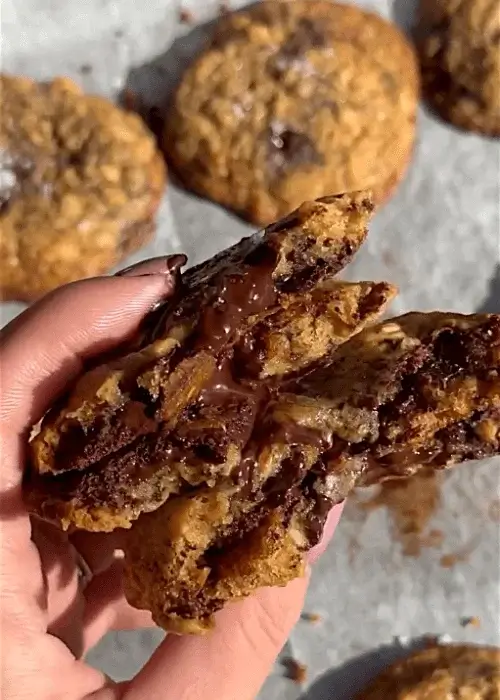
Salted Dark Chocolate Oatmeal Cookies
Watch the Full Step-by-Step
- Kitchen scale
- Chef's knife
- Baking sheet
INGREDIENTS
- 2.8 ounces/80 grams unsalted butter, softened
- 1 large egg plus 1 egg yolk
- ½ cup/50 grams coarse rolled oats
- ¾ cup/100 grams all-purpose flour
- ¼ cup brown sugar
- ⅓ cup sugar
- 2.8 ounces/80 grams dark chocolate, finely chopped
- ½ teaspoon/2 grams baking soda
- 1 teaspoon vanilla paste or extract
- ¼ teaspoon fine salt
- Flaky salt, for finishing

INSTRUCTIONS
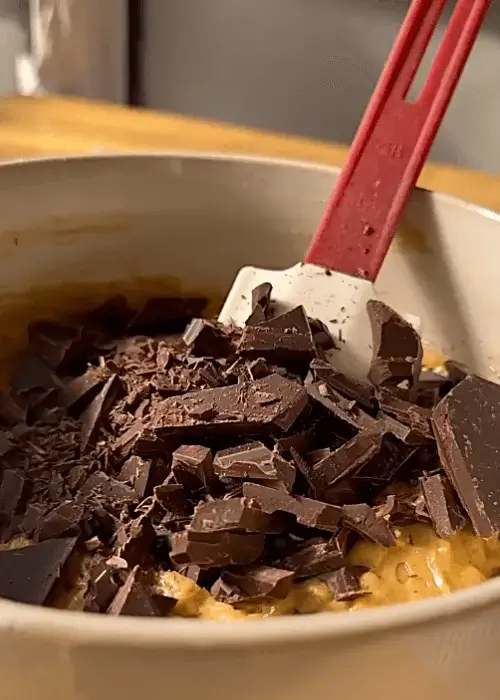
- In a large bowl, cream the butter with both sugars until smooth and cohesive. Add the egg, egg yolk, and vanilla, mixing just until incorporated. Add the flour, oats, baking soda, and fine salt, stirring until no dry spots remain. Fold in the chopped dark chocolate.
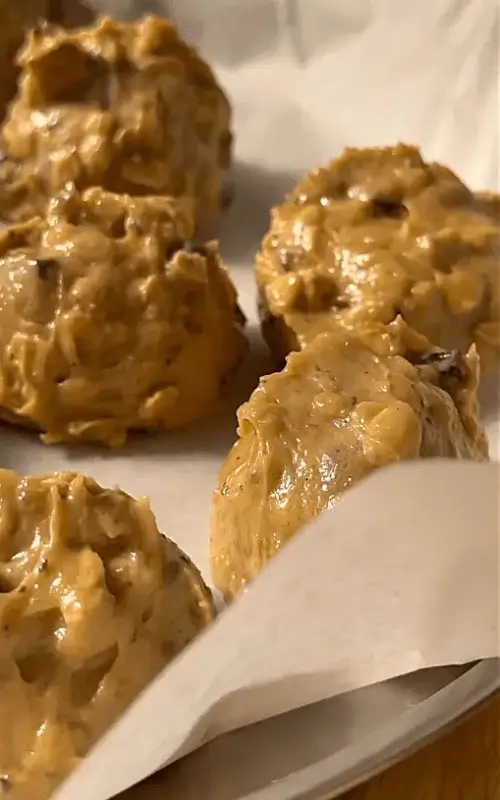
- Portion the dough into balls, about 2 tablespoons each, and arrange on a parchment-lined baking sheet. Freeze for 60 minutes.
- Heat the oven to 340°F/170°C.
- Arrange the cookies on a lined baking sheet, spacing them well apart. Bake until the edges are set and lightly golden while the centers remain soft, 8 to 12 minutes.
- Remove from the oven while slightly underbaked; the cookies will continue to set as they cool. Sprinkle lightly with coarse salt and cool completely.

FAQ
Why are the cookie dough balls frozen before baking?
Freezing the dough is a deliberate technique that improves both texture and flavor in dark chocolate oatmeal cookies. Chilling solidifies the butter, which slows down spreading once the cookies hit the oven. This helps the cookies hold their shape, producing thicker centers and defined edges instead of flat, greasy cookies. Freezing also allows the flour to fully hydrate and gives the sugars time to dissolve more evenly, leading to a smoother dough and more consistent bake.
Additionally, resting the dough enhances flavor development, particularly in recipes using dark chocolate, where bitterness benefits from a more balanced, rounded sweetness. For dark chocolate oatmeal cookies, freezing ensures a chewy interior, crisp perimeter, and controlled caramelization. While refrigeration can help, freezing is more effective for short bake times and higher butter ratios, especially when baking in batches or warm kitchens.
How do you know when the cookies are properly baked?
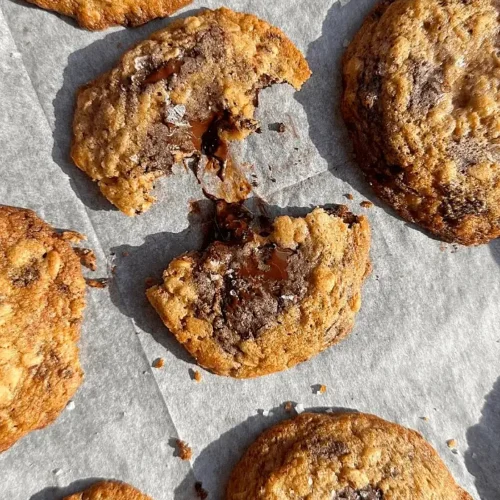
Dark chocolate oatmeal cookies should be removed from the oven when the edges are set and lightly golden, while the centers still appear soft and slightly underbaked. This visual cue is more reliable than time alone, as oven temperatures and dough temperature can vary. The cookies will continue to bake from residual heat once removed, allowing the centers to firm up without drying out.
Overbaking dark chocolate oatmeal cookies results in a crumbly texture and dull chocolate flavor, especially when using high-cocoa dark chocolate. Another indicator is surface cracking: gentle cracks around the edges signal that the structure has set. Allowing the cookies to cool fully on the baking sheet ensures proper texture development and prevents premature breakage.
What role does baking soda play in dark chocolate oatmeal cookies?
Baking soda is a critical leavening agent, affecting both texture and flavor. As an alkaline ingredient, it reacts with acidic components such as brown sugar and dark chocolate, producing carbon dioxide that helps the cookies rise slightly and spread properly. This controlled spread is essential for achieving crisp edges and soft centers.
Baking soda also raises the pH of the dough, which enhances browning through the Maillard reaction, contributing to deeper color and more complex flavor. Without baking soda, dark chocolate oatmeal cookies would bake up dense, pale, and overly compact. Using the correct amount ensures balance; too much can create a bitter or soapy aftertaste, while too little limits spread and browning.
Why is it important to cream the butter and sugars properly?
Proper creaming of butter and sugars is foundational to the structure of dark chocolate oatmeal cookies. This step incorporates air into the dough, which helps the cookies bake evenly and prevents excessive density. Well-creamed butter creates a smooth emulsion that distributes sugar evenly, improving caramelization and browning during baking.
If under-creamed, dark chocolate oatmeal cookies may bake unevenly, spread unpredictably, or develop a greasy texture. Over-creaming, however, can introduce too much air, leading to excessive spread and thin cookies. The goal is a cohesive, pale mixture that supports even hydration of dry ingredients. This balance ensures dark chocolate oatmeal cookies achieve the intended chew, spread, and flavor development.
Can sugar substitutes be used in dark chocolate oatmeal cookies?
Granulated sugar contributes not only sweetness but also moisture retention and caramelization. When replaced with a sugar substitute, dark chocolate oatmeal cookies may spread less and bake up thicker, with a drier crumb. Some substitutes lack the hygroscopic properties of sugar, meaning they do not hold moisture as effectively, which can shorten shelf life.
Heat-stable substitutes perform better than powdered or liquid alternatives. Using a partial replacement, rather than a full swap, often yields the best results for dark chocolate oatmeal cookies, preserving chew while reducing sweetness. Measuring by weight and maintaining the same fat ratio helps prevent structural issues and ensures the cookies still bake evenly and retain their intended texture.

What type of oats work best for dark chocolate oatmeal cookies?
Coarse rolled oats are ideal for dark chocolate oatmeal cookies because they provide structure, chew, and visual texture without absorbing too much moisture. They soften just enough during baking while still retaining definition, which prevents the cookies from becoming dense or gummy. Quick oats absorb liquid more rapidly and can make dark chocolate oatmeal cookies overly soft or cake-like, while steel-cut oats are too firm and will not cook properly in the short baking time.
If substitution is necessary, quick oats can be used in equal weight, but the cookies will spread less and have a finer crumb. For best results, stick with coarse rolled oats and measure by weight to maintain consistency. Their balance of absorbency and structure is critical to achieving the intended texture of dark chocolate oatmeal cookies.
How does dark chocolate percentage affect the flavor of the cookies?
The cocoa percentage of the chocolate significantly influences the final taste of dark chocolate oatmeal cookies. Chocolate in the 70–85% range delivers deeper cocoa notes, mild bitterness, and reduced sweetness, which balances well with brown sugar and oats. Higher percentages intensify bitterness and produce a more adult, complex cookie, while lower percentages introduce more sugar and a softer chocolate flavor.
In dark chocolate oatmeal cookies, higher cocoa content also melts less aggressively, helping the chocolate hold shape rather than spreading excessively. This results in distinct pockets of chocolate rather than uniform sweetness. Choosing the right percentage allows you to control contrast between the nutty oats, caramelized sugars, and chocolate bitterness.