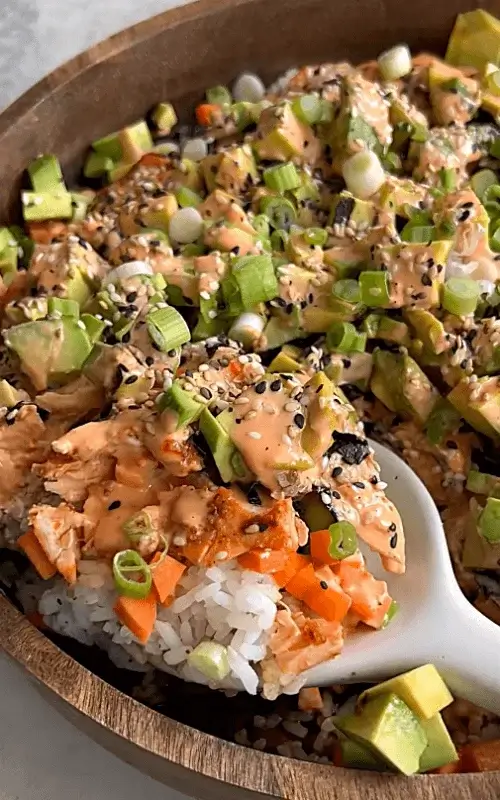
Spicy Salmon Sushi Bowl
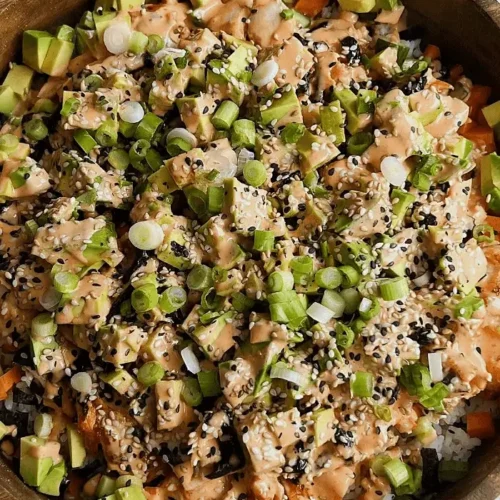
Watch the Full Step-by-Step
- Baking sheet
- Mixing bowls
- Shallow bowls
INGREDIENTS
Rice:
- 1 cup/200 grams sushi rice
- 1½ tablespoons rice vinegar
- 1 tablespoon sugar
- ½ teaspoon salt
- 1 teaspoon sesame seeds
Salmon:
- 1 –1½ pounds/450–680 grams salmon fillet
- 1 tablespoon chili crunch
- 1 –2 tablespoons coconut aminos or soy sauce, optional
- Salt and garlic powder, to taste
Spicy Mayo:
- ¼ cup mayonnaise
- 2 tablespoons sriracha
- ½ teaspoon sesame oil
Toppings:
- Diced cucumber and carrots
- Diced avocado
- Chopped scallions
- Cut nori or furikake
- Sesame seeds
- Eel sauce or teriyaki
- Crispy fried onions, optional

INSTRUCTIONS
- Preheat the oven to 375°F/190°C.
- Cook the sushi rice according to the package instructions. Fold in rice vinegar, sugar, salt, and sesame seeds while warm. Set aside.
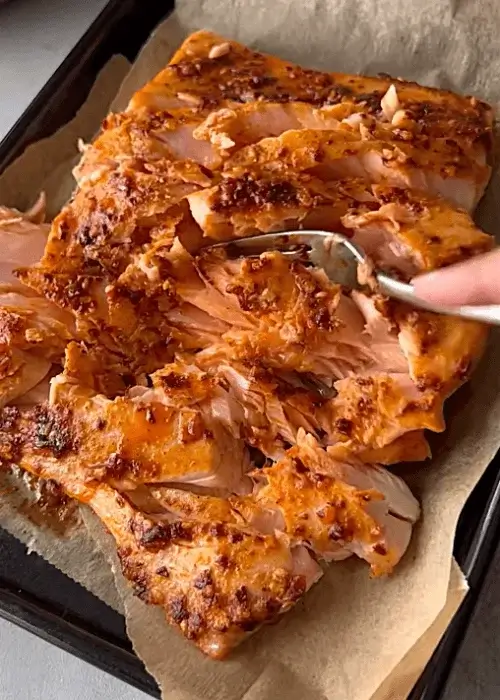
- Season the salmon with salt and garlic powder. Drizzle with coconut aminos (if using) and chili crunch. Bake on a parchment-lined sheet pan for 10–12 minutes, until just cooked through, then flake with a fork.
- Whisk together mayonnaise, sriracha, and sesame oil to make the spicy mayo. Adjust heat to taste.
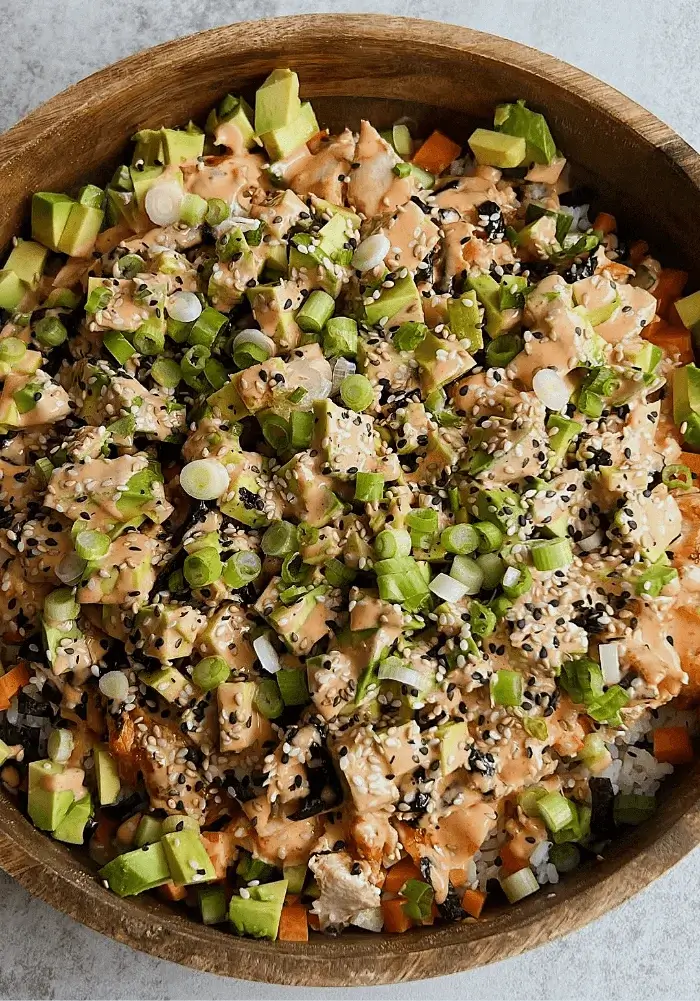
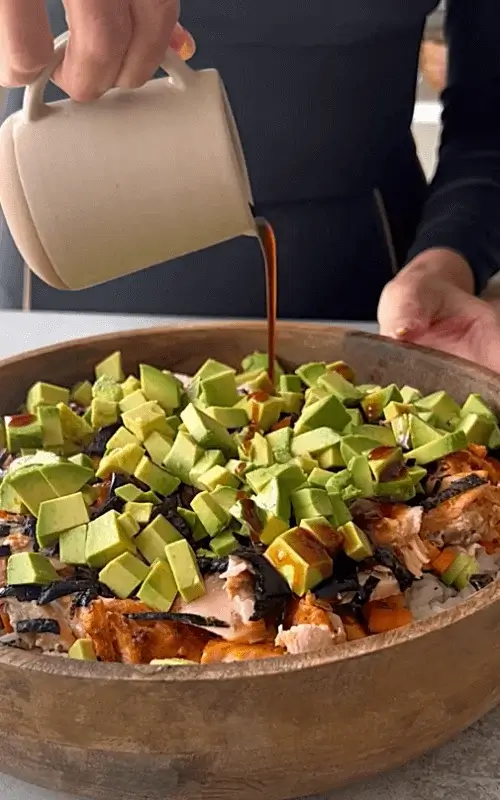
- Layer sushi rice in shallow bowls or on a platter. Top with flaked salmon, diced vegetables, avocado, and scallions. Drizzle with spicy mayo and eel or teriyaki sauce. Sprinkle with sesame seeds, nori/furikake, and crispy onions if desired.
FAQ
What is the best type of salmon to use for a baked salmon sushi bowl?
The best salmon is a high-quality, firm-fleshed fillet, ideally wild-caught or sustainably farmed. Wild-caught salmon has a more pronounced flavor and slightly firmer texture, which holds up well during baking and flaking. Farmed salmon is typically fattier, which can result in a richer, more buttery mouthfeel in the dish.
Fillets should be skinless or with the skin removed for easier flaking and serving. Avoid thin or uneven fillets, as these may overcook quickly. Freshness is key: the salmon should smell clean and have a bright, translucent appearance, without any grayish or dry edges, ensuring a perfect salmon sushi bowl every time.
How can I adjust the spiciness in the salmon sushi bowl?
The spiciness in a salmon sushi bowl can be adjusted at multiple points. For the chili-baked salmon, reduce or increase the amount of chili crunch used during seasoning. For the spicy mayo, adjust the sriracha quantity according to personal preference. You can also mix the spicy mayo with additional mayonnaise or yogurt to mellow the heat without changing flavor.
Another option is to serve the sauces on the side, allowing each diner to control spiciness individually. Adding avocado or cucumber can naturally balance heat, while garnishing with sesame seeds or nori can add flavor complexity without additional spice.
What vegetables work best in a salmon sushi bowl?
The best vegetables for a salmon sushi bowl are those that provide a combination of crunch, freshness, and mild flavor to complement the rich salmon. Common choices include diced cucumber, carrots, and avocado, which offer texture and creaminess. Scallions add a mild onion flavor and bright color, while cut nori or furikake introduces an umami element.
Other vegetables such as radish, bell peppers, or edamame can be incorporated for additional color, flavor, and nutrients. It is important to dice vegetables uniformly to create an even texture and visual appeal.
How should I store leftovers?
Separate the cooked salmon from the rice and toppings to prevent sogginess. Store each component in airtight containers in the refrigerator for up to 24 hours. Sushi rice tends to firm up when cold, so lightly steam or microwave it with a damp paper towel before serving to restore softness. Avocado may brown quickly, so it is best added fresh when reheating.
Can I use frozen salmon for this salmon sushi bowl?
Yes, but thawing properly is crucial. Remove the salmon from its packaging and thaw it in the refrigerator overnight, allowing it to thaw slowly and evenly. Avoid using warm water or microwaving, as this can partially cook the fish and affect texture. Once thawed, pat the salmon dry with paper towels to remove excess moisture.
How do I prevent avocado from browning?
There are several ways to preserve its bright color in a salmon sushi bowl. Choose firm, ripe avocado and dice it just before assembly. Sprinkling a small amount of lemon or lime juice over the cut avocado slows browning while adding a subtle citrus flavor. Store prepared avocado separately from the rice and salmon if assembling ahead of time. Cover tightly with plastic wrap or use an airtight container to reduce air exposure.
What is the best way to bake salmon without drying it?
Preheat the oven to a moderate 375°F/190°C. Line a sheet pan with parchment paper to prevent sticking and promote even cooking. Season the salmon lightly and drizzle with a bit of oil or chili crunch to retain moisture. Bake for 10–12 minutes depending on the thickness of the fillet, checking carefully near the end. The salmon should flake easily with a fork but remain slightly translucent in the center to avoid dryness. Letting the fish rest for a few minutes after baking locks in juices, resulting in tender flakes for the salmon sushi bowl.
Can I make this salmon sushi bowl ahead for meal prep?
Timing and storage are crucial to maintain freshness and texture. Cook the sushi rice and season it with vinegar, sugar, and salt, then allow it to cool before storing it in an airtight container. Bake the salmon and store it separately to prevent the rice from becoming soggy. Prepare toppings like diced cucumbers, carrots, and scallions, keeping avocado aside until just before serving to prevent browning. Assemble the bowls when ready to eat, drizzling with spicy mayo and sauces.
Is it better to bake or pan-sear the salmon?
Both baking and pan-searing are excellent methods for preparing salmon for a salmon sushi bowl, but each produces a slightly different texture. Baking is gentle and consistent, allowing the salmon to cook evenly without much hands-on attention, making it ideal for flaky, tender flakes. Pan-searing creates a crisp exterior and slightly caramelized surface, adding texture and depth of flavor. If using pan-searing, cook the salmon over medium-high heat for a few minutes per side, then finish in the oven if needed.