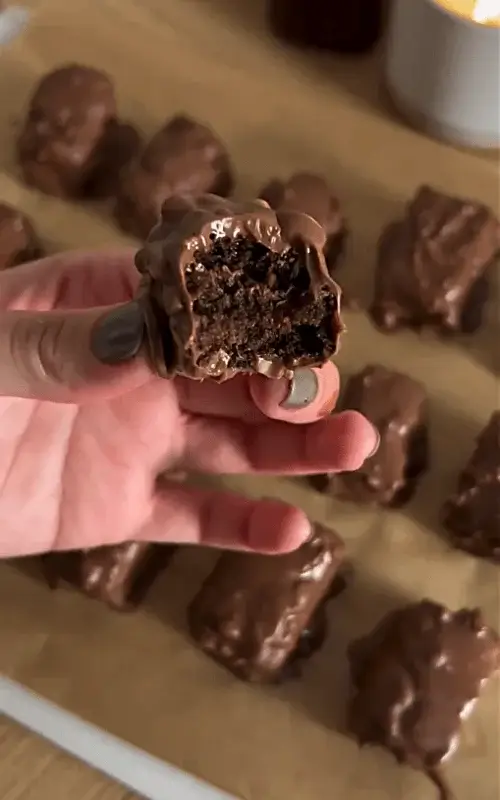
Chocolate Covered Brownie Bites
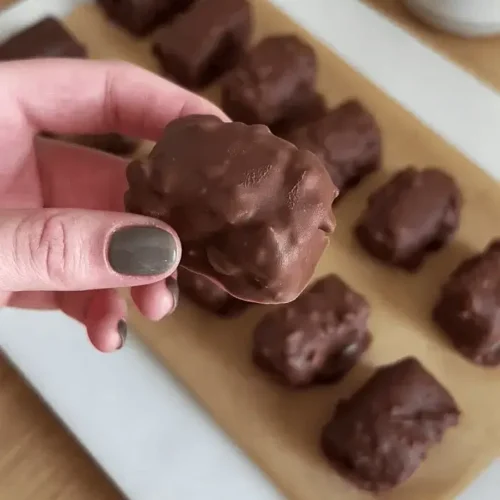
Watch the Full Step-by-Step
- Square baking pan (20×20 cm / 8×8 inches)
- Medium heatproof bowl
- Chef's knife
- Kitchen scale
INGREDIENTS
- 7 ounces/200 grams unsalted butter
- 7 ounces/200 grams dark chocolate
- 3 large eggs
- 1 cup/200 grams sugar
- ¼ teaspoon salt
- ½ cup/70 grams all-purpose flour
- ½ teaspoon baking powder
Coating:
- 14 ounces/400 grams milk chocolate
- 1 tablespoon ground almonds, optional

INSTRUCTIONS
- Heat oven to 170°C/340°F on convection. Line a 20×20 cm/8×8-inch square pan with parchment paper.
- Melt butter and dark chocolate together until smooth. Stir until fully combined.
- Whisk in eggs, sugar, and salt just until smooth. Fold in flour and baking powder.
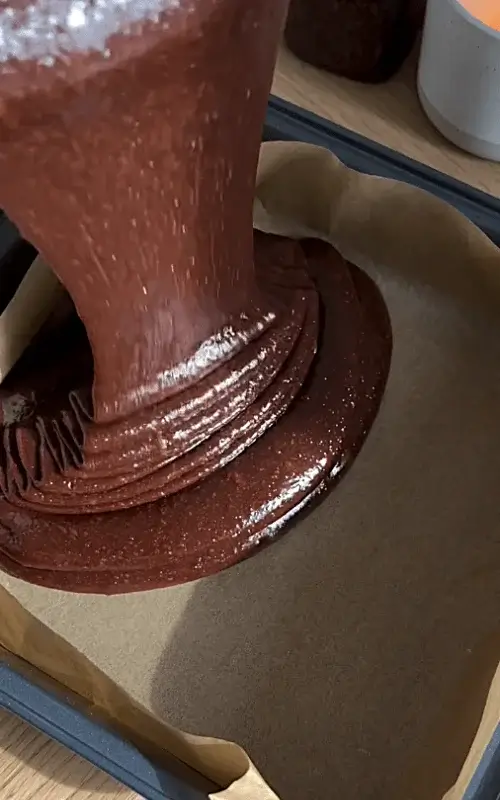
- Pour batter into the prepared pan and smooth the surface. Bake for 25 to 30 minutes, until the edges are set and the center jiggles slightly.
- Cool completely, then freeze uncovered until fully firm, at least 4 hours or overnight.
- Melt milk chocolate gently without oil. Stir in ground almonds, if using.
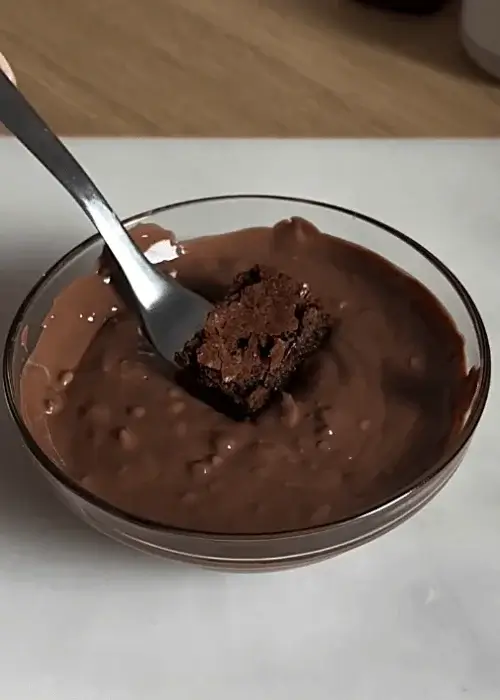
- Cut brownies into bite-size squares. Dip each piece into the chocolate, letting excess drip off.
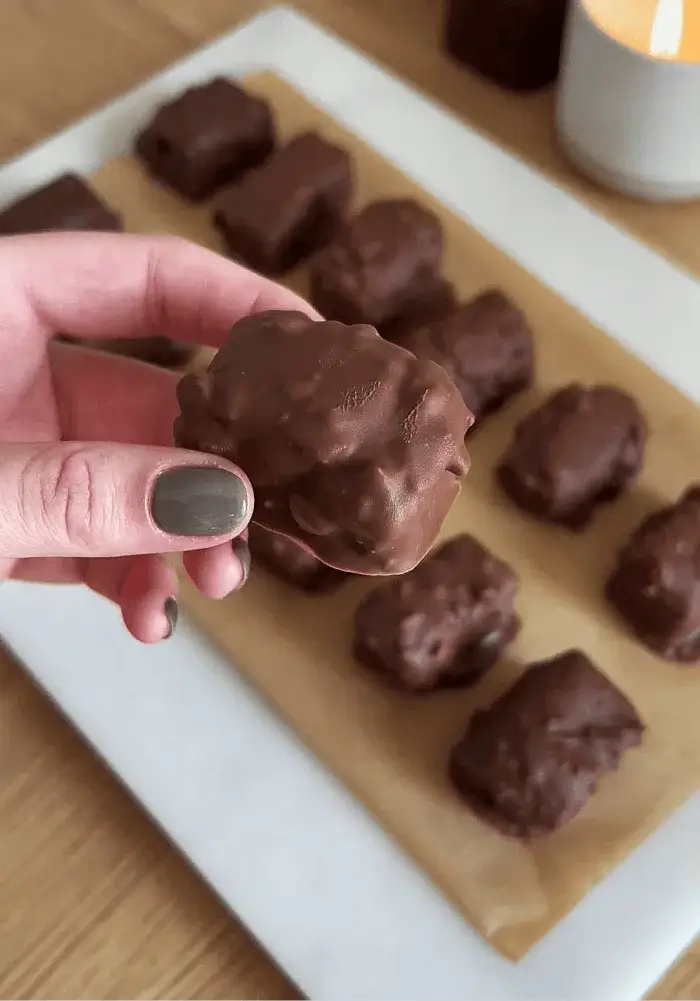
- Place on parchment paper and freeze until the coating is set, about 1 hour. Serve chilled or at room temperature.
FAQ
Why do brownie bites need to be frozen before cutting and coating?
Freezing is a structural step that ensures brownie bites can be cut cleanly and coated efficiently without crumbling or melting. Brownies with a high fat and chocolate content remain soft at room temperature, which makes precise slicing difficult and causes irregular edges. Chilling firms the cocoa butter and butter fats, stabilizing the crumb so each piece holds its shape.
Freezing also prevents the interior from warming when dipped into melted chocolate, allowing the coating to set quickly and evenly. Without freezing, the brownie surface can absorb excess chocolate, creating thick patches and uneven shells. This step is especially important for bite-size portions, where clean geometry improves both presentation and texture. Proper freezing also reduces condensation, which can otherwise cause chocolate to seize or streak during coating.
What type of chocolate works best for coating chocolate covered brownie bites?
Milk chocolate with moderate cocoa butter content works best for coating chocolate covered brownie bites because it melts smoothly and sets with a clean snap when chilled. Chocolate bars or couverture-style chocolate are preferred over chips, which contain stabilizers that inhibit fluid melting. A chocolate with 30 to 40 percent cocoa solids balances sweetness and fluidity, complementing the darker brownie interior.
Avoid compound coatings or candy melts if a true chocolate flavor and texture are desired. Melting should be done gently to preserve the cocoa butter structure, as overheating can cause separation or dull finishes.
How do you achieve a fudgy center without overbaking?
A fudgy texture depends on controlling bake time, temperature, and ingredient ratios in chocolate covered brownie bites. High fat content from butter and chocolate limits gluten formation, while a relatively low flour quantity keeps the crumb dense. Baking should stop when the edges are fully set but the center still jiggles slightly, indicating residual moisture.
Carryover heat will finish cooking the interior as the brownies cool. Using convection promotes even heat distribution, reducing hot spots that cause overbaking. Cooling completely before freezing allows the crumb to settle and moisture to redistribute evenly. Overbaking drives off too much water, resulting in a cakier texture that lacks the signature richness expected from chocolate covered brownie bites.
Why is convection baking recommended for chocolate covered brownie bites?
Convection baking provides consistent airflow that promotes even heat distribution, which is critical for chocolate covered brownie bites. The circulating air reduces temperature gradients across the pan, ensuring uniform edge setting without overcooking the center. This is particularly important in dense batters, where uneven heat can lead to dry corners and underbaked middles.
Convection also allows baking at slightly lower temperatures, preserving moisture and enhancing fudginess. Predictable results make timing more reliable, especially when precision is required for freezing and coating steps that follow. Using convection supports the controlled structure and texture expected from professionally finished chocolate covered brownie bites.
Should chocolate be tempered for the best coating finish?
Tempering is not strictly required for chocolate covered brownie bites, but it significantly improves appearance, texture, and shelf stability. Tempered chocolate sets with a glossy finish, firm snap, and resistance to melting at room temperature, which elevates the final product. Because brownie bites are dipped and then chilled, many home bakers rely on freezing to set the coating quickly, which works but can result in a softer shell.
Tempering aligns cocoa butter crystals into a stable form, preventing streaks and dull surfaces. If the brownie bites are intended for gifting, display, or extended room-temperature holding, tempering is strongly recommended. For casual serving or freezer storage, untempered chocolate is acceptable, but the coating will remain more fragile and may soften faster once handled.
How thick should the chocolate coating be on chocolate covered brownie bites?
The ideal coating on chocolate covered brownie bites should be thin and even, just thick enough to create a clean shell without overwhelming the brownie interior. A heavy coating dulls flavor balance and creates a cloying mouthfeel, while a thin shell provides contrast and snap. Proper viscosity is key: chocolate should be fully melted and fluid, allowing excess to drip off easily.
Freezing the brownie bites beforehand helps the chocolate set quickly, preventing buildup. Using a fork or dipping tool encourages uniform coverage and clean edges.
What is the ideal cutting method for uniform brownie bites?
The brownies should be fully frozen before slicing to prevent dragging and tearing. A long, sharp chef’s knife warmed slightly under hot water and dried thoroughly allows for clean cuts through dense chocolate crumb. Cuts should be made in straight, deliberate motions rather than sawing. Wiping the blade between cuts removes residue that can distort edges.
How do you prevent chocolate bloom on chocolate covered brownie bites?
Chocolate bloom appears as white or gray streaks caused by fat or sugar migration, often due to temperature fluctuations. To prevent bloom on chocolate covered brownie bites, stable storage conditions are essential. Once coated and set, the bites should be stored in airtight containers to protect them from humidity.
Freezing is ideal for long-term storage, as it slows fat movement and preserves surface integrity. When removing from the freezer, allow the bites to thaw gradually inside the container to prevent condensation. Avoid repeated temperature changes, which destabilize cocoa butter crystals.