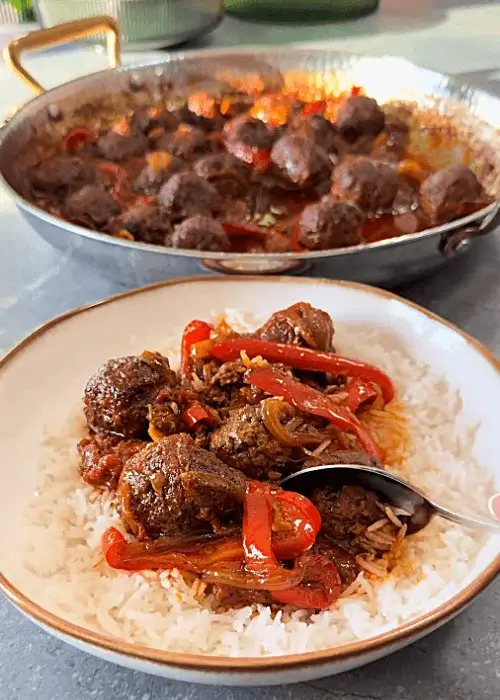
Middle Eastern Meatballs in Tomato Sauce
Watch the Full Step-by-Step
- Food processor
- Large mixing bowl
- Wide oven-safe pot
- Baking sheet
INGREDIENTS
- 1.1 pound/500 grams ground beef, rib or chuck
- 1 large white onion, roughly chopped
- 4 garlic cloves, peeled
- 1 packed cup mixed parsley and cilantro leaves
- 1 tablespoon sweet paprika
- 1 teaspoon salt
- 1 teaspoon ground black pepper
- 1 teaspoon ground cumin
- 1 teaspoon ground turmeric
- 1 teaspoon ras el hanout spice mix
- 3 tablespoons olive oil
- ¼ cup fine breadcrumbs
- 3 tablespoons water
Sauce:
- 2 medium onions, thinly sliced
- 1 large red bell pepper, cut into thin strips
- 2 tablespoons tomato paste or ¼ cup tomato purée
- 4 medium tomatoes, peeled and diced
- 4 garlic cloves, thinly sliced
- 4 tablespoons olive oil
- 1 tablespoon sweet paprika
- 1 teaspoon ground black pepper
- 1 teaspoon salt
- ½ teaspoon ground turmeric
- 2 tablespoons date syrup
- 2 cups water

INSTRUCTIONS
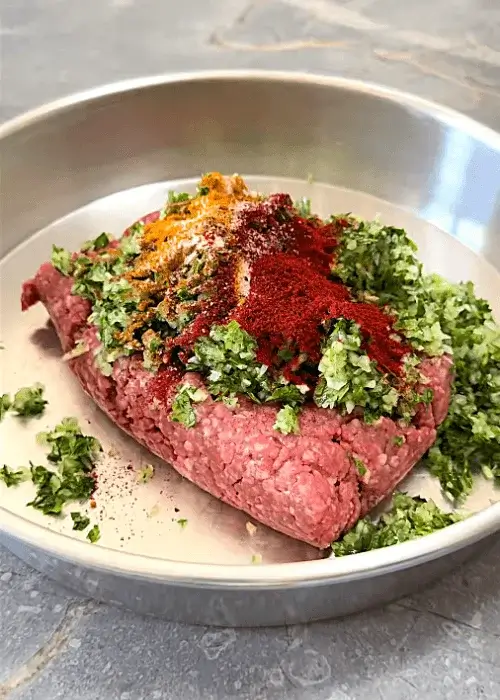
- Pulse the onion, garlic, parsley, and cilantro in a food processor until finely chopped but not puréed. Transfer to a large bowl, add the beef, paprika, salt, pepper, cumin, turmeric, ras el hanout, olive oil, breadcrumbs, and water, and mix gently just until combined. Cover and refrigerate for 30 minutes.
- Form the mixture into small meatballs, about 1½ inches in diameter, and arrange on a tray. Heat the oven to 340°F/170°C convection.
- In a wide, heavy oven-safe pot or deep skillet, heat the olive oil over medium heat. Brown the meatballs in batches, turning gently, until lightly colored on all sides, about 2 to 3 minutes total. Transfer to a plate.
- Add the onions to the pot and cook, stirring occasionally, until softened and lightly golden, about 8 minutes. Add the garlic, paprika, black pepper, salt, and turmeric and cook until fragrant, about 30 seconds. Stir in the bell pepper, tomato paste or purée, tomatoes, date syrup, and water.
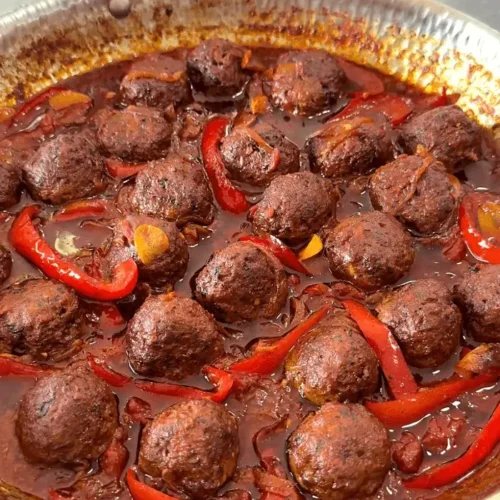
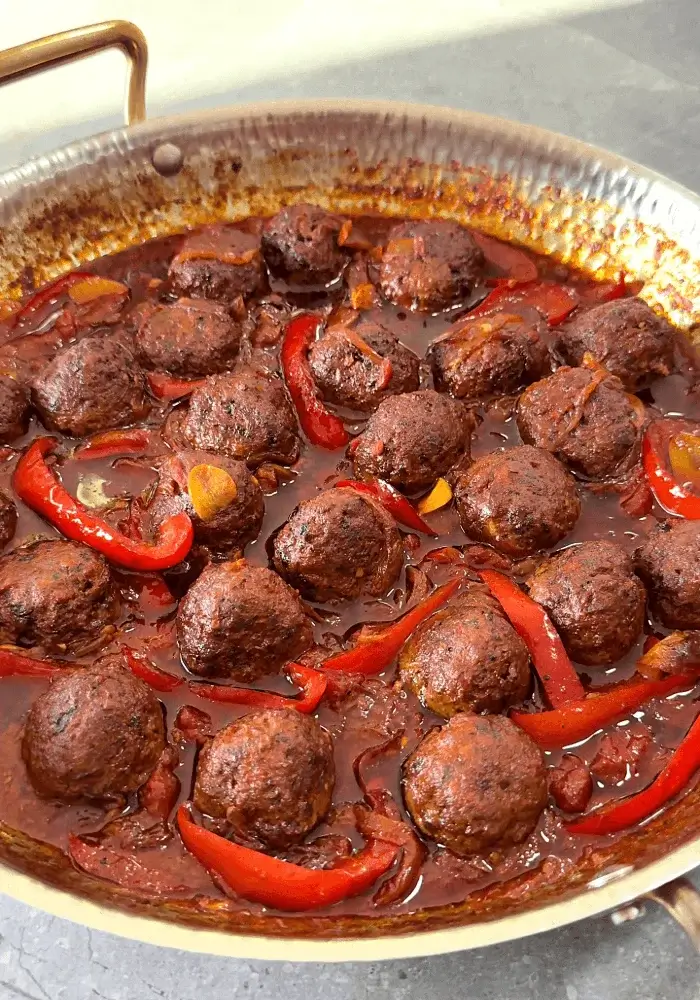
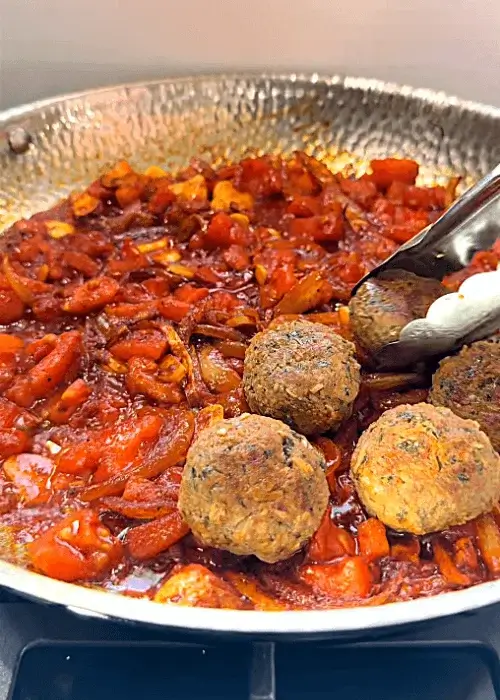
- Return the meatballs to the pot, ensuring the liquid reaches about halfway up the sides of the meatballs. Bring to a gentle simmer, cover, and cook over medium-low heat for 40 minutes.
- Uncover and transfer the pot to the oven. Cook until the sauce thickens slightly and the meatballs are lightly browned, about 15 minutes. Serve hot with plain white rice.
FAQ
What type of beef works best for Middle Eastern meatballs?
Ground beef with moderate fat content is essential for both texture and flavor. Cuts such as rib or chuck are ideal because they typically contain around 15 to 20 percent fat, which keeps the meatballs juicy during browning and simmering. Leaner beef can result in dry, crumbly meatballs, especially when cooked for extended periods in sauce.
The fat melts gradually and enriches the tomato sauce, creating a cohesive dish rather than separate components. Grinding the meat medium-fine also helps maintain tenderness. Very coarse grinds can lead to uneven cooking, while overly fine grinds may produce a dense texture. Using fresh, well-chilled beef allows the mixture to bind properly without overmixing, which is critical for achieving tender, delicious Middle Eastern meatballs
Why are the meatballs browned before simmering in the sauce?
Browning meatballs before simmering serves both structural and flavor-driven purposes. The initial sear creates a lightly caramelized exterior through the Maillard reaction, adding depth and savory complexity that cannot be achieved through simmering alone. This step also helps the meatballs hold their shape once submerged in the tomato sauce, preventing them from breaking apart during long cooking.
Browning does not cook the meatballs fully; instead, it sets the exterior while leaving the interior tender. As they finish cooking in the sauce, the meatballs absorb surrounding flavors while releasing juices that enrich the sauce itself. Skipping this step often results in softer texture and flatter flavor, especially in traditional Middle Eastern meatballs where spice balance is key.
How do herbs and spices affect the flavor of Middle Eastern meatballs?
Herbs and spices are central to the identity of Middle Eastern meatballs, providing warmth, aroma, and complexity rather than heat alone. Fresh parsley and cilantro contribute brightness and prevent the dish from tasting heavy, especially when paired with rich tomato sauce. Spices such as cumin, turmeric, paprika, and ras el hanout build layered flavor, with earthy, floral, and slightly sweet notes working together.
These spices bloom during cooking, particularly when briefly sautéed in oil, which intensifies their aroma and distributes flavor evenly. Balanced seasoning ensures the meatballs remain flavorful even after extended simmering. Proper spice ratios distinguish Middle Eastern meatballs from other regional styles, emphasizing depth and harmony rather than sharp or aggressive seasoning.
What is the purpose of finishing the meatballs in the oven?
It provides controlled, even heat that enhances both texture and flavor. Oven heat allows excess moisture to gently evaporate, slightly thickening the sauce without reducing it aggressively on the stovetop. This step also promotes light browning on the exposed surfaces of the meatballs, adding visual appeal and subtle caramelization.
Unlike direct stovetop heat, which can cause scorching or uneven simmering, the oven surrounds the pot with consistent warmth, reducing the risk of sticking or breaking. This method is especially effective for larger batches, ensuring the meatballs cook uniformly. The result is a cohesive dish where Middle Eastern meatballs remain tender while the sauce develops a richer, more concentrated flavor.
How to prevent the meatballs from becoming dense or dry during cooking
It all begins with gentle handling of the meat mixture. Overmixing activates proteins that tighten during cooking, resulting in a firm texture. Mixing just until combined preserves tenderness. Adding breadcrumbs and water introduces moisture that slowly releases during cooking, keeping the meatballs soft.
Letting the the mixture rest in the refrigerator allows the ingredients to hydrate evenly, improving structure without toughness. In addition, cooking over moderate heat is equally important. Aggressive boiling causes meat fibers to contract rapidly, squeezing out juices. Simmering gently and finishing in the oven ensures gradual cooking.
What size should the meatballs be for even cooking?
Meatballs that are approximately 1½ inches in diameter strike the ideal balance between surface browning and interior tenderness. Smaller meatballs cook too quickly, often losing moisture before the sauce has time to penetrate, while larger meatballs require longer cooking, increasing the risk of a dense or undercooked center.
Uniform sizing ensures consistent heat exposure, which is especially important when the meatballs are first browned and later simmered and oven-finished. Even sizing also helps regulate sauce reduction, as meatballs of the same size release fat and juices at similar rates.
How does the sauce influence the final texture of the meatballs?
As the meatballs simmer, the acidic components of the tomatoes gently tenderize the meat proteins, helping maintain a soft interior while the exterior remains intact. The sauce also acts as a heat buffer, preventing direct exposure to high temperatures that could otherwise dry out the meat.
Over time, the meatballs absorb moisture and flavor from the sauce, while simultaneously releasing fat and juices that enrich its body. Proper sauce consistency is essential. If the sauce is too thin, the meatballs may leach flavor; if too thick, they may cook unevenly. A balanced tomato sauce ensures Middle Eastern meatballs remain tender, cohesive, and fully infused with seasoning.
How can the recipe be adapted for different regional spice preferences?
Spice blends can be adjusted to reflect regional preferences without compromising structure. For a North African profile, increasing paprika and adding coriander or caraway enhances warmth and depth. A Levantine variation may emphasize allspice and cinnamon, producing a slightly sweeter aromatic note.
Persian-style adaptations often include a touch of dried lime or sumac to introduce brightness. When modifying spices, balance is crucial. Adjust one or two elements rather than multiple at once to preserve clarity of flavor. The tomato sauce should remain supportive, not dominant.