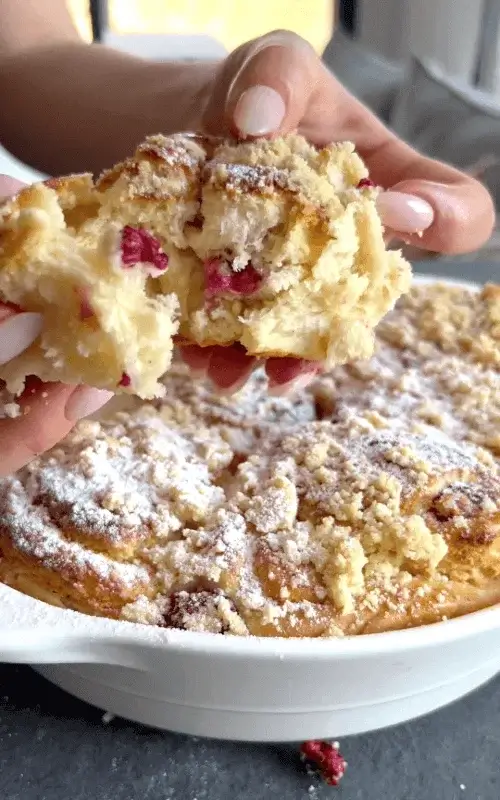
Raspberry Sweet Rolls with Cheese and Crumble
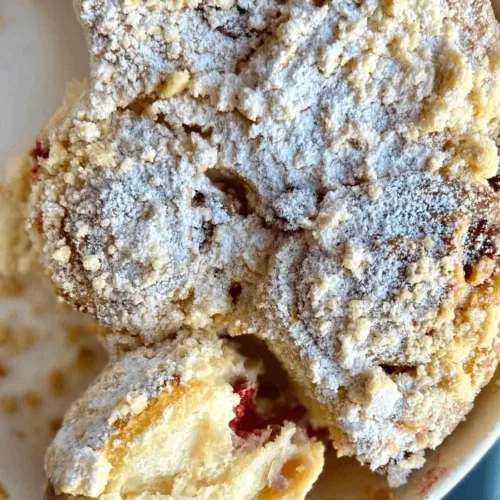
Watch the Full Step-by-Step
- Mixing bowls
- Rolling Pin
- Bench knife
- Kitchen scale
- Food processor
- 9×13-inch baking pan
- Pastry brush
INGREDIENTS
- 1 large egg, for brushing
Dough:
- 3¾ cups/470 grams all-purpose flour
- 0.75 ounce/21 grams fresh yeast
- ½ cup granulated sugar
- 1 large egg
- 1 cup/240 grams whole milk, lukewarm
- 4½ tablespoons/60 grams unsalted butter, very soft
- ¼ teaspoon fine salt
Filling:
- 1 cup/250 grams soft farmer cheese, well drained
- 2 large egg yolks
- 4 tablespoons instant vanilla pudding mix
- 4 tablespoons cornstarch
- ⅓ cup heavy cream
- 1 cup/125 grams raspberries, fresh or frozen
Crumble:
- ⅔ cup powdered sugar
- ⅓ cup all-purpose flour
- 3½ tablespoons unsalted butter, cold and cubed

INSTRUCTIONS
- Heat the oven to 350°F/175°C, conventional setting.
- In the bowl of a stand mixer, combine milk, yeast, and sugar and stir briefly. Let stand until lightly foamy, about 10 minutes.
- Add flour and mix on low speed with a dough hook. Add the egg and mix until a rough dough forms. Add butter and salt and knead until smooth, elastic, and tacky, about 8 to 10 minutes.
- Transfer dough to a lightly greased bowl, cover, and let rise until doubled, 60 to 90 minutes at room temperature or overnight in the refrigerator.
- In a medium bowl, whisk cheese, egg yolks, pudding mix, cornstarch, and cream until smooth and thick. Chill until ready to use.
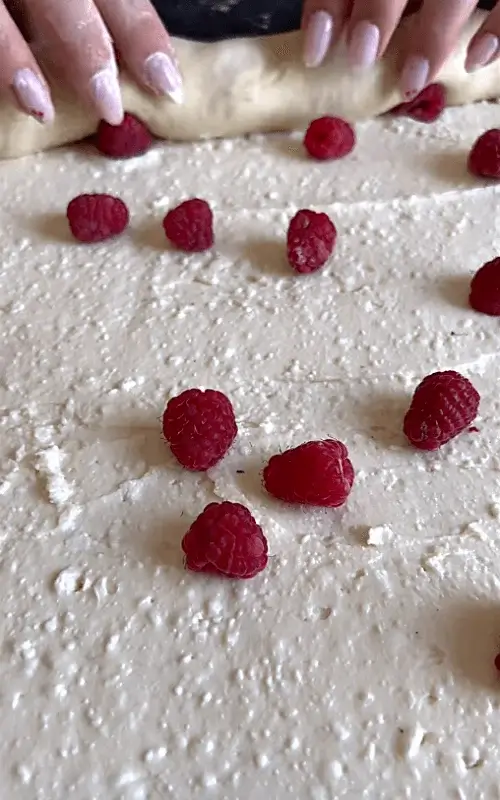
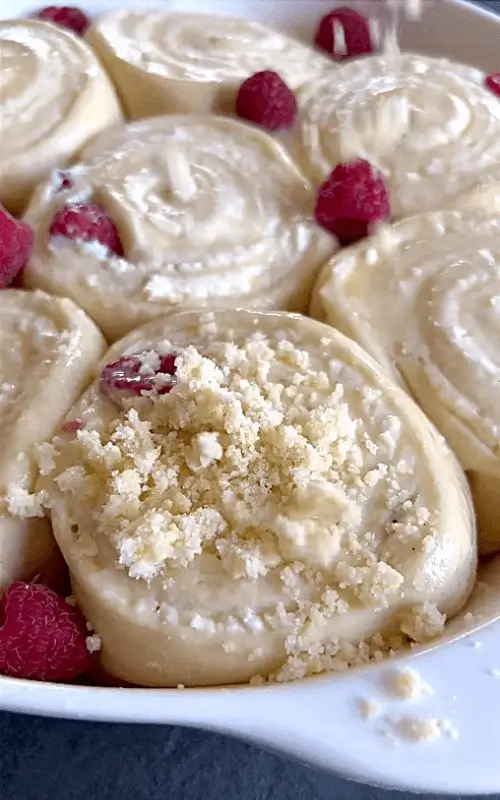
- Roll dough on a well-floured surface into a rectangle about 1/4 inch/6 mm thick. Spread filling evenly, leaving a narrow border. Scatter raspberries evenly over the surface and roll tightly into a log from the long side.
- Cut into 12 equal rolls and arrange cut-side up in a greased 9×13-inch baking pan. Cover loosely and let rise until puffy and nearly doubled, about 45 minutes.
- In a food processor, pulse powdered sugar, flour, and butter until coarse crumbs form.
- Brush rolls with beaten egg and generously scatter crumble over the tops.
- Bake until deeply golden and set through the center, 28 to 32 minutes. Cool slightly and serve warm or at room temperature.
- Store covered in the refrigerator for up to 3 days.
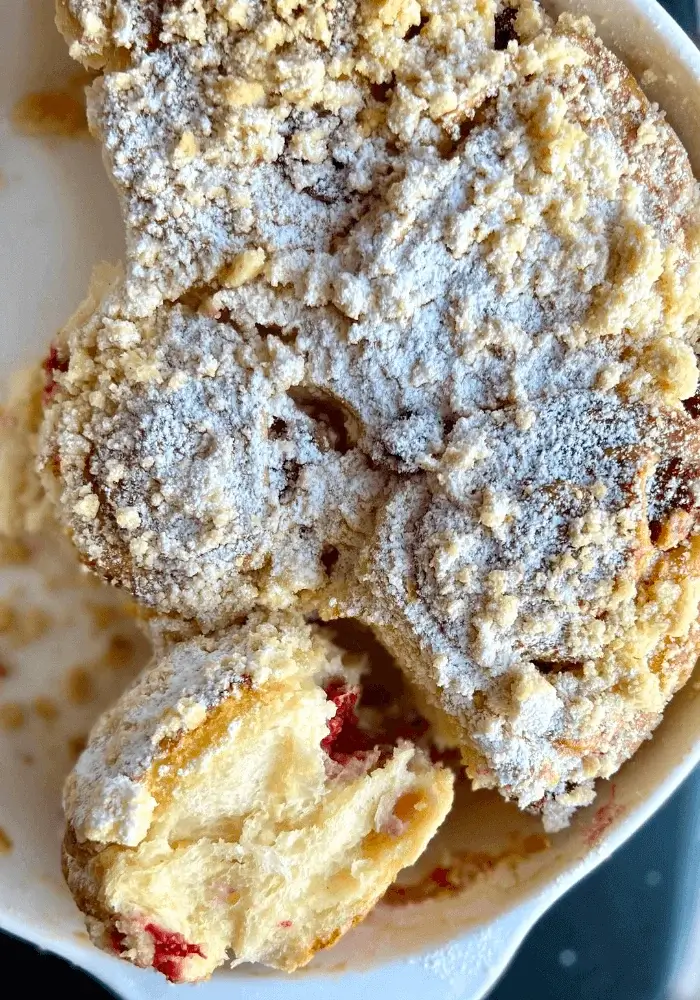
FAQ
Can raspberry sweet rolls be made ahead of time?
The most effective approach is to prepare the dough and complete the first rise, then refrigerate it overnight. Cold fermentation slows yeast activity while improving flavor development and dough structure, which results in a more tender crumb. The rolls can also be fully shaped, placed in the baking pan, covered tightly, and refrigerated for up to 12 hours before the second rise.
When ready to bake, allow the rolls to sit at room temperature until they appear puffy and slightly expanded before going into the oven. This ensures proper oven spring. Avoid baking them fully in advance if possible, as freshly baked raspberry sweet rolls retain better moisture and aroma. If baking ahead is necessary, slightly underbake and finish reheating before serving.
What type of cheese works best for the filling?
The ideal cheese for raspberry sweet rolls is a mild, soft, farmer-style cheese with moderate fat content, typically around 5 percent. This type of cheese provides structure without excessive moisture, allowing the filling to set cleanly during baking. Cream cheese can be used, but it produces a richer, denser filling and may require additional sugar or cream to loosen the texture.
Ricotta is acceptable only if very well drained, as excess whey can cause soggy layers and leakage. The cheese should be smooth, neutral, and slightly tangy to balance the sweetness of the dough and raspberries. Adding starch, such as cornstarch or pudding mix, stabilizes the filling and prevents separation. For consistent results, always drain the cheese thoroughly before mixing.
What baking pan produces the best texture for raspberry sweet rolls?
The best pan for raspberry sweet rolls is a light-colored metal pan, ideally aluminum, in a 9×13-inch size. Light metal conducts heat evenly, promoting consistent baking and preventing overbrowning of the bottoms before the centers are set. Glass pans retain heat longer and can cause the rolls to brown too quickly on the edges while remaining underbaked in the center.
Ceramic dishes behave similarly and may require reduced oven temperature. Metal pans also encourage better oven spring, which is important for enriched doughs like raspberry sweet rolls. If using a darker metal pan, lowering the oven temperature slightly can help avoid excessive browning while still allowing the rolls to bake through completely.
How do you prevent the filling from leaking during baking?
Preventing leakage in raspberry sweet rolls depends on both filling consistency and shaping technique. The cheese filling should be thick, spoonable, and able to hold soft peaks. If it spreads too easily, it will escape during rolling and baking. Leaving a clean border of dough around the edges before rolling is essential, as this creates a seal.
Rolling the dough tightly but without compressing the filling helps maintain defined layers. Using fresh or frozen raspberries whole rather than crushed reduces excess juice release. During baking, placing the rolls snugly together in the pan encourages upward rise instead of outward spread. Proper chilling of the filling before assembly also helps it stay in place as the rolls heat up.
What is the best way to store and reheat raspberry sweet rolls?
The rolls should be stored covered in the refrigerator once fully cooled, where they will keep well for up to three days. Refrigeration slows spoilage from the dairy-based filling, but it can dry out the dough if not properly sealed.
To reheat, allow the rolls to come to room temperature, then warm gently in a 300°F oven for 8 to 12 minutes, covered loosely with foil to prevent browning. This restores softness without melting the filling. Microwaving is possible for short bursts, but it can toughen the crumb if overdone. For best texture, reheating in the oven is preferred, especially when serving raspberry sweet rolls to guests.
Can raspberry sweet rolls be frozen before or after baking?
Raspberry sweet rolls can be frozen successfully both before and after baking, depending on scheduling needs. Freezing before baking generally yields the best final texture. After shaping the rolls and placing them in the pan, they can be frozen once firm, then wrapped tightly. When ready to bake, thaw overnight in the refrigerator and allow a full second rise at room temperature until visibly puffy.
This method preserves yeast activity and ensures proper oven spring. Freezing after baking is also possible, but the crumb may dry slightly upon reheating. Fully cooled raspberry sweet rolls should be wrapped airtight and frozen for up to two months. Reheat gently in a low oven, covered, to restore softness. Avoid microwaving from frozen, as this can cause uneven heating and rubbery texture.
What dough hydration level is ideal for raspberry sweet rolls?
It is moderately high, typically around 60 to 65 percent when accounting for milk, egg, and butter. This level produces a soft, extensible dough that can be rolled thin without tearing while still supporting a rich filling. Dough that is too dry will resist rolling and may split, causing filling leakage. Dough that is overly wet will spread instead of rising upward, leading to flat rolls.
A properly hydrated dough should feel tacky but manageable after kneading and should clean the sides of the bowl while sticking slightly to the bottom. This balance is essential for achieving tender crumb structure and well-defined layers in raspberry sweet rolls.
How do frozen raspberries affect raspberry sweet rolls compared to fresh?
Frozen raspberries work very well in raspberry sweet rolls but require slight handling adjustments. They release more liquid as they thaw, which can increase the risk of soggy layers if overused. For best results, use frozen raspberries straight from the freezer and scatter them evenly without thawing. This limits juice release during shaping.
Fresh raspberries provide slightly cleaner layers and brighter visual contrast, but their seasonality and fragility can be limiting. Both options deliver strong flavor, especially when paired with a stabilized cheese filling. When baking rolls with frozen fruit, ensure the filling is well thickened and the rolls are baked until fully set in the center to evaporate excess moisture.
Why is a second rise important?
The second rise is critical for achieving light, tender raspberry sweet rolls with proper structure. After shaping, the dough needs time to relax and allow yeast activity to re-inflate the gluten network disrupted during rolling and cutting. Skipping or shortening this rise results in dense rolls with tight crumb and limited oven spring.
During the second rise, the dough expands outward and upward, creating space for steam generation during baking. This leads to soft layers rather than compact spirals. The second rise also ensures even baking, as fully proofed rolls heat more uniformly. For raspberry sweet rolls, this step is especially important to balance the weight of the cheese filling and fruit without collapse.